
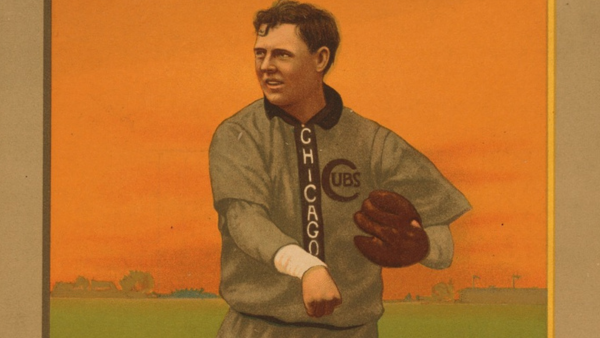
Ask any Chicagoan about baseball, and the first thing they’ll do is pick a side. That’s because Chicago has two Major League Baseball teams, and picking one over the other is practically a rite of passage.
So why does Chicago have two baseball teams when most cities only get one? The short answer involves league politics, a booming population, and a city big enough to split in half. Here’s the full story.
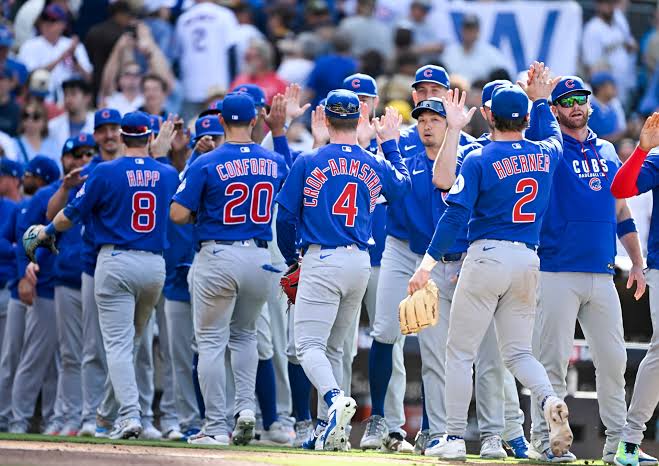
Chicago has two MLB teams, the Cubs and the White Sox, because the Cubs were already established in the National League by 1876, and the rival American League placed the White Sox in Chicago in 1901 to compete for the city’s massive population.
Rather than forcing one team out, both leagues eventually recognized each other, letting both franchises stay permanently.
Chicago’s baseball story starts decades before the White Sox existed. The team known today as the Cubs began in 1870 as the Chicago White Stockings.
They became a founding member of the National League in 1876, making them one of the oldest professional franchises in American sports.
By the time a rival league appeared in 1900, the Cubs already had a loyal following and a permanent place in the city’s sports identity.
In 1901, Ban Johnson turned his regional Western League into a new major league to challenge the National League’s control over professional baseball.
Chicago was an obvious target: it had a huge population, strong rail connections, and a proven appetite for the sport.
Charles Comiskey moved his team to Chicago’s South Side, and the newly formed Chicago White Sox became a charter franchise of the American League.
The National League and American League spent their early years locked in a bitter battle over players, territory, and legitimacy.
Instead of one league forcing the other out of Chicago, the two sides reached a peace agreement around 1903 that recognized both leagues as equals.
This agreement effectively grandfathered Chicago’s dual-team status in, letting the Cubs keep their National League rights and the White Sox keep their American League rights permanently.
Chicago spans roughly 230 square miles with a population that topped 1.7 million by 1900, big enough to comfortably support separate fan bases.
The Cubs settled on the North Side, eventually calling Wrigley Field home in 1916, while the White Sox built their identity on the South Side.
This natural split meant fans didn’t have to choose based on team quality alone; location and neighborhood loyalty mattered just as much.
Cubs and White Sox fans didn’t just root for different teams, they represented different parts of Chicago’s identity, work life, and even class background.
Sox fans are often described as working-class and deeply local, while Cubs fandom grew into more of a national brand thanks to Wrigley Field’s tourist appeal.
Over time, this cultural gap only deepened the rivalry rather than fading it away.
| Factor | Chicago Cubs | Chicago White Sox |
|---|---|---|
| League | National League | American League |
| Founded | 1876 (as charter NL member) | 1901 (as charter AL member) |
| Home Stadium | Wrigley Field (since 1916) | Rate Field (South Side) |
| Nickname | The North Siders | The South Siders |
| Most Recent World Series | 2016 | 2005 |
| Fan Base Identity | Citywide and national appeal | Deeply working-class and local |
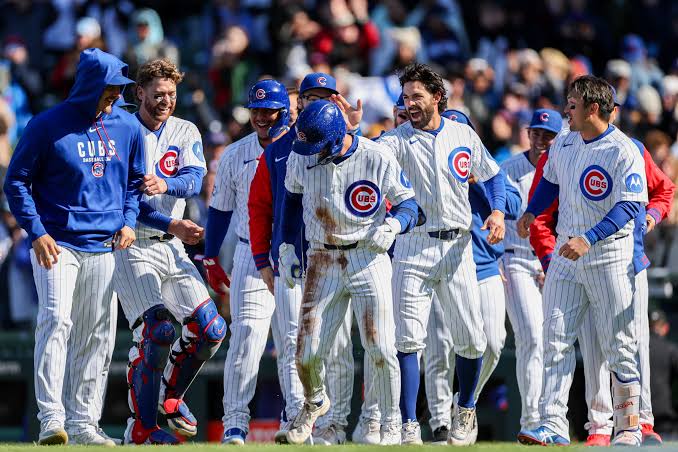
The Cubs and White Sox first faced off in the 1906 World Series, a matchup still remembered as one of baseball’s biggest upsets.
Despite being heavily favored, the Cubs lost that series to the White Sox in six games, giving South Side fans bragging rights that lasted generations.
For most of the 20th century, the two teams rarely met again outside exhibitions, since interleague play didn’t begin until 1997.
Once interleague play started, the Cubs and White Sox began meeting every regular season in what’s now called the Crosstown Classic.
These matchups consistently draw some of the largest crowds of the season for both teams, showing the rivalry never actually cooled off.
Attendance data shows Crosstown games regularly outdraw each team’s regular home average by a wide margin.
Chicago isn’t alone, but it is one of a small handful of U.S. cities with two MLB franchises.
What makes Chicago unique is that both franchises predate World War II, giving the rivalry far deeper historical roots than most other multi-team cities.
Also Read (lifestylenetworth.com)
Because the Cubs were already an established National League team by 1876, and the American League placed the White Sox in Chicago in 1901 to compete for the same large market.
The Cubs came first, forming in 1870 and joining the National League in 1876, decades before the White Sox existed.
A peace agreement between the American and National Leagues around 1903 formally recognized both leagues, allowing both Chicago teams to keep their territory permanently.
No, the two teams have always operated as separate, independently owned franchises.
The Cubs play at Wrigley Field on the North Side, while the White Sox play on the South Side, creating a natural geographic and cultural divide between fan bases.
They didn’t meet in regular-season play until interleague play began in 1997, despite both existing since the early 1900s.
It’s the nickname for the annual regular-season series between the Cubs and White Sox, known for drawing some of the largest crowds of the season.
Yes, in 1906, when the White Sox upset the heavily favored Cubs in six games.
No, New York (Yankees and Mets) and Los Angeles (Dodgers and Angels) also have two MLB franchises each.
The rivalry combines league differences, geographic divide, and long-standing cultural identity tied to the North Side and South Side of Chicago.
The Cubs play in the National League Central division, while the White Sox play in the American League Central division.
They adopted the name because it was already familiar to Chicago fans from the Cubs’ earlier nickname, before shortening it to White Sox in 1904.
The Cubs have won three World Series titles (1907, 1908, 2016), while the White Sox have won three as well (1906, 1917, 2005).
Yes, Chicago’s large population and geographic spread historically gave both teams enough fans to remain financially viable at the same time.
Wrigley Field’s status as a historic tourist landmark, combined with national broadcasting deals, has helped the Cubs build a bigger nationwide following over time.
Chicago ended up with two baseball teams because timing, league politics, and sheer city size all lined up perfectly in the early 1900s.
The Cubs had already claimed the National League, and when the American League needed a foothold in a major market, Chicago’s South Side became the natural home for the White Sox.
More than a century later, that split still defines the city, turning every Crosstown Classic into far more than just a baseball game.