
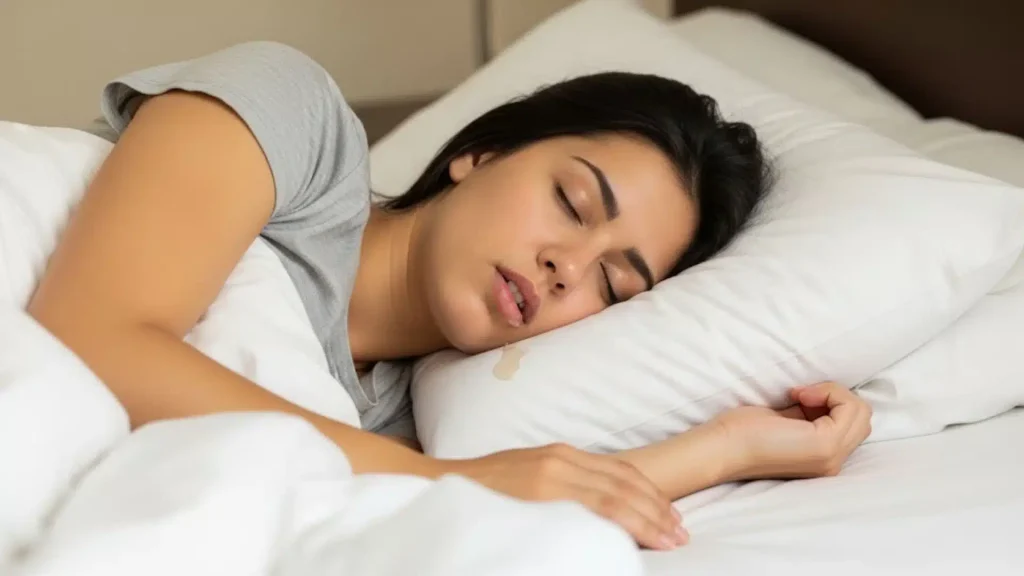
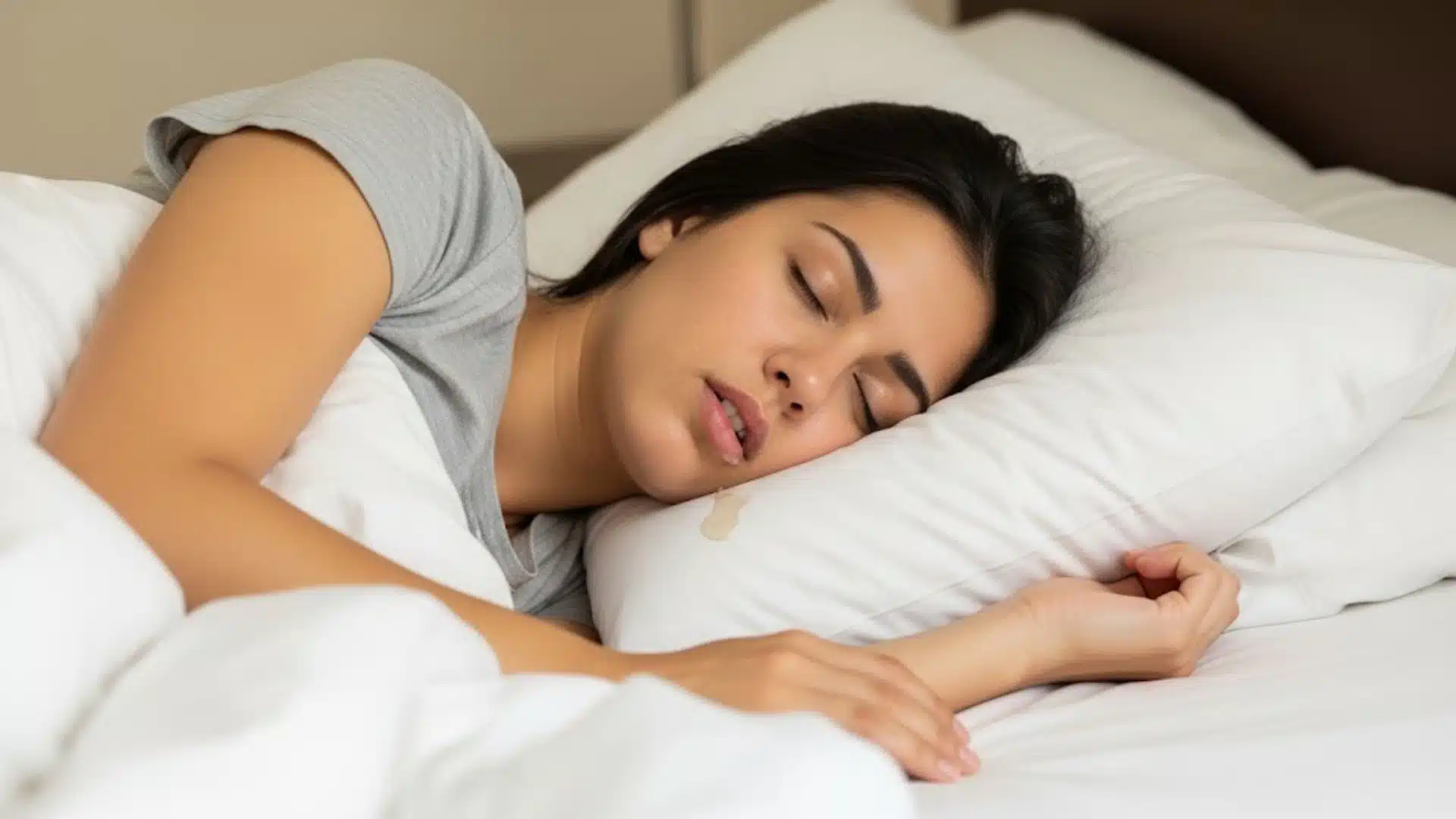
Why do people drool in their sleep? It is one of the most common yet least talked-about sleep experiences.
Almost everyone has woken up to a damp pillow at some point, and most people never know why it happens.
The short answer is that your muscles relax, your swallowing reflex slows down, and saliva escapes from your open mouth.
But the full story involves sleep biology, breathing patterns, health conditions, and even the position you sleep in.
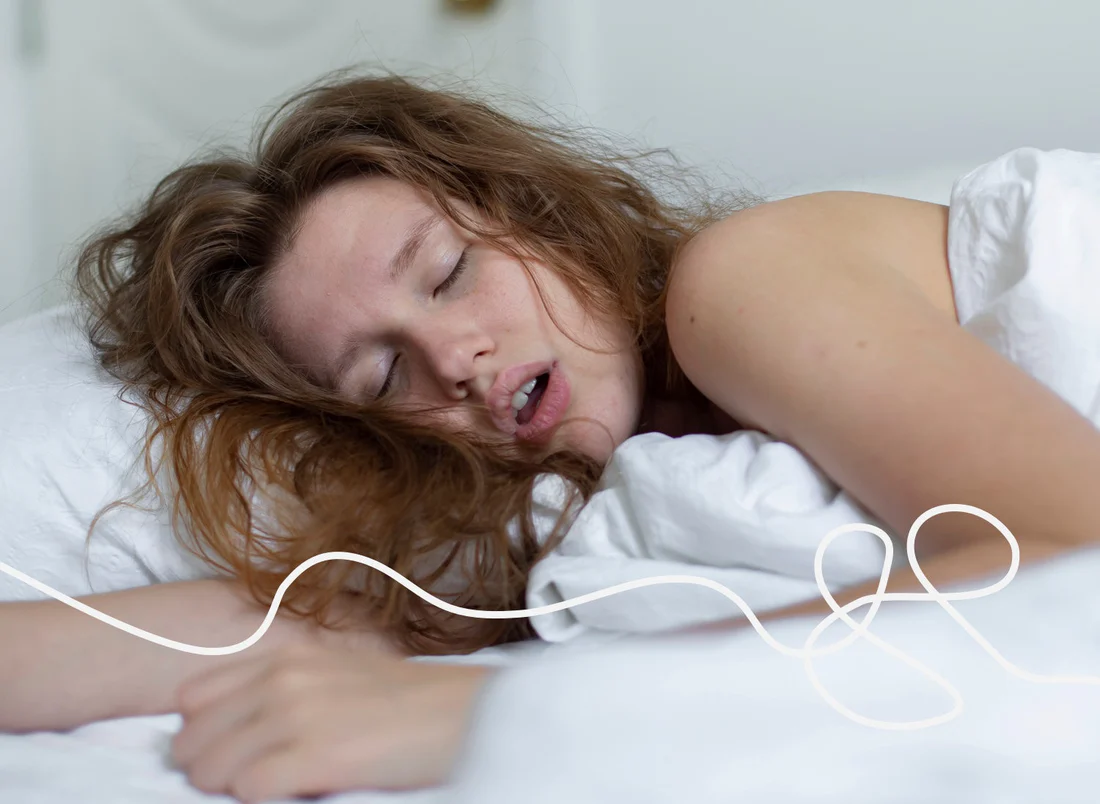
Drooling during sleep is medically called nocturnal sialorrhea. It happens when saliva escapes from the mouth while you are asleep.
It is not a disease on its own. For most people, it is a normal physiological process linked to how the body behaves during sleep.
Occasional drooling is completely harmless. Frequent or excessive drooling, however, can signal an underlying issue worth investigating.
Your salivary glands produce roughly 1 to 2 liters of saliva every day. There are six salivary glands in the mouth, located in the cheeks, under the jaw, and near the front teeth.
During waking hours, you swallow an average of 25 to 35 times per hour without even noticing it. Each swallow clears accumulated saliva before it can pool.
When you fall asleep, saliva production drops significantly but never reaches zero. The submandibular glands, which are responsible for about 70% of resting saliva, continue producing small amounts throughout the night.
During light sleep, swallowing slows to roughly 6 to 12 times per hour. During deep slow-wave sleep, it drops to nearly zero.
The muscles of the face, jaw, and throat fully relax. The swallowing reflex that operates automatically all day becomes much less active.
If saliva accumulates faster than the sleeping body can manage it, and if the lips are slightly apart, gravity does the rest. The result is the damp patch on the pillowcase.
Yes, for most people, occasional drooling is completely normal.
It simply reflects a relaxed sleep state where the swallowing reflex has naturally slowed down.
Some sleep specialists note that drooling can actually indicate deep, restorative sleep, because it is during the deepest sleep stages that muscle tone drops most completely. It is not a sign that something is wrong.
The situation changes when drooling is frequent, heavy, or accompanied by other symptoms like snoring, difficulty swallowing, or breathing pauses. In those cases, an underlying cause is worth exploring.
Sleep position is the single most common cause of nighttime drooling.
When you sleep on your side or stomach, gravity pulls saliva toward the lower side of your mouth and directly toward your lips. If your mouth is even slightly open, saliva will leak out.
Back sleepers have a significant advantage. Lying on your back directs saliva toward the throat, where the swallowing reflex can clear it far more easily.
| Sleep Position | Drooling Risk |
|---|---|
| Back (supine) | Low — gravity keeps saliva in the throat |
| Side (lateral) | High — gravity pulls saliva toward the lips |
| Stomach (prone) | High — same gravity effect as side sleeping |
Mouth breathing is the second most common trigger for nighttime drooling.
When you breathe through your mouth during sleep, your lips stay open. Open lips allow accumulated saliva to escape directly rather than being retained in the mouth.
Mouth breathing also dries out the oral tissues, which signals the salivary glands to produce more saliva in response. This combination of an open mouth and increased saliva output is a reliable recipe for waking up with a wet pillow.
When the nose is blocked, the body switches to mouth breathing automatically.
Nasal congestion from allergies, sinus infections, a deviated septum, or dry indoor air forces this switch. You cannot control it consciously during sleep.
Clearing the nasal passages before bed is one of the most effective ways to reduce drooling caused by this mechanism.
Obstructive sleep apnea (OSA) is a sleep disorder in which the airway becomes partially or fully blocked during sleep, causing repeated breathing pauses.
When breathing stops, the body gasps for air through the mouth. The mouth stays open during these breathing events, allowing saliva to escape freely.
Other signs of sleep apnea include loud snoring, frequent waking during the night, morning headaches, difficulty concentrating, and excessive daytime sleepiness.
Drooling that coincides with any of these symptoms warrants a conversation with a doctor or sleep specialist.
Gastroesophageal reflux disease (GERD) triggers excess saliva production as a defensive response.
When stomach acid rises toward the throat, the salivary glands produce extra saliva to neutralize and dilute the acid. This protective mechanism, sometimes called waterbrash, increases the total saliva volume in the mouth during sleep.
Avoiding large meals close to bedtime, elevating the head of the bed slightly, and managing GERD with appropriate treatment can reduce this particular cause of drooling.
Seasonal and year-round allergies cause nasal inflammation and congestion that force mouth breathing during sleep.
Allergies also stimulate mucus production in the throat, which can indirectly increase salivation and worsen nighttime drooling.
Treating allergies with appropriate antihistamines or nasal sprays often resolves the drooling alongside the congestion.
Certain prescription and over-the-counter medications list excessive salivation as a documented side effect.
Medications known to increase saliva production or reduce swallowing efficiency include some antipsychotics (particularly clozapine), certain antibiotics, medications used for Alzheimer’s disease, cholinergic drugs, and some muscle relaxants.
If drooling started or worsened after beginning a new medication, speaking with the prescribing doctor about dose adjustment or alternatives is worth considering.
| Medication Category | Drooling Risk |
|---|---|
| Antipsychotics (e.g. clozapine) | High — directly stimulates salivary glands |
| Cholinergic drugs | High — increases nerve signals to glands |
| Some antibiotics | Moderate — may irritate oral tissues |
| Alzheimer’s medications | Moderate — can affect swallowing reflex |
| Muscle relaxants | Moderate — reduce swallowing muscle tone |
Neurological conditions that affect muscle control and swallowing can cause persistent drooling both during the day and at night.
Parkinson’s disease reduces automatic swallowing frequency, allowing saliva to pool and overflow. Cerebral palsy, stroke, multiple sclerosis (MS), and ALS affect the nerve signals that coordinate the swallowing reflex.
In these conditions, drooling is not due to excess saliva production but to a reduced ability to swallow saliva at the normal rate.
Medical management for drooling in neurological conditions may include anticholinergic medications, botulinum toxin (Botox) injections into the salivary glands, or speech therapy.
Dental problems can increase saliva production or make it harder to keep the mouth closed during sleep.
Tooth decay, mouth ulcers, pharyngitis, swollen tonsils, and tonsillitis can all stimulate the salivary glands. Infections in the mouth or throat, including strep throat and mononucleosis, are also documented causes.
Misaligned teeth or bite issues may make it harder to maintain a closed mouth posture during sleep, increasing drooling.
Hormonal changes during pregnancy, particularly in the first trimester, can temporarily increase saliva production.
This condition is called ptyalism gravidarum. It is directly caused by pregnancy hormones and typically resolves after delivery.
Nausea and acid reflux, which are also common in pregnancy, can further increase salivation through the same GERD mechanism described above.
Bruxism, or teeth grinding during sleep, is associated with increased drooling.
People who grind their teeth tend to breathe through their mouth and keep their jaw in a more open position during sleep. Open-mouth posture during bruxism episodes allows saliva to escape more easily.
Snoring, restlessness, and shorter sleep duration are other risk factors that overlap with bruxism and can compound drooling.
REM (rapid eye movement) sleep is the sleep stage associated with vivid dreaming.
During REM sleep, voluntary muscle activity is actively suppressed by the brain. This includes the muscles of the face and jaw. The lips may part, and the tongue may shift position, making it easier for saliva to flow out.
Some research suggests that dreaming about food or eating can stimulate the salivary glands during REM sleep, contributing to heavier drooling in some individuals.
The deepest non-REM sleep stages also contribute. During stages 3 and 4 of slow-wave sleep, voluntary muscle activity drops to near zero, swallowing pauses almost completely, and any saliva that accumulates has few mechanisms to keep it in the mouth.
This question comes up often, and the science is nuanced.
Drooling peaks during the deepest stages of sleep, which are also the most physically restorative. In that specific sense, occasional drooling can indicate that you are reaching deep sleep stages successfully.
However, drooling is not a reliable marker of sleep quality on its own. True markers of restorative sleep include sleep efficiency, time spent in slow-wave and REM stages, and how alert and refreshed you feel upon waking.
Drooling caused by sleep apnea, nasal obstruction, or poor sleep position is not a sign of good sleep. It reflects a physical disruption rather than depth of rest.
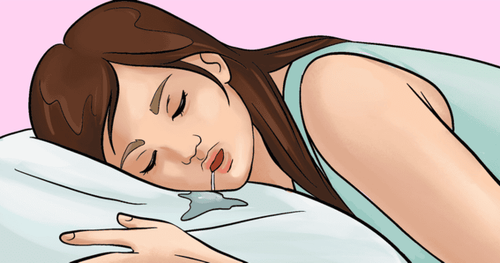
Occasional drooling causes no harm. Frequent or heavy drooling can lead to a few secondary issues.
Bad breath (halitosis): Saliva that sits on a pillow or around the mouth overnight can become a breeding ground for bacteria, contributing to morning bad breath.
Skin irritation: Repeated contact with saliva around the lips and chin can cause mild skin chapping or irritation over time.
Dehydration: Losing significant saliva volume overnight without adequate fluid intake can contribute to morning dry mouth and mild dehydration.
Disrupted sleep: Awareness of drooling, or waking in a wet patch, can interrupt sleep for some people and affect overall sleep quality.
Embarrassment: Social and psychological discomfort is one of the most commonly reported impacts, particularly for people who share a bed.
Switching to back sleeping is the most straightforward and effective first step.
Sleeping on your back uses gravity in your favor. Saliva flows toward the throat rather than the lips, where the natural swallowing reflex can clear it even during light sleep.
Using pillows on either side of the body to prevent rolling, or trying a wedge pillow that slightly elevates the head, can make back sleeping more stable and comfortable.
Clearing the nasal passages before bed removes one of the most common triggers.
Nasal rinses with saline solution, nasal strips, a humidifier in the bedroom, or appropriate allergy medication can all improve nasal airflow. When the nose is unobstructed, mouth breathing stops, and drooling typically reduces significantly.
Seeing a doctor about a deviated septum or chronic sinusitis is worth considering if nasal congestion is a persistent year-round problem.
If allergies are driving nasal congestion and mouth breathing, treating the allergies is more effective than any direct anti-drooling measure.
Antihistamines, nasal corticosteroid sprays, and allergen avoidance strategies can all reduce allergy-driven nasal obstruction.
If sleep apnea is the underlying cause, treating the apnea addresses the drooling automatically.
CPAP (continuous positive airway pressure) therapy is the most common first-line treatment for obstructive sleep apnea. It keeps the airway open during sleep, reduces mouth breathing, and removes the need to gasp for air through an open mouth.
Mandibular advancement devices (MADs) are custom oral appliances worn during sleep that reposition the jaw to maintain an open airway. They also keep the lips more naturally closed, which directly reduces drooling.
Reducing acid reflux removes a significant stimulus for excess saliva production.
Practical steps include avoiding large meals within three hours of bedtime, limiting alcohol and caffeine in the evening, and elevating the head of the bed by 15 to 20 cm using a wedge pillow or bed risers. Medical GERD treatment under a doctor’s guidance can further reduce the saliva response.
Strengthening the muscles around the jaw, lips, and tongue can improve the ability to maintain a closed mouth posture during sleep.
Simple exercises include gentle chewing movements, lip closure practice, and tongue resistance exercises. A speech-language pathologist can provide a structured exercise plan for people with more persistent drooling driven by muscle weakness.
Being well-hydrated during the day helps maintain normal saliva composition and reduces the dry-mouth triggers that stimulate excess overnight salivation.
Drinking adequate water throughout the day, rather than large amounts right before bed, is the practical approach.
For cases driven by neurological conditions or persistent hypersalivation that does not respond to lifestyle changes, medical options exist.
| Treatment | How It Works | Used For |
|---|---|---|
| Anticholinergic medications | Block nerve signals to salivary glands | Neurological conditions |
| Botulinum toxin (Botox) injections | Temporarily paralyse salivary glands | Severe hypersalivation, neurological causes |
| CPAP therapy | Treats sleep apnea, reduces mouth breathing | Sleep apnea-related drooling |
| Mandibular advancement device | Keeps jaw forward, lips closed | Sleep apnea, positional drooling |
| Speech therapy | Strengthens swallowing and jaw muscles | Muscle weakness causes |
| Surgery (salivary gland) | Removes or redirects salivary glands | Last resort, severe cases |
Anticholinergic medications reduce drooling by blocking the nerve impulses to the salivary glands. They are effective but commonly produce side effects including dry mouth, constipation, and blurred vision.
Botulinum toxin (Botox) injections into the parotid and submandibular glands are used for severe drooling, particularly in neurological conditions like Parkinson’s disease. Effects last up to six months.
Surgery, including removal or rerouting of salivary gland ducts, is reserved for severe cases that do not respond to other treatments.
Occasional drooling needs no medical attention.
You should consult a doctor if drooling is new and has started suddenly without an obvious cause, if it is accompanied by snoring, breathing pauses, or gasping during sleep, if you notice difficulty swallowing during the day, if it started after beginning a new medication, or if it comes with neurological symptoms like slurred speech, facial asymmetry, or weakness.
Sudden onset drooling combined with slurred speech, facial drooping, or arm weakness can be a sign of stroke and requires immediate emergency medical attention.
Drooling is developmentally normal in babies and toddlers.
Infants begin producing saliva as their salivary glands mature, typically around three to six months of age. They have not yet developed the automatic swallowing patterns and muscle coordination that adults use unconsciously.
Most children develop full swallowing coordination and stop drooling during sleep by around four to five years of age. Persistent drooling in older children may warrant evaluation for underlying developmental or neurological factors.
In adults, drooling during sleep becomes more common with advancing age as swallowing muscle tone naturally decreases. Older adults are also more likely to take medications that affect salivation, and more likely to develop conditions like sleep apnea or GERD that contribute to nighttime drooling.
| Age Group | Common Cause | Typical Outcome |
|---|---|---|
| Infants (0–2 years) | Developing swallowing coordination | Resolves naturally |
| Children (2–5 years) | Transitional muscle development | Usually resolves by age 4–5 |
| Adults | Sleep position, nasal congestion, health conditions | Manageable with lifestyle changes |
| Older adults | Weakened swallowing muscles, medications | Often benefits from medical review |
Saliva plays a protective role in oral health that is easy to overlook.
It neutralizes acids in the mouth, remineralizes tooth enamel, controls bacteria populations, and lubricates the tissues that protect the gums and cheeks.
Losing saliva through drooling overnight is not a problem for oral health. In fact, maintaining salivary flow during sleep helps protect teeth and gum tissue from the dry, acidic environment that can develop if salivation completely stops.
The greater oral health risk is mouth breathing, which dries out the oral mucosa, increases bacterial growth, and raises the risk of cavities and gum disease over time. Reducing mouth breathing addresses both drooling and oral health simultaneously.
Drooling happens because the swallowing reflex slows dramatically during sleep, muscles around the mouth relax, and saliva pools until it escapes. Sleeping on your side or with an open mouth makes it more likely.
Yes, occasional drooling is completely normal for adults and children. It only requires attention when it is frequent, heavy, or accompanied by snoring, breathing pauses, or difficulty swallowing.
Drooling can indicate deep sleep because muscle tone drops most completely in deep slow-wave sleep. However, it is not a reliable marker of sleep quality on its own, and drooling from sleep apnea or mouth breathing is not a sign of good sleep.
Obstructive sleep apnea, GERD, allergies, Parkinson’s disease, cerebral palsy, stroke, and MS are all documented causes. Infections including tonsillitis and sinus infections can also trigger it temporarily.
Yes. Antipsychotics (especially clozapine), some antibiotics, cholinergic drugs, and certain Alzheimer’s medications list excessive salivation as a side effect. Talk to your doctor if drooling began after starting a new prescription.
The most effective first steps are switching to back sleeping, treating nasal congestion, managing allergies, and addressing underlying conditions like sleep apnea or GERD. Most cases improve significantly with one or two of these changes.
For many people, yes. Back sleeping uses gravity to direct saliva toward the throat where the swallowing reflex handles it, rather than toward the lips where it can escape. People who switch to back sleeping often see drooling disappear entirely.
Yes. A deviated septum reduces airflow through one or both nasal passages, forcing mouth breathing during sleep. Open-mouth breathing is one of the primary drivers of nighttime drooling. Treating the septal deviation can resolve the problem.
Sudden, new-onset drooling combined with other neurological symptoms such as slurred speech, facial drooping, or arm weakness can indicate a stroke. In that situation, call emergency services immediately. Isolated nighttime drooling without other symptoms is not a stroke warning sign.
See a doctor if drooling starts suddenly without explanation, if it is accompanied by snoring or breathing pauses, if you have difficulty swallowing while awake, or if it began after starting a new medication. A GP can refer you to a sleep specialist, ENT, or neurologist as needed.
Why do people drool in their sleep? The core reason is simple: the swallowing reflex slows down during sleep, muscles relax, and saliva that accumulates in the mouth escapes through an open or slightly parted mouth, with gravity doing the rest.
For most people, this is occasional, harmless, and completely normal.
Sleep position, nasal congestion, and mouth breathing are the most common contributing factors and the easiest to address.
When drooling is frequent or excessive, it is worth looking at deeper causes.
Sleep apnea, GERD, allergies, medications, and neurological conditions all have well-established connections to nighttime drooling, and each has effective treatment options.
Switching to back sleeping, clearing nasal congestion, managing allergies, and treating sleep apnea are the most impactful changes most people can make.
For persistent or sudden-onset drooling with other symptoms, speaking with a doctor ensures nothing more serious is missed.