
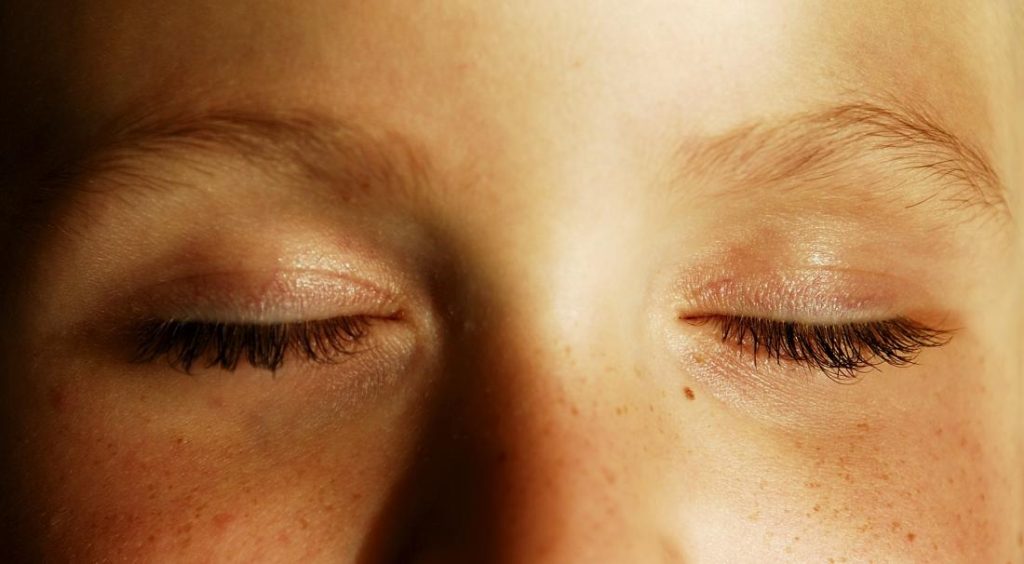
Why does my eyeball hurt — and is it serious? Eye pain is one of the most alarming symptoms a person can experience, partly because the eye is so sensitive and partly because the causes range from completely harmless to sight-threatening emergencies.
A scratch on the surface of the eye, a sinus infection pressing behind the socket, or a dangerous spike in eye pressure can all produce intense pain that feels nearly identical from the outside.
Knowing the difference is not just useful — it can protect your vision.
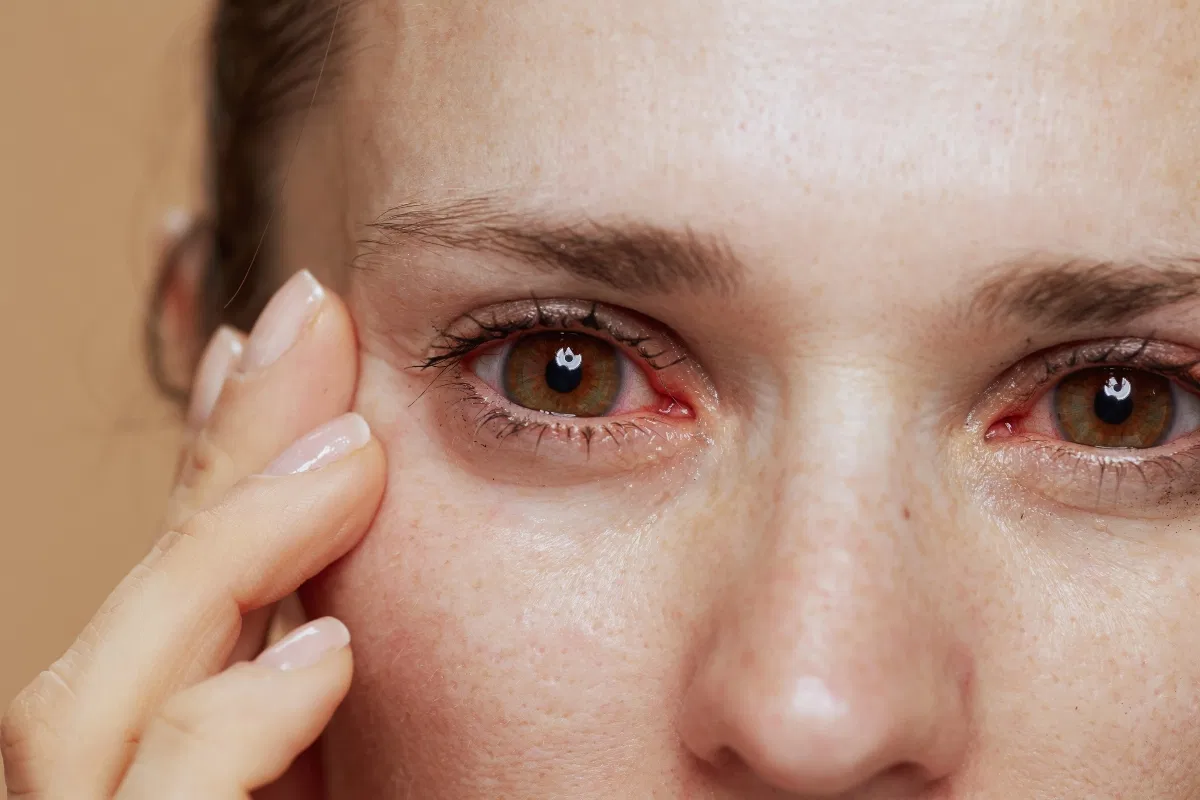
Eye pain is not a single sensation. It comes in distinct types that point toward very different causes, and recognizing the type is the first step toward understanding what is wrong.
Surface pain — also called ocular pain — originates on or near the front of the eye. It often feels like burning, stinging, scratchiness, or the sensation of a foreign object stuck under the eyelid. It typically gets worse when you blink.
Deep pain — called orbital pain — comes from inside or behind the eyeball. It tends to feel like aching, throbbing, or pressure. It is often associated with more serious conditions like glaucoma, uveitis, or optic neuritis.
Understanding which type you are experiencing helps narrow down the list of possible causes significantly before you even see a doctor.
Pain can originate in several structures of the eye and surrounding areas. Knowing the anatomy helps explain why different conditions feel different.
| Eye Structure | Location | Common Pain-Causing Conditions |
|---|---|---|
| Cornea | Clear front surface covering iris and pupil | Corneal abrasion, ulcer, infection, dry eye |
| Conjunctiva | Thin membrane over white of eye and inside eyelids | Conjunctivitis (pink eye), allergic reaction |
| Sclera | White outer layer of the eyeball | Scleritis, episcleritis |
| Uvea (iris, ciliary body, choroid) | Middle layer inside the eye | Uveitis, iritis |
| Optic nerve | Connects back of eye to brain | Optic neuritis, glaucoma damage |
| Orbit | Bony socket surrounding the eyeball | Orbital cellulitis, sinusitis pressure |
| Eyelids | Upper and lower skin folds | Stye, blepharitis, chalazion |
Most cases of eye pain fall into one of several well-defined categories. Here they are in order from most common to most serious.
Digital eye strain — formally called Computer Vision Syndrome (CVS) — is the single most common cause of everyday eye discomfort in 2026. Studies estimate it affects between 50% and 75% of people who use digital devices regularly.
When you stare at a screen, your blink rate drops by up to 60%. Tears evaporate faster than they are replaced, and the eyes are forced to constantly refocus and converge on a pixelated surface. The result is a dull, aching pain behind the eyes, often accompanied by headache, blurred vision, and neck tension.
The good news is that digital eye strain is rarely dangerous. It resolves with rest, proper breaks, and the use of artificial tear drops.
The 20-20-20 rule is the most evidence-supported prevention method: every 20 minutes, look at something 20 feet away for at least 20 seconds. This resets the focusing muscles and encourages blinking.
Dry eye is closely linked to digital eye strain but is a distinct condition. It occurs when the eye does not produce enough tears or when tears evaporate too quickly, leaving the eye surface inadequately lubricated.
The pain from dry eye is typically described as burning, stinging, or a persistent gritty sensation, as if sand is trapped under the eyelid. It often worsens in air-conditioned rooms, on airplanes, or after prolonged screen use.
Around 16 million Americans have been formally diagnosed with dry eye disease, and the number is rising with increased screen time and an aging population.
Treatment ranges from over-the-counter artificial tears to prescription anti-inflammatory drops, punctal plugs, and dietary omega-3 supplementation.
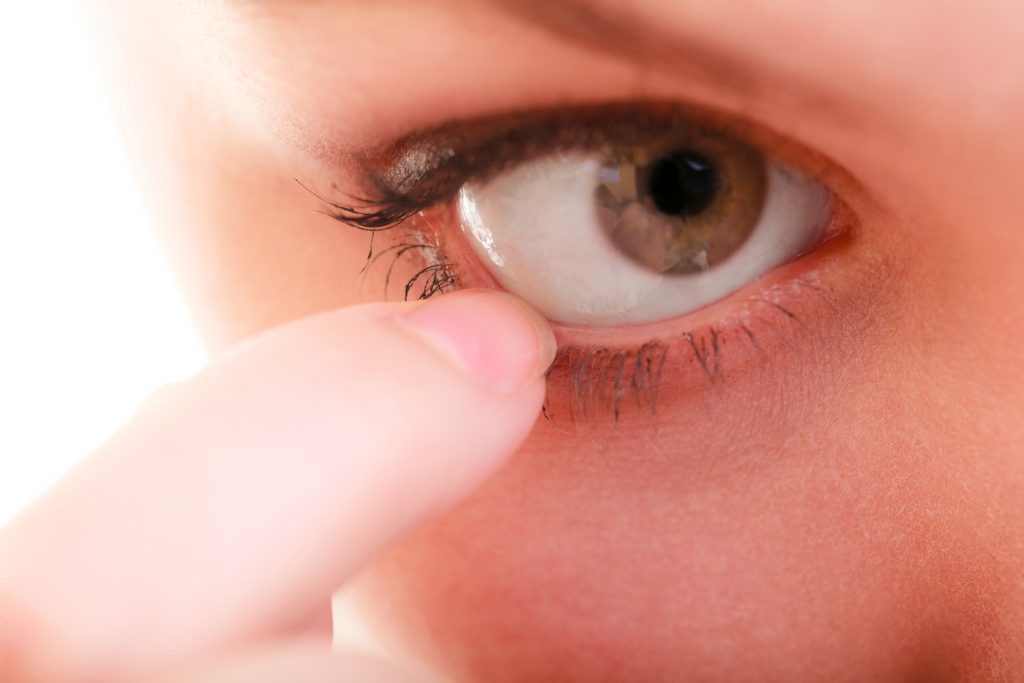
Conjunctivitis is inflammation of the conjunctiva — the thin, transparent membrane covering the white of the eye and lining the inside of the eyelids. It is one of the most frequently diagnosed eye conditions worldwide.
The pain or discomfort from pink eye is usually described as burning, itching, or a scratchy feeling. The affected eye becomes visibly red, and discharge is common — often causing the eye to crust shut in the morning.
| Type of Conjunctivitis | Cause | Key Symptom | Contagious? |
|---|---|---|---|
| Viral | Adenovirus, herpes virus | Watery discharge, both eyes often affected | Yes — highly |
| Bacterial | Staph, strep, chlamydia | Thick yellow-green discharge | Yes |
| Allergic | Pollen, pet dander, dust | Intense itching, both eyes | No |
| Chemical | Cleaning products, smoke, chlorine | Burning, redness | No |
Bacterial conjunctivitis is treated with antibiotic eye drops. Viral cases resolve on their own in 7–14 days. Allergic pink eye responds to antihistamine drops.
A corneal abrasion is a scratch on the cornea — the clear dome covering the front of the eye. Despite being tiny, even a microscopic scratch on the cornea causes intense pain because the cornea contains more nerve endings per square millimeter than almost any other tissue in the body.
Common causes include a fingernail catching the eye, a piece of dirt or grit, contact lens misuse, or rubbing the eye when a foreign particle is present. The pain is typically sharp, immediate, and worsens with every blink.
Other symptoms include excessive tearing, light sensitivity, and a constant feeling that something is stuck in the eye even after removal.
Most corneal abrasions heal within 24 to 72 hours with antibiotic ointment and sometimes a protective eye patch. They should always be seen by a doctor because an untreated corneal scratch can become infected and develop into a more serious corneal ulcer.
A foreign body — dust, a metal shaving, a wood chip, an insect, an eyelash — lodged on or in the eye causes immediate, intense surface pain. The irritation is usually localized and worsens dramatically with blinking.
Most superficial foreign bodies can be flushed out with clean water or saline. However, any object that appears embedded in the cornea or has penetrated the eye must be treated as a medical emergency. Never rub the eye or attempt to remove a deeply embedded object at home.
People who work with metal, wood, or machinery are at significantly higher risk. Eye protection should always be worn in these environments.
A stye (also called a hordeolum) is a painful, red lump on the edge or inside of the eyelid caused by a bacterial infection of an oil gland or eyelash follicle. It looks and feels like a small pimple and can make the entire eyelid tender and swollen.
A chalazion is a related but non-infectious condition — a blocked oil gland that creates a firm, often painless bump deeper in the eyelid. It tends to grow slowly and is usually less painful than a stye unless it becomes secondarily infected.
Both conditions are treated with warm compresses applied for 10 to 15 minutes several times a day. This softens the blocked material and encourages drainage. Most styes resolve within one to two weeks. Persistent chalazia may require steroid injections or minor surgical drainage.
Blepharitis is chronic inflammation of the eyelid margins, usually caused by a bacterial overgrowth or dysfunction of the oil-secreting (meibomian) glands along the eyelid edges. It is one of the most common eyelid disorders seen by eye doctors.
Symptoms include a burning or stinging sensation in the eyes, red and swollen eyelids, crusty flakes at the base of the eyelashes, and general discomfort that worsens in the morning. It can also contribute to dry eye disease.
Blepharitis is managed rather than cured. Daily warm compresses and eyelid scrubs — using diluted baby shampoo or commercial lid cleaners — reduce the bacterial load and unclog oil glands. In some cases, antibiotic ointments or oral tetracycline are prescribed.
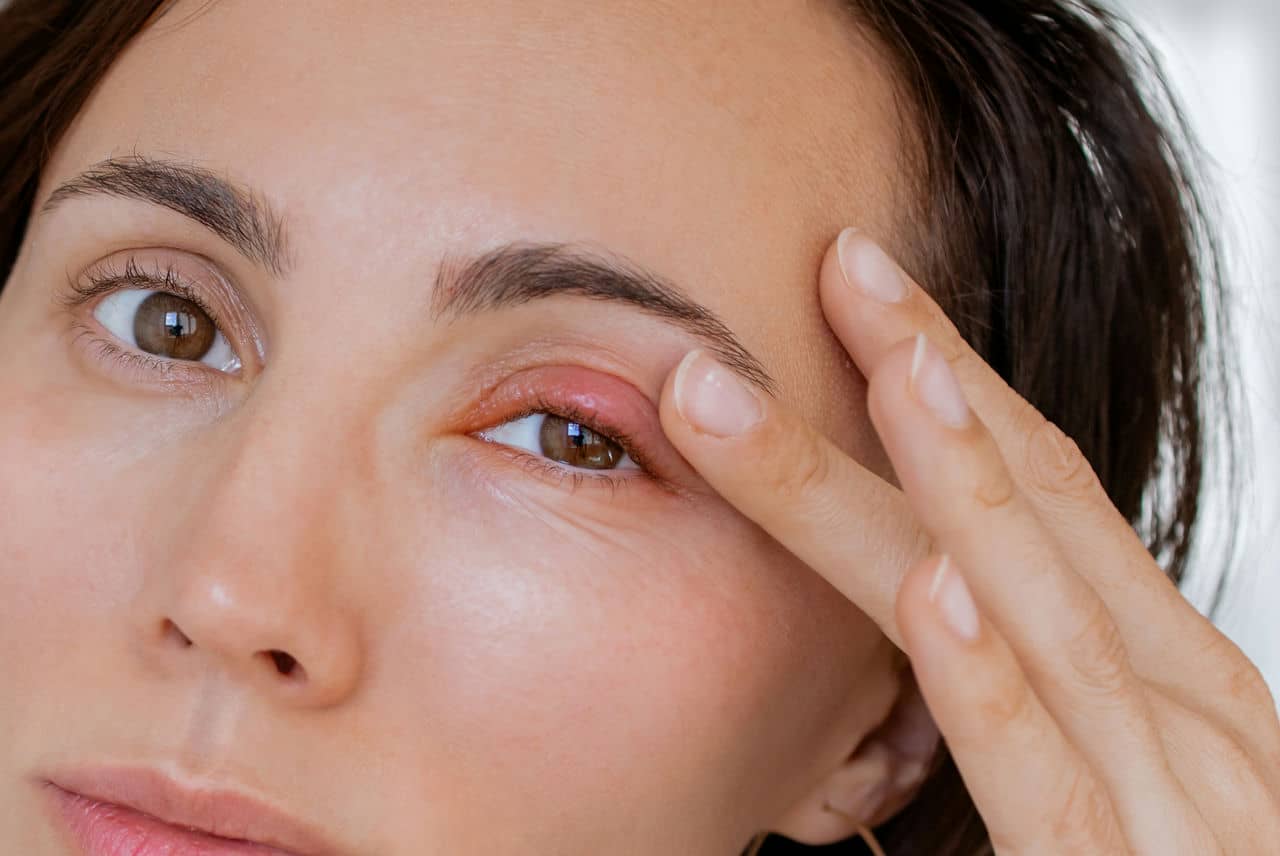
Uveitis is inflammation of the uvea — the middle layer of the eye that includes the iris, ciliary body, and choroid. When only the iris is affected, it is called iritis. This condition is more serious than surface-level eye problems and requires prompt treatment.
The pain from uveitis is typically deep, aching, and throbbing. It is accompanied by redness that concentrates around the colored iris (called ciliary flush), significant light sensitivity, blurred vision, and sometimes a noticeably smaller or irregular pupil.
Uveitis can result from autoimmune diseases (rheumatoid arthritis, ankylosing spondylitis, inflammatory bowel disease), infections (herpes, toxoplasmosis, syphilis), or trauma. In about 60% of cases, no specific cause is found.
Without treatment, uveitis can cause permanent vision damage. Treatment involves prescription corticosteroid eye drops, sometimes combined with oral medications or injections to control inflammation.
Acute angle-closure glaucoma is one of the most serious and time-sensitive eye emergencies in ophthalmology. It occurs when the drainage angle inside the eye suddenly becomes blocked, causing intraocular pressure to spike rapidly and dangerously.
The pain is severe and sudden — often described as excruciating pressure in and around the eye. It is almost always accompanied by nausea and vomiting, blurred vision, and the dramatic visual symptom of seeing halos or rainbow rings around lights.
This condition can cause permanent, irreversible blindness within hours if not treated immediately. If you or someone nearby develops sudden severe eye pain with nausea and haloes around lights, go to the emergency room immediately. Do not wait to see if it improves.
Normal (open-angle) glaucoma is different — it develops slowly and painlessly over years — but acute angle-closure is always an emergency.
Scleritis is inflammation of the sclera — the tough white outer wall of the eyeball. It causes a deep, boring pain that is often described as one of the most intense eye pains a person can experience. The pain frequently radiates to the forehead, temple, or jaw.
Approximately 50% of scleritis cases are associated with an underlying systemic inflammatory condition such as rheumatoid arthritis, lupus, or Wegener’s granulomatosis. It requires urgent evaluation and treatment, typically with oral NSAIDs or corticosteroids.
Episcleritis is a milder, more superficial form of the same process, affecting the layer just beneath the conjunctiva. It causes localized redness and mild discomfort but resolves more readily and is rarely linked to serious systemic disease.
Optic neuritis is inflammation of the optic nerve — the cable connecting the back of the eyeball to the brain. It is a particularly important condition to recognize because about 40% of people who develop optic neuritis will go on to develop multiple sclerosis over the following decade.
The pain from optic neuritis is characteristically behind the eye and worsens distinctly when the eye is moved from side to side. Over 90% of people with optic neuritis experience this movement-related pain as one of their first symptoms.
Vision loss is the other defining feature — typically affecting the center of the visual field and often causing a loss of color vision, particularly the ability to perceive red correctly.
Optic neuritis is treated with intravenous corticosteroids to speed recovery. An MRI of the brain and orbits is typically ordered to assess for signs of demyelinating disease.
Not all eye pain originates in the eye itself. The sinuses — hollow air-filled spaces in the bones surrounding the eyes — share nerve pathways with the eye socket. When sinuses become infected or inflamed, the pressure they generate can radiate directly into the eyes.
Sinusitis-related eye pain typically feels like a dull ache or heaviness behind and around the eyes. It is usually accompanied by nasal congestion, facial pressure, thick nasal discharge, and sometimes fever.
Pressing on the cheekbones or forehead worsens the pain. The eyes themselves are not red, discharge-free, and vision is unaffected — all clues that the problem is in the sinuses, not the eyes.
Treatment with antibiotics (for bacterial sinusitis), decongestants, and nasal corticosteroid sprays resolves the eye discomfort once the underlying infection clears.
Cluster headaches produce some of the most severe head and eye pain known in medicine. They cause sudden, excruciating pain in or behind one eye, often accompanied by a red, watery eye, a drooping eyelid, and a stuffy or runny nostril on the same side.
Attacks typically last 15 minutes to 3 hours and often occur at the same time each day — frequently waking people from sleep. The eye involvement can make people initially believe they are experiencing an eye emergency.
Migraines can also cause significant eye pain or pain behind the eyes, usually accompanied by light sensitivity, sound sensitivity, and nausea. Neither condition is an eye emergency, but both require their own specific treatment regimens.
Wearing contact lenses improperly is a significant and preventable cause of serious eye pain. Sleeping in lenses, wearing them beyond the recommended period, or failing to maintain proper hygiene dramatically increases the risk of corneal infections and abrasions.
Contact lens-related pain can range from mild irritation to the severe, vision-threatening pain of a corneal ulcer or microbial keratitis. The cornea requires oxygen from the air to stay healthy, and contact lenses restrict this access when worn for extended periods.
Any eye pain, redness, or discharge while wearing contact lenses should prompt immediate removal. If symptoms do not improve within a few hours of removing the lenses, see an eye doctor the same day.
Certain combinations of symptoms indicate that eye pain is a medical emergency requiring immediate care. Do not attempt home remedies or wait for a scheduled appointment if any of the following are present.
| Warning Sign | Possible Cause | Action |
|---|---|---|
| Sudden severe eye pain + nausea + halos around lights | Acute angle-closure glaucoma | Emergency room immediately |
| Sudden vision loss in one eye | Retinal detachment, retinal artery occlusion, optic neuritis | Emergency room immediately |
| Eye pain after chemical exposure | Chemical burn | Flush 15–20 min then ER |
| Penetrating object in eye | Eye perforation | ER — do not remove object |
| Eye pain + fever + eyelid swelling + vision changes | Orbital cellulitis | Emergency room immediately |
| Severe pain + pupil changes + light sensitivity | Uveitis or acute glaucoma | Urgent same-day care |
| Eye pain + pain when moving eyes + vision loss | Optic neuritis | Same-day ophthalmology |
| Eye pain in contact lens wearer | Corneal infection | Same-day eye doctor |
| Pain + flashing lights + curtain across vision | Retinal detachment | Emergency room immediately |
| Persistent eye pain not improving after 48 hours | Multiple possible causes | Schedule eye appointment |
The character of the pain offers important diagnostic clues even before an examination.
Sharp, stabbing pain that worsens with blinking suggests a corneal problem — abrasion, foreign body, ulcer, or dry eye at its most acute.
Deep, aching, throbbing pain behind the eye suggests a serious intraocular condition — glaucoma, uveitis, scleritis, or optic neuritis.
Burning or stinging on the surface suggests dry eye, allergic conjunctivitis, or chemical irritation.
Pain that worsens when moving the eye is the hallmark of optic neuritis and should prompt an urgent evaluation.
Pressure or fullness around the eye without surface redness suggests sinusitis or, if severe and sudden, acute glaucoma.
Pain only with bright light (photophobia) suggests corneal involvement or uveitis.
An eye doctor uses several tools and techniques to find the cause of eye pain:
Visual acuity testing — measuring how clearly you can see — is always the first step. A sudden drop in vision with pain changes the urgency of the situation immediately.
Slit-lamp examination uses magnification and a narrow beam of light to examine the cornea, anterior chamber, iris, and lens in fine detail.
Fluorescein staining applies a fluorescent dye to the eye surface that reveals corneal scratches, ulcers, and foreign bodies that are invisible to the naked eye under normal light.
Tonometry measures intraocular pressure. Elevated pressure points toward glaucoma and is a critical test in any patient with acute eye pain.
Ophthalmoscopy examines the retina and optic nerve at the back of the eye.
CT or MRI imaging is ordered when orbital cellulitis, optic neuritis, or sinusitis is suspected and when pain is accompanied by eye movement abnormalities.
Treatment is always directed at the underlying cause. There is no one-size-fits-all approach to eye pain, which is why professional diagnosis matters so much.
| Cause | Primary Treatment | Additional Options |
|---|---|---|
| Digital eye strain | 20-20-20 rule, artificial tears, screen breaks | Blue light glasses, ergonomic adjustments |
| Dry eye | Preservative-free artificial tears | Prescription cyclosporine drops, punctal plugs |
| Bacterial conjunctivitis | Antibiotic eye drops | Warm compresses |
| Corneal abrasion | Antibiotic ointment, protective patch | Lubricating drops |
| Stye | Warm compresses | Antibiotic drops, incision if needed |
| Uveitis | Corticosteroid eye drops | Oral steroids, immunosuppressants |
| Acute angle-closure glaucoma | Emergency laser treatment (iridotomy) | Pressure-lowering IV medication |
| Scleritis | Oral NSAIDs, corticosteroids | Immunosuppressive therapy |
| Optic neuritis | IV corticosteroids | MRI, neurology referral |
| Sinusitis | Antibiotics, decongestants | Nasal corticosteroid sprays |
| Contact lens infection | Antibiotic drops, remove lenses | Antifungal or antiviral drops if indicated |
Some self-care measures are safe for mild eye discomfort while waiting to be seen or managing a minor issue.
Safe to try at home:
Never do these:
This is almost certainly digital eye strain. Take a break, use preservative-free artificial tears, blink consciously, and apply the 20-20-20 rule. If pain persists beyond 48 hours of proper screen hygiene, book an eye appointment.
This is the classic sign of optic neuritis. It is not something to manage at home. See an eye doctor or visit urgent care the same day. An MRI is typically required.
This combination points to conjunctivitis. If bacterial (thick, colored discharge), antibiotic drops are usually prescribed. If you wear contact lenses and develop this combination, treat it as urgent.
Nighttime or early morning eye pain in a patient with no other symptoms often points to dry eye, as tear production slows during sleep. However, if the pain is severe and accompanied by halos, nausea, or vision changes, treat it as a possible glaucoma emergency.
Any blunt or penetrating trauma to the eye deserves professional evaluation, even if the eye appears normal afterward. Internal bleeding, lens dislocation, and retinal tears can all occur without obvious external signs and become serious if untreated.
Most non-emergency eye pain is preventable with consistent, basic eye care habits.
Follow the 20-20-20 rule every day when using screens. It takes 20 seconds and costs nothing.
Stay hydrated. Adequate water intake supports healthy tear film production. Dehydration worsens dry eye.
Wear UV-protective sunglasses outdoors. UV radiation contributes to long-term eye damage and can cause painful photokeratitis (sunburn of the cornea) after intense sun exposure.
Use proper eye protection at work. Foreign body injuries are among the most preventable causes of eye pain. Safety glasses appropriate for the specific hazard prevent the vast majority of workplace eye injuries.
Follow contact lens hygiene strictly. Never sleep in daily lenses. Replace lenses on schedule. Wash hands before handling. Use only recommended solutions.
See an eye doctor annually. Many conditions that cause eye pain — including early glaucoma and early dry eye — are caught and managed more easily with routine examination.
Avoid rubbing the eyes. Rubbing spreads bacteria and can cause or worsen a corneal abrasion.
Pain that worsens specifically with eye movement is the hallmark symptom of optic neuritis — inflammation of the optic nerve. This requires same-day evaluation by an eye doctor, not home treatment.
Deep pain with no visible redness can indicate uveitis, scleritis, optic neuritis, or referred pain from sinusitis or migraine. A normal-looking eye does not rule out serious internal conditions — see a doctor for any persistent deep eye pain.
Yes. Sinus infections create pressure in the air-filled cavities surrounding the eye socket, which radiates pain into and around the eye. The eye itself is not infected, and vision is typically unaffected.
Screen use causes digital eye strain by reducing blink rate up to 60%, which dries the eye surface and strains the focusing muscles. The result is aching behind and around the eyes. The 20-20-20 rule and artificial tears provide reliable relief.
Yes, if it is accompanied by nausea, halos around lights, blurred vision, or sudden vision loss. These symptoms suggest acute angle-closure glaucoma, which can cause permanent blindness within hours. Go to the emergency room immediately.
A gritty, foreign body sensation is most often caused by a corneal abrasion, dry eye, blepharitis, or an actual foreign particle on the eye surface. If flushing with clean water does not relieve it within 30 minutes, see an eye doctor.
Yes. Migraines frequently cause pain behind one or both eyes, often with light sensitivity and nausea. Cluster headaches cause even more intense eye pain, typically in or behind one eye, with redness and tearing on the same side.
Mild tenderness when pressing on the eye can reflect sinusitis, scleritis, or superficial inflammation. Significant pain on palpation — especially with fever or eyelid swelling — can indicate orbital cellulitis, which is a serious infection requiring urgent treatment.
Contact lenses reduce corneal oxygen supply and can cause abrasions, infections, or chemical irritation from lens solutions. Remove the lenses immediately when experiencing any eye pain, and see an eye doctor the same day if discomfort does not resolve within a few hours.
Go immediately if you have sudden severe eye pain with nausea, halos, or vision loss (possible glaucoma); sudden vision loss in one eye; chemical splash; a penetrating object in the eye; or eye pain with fever, swollen eyelids, and inability to move the eye (possible orbital cellulitis).
Why does my eyeball hurt? The answer spans a remarkable range — from the mundane fatigue of a long screen day to rare but sight-threatening emergencies like acute angle-closure glaucoma.
Most eye pain is benign and resolves with rest, hydration, artificial tears, or the simple removal of an irritant.
But some causes demand immediate action, and the difference between early treatment and delayed care can be the difference between full vision recovery and permanent damage.
The most important rule is this: never dismiss eye pain that is severe, sudden, worsening, or paired with vision changes.
Your eyes have almost no tolerance for delayed care in true emergencies.
Whether the cause is a scratched cornea, inflamed sinuses, optic nerve inflammation, or dangerous pressure buildup, the right diagnosis starts with taking the symptom seriously.
When in doubt, see an eye doctor or go to the emergency room.