
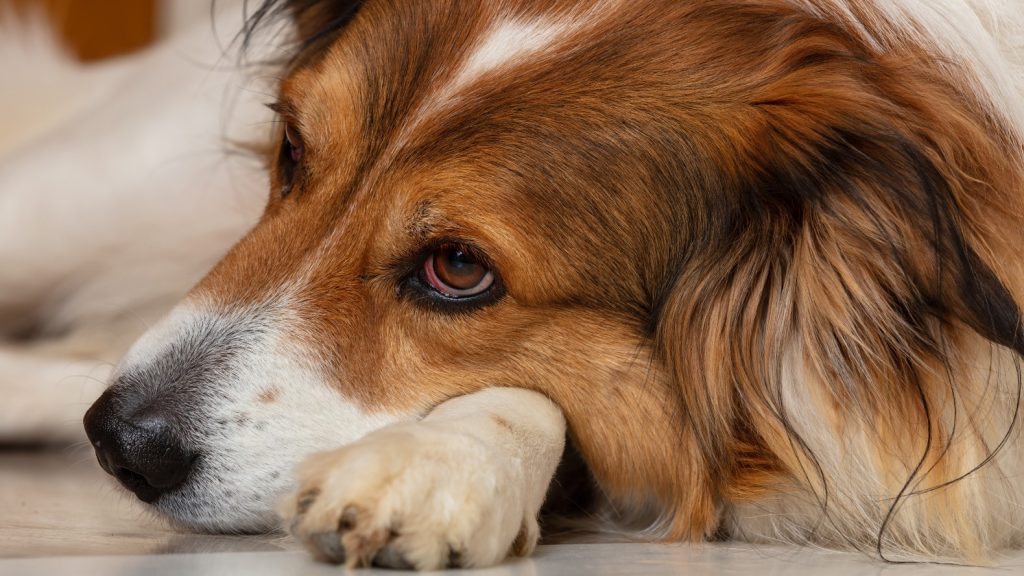
Why are my dog’s eyes red — this is one of the most common and most worried-about questions pet owners ask in 2026. Red eyes in dogs can mean anything from a mild seasonal allergy to a serious condition like glaucoma or a corneal ulcer that threatens your dog’s vision.
Some cases clear up on their own with simple home care. Others need a vet within hours. Knowing the difference could save your dog’s eyesight.
When pet owners say their dog’s eyes are red, they usually mean one of several things. Understanding which type of redness you are seeing is the first step toward figuring out the cause.
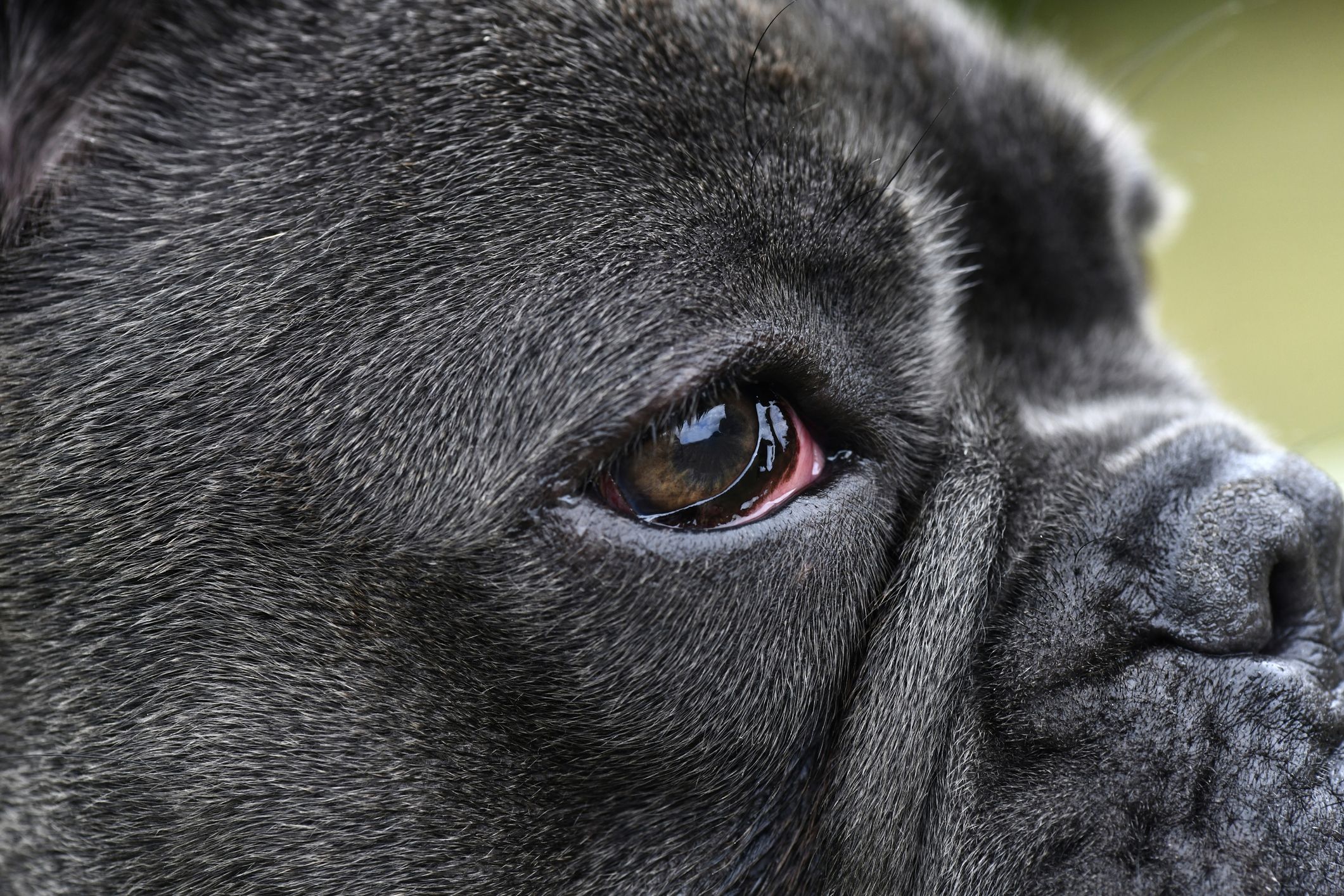
The sclera — the white of the eye — may appear pink or blood-red with visible, enlarged blood vessels. The conjunctiva — the tissue lining the inner eyelids — may look swollen and inflamed. In some cases, the redness is actually blood pooled inside the eye, which looks very different from surface redness.
Redness limited to one eye often points to an infection, injury, or a localized condition. Redness in both eyes at the same time is more likely to be an allergy or a systemic illness affecting the whole body.
Here is a full overview before diving into each cause in detail.
| Cause | One or Both Eyes | Urgency | Common Breeds Affected |
|---|---|---|---|
| Allergies | Usually both | Low-Medium | All breeds |
| Conjunctivitis (pink eye) | One or both | Medium | All breeds |
| Cherry eye | Usually one | Medium | Bulldogs, Beagles, Boxers |
| Corneal ulcer | Usually one | High | Pugs, Boxers, Shih Tzus |
| Dry eye (KCS) | Both | Medium-High | Cavaliers, Bulldogs, Cocker Spaniels |
| Glaucoma | Usually one | Very High / Emergency | Cocker Spaniels, Basset Hounds, Huskies |
| Uveitis | One or both | High | All breeds |
| Trauma or injury | Usually one | High | All breeds |
| Foreign body in eye | Usually one | Medium-High | Hunting dogs, outdoor dogs |
| Entropion / Ectropion | Usually both | Medium | Shar Pei, Basset Hound, Chow Chow |
| Subconjunctival hemorrhage | Usually one | Medium | All breeds |
| Environmental irritants | Both | Low | All breeds |
Allergies are by far the most frequent cause of red eyes in dogs. Just like humans, dogs react to pollen, dust mites, mold spores, and dander with irritated, watery, red eyes.
Some dogs have seasonal allergies that flare in spring and fall. Others deal with year-round allergies triggered by food, household dust, or specific plants. You will usually see redness in both eyes at the same time, along with itching, pawing at the face, and sneezing.
The redness from allergies tends to come and go. It often improves when the dog is indoors and worsens after outdoor time during high-pollen seasons.
Treatment: Mild allergy-related redness can be soothed with a vet-approved saline eyewash or artificial tear drops to flush out allergens. Keep your dog away from known triggers. For moderate to severe allergy symptoms, vets commonly prescribe antihistamines or corticosteroid eye drops. Long-term allergy management may include allergy testing and immunotherapy.
Conjunctivitis — commonly called pink eye — is inflammation of the conjunctiva, the membrane lining the inside of the eyelids. It is one of the most frequently diagnosed eye conditions in dogs.
The conjunctiva becomes red, puffy, and irritated. You will often see discharge from the eye that can be watery, cloudy, yellow, or greenish depending on the cause. Dogs with conjunctivitis frequently squint, blink excessively, and paw at their face.
Conjunctivitis in dogs can be caused by bacterial infections, viral infections (including canine distemper virus and canine herpesvirus), allergies, irritants, trauma, or underlying eye conditions like dry eye or entropion. It may affect one or both eyes.
Treatment: Treatment depends on the cause. Bacterial conjunctivitis is treated with antibiotic eye drops or ointment — often tobramycin or neomycin-based formulas. Viral cases are managed with supportive care. Allergic conjunctivitis responds to antihistamines or steroid eye drops. Regular gentle cleaning of discharge from around the eye with a vet-approved solution is always recommended. Do not use human eye drops without veterinary guidance.
Cherry eye is a very recognizable condition where a small gland inside the dog’s third eyelid protrudes and becomes visible as a pink or red fleshy mass in the inner corner of the eye.
This gland — the lacrimal gland of the third eyelid — normally sits hidden beneath the nictitating membrane. When the connective tissue holding it in place weakens, the gland pops out of position. It looks alarming, but it is not immediately painful in mild cases.
Cherry eye is most common in dogs under two years old. It is more prevalent in certain breeds due to their eye anatomy and genetic predisposition.
Breeds most prone to cherry eye: Bulldogs, Boston Terriers, Shih Tzus, Lhasa Apsos, Beagles, Boxers, Cocker Spaniels, Saint Bernards, and Poodles.
Treatment: Mild cases may respond temporarily to anti-inflammatory eye drops. However, the standard and most effective treatment is surgery to reposition and anchor the gland back in place. Removing the gland is now considered outdated practice because it leads to dry eye (KCS) later in life. Without treatment, the exposed gland becomes irritated, infected, and inflamed — and the dog has a significantly higher risk of developing dry eye. Address cherry eye promptly to preserve long-term tear production.
A corneal ulcer is an open sore on the surface of the cornea — the clear front window of the eye. It is painful, and it causes visible redness along with squinting, tearing, and sometimes a cloudy or bluish appearance on the eye surface.
Corneal ulcers are commonly caused by trauma — a scratch from a twig, a dog’s own paw, another animal, grass seeds, or shampoo entering the eye during a bath. They can also result from bacterial or viral infections, dry eye, or abnormal eyelashes rubbing on the cornea.
Dogs with flat, prominent eyes — like Pugs, Boxers, French Bulldogs, and Shih Tzus — are especially prone to corneal injuries because their eyes protrude more and have less natural protection.
Symptoms to watch for: Redness, squinting, pawing at the eye, excessive tearing, cloudiness or bluish tint on the cornea, reluctance to open the eye in bright light.
Treatment: Superficial corneal ulcers usually heal within a few days with antibiotic eye drops to prevent secondary infection. An Elizabethan collar (cone) is essential to prevent the dog from rubbing the eye and worsening the ulcer. Deep or infected ulcers are a medical emergency. Bacteria can penetrate deeper layers of the cornea and cause the eye to rupture if not treated aggressively. Severe cases may require surgical grafting. Never delay veterinary care for a suspected corneal ulcer.
Dry eye — medically known as keratoconjunctivitis sicca (KCS) — happens when the tear glands do not produce enough tears to keep the eye surface lubricated.
Tears do more than keep the eye moist. They carry oxygen and nutrients to the cornea, flush away debris, and maintain a healthy balance of bacteria on the eye surface. Without enough tears, the cornea becomes dry, inflamed, and vulnerable to infection and scarring.
Signs of KCS include redness, a thick sticky or greenish-yellow discharge (the body’s attempt to compensate for the lack of tears), cloudiness, and a dull appearance to the eyes. The condition is usually autoimmune — the immune system attacks and destroys the tear-producing glands.
Breeds most affected: Cavalier King Charles Spaniels, English Bulldogs, West Highland White Terriers, Shih Tzus, Cocker Spaniels, Boston Terriers, and Lhasa Apsos.
Treatment: KCS requires lifelong management. The most effective treatments are topical medications — cyclosporine or tacrolimus — that suppress the immune attack on the tear glands and stimulate tear production. Artificial tear lubricants are used frequently throughout the day to keep the eye surface moist. If medications are ineffective, a surgical procedure called parotid duct transposition — which reroutes saliva to the eye — may be considered. Early treatment is critical to prevent permanent corneal scarring and vision loss.
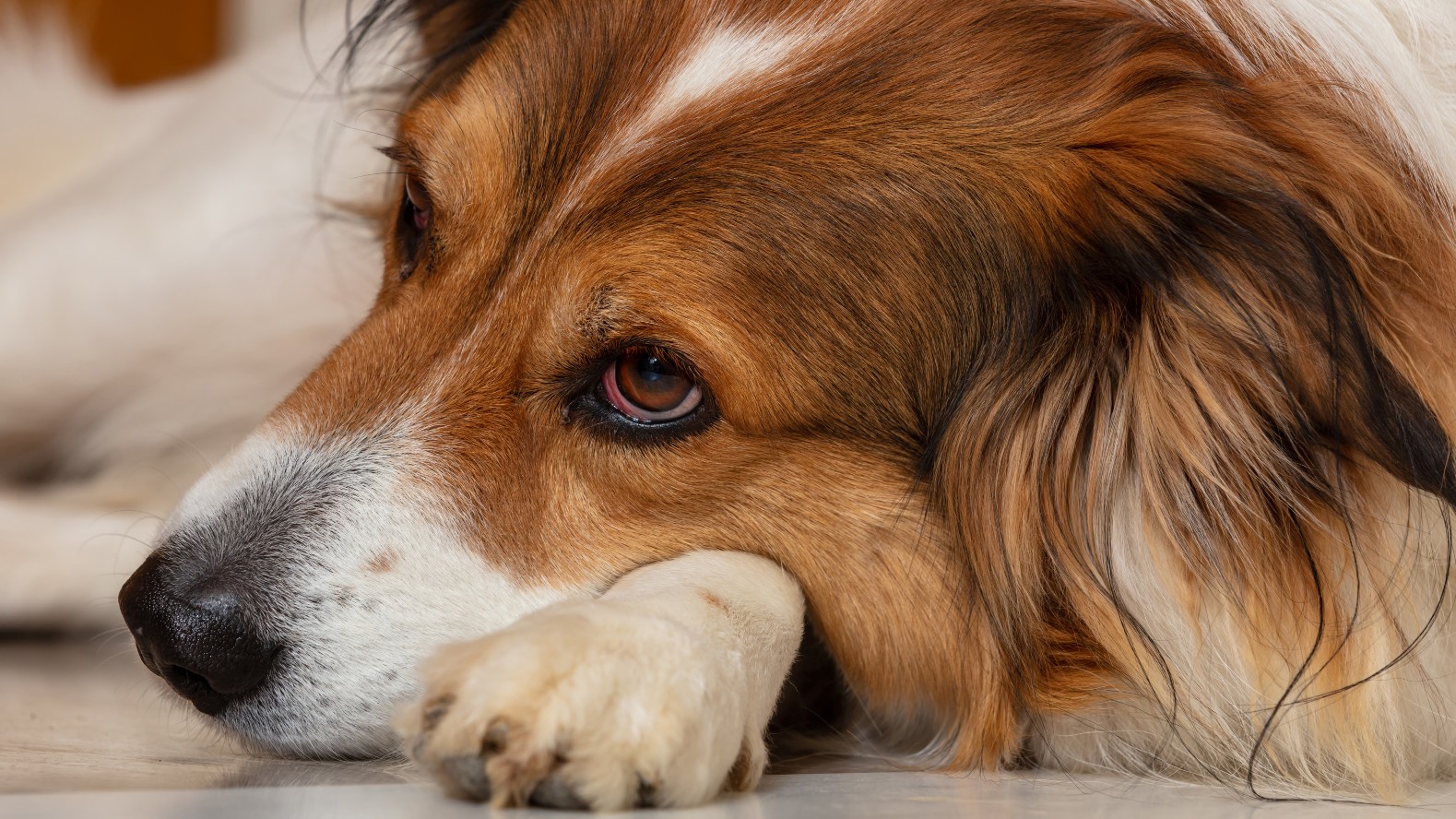
Glaucoma is one of the most serious and urgent causes of red eyes in dogs. It is caused by a dangerous buildup of fluid pressure inside the eye — known as intraocular pressure (IOP) — that damages the optic nerve and retina.
In a healthy eye, a fluid called aqueous humor is produced and drained at a balanced rate. When drainage is impaired, pressure builds. This pressure is destructive and can cause permanent blindness within 24 to 48 hours in acute cases.
Glaucoma can be primary — caused by inherited genetic abnormalities in the eye’s drainage angle — or secondary — resulting from uveitis, trauma, cataracts, or tumors blocking fluid drainage.
Signs of glaucoma in dogs:
The white of the eye (sclera) shows large, angry, and tortuous blood vessels. The cornea may appear cloudy, hazy, or steamy blue-white. The affected eye may look visibly larger or more prominent than the other. The pupil may be dilated and unresponsive to light. The dog may squint severely, rub the face on the floor, become head-shy when touched, or refuse to eat hard food because chewing vibrates a painful head. Vision loss may be sudden.
Breeds at highest risk for primary glaucoma:
| Breed Group | Specific Breeds |
|---|---|
| Terriers | Boston Terriers, Wire Fox Terriers, Jack Russell Terriers, Cairn Terriers |
| Hounds | Basset Hounds, Beagles |
| Spaniels | American Cocker Spaniels, Cocker Spaniels |
| Working/Nordic | Siberian Huskies, Chow Chows, Shar Peis |
| Other | Norwegian Elkhounds, Dalmatians, Miniature Poodles, Border Collies |
Treatment: Glaucoma is a veterinary emergency. Eye pressure above 40–50 mmHg requires immediate treatment. Prostaglandin analogue eye drops (latanoprost, travoprost) can bring pressure down rapidly. Carbonic anhydrase inhibitors (dorzolamide, brinzolamide) and beta blockers (timolol) are also used. Long-term management requires daily medication. Surgical options include cyclocryotherapy — which destroys fluid-producing cells using cold temperatures — and in advanced cases, removal of the eye is necessary to relieve pain when vision is already lost. Annual eye pressure screening is recommended for all at-risk breeds starting at age two.
Uveitis is inflammation of the uvea — the interior structures of the eye, including the iris, ciliary body, and choroid. It is painful and causes the eye to appear red, often with a cloudy or bluish appearance.
Dogs with uveitis are frequently photophobic — they avoid bright light and squint. The pupil may appear an abnormal shape or size due to tissues sticking together inside the eye.
Uveitis can result from infections (bacterial, viral, fungal, or tick-borne diseases), trauma, cataracts, immune disorders, tumors, or systemic diseases including diabetes and cancer. It is not always possible to find a specific underlying cause.
Treatment: Uveitis is managed with topical and oral anti-inflammatory medications — typically corticosteroid eye drops and oral NSAIDs or steroids. The underlying cause must be identified and treated to prevent recurrence. Untreated uveitis leads to glaucoma, cataracts, lens luxation, and blindness. Regular follow-up appointments are essential to ensure the treatment is working.
Trauma to the eye is a common cause of sudden, severe redness — especially in active, outdoor, or hunting dogs. Dogs can scratch their eye on grass, tree branches, or thorns. They can injure an eye during play with other dogs, or take a hit during rough activity.
A foreign body — grass seed, sand, dust, an insect, or a small piece of debris — trapped under the eyelid or on the cornea causes immediate irritation, tearing, blinking, and redness.
Shampoo splashing into the eye during a bath is another surprisingly common cause, especially in dogs that resist bathing.
Signs of trauma: Sudden onset of redness, squinting, pawing at the eye, excessive tearing, visible swelling, bleeding around or inside the eye.
Treatment: If you can see a foreign body and it is on the outer surface, flush the eye gently with sterile saline or artificial tears. Do not attempt to remove anything embedded in the eye or beneath the eyelid with fingers or tools. Use a cone to prevent the dog from rubbing the eye. See a vet for any trauma case involving squinting, persistent redness, or suspected corneal damage. Bleeding inside the eye — hyphema — always requires emergency veterinary care.
Entropion is a condition where the eyelid rolls inward, causing the eyelashes and skin to rub directly against the cornea. This chronic friction causes constant irritation, redness, corneal scarring, ulcers, and significant pain.
Ectropion is the opposite — the lower eyelid droops outward, exposing the conjunctiva to the environment. This leads to chronic inflammation, dryness, and a red, irritated eye.
Both conditions are largely genetic and are strongly associated with specific breeds.
Breeds prone to entropion: Shar Pei, Chow Chow, Labrador Retriever, Rottweiler, Saint Bernard, Bulldog.
Breeds prone to ectropion: Basset Hound, Bloodhound, Saint Bernard, Cocker Spaniel, Great Dane.
Treatment: Both conditions are corrected surgically. Entropion surgery repositions the eyelid to prevent contact with the cornea. Ectropion surgery tightens the lower lid. Surgery is usually highly effective, but may need to be staged in young dogs as the face and skull continue to grow. Anti-inflammatory and antibiotic drops are used before and after surgery to manage infection and inflammation.
Household irritants cause red, watery, itchy eyes in dogs just as they do in humans. Cigarette smoke, campfire smoke, fumes from cleaning products, air fresheners, dust, and certain pollens all irritate the delicate surface of the eye.
This type of redness typically affects both eyes at the same time and improves as soon as the dog is moved away from the irritant source. There is usually no discharge, squinting, or sign of pain beyond mild blinking.
Treatment: Remove the irritant source. Flush the eyes gently with a pet-safe saline wash or artificial tear drops. Improve ventilation in the home. If redness persists after the irritant is removed, a vet visit is warranted to rule out an underlying sensitivity or early allergy.
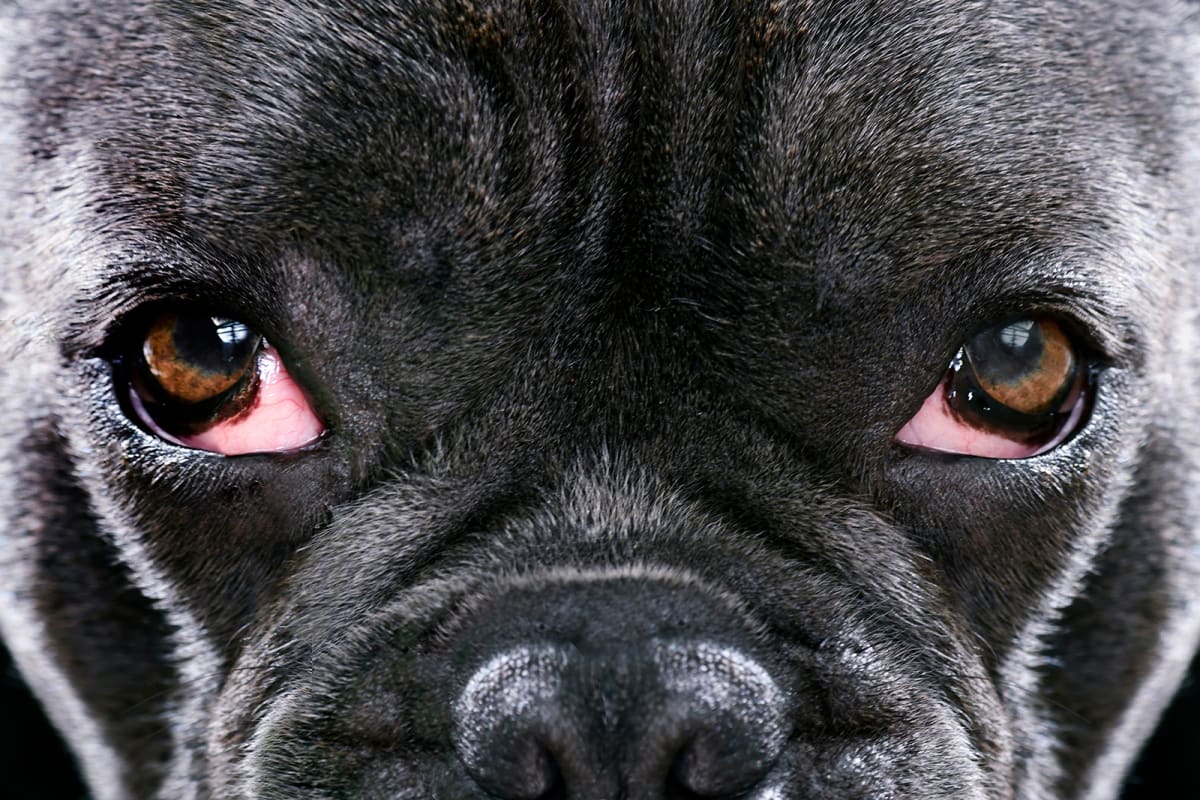
A subconjunctival hemorrhage is bleeding beneath the conjunctiva — the clear membrane covering the white of the eye. It looks alarming because the entire white section of one eye can appear bright red or dark red with no visible blood vessels.
This type of redness has a specific appearance: solid red, not pink with visible vessels, usually in one eye. It can be caused by trauma, straining, coughing fits, vomiting, hypertension, or blood clotting disorders.
Treatment: Minor subconjunctival hemorrhages often resolve on their own within 1–2 weeks, similar to a bruise. However, because they can indicate systemic conditions like high blood pressure or a clotting problem, all cases of blood pooling inside the eye should be evaluated by a vet.
Not every case of red eyes requires an emergency vet visit, but some absolutely do. Use this guide to decide how quickly to act.
| Symptom Combination | Urgency | Action |
|---|---|---|
| Mild redness, both eyes, no other symptoms | Low | Monitor, flush with saline, vet visit if no improvement in 24–48 hrs |
| Redness + watery discharge, both eyes | Low-Medium | Vet appointment within 24 hrs |
| Redness + yellow/green discharge, squinting | Medium | Vet appointment same day |
| Redness + pawing at eye + squinting | Medium-High | Vet within hours |
| Redness + cloudy or blue cornea | High | Emergency vet same day |
| Redness + enlarged or bulging eye | Emergency | Emergency vet immediately |
| Redness + visible blood inside eye | Emergency | Emergency vet immediately |
| Redness + sudden squinting won’t open eye | Emergency | Emergency vet immediately |
| Redness + apparent vision loss | Emergency | Emergency vet immediately |
| Redness after trauma | High | Emergency vet same day |
There are safe steps you can take at home while waiting for your vet appointment or to manage mild cases.
Safe home actions:
Use a sterile saline solution or a vet-approved pet eyewash to gently flush debris and irritants from the eye. Use clean cotton balls to wipe discharge from around the eye — always wipe away from the eye, never toward it. Apply a cold compress with a soft, clean cloth to reduce mild inflammation — hold gently near the eye for a few minutes. Put an Elizabethan collar on your dog to prevent pawing or rubbing at the eye. Remove obvious irritants from the environment — smoke, dust, strong chemical sprays, air fresheners.
What you must not do at home:
Do not use human eye drops — including Visine — without veterinary guidance. Many human products contain ingredients toxic or irritating to dogs. Do not attempt to remove anything embedded in or under the eyelid. Do not apply any pressure to the eye. Do not delay seeking veterinary care if the dog is squinting, in pain, showing cloudiness, or the redness is severe or worsening.
When you bring your dog in for red eyes, the vet will conduct a thorough examination. Here is what to expect.
Standard diagnostic steps:
Physical examination — checking for visible swelling, discharge, injury, and eyelid position. Schirmer tear test — a small strip placed inside the lower eyelid measures tear production in 60 seconds. This diagnoses dry eye. Fluorescein staining — a special orange dye applied to the eye surface glows under UV light to reveal corneal ulcers. Tonometry — a small instrument gently pressed against the cornea measures intraocular pressure. This diagnoses or rules out glaucoma. Nasolacrimal duct flushing — checks if tear ducts are blocked. Conjunctival cytology or culture — a swab of the eye surface is examined to identify bacteria, viruses, or cells. Blood tests — ordered if a systemic condition like an autoimmune disease or tick-borne illness is suspected.
| Condition | Primary Treatment | Additional Notes |
|---|---|---|
| Allergies | Antihistamines, steroid eye drops | Identify and reduce allergen exposure |
| Bacterial conjunctivitis | Antibiotic eye drops/ointment | Usually clears in 5–10 days |
| Viral conjunctivitis | Supportive care, lubricants | Address underlying infection |
| Cherry eye | Surgery (pocket or tacking technique) | Early treatment prevents dry eye |
| Corneal ulcer | Antibiotic drops, cone, pain relief | Never delay — can cause rupture |
| Dry eye (KCS) | Cyclosporine or tacrolimus drops + lubricants | Lifelong management required |
| Glaucoma | Pressure-lowering drops, possible surgery | Emergency if acute onset |
| Uveitis | Anti-inflammatories topical and oral | Find and treat underlying cause |
| Trauma | Saline flush, cone, antibiotic drops, possible surgery | Assess for corneal damage |
| Entropion / Ectropion | Surgical eyelid correction | Often breed-specific |
| Environmental irritants | Remove irritant, saline flush | Monitor; vet if persists |
| Subconjunctival hemorrhage | Monitor; investigate underlying cause | Check blood pressure, clotting |
Certain breeds face significantly higher lifetime risk of eye conditions due to their anatomy and genetics. If you own one of these breeds, proactive annual eye exams are essential.
Brachycephalic breeds (flat-faced): Pugs, French Bulldogs, English Bulldogs, Shih Tzus, Boston Terriers, Boxers, Pekingese. These dogs have prominent eyes with shallow sockets, making them more vulnerable to corneal trauma, dry eye, and cherry eye.
Heavy-skinned or droopy-faced breeds: Shar Pei, Basset Hound, Bloodhound, Chow Chow, Saint Bernard. These breeds are predisposed to entropion and ectropion due to excess skin around the face.
Breeds with elevated glaucoma risk: American Cocker Spaniels, Basset Hounds, Siberian Huskies, Wire Fox Terriers, Border Collies, Dalmatians, Norwegian Elkhounds.
Breeds prone to KCS (dry eye): Cavalier King Charles Spaniels, West Highland White Terriers, English Bulldogs, Cocker Spaniels.
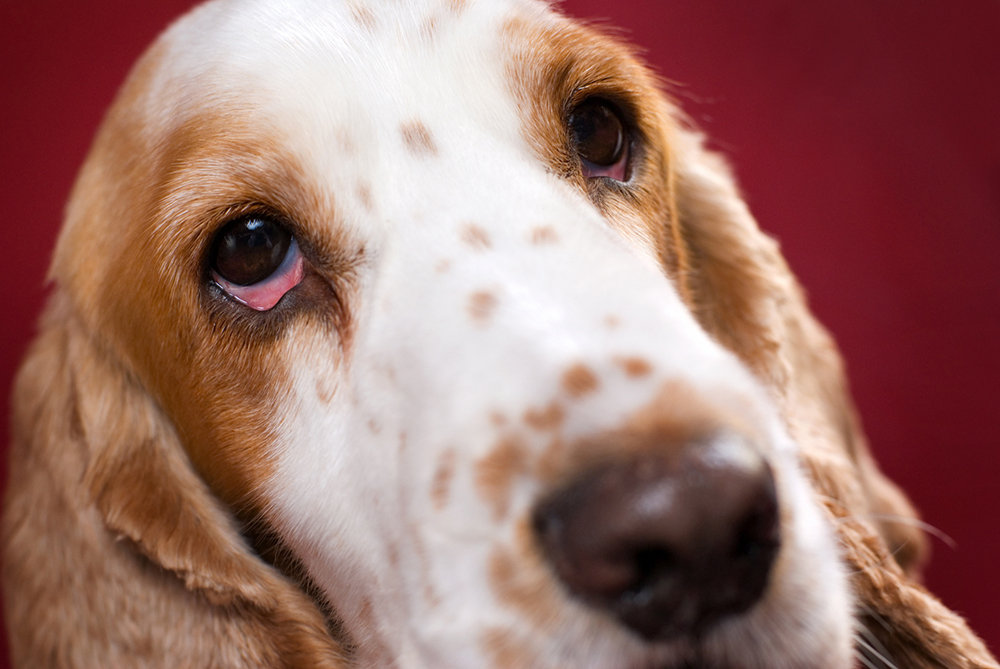
Prevention is always easier and cheaper than treatment. Good habits protect your dog’s eye health long-term.
Keep the hair around your dog’s eyes trimmed regularly to prevent irritation from stray hairs rubbing against the cornea. This is especially important in breeds like Shih Tzus, Maltese, and Lhasa Apsos.
Clean around your dog’s eyes daily using a vet-approved eye wipe or damp cotton ball. Wipe away from the eye in a gentle, outward motion. This removes discharge and prevents buildup that can harbor bacteria.
Schedule annual vet checkups that include an eye examination. Dogs over seven years old — and all at-risk breeds — benefit from annual intraocular pressure checks to catch glaucoma early.
During outdoor activities, protect your dog’s eyes from grass seeds, thorns, and dust. After hikes through dense vegetation, check the eyes for debris.
During baths, be careful to keep shampoo out of the eyes. Use a washcloth around the face rather than pouring water over the head.
Address cherry eye or eyelid abnormalities promptly — early surgical correction prevents more serious conditions from developing.
Maintain up-to-date vaccinations against canine distemper virus, which can cause severe conjunctivitis and systemic illness.
Sudden red eyes in dogs most often indicate trauma, a foreign object in the eye, or acute glaucoma. If accompanied by squinting, cloudiness, or an enlarged eye, treat it as an emergency and seek veterinary care immediately.
No. Most human eye drops — including Visine — contain ingredients that can be harmful or irritating to dogs. Only use products specifically labeled as safe for pets or recommended by your vet.
Mild occasional redness from dust, pollen, or a brief irritant is not unusual. Persistent redness, redness with discharge or squinting, or redness that appears in only one eye should always be evaluated by a vet.
Mild allergy-related or irritant-caused redness often resolves within 24–48 hours when the trigger is removed. Red eyes caused by infections, corneal ulcers, glaucoma, or cherry eye will not resolve without veterinary treatment.
Redness in one eye usually points to a local problem — an infection, injury, corneal ulcer, foreign body, cherry eye, or early glaucoma. A vet exam is needed to determine which, as some causes are urgent.
Glaucoma typically causes extreme redness with a cloudy or bluish cornea, a dilated unresponsive pupil, and a visibly enlarged or protruding eye. Pink eye causes a pink, irritated eye with discharge but no cloudiness and no change in pupil size. When in doubt, see a vet.
Yes. Dogs with environmental allergies to dust mites, mold, or certain foods can have red, itchy eyes all year. Seasonal allergies flare in spring and fall, while indoor allergens cause persistent year-round symptoms.
Bulldogs, Boston Terriers, Beagles, Boxers, Shih Tzus, Lhasa Apsos, Cocker Spaniels, Saint Bernards, and Poodles are most commonly affected. Cherry eye typically appears before age two.
Not all eye conditions are immediately painful. Dry eye, early glaucoma, and corneal ulcers can initially appear mild. Always have a vet check a red eye even if your dog seems comfortable, because some conditions can progress to vision loss quickly.
Costs vary widely. A standard vet exam runs $50–$100. Antibiotic eye drops cost $15–$40. Cherry eye surgery ranges from $300–$800 per eye. Glaucoma treatment (long-term medication and possible surgery) can reach $1,000–$3,000 or more. Pet insurance can significantly reduce these costs for breeds at high risk.
Why are my dog’s eyes red — the answer in 2026 is never one-size-fits-all. From seasonal allergies and minor irritants to life-altering conditions like glaucoma and corneal ulcers, red eyes in dogs cover a wide spectrum of causes and urgency levels. The most important thing you can do as a pet owner is observe carefully, act quickly when needed, and never assume it will pass on its own.
Always note whether one or both eyes are affected, whether discharge is present, and whether your dog is squinting or showing signs of pain. Use the urgency table in this guide to decide your next step.
A mild flush with saline and a vet appointment within 24 hours is often all that is needed. But for cloudy eyes, an enlarged eye, blood in the eye, or sudden and severe squinting, treat it as an emergency.
Your dog’s vision depends on fast, accurate care. With the right treatment and regular preventive eye exams, most dogs with eye conditions go on to live comfortable, full-sighted lives in 2026 and beyond.