

Why Does My Throat Hurt When I Yawn? A yawn stretches your throat, jaw, and neck wide open in one motion, and if any of that tissue is already inflamed, dry, or injured, that stretch is what turns quiet discomfort into a noticeable sting.
Throat pain when yawning isn’t its own medical condition — it’s a sign that something else, usually dryness, a viral infection, or tonsil inflammation, is being aggravated by the motion.
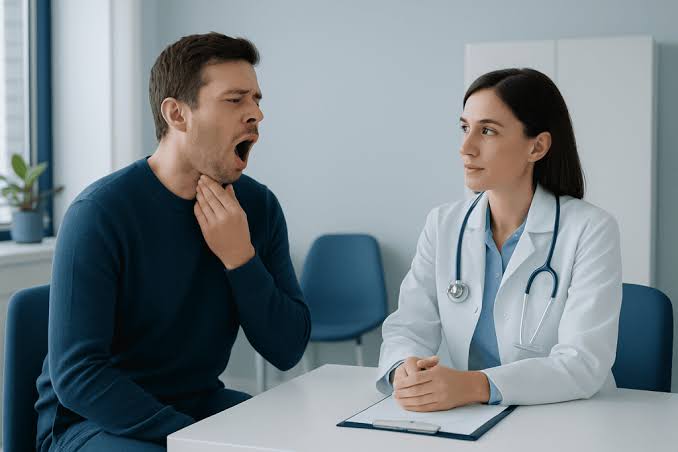
Throat pain when yawning almost always comes from irritation or inflammation in the throat that a wide stretch makes worse. Yawning pulls open the same muscles and tissues involved in a sore throat, so any existing dryness, infection, or injury back there gets stretched and becomes more noticeable in that moment.
Yawning involves opening your mouth wide and stretching the muscles of your jaw, throat, and neck all at once, while pulling a large volume of air across your throat tissue.
If that tissue is already inflamed from an infection or dried out from mouth breathing, the stretch and the rush of air both add friction to already-sensitive tissue. That’s why the pain often feels sharper during a yawn than it does at rest.

A dry throat develops when your membranes aren’t producing enough mucus to keep the area moist, leaving it scratchy and more prone to irritation. Sleeping with your mouth open, breathing dry air, dehydration, allergies, and smoking are all common contributors, and the dryness tends to feel worst first thing in the morning.
Common viral illnesses inflame the throat lining, and when you yawn, moving air and saliva across that inflamed tissue causes additional pain. This is one of the most frequent causes of sore throats overall, responsible for the large majority of cases.
Strep throat is a contagious bacterial infection that typically causes pain concentrated on swallowing, though the same wide stretch during a yawn can aggravate it too. It accounts for a meaningful share of sore throat cases in both adults and children, and it generally needs antibiotic treatment.
Your tonsils are lymph tissue at the back of your throat, and when they become infected and swollen, they can press against surrounding tissue in a way that makes yawning and swallowing both painful. Tonsillitis can stem from either viral or bacterial infections, and cases that keep recurring are sometimes treated with a tonsillectomy.
Something as small as a sharp chip or cracker can scratch the back of your throat on the way down. Once scratched, the area stays sensitive, and yawning pulls saliva and air across the injury, keeping it irritated until it heals.
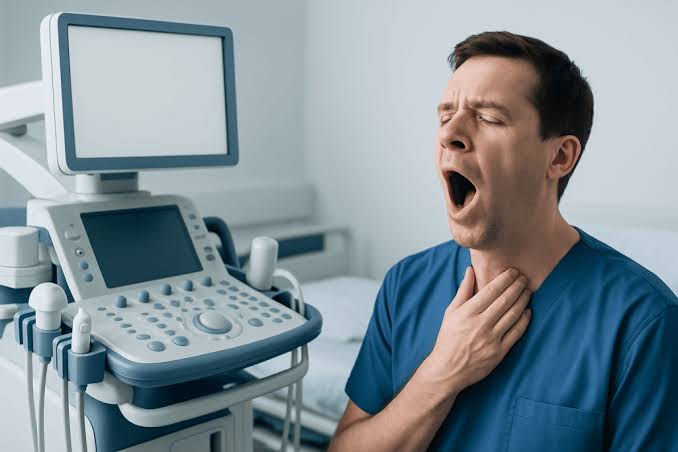
TMJ disorders affect the joint connecting your jaw to your skull, and they’re common enough to affect a meaningful share of adults. Because a yawn stretches that joint to its full range of motion, TMJ-related pain often radiates toward the throat and ear specifically during a yawn, sometimes alongside clicking, popping, or a jaw that feels stuck.
When stomach acid backs up into the esophagus and throat, it irritates the lining and can cause a burning sensation that gets worse with the stretch and air movement of a yawn. This is a less obvious cause but worth considering if you also notice a sour taste, chest burning, or symptoms that worsen after eating or lying down.
If you’ve recently been talking, singing, or shouting more than usual, or find yourself yawning excessively, the muscles around your throat and jaw can simply become fatigued. This kind of soreness is typically mild and temporary, and it settles down with a bit of rest.

| Feature | Throat-related pain | TMJ / jaw-related pain |
|---|---|---|
| Pain location | Back of throat, both sides | In front of the ear, along the jaw |
| Common trigger | Infection, dryness, injury | Stress, teeth grinding, jaw overuse |
| Extra symptoms | Scratchiness, swollen glands, fever | Clicking, popping, limited jaw opening |
| Worsens with | Swallowing, talking | Chewing, wide mouth opening |
| Typical duration | Days (infection-related) | Can be chronic without treatment |
Most causes of throat pain when yawning, especially dryness and mild viral infections, clear up within about a week using basic home care. But certain signs mean it’s time to get checked out rather than wait it out.
Occasional mild discomfort during a yawn, especially after talking a lot or when you’re a bit dehydrated, is common and not usually a concern. Pain that’s sharp, persistent, or recurring points to an underlying cause worth addressing.
Yes. Dehydration reduces the mucus that keeps your throat moist, leaving it dry and scratchy, which becomes more noticeable during the wide stretch of a yawn.
Yawning stretches the throat tissue further and pulls more air across it than a normal swallow does, so existing irritation can feel more pronounced during a yawn.
Yes. Allergies often lead to post-nasal drip and throat dryness, both of which make the throat more sensitive to the stretch and airflow of a yawn.
It can be, especially if it’s paired with swollen tonsils, pain when swallowing, fever, or white patches at the back of the throat. A doctor can confirm with a throat exam.
Yes. TMJ-related pain can radiate toward the throat and ear because of how closely connected the jaw joint, muscles, and surrounding tissue are.
Viral throat pain generally lasts around 5 to 7 days and improves gradually rather than getting worse over time.
Yes. Reflux irritates the throat lining, and the extra stretch and airflow during a yawn can make that irritation feel more intense.
Isolated, mild discomfort with no other symptoms is usually not a cause for concern and often resolves on its own within a few days.
Frequent yawning can lead to temporary muscle fatigue and mild soreness, but it doesn’t typically cause lasting injury on its own.
Strep throat is bacterial and often causes more intense pain when swallowing, sometimes with fever and no cough, while viral sore throats usually come with cold-like symptoms such as a runny nose and cough.
Yes. Smoking dries and irritates the throat lining, which increases sensitivity to the stretching motion of a yawn.
For most healthy adults, occasional use of ibuprofen or acetaminophen for throat pain is safe, but check with a doctor or pharmacist if you have other health conditions or take other medications.
This is rare. Persistent throat pain, especially with unexplained weight loss, a lump in the neck, or a voice change lasting more than a few weeks, warrants a medical evaluation to rule out serious causes.
If throat pain keeps recurring, doesn’t respond to basic treatment, or comes with symptoms like chronic tonsillitis or suspected TMJ involvement, an ENT specialist can offer a more targeted diagnosis and treatment plan.
Throat pain when yawning is almost always your body flagging existing irritation, whether that’s dryness, a viral infection, tonsil inflammation, or a jaw joint issue, rather than a problem caused by yawning itself.
Simple home care like hydration, salt water gargles, and rest resolves most cases within a week. Persistent, severe, or unusual symptoms are worth a doctor’s visit to rule out anything that needs more targeted treatment.