
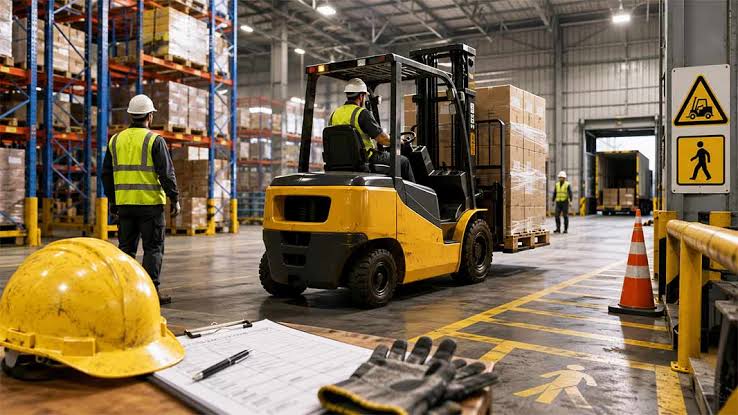
Material-handling requirements can change significantly from one project, facility, or business operation to another, making flexibility an important consideration when organizations need dependable equipment without committing to permanent ownership. Forklifts are used for a wide range of tasks, including moving palletized goods, loading and unloading materials, positioning heavy items, supporting warehouse operations, and handling inventory across different stages of a workflow. However, purchasing equipment is not always the most practical solution, particularly when a business has temporary requirements, fluctuating workloads, seasonal demand, or projects that require additional machines for a limited period. Equipment rental can provide an alternative approach by allowing businesses to obtain suitable machines when they are needed and return them when the project or increased workload has been completed. Well-planned forklift rentals can give organizations greater flexibility while helping them align equipment availability with actual operational demands. When rental decisions are based on equipment specifications, workload, operating environment, project duration, and maintenance requirements, businesses can create a more organized approach to material movement without unnecessarily expanding their permanent equipment fleet.
Businesses may require additional forklift capacity for many different reasons, and understanding the specific reason for the requirement can help determine whether rental equipment is an appropriate solution. A warehouse may experience a seasonal increase in inventory, a manufacturer may receive a large temporary order, a construction project may require additional material movement, or a facility may need replacement equipment while one of its existing machines is being serviced. In each situation, the need for additional equipment may be temporary rather than permanent. Renting can provide a way to address the increased workload without requiring the business to purchase another machine that may not be used consistently once demand returns to normal. Before arranging equipment, managers should review the expected workload, number of shifts, material types, load weights, travel distances, storage layout, and duration of the increased demand. This assessment can help determine whether additional equipment is necessary and what type of forklift will be suitable for the work.
Load requirements should be one of the first factors considered when selecting a forklift because equipment capacity needs to correspond with the materials being handled. Businesses should understand the typical and maximum loads that the machine will be expected to move, including the weight of pallets, containers, materials, and other items. Load dimensions can also influence equipment selection because large or unusually shaped materials may require different handling capabilities from standard palletized goods. Managers should avoid selecting equipment based only on an average load if occasional heavier loads are expected during the rental period. Understanding the complete range of anticipated applications can help businesses select equipment that is appropriate for the work while avoiding unnecessary limitations during daily operations.
The required lifting height can influence equipment selection just as much as load capacity. Warehouses and distribution facilities may use vertical storage systems that require forklifts to reach elevated rack positions, while construction or manufacturing operations may have different height requirements based on where materials need to be placed. Managers should determine the highest intended storage or placement point and consider the surrounding environment when evaluating equipment. Rack configuration, ceiling height, aisle dimensions, and overhead obstructions can all influence the practical use of a forklift. Choosing a machine with appropriate lifting capabilities can help operators complete required tasks without relying on inefficient alternatives or repeatedly repositioning materials.
The environment in which a forklift will operate can affect both equipment selection and daily performance. Indoor warehouse operations may involve smooth floors, narrow aisles, high storage racks, pedestrian traffic, and controlled environmental conditions, while outdoor applications may involve pavement, construction surfaces, uneven ground, changing weather, and larger travel areas. Different equipment configurations can be better suited to different environments, so businesses should provide accurate information about where the machine will be used when arranging a rental. Managers should also consider the presence of ramps, loading docks, doors, confined areas, and other physical features that could influence equipment movement. Evaluating the complete operating environment helps ensure that the selected machine is compatible with the conditions it will encounter throughout the rental period.
The length of time equipment will be needed is an important part of rental planning because the rental period should correspond as closely as possible to the actual project or operational requirement. Short-term work may only require a machine for several days or weeks, while seasonal operations or longer projects may require equipment for several months. Businesses should review their schedules carefully and consider potential delays before finalizing the rental period. Construction projects, inventory movements, facility improvements, and other operations can change unexpectedly, so maintaining communication with the equipment provider can be useful if the original schedule needs to be extended or adjusted. Careful planning can help prevent both unnecessary rental expenses and situations where equipment is returned before important work has been completed.
Equipment delivery should be coordinated with the operational schedule so that the forklift is available when the work begins. Managers should consider where the equipment will be delivered, how it will enter the facility or worksite, and where it will be stored when not in use. Entrance dimensions, loading areas, ramps, doors, floor conditions, and available parking or storage space can all affect delivery arrangements. If these details are overlooked, the equipment may arrive but still require additional planning before it can be placed into service. Providing accurate site information in advance can help reduce logistical complications and allow the rental process to fit more smoothly into the overall project schedule.
The effectiveness of rental equipment depends partly on the people operating it, so businesses should make sure that authorized operators understand the specific machine they will be using and the procedures that apply to their workplace. Operators should be familiar with the controls, equipment limitations, inspection requirements, load-handling procedures, and other applicable operating practices. A worker who has experience with one forklift should still understand the characteristics of the particular machine being introduced into the operation because different models can have different controls, dimensions, capacities, and handling characteristics. Appropriate preparation can help operators adapt to the equipment more effectively and can support a more consistent material-handling process throughout the rental period.
Equipment inspections provide an important opportunity to identify visible conditions before a forklift enters active service. Depending on the machine and applicable procedures, inspections may include tires, forks, mast components, hydraulic systems, brakes, steering, controls, safety devices, warning indicators, and other relevant areas. Operators should follow manufacturer recommendations and workplace requirements when performing inspections and should report unusual conditions through the appropriate process. Rental equipment should also be reviewed when it arrives so that any concerns can be communicated promptly to the provider. Maintaining a consistent inspection routine can help businesses identify equipment issues earlier and establish clearer expectations around machine condition.
Rental equipment still requires appropriate care during its period of use, even though the machine is not permanently owned by the business. Operators should follow applicable operating procedures, report unusual behavior, and avoid using the equipment outside its intended capabilities. Businesses should also understand how maintenance concerns should be reported and who is responsible for arranging service when a problem occurs. Clear communication with the rental provider can help ensure that equipment issues are addressed appropriately and that the machine remains suitable for the intended application. Maintenance planning becomes particularly important when equipment is being used for long shifts or demanding workloads because intensive use can increase the importance of timely inspections and service.
Rental decisions should be based on overall operational requirements rather than simply choosing the machine with the lowest rental rate. A forklift that does not have enough capacity, lifting height, maneuverability, or environmental suitability may create inefficiencies that increase labor costs or cause project delays. Conversely, selecting equipment with capabilities far beyond what the business requires may result in unnecessary rental expense. Managers should compare equipment specifications with the actual work, including load requirements, operating environment, travel distances, storage heights, and expected usage frequency. A balanced approach can help businesses obtain equipment that provides the capabilities they need without paying for features or capacity that will not contribute meaningful value to the project.
The effectiveness of a forklift depends partly on how it fits into the overall movement of materials. A well-selected machine can support loading, unloading, storage, retrieval, production movement, and other activities, but poor workflow organization can limit the benefits of the equipment. Businesses should examine travel paths, storage locations, loading areas, aisle widths, staging zones, and the sequence in which materials move through the facility. When rental equipment is introduced to address increased demand, managers should consider whether the existing layout can accommodate additional traffic or whether temporary workflow adjustments are needed. Organizing material flow alongside equipment planning can help reduce unnecessary travel and make better use of the available forklift capacity.
Seasonal demand is one situation in which rental equipment can provide useful flexibility. Some businesses experience significant changes in inventory levels during particular periods of the year, creating temporary increases in loading, unloading, storage, and order fulfillment activity. Purchasing additional forklifts for a short period may leave the business with excess equipment once the seasonal demand has passed. Renting can provide a way to increase capacity during the busy period and reduce equipment commitments afterward. Businesses should estimate seasonal workload as accurately as possible and plan rental periods around expected demand while allowing enough flexibility to accommodate reasonable changes in scheduling.
Temporary equipment can also be useful when an existing forklift is unavailable because of major maintenance, repair, inspection, or replacement. A business may not want to interrupt its material-handling process simply because one machine is temporarily out of service. A rental forklift can provide additional capacity during the transition and give managers more time to complete necessary repairs or arrange permanent replacement equipment. This can be particularly valuable when the affected machine performs an essential role in daily operations. Rather than rushing into a permanent purchase because of an unexpected failure, businesses can use temporary equipment to maintain operational flexibility while evaluating longer-term requirements.
The end of a rental period provides an opportunity to review how effectively the equipment supported the project or business operation. Managers can consider whether the machine had adequate capacity, whether its dimensions were appropriate for the worksite, whether operators found it suitable for the application, and whether the rental duration matched actual requirements. Reviewing these factors can help businesses make better decisions during future rental arrangements. If a similar project occurs again, the previous equipment information can provide a useful starting point for determining specifications and scheduling. Keeping simple records of rental equipment and project requirements can therefore improve future planning and reduce the need to repeat the same evaluation process from the beginning.
Businesses with changing material-handling requirements can benefit from combining permanent equipment with temporary rental capacity when appropriate. A core fleet can handle consistent daily demand, while forklift rentals can provide additional capacity during seasonal increases, special projects, temporary facility changes, or equipment downtime. This approach allows businesses to respond to changing workloads without necessarily expanding permanent equipment ownership every time demand increases. Fleet managers can evaluate utilization levels, maintenance history, project requirements, and seasonal patterns to determine when temporary equipment may be useful. A flexible strategy can also make it easier to adapt when business conditions change, provided equipment selection remains based on actual operational requirements.
.Conclusion
Forklift rental planning involves more than arranging a machine for a specific period. Businesses should evaluate load capacity, lifting height, operating environment, aisle dimensions, workload, rental duration, delivery requirements, operator preparation, maintenance responsibilities, and overall material flow before selecting equipment. A properly planned rental can provide temporary capacity when demand increases, support projects that require additional equipment, maintain operations while owned machinery is being repaired, or provide flexibility during seasonal activity. By connecting equipment selection with detailed operational planning, businesses can avoid choosing machines based solely on price or availability and instead focus on the capabilities required for the work. Well-managed forklift rentals can give organizations greater flexibility while helping them respond to changing material-handling demands without automatically increasing the size of their permanent fleet. A thoughtful approach to rental equipment can therefore support better scheduling, more organized material movement, and more adaptable equipment management across a wide range of operational requirements.