
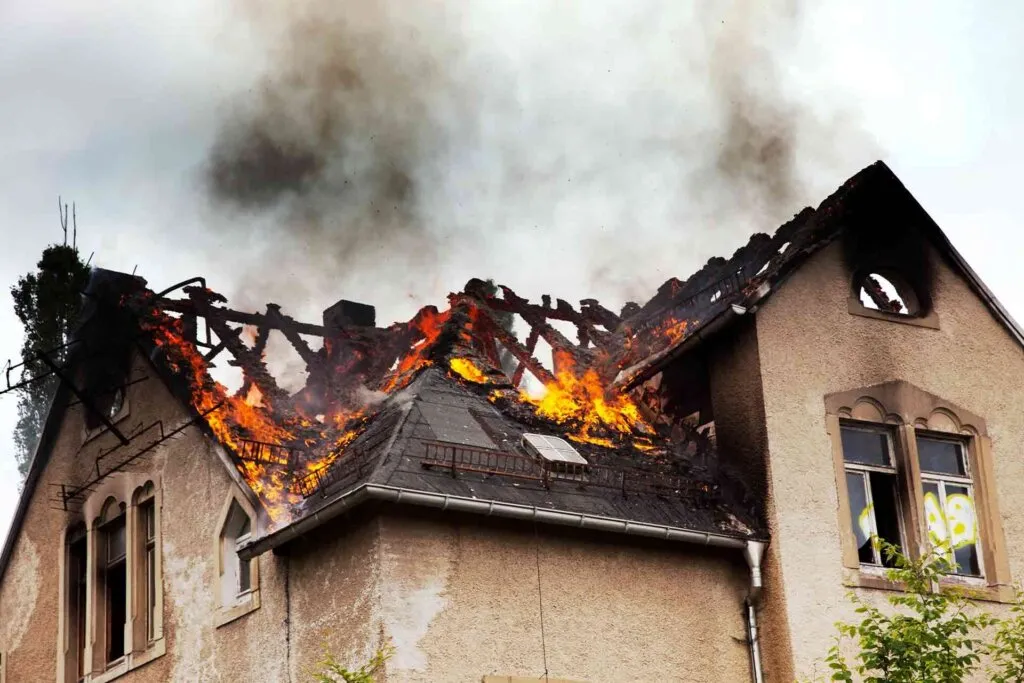
Selling a house with fire damage is one of the few real estate situations where the standard playbook stops working almost immediately. Everything about a conventional sale assumes a property a lender will finance, a buyer will insure, and an inspector will pass without a list of structural questions. A fire removes all three assumptions at once, and it does so at a moment when the owner is already dealing with insurance adjusters, temporary housing, and the slow work of replacing what burned.
The good news is that fire damaged homes sell in Connecticut every month, and many of them sell quickly. They just rarely sell the way an undamaged house does. Understanding why the traditional route stalls, and what actually moves these properties, puts a homeowner back in control of a decision that otherwise feels like it is being made for them.
Most homeowners assume the insurance settlement will simply restore the house and the sale can proceed normally afterward. Sometimes that happens. Often it does not, for reasons that have little to do with the quality of the policy.
Carriers pay actual cash value first and hold back recoverable depreciation until the repairs are finished and documented. That means the initial check is frequently far smaller than the cost of the work, and the balance only arrives after the owner has already fronted the difference. If the home carried a mortgage, the lender is typically named on the check and releases funds in stages tied to contractor progress. Add code upgrade requirements that older Connecticut housing stock almost always triggers once walls are opened, and a settlement that looked adequate on paper turns into a project the owner is personally financing month by month.
There is also the policy itself. After a significant fire claim, renewal is not guaranteed, and owners of vacant damaged properties often end up on vacant building coverage at several times the normal premium. Every month of delay carries a real cost, which is why the repair timeline matters as much as the repair budget.
The retail buyer pool for a fire damaged home is much smaller than sellers expect, and the reason is financing rather than taste. Conventional, FHA, and VA loans all require the property to meet minimum condition standards at appraisal. Charred framing, a compromised roof, missing electrical service, or an uninhabitable kitchen fails that test outright, and the lender will not fund until repairs are complete. The buyer cannot finish the repairs before closing because they do not own the house, and the seller often cannot finish them because the money is tied up in a staged insurance release.
Renovation loan products exist for exactly this gap, but they are slow, require detailed contractor bids submitted for approval, and put the buyer’s timeline at the mercy of an underwriter reviewing a scope of work. Most buyers in that position eventually decide the paperwork is not worth it and move on to a listing that closes cleanly. Sellers who list a fire damaged property conventionally frequently spend two or three months collecting offers that never make it through underwriting, while the taxes, the elevated insurance, and the mortgage keep running.
Owners tend to price the visible burn and overlook everything around it, which is where most surprises come from during a sale. Smoke residue migrates through wall cavities, HVAC ductwork, and insulation, and it settles in places no cosmetic repair reaches. Porous materials hold odor indefinitely. A buyer walking through six weeks after the fire will notice it in the first ten seconds, whatever the walls look like.
Then there is the water. Firefighting puts an enormous volume of water into a structure in a short period, and in Connecticut’s climate that water sits in subfloors, basements, and insulation long enough for mold to establish. A house with a modest fire footprint can carry a serious remediation bill driven almost entirely by water and smoke rather than flame. Sellers who get a proper assessment early avoid the far worse outcome of discovering the real scope after a buyer’s inspector does.
This is the central decision, and it turns on three variables rather than on principle. The first is how much of the repair the insurance settlement genuinely funds after depreciation holdbacks and code upgrades. The second is how long the work will take, because six to twelve months is common for substantial fire restoration once permitting, contractor scheduling, and inspections are factored in. The third is whether the finished house will appraise for enough to justify the months of carrying costs and the owner’s time.
When the settlement covers the work, the owner has the cash flow to manage the process, and the neighborhood supports a strong post repair value, restoring and listing is usually the stronger financial move. When the settlement falls short, the owner lives out of state, the property is part of an estate, or the fire exposed older wiring and structural conditions that expand the scope, selling as is starts to win the math quickly. Cash buyers who work with damaged properties price the repairs into their offer and take on the contractor risk, the permitting, and the timeline that would otherwise sit on the seller’s shoulders.
Connecticut requires sellers to complete a residential property condition disclosure report, and fire history belongs on it. Attempting to conceal past fire damage is both a legal exposure and a practical mistake, because appraisers, inspectors, insurance databases, and often the neighbors will surface it anyway. Sellers who disclose openly, provide the fire marshal report, and hand over documentation of any completed remediation are in a far stronger position than those who let a buyer discover the history mid transaction. Full documentation also protects the price, since undocumented damage invites a buyer to assume the worst.
The comparison that matters when selling a house with fire damage is what actually reaches the seller on a specific date. A retail sale after full restoration subtracts the repair cost the insurance did not cover, agent commission, Connecticut state and municipal conveyance taxes, attorney fees, inspection credits, and every month of taxes, elevated vacant property insurance, and mortgage payments between the fire and the closing. A cash as is sale subtracts almost none of that and eliminates the risk of a financed deal collapsing at underwriting after weeks of waiting.
Measured that way, the spread between the two paths is usually much narrower than the headline numbers suggest, and on badly damaged or inherited properties it often reverses entirely. The mistake is weighing a cash offer against a hypothetical restored market value rather than against the check that clears after a long and uncertain process.
Selling a house with fire damage should start with facts rather than estimates. Neighbor Joe buys fire damaged homes throughout Connecticut in any condition, from smoke affected properties that need remediation to structures that will need to come down to the studs, and makes no obligation cash offers with a firm closing date attached. The offer costs nothing and commits you to nothing, but it gives you a concrete figure to hold against the restoration route while the insurance claim is still being worked out. Whichever direction you choose after that, you will be choosing with real numbers in hand instead of guessing at what a damaged house is worth.