
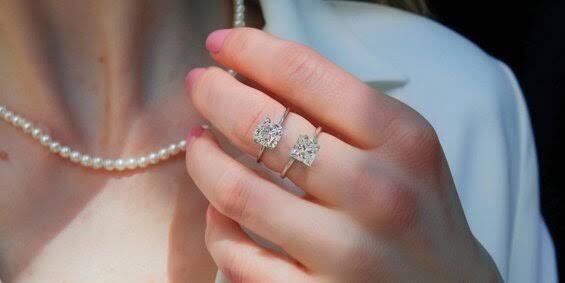
Walk into any jeweler, and two shapes dominate the cases: the round brilliant and the classic, which owns most of the market. Beside it sits the princess cut, the square challenger that keeps winning hearts on a budget. Choosing between them is the most common fork in the road for engagement ring shoppers.
Buyers comparing the two in New York showrooms and online find the decision is less about which shape is better and more about which trade-offs suit the wearer. Both can be spectacular, both can disappoint, and the differences that matter are specific enough to walk through properly.
Here’s how the two really stack up.
Before the numbers, there’s the feel, because the two shapes read differently on a hand. Each has a personality that tends to match its wearer.
Neither personality is superior, and both have decades of staying power at this point. The right starting question isn’t which shape wins, but which one the wearer keeps coming back to in the case.
Whichever shape you lean toward, one truth governs both. The FTC’s Jewelry Guides state that marketers must truthfully represent the type, kind, grade, quality, size, weight, cut, and color of their merchandise, which is a quiet reassurance for shoppers: a cut grade on a certificate is a claim the seller is accountable for, not a decoration. It also means shape and cut are separate representations; a princess and a round of equal weight can differ enormously in beauty purely on cut execution.
Rounds benefit from standardized cut grading, which makes excellence easy to verify on a certificate. Princess cuts have looser grading conventions, so photos, videos, and light-performance imagery matter more when judging one. In both cases, cut quality is the last place to save money, because it’s where the sparkle is manufactured.
The round brilliant exists for one purpose: its 57 or 58 facets were engineered over a century to return the maximum light to your eye, and nothing else matches its raw brilliance. The princess plays a different game, with chevron facets that produce a distinctive crushed-ice glitter and flashes of color. Watching round and princess diamonds side by side under the same lighting makes the difference obvious in seconds.
Retailers such as Ritani’s listings include 360-degree video for exactly that kind of comparison, which flat photos never quite capture. Rounds also hide imperfections and faint color better, since their brilliance visually scrambles what’s inside. Princess cuts are slightly more revealing, which nudges their ideal clarity and color grades up a notch. Sparkle-wise, it’s a choice between the round’s white-light fireworks and the princess’s icy shimmer.
Here’s where the princess cut wins outright: money. The gap is structural, not promotional, and it comes down to what happens at the cutting wheel. Princess cuts retain far more of the rough crystal, often 20 to 30% more, while rounds waste the most rough of any shape, and the price on the tag reflects that lost material.
That’s why a princess typically costs meaningfully less than a round of equal weight, and square shapes carry their weight visibly too, looking large for their carats. For shoppers set on maximum stone for the budget, the princess is the pragmatic pick. The savings can fund a better cut grade, a nicer setting, or simply a bigger diamond.
The last comparison lives in the real world, where rings get worn daily and knocked occasionally. The round’s smooth girdle has no weak points, which is part of why it suits nearly any setting, from delicate solitaires to tension designs. The princess’s four sharp corners are its signature and its vulnerability, since corners can chip if struck.
The solution is settled practice: princess cuts belong in settings with prongs protecting each corner or bezels that wrap them entirely. Lifestyle matters here more than shoppers expect. A nurse, climber, or new parent may bless the round’s resilience, while a desk-bound romantic can wear a princess for decades without incident. The right setting closes most of the gap; the wrong one invites the chip.
The princess and the round have coexisted at the top of the market for decades because they solve the same problem in two beautiful ways, and neither is going anywhere. The round asks a premium for perfected brilliance and effortless durability; the princess offers modern lines and more diamonds per dollar, with a corner-guarding setting as the small print. Shoppers who choose based on the wearer’s taste, habits, and hand almost never regret either. See both in person or on video before deciding, because the difference is felt more than described. Then pick the one that gets the second look. That’s the only grade that matters once the box is open.