
How Many Calories in a Can of Guinness Zero is one of the most searched beer nutrition questions in 2026, and the answer genuinely surprises most people.
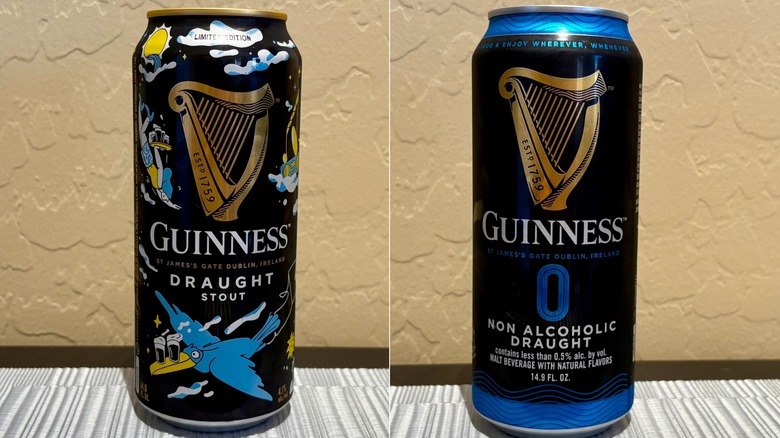
Guinness Zero, officially known as Guinness 0.0, contains just 17 calories per 100ml. That works out to around 75 calories in a standard 440ml can and approximately 97 calories in a full pint.
That is less than half the calorie count of regular Guinness Draught. Despite tasting remarkably close to the original, this alcohol-free stout is dramatically lower in calories simply because the alcohol has been removed.
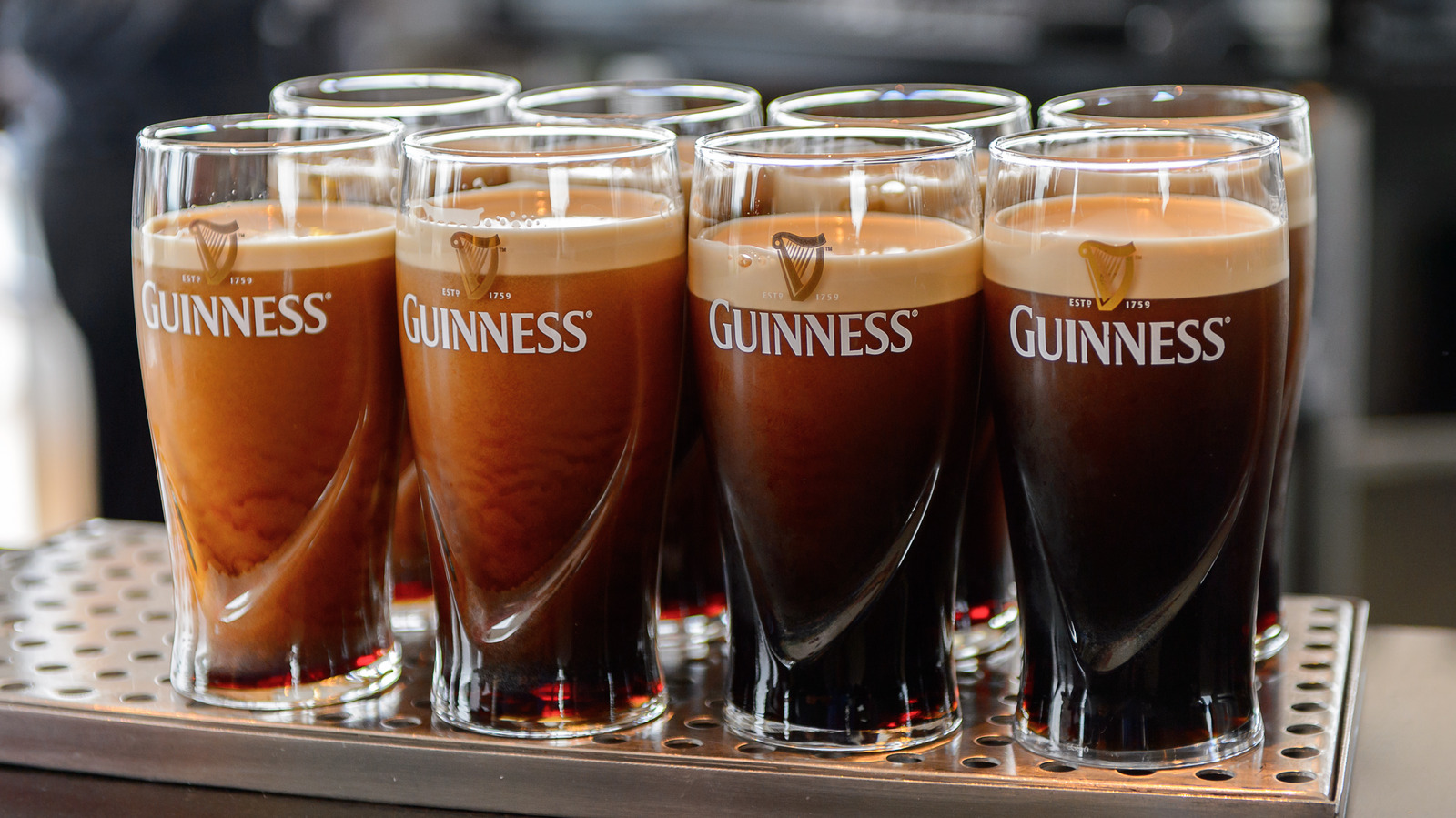
Guinness Zero, also called Guinness 0.0 or Guinness 0, is the fully alcohol-free version of the world-famous Irish dry stout. It is brewed at St. James’s Gate in Dublin, Ireland — the same brewery where regular Guinness has been produced since 1759.
The “0.0” in the name refers to alcohol content, not calorie count. This is one of the most common points of confusion for people searching how many calories in Guinness Zero for the first time.
It was developed over four years by the Guinness brewing and innovation team. After a recalled initial launch in 2020 due to quality concerns, it was successfully relaunched and became widely available from 2021 onward.
Guinness Zero contains 17 kcal per 100ml, with 3.8g of carbohydrates and 0g of fat. These figures come directly from the official Guinness nutrition label and are consistent across all markets.
There are just 17 calories and 3.8g of carbs per 100ml in Guinness 0.0, compared to 35 calories and 2.7g of carbs in full-strength Guinness Draught.
That is a calorie reduction of more than 50% per 100ml simply by removing the alcohol.
| Nutrient | Per 100ml |
|---|---|
| Calories (kcal) | 17 |
| Energy (kJ) | 71 |
| Carbohydrates | 3.8g |
| Sugar | 0.7g |
| Fat | 0g |
| Protein | 0.4g |
The calorie count changes depending on how you buy and pour Guinness Zero. This is why people get confused when comparing different labels and product listings.
A standard 440ml UK can of Guinness Zero contains approximately 75 calories. A US 12oz (355ml) can contains approximately 57–60 calories. A full pint of Guinness Zero (568ml) contains approximately 97 calories.
A standard 500ml can contains just 80 calories.
Here is a full serving-size breakdown to make comparison straightforward:
| Serving Size | Calories |
|---|---|
| 100ml | 17 kcal |
| 330ml bottle | 56 kcal |
| 355ml US can (12oz) | ~60 kcal |
| 440ml UK can | ~75 kcal |
| 500ml can | ~80 kcal |
| Pint (568ml) | ~97 kcal |
This is the comparison most people actually want. Guinness Zero delivers a genuinely low-calorie experience at approximately 17 calories per 100ml, compared to regular Guinness Draught which sits at approximately 35 kcal per 100ml.
Regular Guinness Draught has 4.1–4.2% ABV and around 210 calories per pint. Guinness Zero comes in at roughly 97 calories per pint.
Switching from regular Guinness to Guinness 0 saves approximately 113 calories per pint. If you typically have two pints, that is a saving of 226 calories per session. If you do that twice a week, that adds up to over 450 calories saved per week.
| Format | Guinness Zero | Regular Guinness Draught |
|---|---|---|
| Per 100ml | 17 kcal | 35 kcal |
| 440ml can | ~75 kcal | ~154 kcal |
| Pint (568ml) | ~97 kcal | ~210 kcal |
| ABV | 0.0% | 4.1–4.2% |
The reason for the dramatic calorie reduction comes down to a single ingredient that most people overlook: alcohol itself.
Alcohol contains 7 calories per gram — that is almost as calorie-dense as fat, which provides 9 calories per gram. In a standard pint of Guinness at 4.2% ABV, the majority of calories come from alcohol alone.
When cold filtration removes all the alcohol, those 7-calories-per-gram units disappear. The malt, barley, hops, and water that remain contribute far fewer calories by comparison.
The small addition of fructose adds back a little sugar and carbs but far fewer calories than the alcohol it replaces. The result is more carbs per 100ml but dramatically fewer total calories.
Guinness Zero is not just low in calories compared to regular beer. It is also competitive with other non-alcoholic beers on the market.
A lot of low-calorie non-alcoholic beers like Partake at 15 calories a can are missing the things Guinness 0 offers even with a low calorie count, including taste, mouthfeel, and flavour.
Guinness 0.0 has one of the lowest calorie counts for an alcohol-free beer at just 70 calories for a 440ml can.
Here is how Guinness Zero stacks up against other popular non-alcoholic and low-calorie beers:
| Beer | Calories per 330ml | ABV |
|---|---|---|
| Guinness Zero (0.0%) | ~56 kcal | 0.0% |
| Heineken 0.0 | ~69 kcal | 0.0% |
| Budweiser Zero | ~50 kcal | 0.0% |
| Beck’s Blue | ~65 kcal | 0.05% |
| Corona Cero | ~80 kcal | 0.0% |
| Partake Brewing IPA | ~15 kcal | 0.3% |
| Regular Guinness Draught | ~100 kcal | 4.2% |
| Heineken Regular | ~139 kcal | 5.0% |
| Budweiser Regular | ~130 kcal | 4.5% |
Guinness Zero sits comfortably in the low-calorie range for the non-alcoholic category while offering far more flavour depth than most competing products at a similar calorie level.
Understanding how many calories in Guinness Zero requires looking at the complete nutritional profile, not just calories alone.
Guinness Zero is fat-free and very low in sugar. The protein content is minimal but present due to the barley used in brewing. It also contains negligible amounts of B vitamins, potassium, and magnesium that occur naturally in malted barley.
Here is the full nutrition facts panel for a standard 440ml can:
| Nutrient | Per 440ml Can |
|---|---|
| Calories | ~75 kcal |
| Energy (kJ) | ~313 kJ |
| Carbohydrates | ~16.7g |
| Sugar | ~3g |
| Fat | 0g |
| Saturated Fat | 0g |
| Protein | ~1.8g |
| Salt | Trace |
This is the question that confuses most people when they first look at the nutrition label. Guinness Zero has 3.8g of carbohydrates per 100ml while regular Guinness Draught has only 2.7g per 100ml.
Guinness 0.0 is lower in calories than Guinness Draught due to the lack of alcohol, but it has a higher sugar and carbohydrate content per 100ml. The added fructose and other natural flavourings in Guinness 0.0 are vital for replicating the taste profile of the original stout after alcohol is removed.
When alcohol is removed from beer it takes away body, mouthfeel, and a significant portion of flavour. The brewers compensate by adding a small amount of natural fructose.
Fructose is a natural sugar that adds a touch of sweetness and helps replicate the fuller body that alcohol provides. This is why the carb and sugar count per 100ml is slightly higher in Guinness Zero than in regular Guinness. Despite this, total calories are still dramatically lower because alcohol itself is more calorie-dense than sugar.
Think of it this way: adding a little fructose adds back some carbs but nowhere near the calories that the alcohol provided. The net result is still a dramatically lower-calorie drink.
Sugar is a separate concern from total calories for many people tracking nutrition. How much sugar is in Guinness Zero is an important question for anyone managing blood sugar, following a low-sugar diet, or dealing with diabetes.
Guinness Zero contains approximately 0.7g of sugar per 100ml, which amounts to about 3g of sugar per 440ml can. This sugar comes primarily from the fructose added during brewing to compensate for the body and sweetness that alcohol provides.
For context, a regular soft drink typically contains 10–12g of sugar per 100ml. Guinness Zero at 0.7g per 100ml is extremely low in sugar by comparison.
That means a standard cola has roughly 15 times more sugar per 100ml than Guinness Zero. For anyone monitoring sugar intake, Guinness Zero is a dramatically smarter choice than sweetened beverages.
| Drink | Sugar per 100ml |
|---|---|
| Guinness Zero | 0.7g |
| Regular Guinness Draught | 0.2g |
| Coca-Cola | 10.6g |
| Orange Juice | 8.4g |
| Tonic Water | 8.7g |
| Low Sugar Cola | 0.3g |
For people following a ketogenic or low-carb diet, the carbohydrate content matters as much as calories. Here is the honest picture for Guinness Zero on keto.
Guinness Zero contains approximately 3.8g of carbs per 100ml. A standard 440ml can would contain around 16–17g of total carbs. On a standard ketogenic diet, daily carb intake is typically limited to 20–50g. A single can of Guinness Zero would represent a significant portion of that limit — especially at the lower end of the spectrum.
For strict keto followers, Guinness Zero is not a great fit. However, if you follow a general low-carb diet and allow for occasional treats, one can is unlikely to push you out of ketosis on its own.
If you are strictly tracking carbs, one can per occasion is the sensible limit. If you are following a more moderate low-carb approach, Guinness Zero fits comfortably alongside most other dietary choices.
Understanding how Guinness Zero is made helps explain both its calorie count and why it tastes so much like the original.
Guinness Zero is made by first brewing regular Guinness beer at the plant in Ireland. Once the brew is finished, Guinness uses a cold-filtration process to remove the alcohol from the regular Guinness liquid. Cold-filtration helps retain the well-known flavour and texture of Guinness and protects the liquid from thermal stress.
The ingredients include water, barley, and hops along with fructose, which is a natural sugar, and nitrogen. The nitrogen paired with the plastic widget inside the can is responsible for agitating the beer on opening and pouring, creating Guinness’s famous surge and settle effect.
The use of nitrogen rather than carbon dioxide is what gives Guinness Zero its distinctively creamy, smooth pour. This sets it apart from virtually every other non-alcoholic beer on the market.
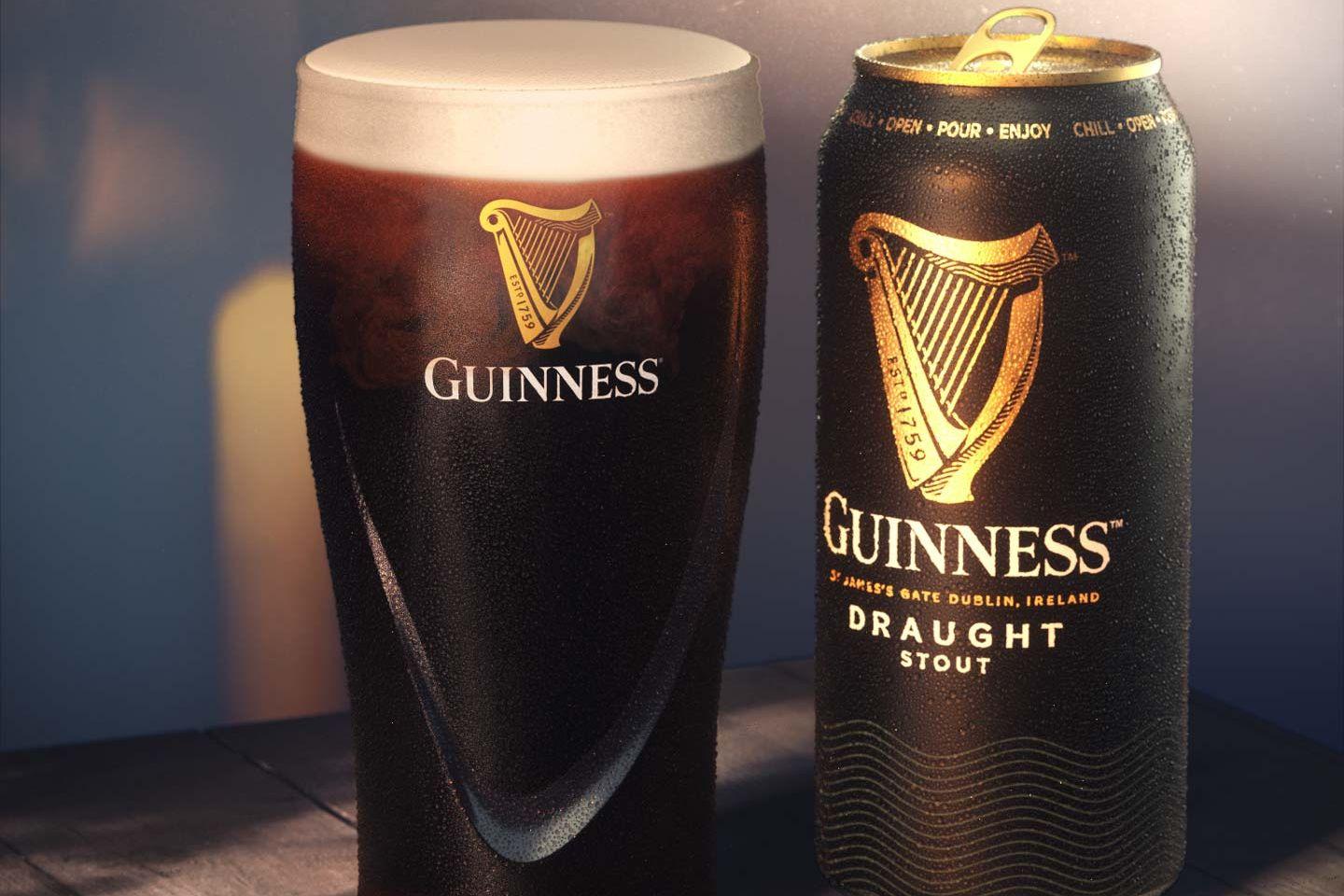
Yes, Guinness Zero is fully vegan. Guinness removed isinglass from its production process in 2018, and both Guinness Draught and Guinness Zero now carry confirmed vegan-friendly status.
This is a significant improvement from older Guinness formulations which used isinglass — a fining agent derived from fish bladders — during the filtration process. The current Guinness Zero formulation is free from all animal products.
This is a key question for anyone with coeliac disease or gluten sensitivity.
Although Guinness 0.0 is vegan-friendly it is not suitable for gluten-free drinkers.
Guinness Zero is brewed with malted barley, which contains gluten. It is not suitable for people with coeliac disease or serious gluten sensitivity and should be avoided by anyone with a clinically diagnosed gluten condition.
If you are managing a gluten-related condition, Guinness Zero is not a safe option. Look for dedicated gluten-free non-alcoholic stouts from specialist craft brewers instead.
Many people searching how many calories in Guinness Zero are motivated by weight management goals. Here is the honest picture.
Guinness Zero can support weight loss when substituted for regular Guinness, saving approximately 113 calories per pint. It is not calorie-free though, so moderation still matters as part of an overall balanced and calorie-conscious diet.
The maths are simple. If you regularly drink two pints of Guinness on a Friday night and switch to Guinness Zero, you save approximately 226 calories in that session alone. Over a month, that saving adds up to a meaningful reduction without any change in social behaviour or flavour experience.
Guinness Zero is not a diet product. But as a direct like-for-like swap for regular Guinness, it is a genuinely effective calorie-reduction strategy.
Athletes and gym-goers have increasingly embraced non-alcoholic beers as post-workout drinks. Guinness Zero has specific advantages in this context.
Alcohol impairs protein synthesis, disrupts sleep quality, and slows recovery. Guinness Zero removes all of those drawbacks while preserving the social and flavour experience. With under 100 calories per pint, Guinness Zero fits comfortably into a performance-focused nutrition plan, especially when consumed in moderation.
The carbohydrates in Guinness Zero can even serve as a mild source of post-exercise glycogen replenishment. At 16–17g of carbs per can, it is not a high-carb recovery drink, but it contributes marginally to energy replacement after training.
The key advantage is what it removes: alcohol. Alcohol is directly anti-anabolic, meaning it slows muscle protein synthesis. Guinness Zero gives you the post-match or post-training ritual without the physiological cost.
Dry January, Sober October, and other alcohol-free challenges have become mainstream. Guinness Zero has become one of the most popular choices for participants because it closely mirrors the experience of drinking regular Guinness.
Guinness 0 is one of the lowest-calorie NA beers you can buy. Given how amazingly close this NA variety is to its alcoholic twin while clocking in at less than half the calories, it is a standout choice for anyone reducing alcohol intake.
For anyone doing a sober month, the calorie savings are substantial. Switching entirely from regular Guinness to Guinness Zero for 30 days could save well over 3,000 calories depending on how often you would normally drink.
Several widely repeated myths about Guinness Zero calorie content need to be corrected clearly.
Myth 1: Guinness Zero has zero calories.
False. The “0” refers to alcohol content. A 440ml can contains approximately 75 calories.
Myth 2: Guinness Zero has more calories than regular Guinness because of added sugar.
Also false. Despite slightly higher carbohydrates per 100ml due to added fructose, the total calorie count is still less than half of regular Guinness because removing alcohol removes the most calorie-dense ingredient in beer.
Myth 3: Regular Guinness is a heavy, high-calorie beer.
Regular Guinness Draught has 4.2% ABV and 125 calories in a 12oz serving — that is just 23 more calories than a Coors Light, and the same exact ABV. Guinness has long had an undeserved reputation as a high-calorie beer.
Myth 4: Non-alcoholic means no calories.
False. Calories in beer come from both alcohol and carbohydrates. Even with alcohol removed, some carb-based calories remain. Guinness Zero proves this clearly.
Myth 5: Guinness Zero is high in iron.
This is an old claim about regular Guinness that has been widely debunked. Both Guinness Draught and Guinness Zero contain negligible amounts of iron relative to daily requirements.
Guinness produces several different products and variants. Here is how the calorie content compares across the range:
| Product | Calories per 100ml | ABV |
|---|---|---|
| Guinness Zero (0.0) | 17 kcal | 0.0% |
| Guinness Draught | 35 kcal | 4.2% |
| Guinness Extra Stout | 37 kcal | 4.2% |
| Guinness Foreign Extra Stout | 62 kcal | 7.5% |
| Guinness Nitro IPA | ~38 kcal | 5.4% |
Guinness Zero sits at the bottom of the calorie range across the entire Guinness product lineup by a significant margin.
Calorie content matters but so does whether the drink is actually worth drinking. The taste is directly relevant to whether Guinness Zero is a practical substitute for regular Guinness.
Guinness Zero truly replicates the exact taste and texture of a regular Guinness. The nitrogen injection is so important to the zero alcohol Guinness that bars in Ireland have special single-can micro-draught taps that a bartender can use to properly pull a pint.
Guinness Zero is great if you like regular Guinness. Getting this close to recreating all the details of a specific regular beer with a non-alcoholic version is nothing short of amazing.
The main difference noticed in side-by-side comparisons is a slightly lighter body and a touch more sweetness on the finish from the added fructose. For casual drinkers these differences are essentially undetectable.
Knowing how many calories in Guinness Zero helps identify who this product is best suited for. The answer is a wider group than most people assume.
It works for anyone doing Dry January or a sober month who wants to maintain the social experience of drinking. It suits people who are pregnant or on medication that prohibits alcohol. It is ideal for designated drivers who do not want to drink soft drinks all night.
It also suits calorie-conscious drinkers who love the flavour of Guinness but want to reduce their intake without giving up the ritual entirely. And it works for athletes and fitness-focused individuals who want a post-training reward without the physiological cost of alcohol.
Guinness Zero is an excellent choice for a wide range of people in 2026 — whether you are cutting back on alcohol for health reasons, doing Dry January, managing your weight, or simply exploring the rapidly growing world of non-alcoholic craft beer.
Here is a practical calorie savings table to show the real-world impact of switching from regular Guinness to Guinness Zero at different drinking frequencies:
| Weekly Pints | Regular Guinness (Weekly kcal) | Guinness Zero (Weekly kcal) | Weekly Saving | Monthly Saving |
|---|---|---|---|---|
| 2 pints | 420 kcal | 194 kcal | 226 kcal | ~904 kcal |
| 4 pints | 840 kcal | 388 kcal | 452 kcal | ~1,808 kcal |
| 6 pints | 1,260 kcal | 582 kcal | 678 kcal | ~2,712 kcal |
| 10 pints | 2,100 kcal | 970 kcal | 1,130 kcal | ~4,520 kcal |
These savings are real and meaningful. Over a full year, even a moderate drinker switching from two regular pints per week to Guinness Zero saves well over 10,000 calories.
A standard 440ml can of Guinness Zero contains approximately 75 calories. A 500ml can contains around 80 calories, and a US 12oz can contains roughly 57–60 calories.
A full pint of Guinness Zero (568ml) contains approximately 97 calories. That is less than half the 210 calories found in a regular pint of Guinness Draught.
No. The “zero” refers to alcohol content, not calories. Guinness Zero contains 17 kcal per 100ml and approximately 75 calories in a standard 440ml can.
Guinness Zero contains 3.8g of carbohydrates per 100ml. A standard 440ml can contains approximately 16–17g of total carbohydrates, slightly more than regular Guinness due to added fructose.
Switching from regular Guinness to Guinness Zero saves approximately 113 calories per pint. It is not a zero-calorie product but is a genuinely effective lower-calorie substitute for anyone managing weight.
No. Guinness Zero is brewed with malted barley, which contains gluten. It is not suitable for people with coeliac disease or diagnosed gluten intolerance.
Yes. Guinness removed isinglass from its production process in 2018. Both Guinness Draught and Guinness Zero are confirmed as vegan-friendly.
A small amount of natural fructose is added during brewing to replace the body and flavour that alcohol provides. This increases carbs per 100ml slightly but the total calories are still less than half of regular Guinness.
Guinness Zero at approximately 56 kcal per 330ml is competitive with other leading non-alcoholic beers. It offers more flavour complexity than most comparable low-calorie alcohol-free beers at a similar calorie level.
Guinness Zero contains a maximum of 0.05% ABV — the lowest level detectable by standard laboratory equipment. For all practical, legal, and dietary purposes it is classified as completely alcohol-free.
How many calories in Guinness Zero comes down to one clear answer: approximately 17 calories per 100ml, 75 calories in a 440ml can, and just under 100 calories in a full pint.
That is less than half the calorie count of regular Guinness Draught, achieved by removing the single most calorie-dense ingredient in beer — alcohol itself. Guinness Zero is fat-free, very low in sugar, vegan-friendly, and available in virtually every market worldwide.
Whether you are cutting calories, avoiding alcohol, training hard, or simply curious about what is in your glass, Guinness Zero is one of the most satisfying low-calorie drink choices available in 2026.