
Kronosshort.com has emerged as one of the most searched platforms in 2026, raising questions about its legitimacy, safety, and actual purpose.
Whether you encountered a shortened link, discovered the site through search results, or are considering using its services, understanding the risks and benefits is crucial.
Many users report confusion after visiting the platform, prompting deeper investigation into what Kronosshort.com really offers and whether it’s worth your trust.
Kronosshort.com presents itself as a multi-purpose platform combining link shortening services with content publishing capabilities. The site operates primarily as a URL shortener, allowing users to convert lengthy web addresses into compact, shareable links.
Beyond link shortening, the platform also functions as a blog-style website. It publishes articles covering diverse topics including education, digital literacy, technology, and general knowledge content.
The website was registered relatively recently, making it a newcomer in the crowded URL shortener market. Unlike established services like Bitly or TinyURL, Kronosshort.com lacks the extensive track record that builds user confidence.
Understanding how Kronosshort.com generates revenue reveals important insights about the platform. The site operates through multiple income streams that raise transparency concerns.
Guest post placements form a significant revenue source. Website owners and marketers can purchase article placements on Kronosshort.com, typically ranging from $20 to $50 per post. This practice is common among low-authority websites seeking quick monetization.
Backlink sales represent another income avenue. The platform sells DoFollow backlinks to businesses attempting to improve their search engine rankings. However, these backlinks carry limited SEO value due to the site’s low domain authority.
Some reports suggest the site may use ad-based redirects. When users click shortened links, they might encounter intermediate pages displaying advertisements before reaching their final destination.
The safety of Kronosshort.com remains a primary concern for users and security experts. Multiple factors contribute to the platform’s questionable trustworthiness.
Scamadviser assigned Kronosshort.com a trust score of 76 out of 100, categorizing it as medium to low risk. While not flagged as an outright scam, this rating indicates caution is warranted.
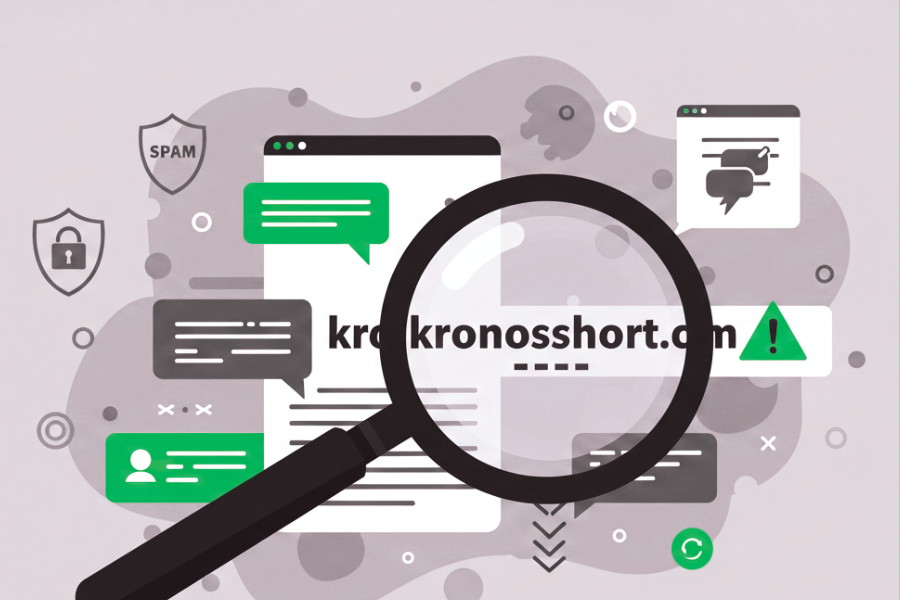
Domain obfuscation tactics raise red flags. The platform is sometimes written as “kronosshort . com” with a deliberate space to bypass spam filters and security systems. This technique helps malicious links evade automated detection.
Limited transparency about ownership creates additional concerns. The website provides minimal information about who operates it, where it’s based, or how user data is handled. Legitimate services typically display clear company information and detailed privacy policies.
Real user experiences with Kronosshort.com vary significantly, creating a mixed picture of reliability and functionality. Understanding these experiences helps potential users make informed decisions.
Some users report smooth interactions with quick page loads and straightforward link shortening. These positive experiences typically involve simple tasks without complications or unexpected behavior.
Other users describe confusing redirects that send them to unexpected destinations. These experiences often involve intermediate pages, countdown timers, or unexpected content that differs from what was anticipated.
Several users mention encountering pop-ups or interstitial advertisements. While not necessarily malicious, these interruptions create frustration and raise questions about the platform’s monetization practices.
Privacy-conscious users express concerns about tracking and data collection. URL shorteners inherently track user behavior, but the lack of transparent privacy policies on Kronosshort.com amplifies these worries.
For marketers and website owners considering Kronosshort.com for SEO purposes, understanding its actual value is essential. The platform’s SEO metrics reveal significant limitations.
Domain authority checks across multiple tools show Kronosshort.com maintains a low DA score, typically in the single digits. This severely limits the value of backlinks obtained from the platform.
Search visibility remains minimal despite the site publishing content regularly. The platform struggles to rank for competitive keywords, suggesting low trust signals from search engines.
Content quality varies considerably across published articles. Many pieces appear hastily written with minimal research, targeting low-competition keywords rather than providing genuine value to readers.
Link profile analysis reveals the site primarily builds links through reciprocal arrangements rather than earning organic backlinks. This pattern is characteristic of low-quality link networks.
Kronosshort.com faces stiff competition from well-established URL shorteners and content platforms. A direct comparison highlights significant differences in reliability, features, and trust.
Bitly offers comprehensive analytics, custom domains, and a proven track record spanning over a decade. Users trust Bitly because it clearly discloses its business practices and maintains strong security standards.
TinyURL provides simple, reliable link shortening without complicated business models. The service has operated consistently since 2002, building user confidence through transparency and stability.
Rebrandly focuses on branded short links for businesses with advanced customization options. The platform invests heavily in security features and compliance with data protection regulations.
By contrast, Kronosshort.com offers limited distinguishing features while raising concerns about transparency, security, and long-term reliability.
Understanding how Kronosshort.com gains visibility helps explain why so many users encounter it unexpectedly. Several distribution methods contribute to the platform’s presence.
Social media sharing accelerates the spread of shortened links. Users share Kronosshort.com links in comments, messages, and posts, often without knowing the final destination.
Email marketing campaigns sometimes utilize the platform’s services. Marketers seeking free or low-cost link shortening may choose Kronosshort.com despite its limitations.
Forum and comment spam occasionally feature links from the platform. Some users report encountering Kronosshort.com URLs in unsolicited messages or suspicious contexts.
Search engine results pages display content from the platform for specific long-tail keywords. This organic visibility drives curious users to investigate what Kronosshort.com offers.

Identifying warning signs helps users avoid potential problems when encountering Kronosshort.com links or content. Several red flags warrant immediate caution.
Unsolicited messages containing Kronosshort.com links should raise suspicion. Legitimate contacts rarely use obscure URL shorteners when established alternatives exist.
Links received from unknown senders deserve extra scrutiny. Even if the message appears harmless, clicking unknown shortened links exposes users to potential security risks.
The presence of spaces in “kronosshort . com” indicates deliberate filter evasion. This formatting trick helps malicious content bypass security systems designed to protect users.
Requests for personal information after clicking a Kronosshort.com link signal potential phishing attempts. Legitimate shortened links direct users to content without requiring sensitive data.
Numerous safer, more reliable alternatives to Kronosshort.com exist for users needing link shortening services. These established platforms offer better security and features.
Bitly remains the industry leader with robust analytics and security features. The platform serves millions of users daily with consistent performance and transparency.
TinyURL provides straightforward link shortening without unnecessary complications. Users appreciate its simplicity and long-standing reputation for reliability.
Short.io offers advanced features for businesses including custom domains and detailed tracking. The platform prioritizes security and compliance with data protection regulations.
Ow.ly integrates seamlessly with Hootsuite for social media managers. This specialized service caters to professional users requiring reliable link management.
Protecting yourself when encountering unfamiliar websites like Kronosshort.com requires following established security practices. These precautions minimize risks.
Always verify shortened links before clicking using preview tools. Services like CheckShortURL reveal the final destination without exposing you to potential threats.
Maintain updated browser security software and extensions. Ad blockers and anti-malware tools provide essential protection against malicious redirects and harmful content.
Never provide personal information to unfamiliar websites. Legitimate services don’t require sensitive data for simple tasks like accessing shortened links.
Use secure browsing habits including HTTPS verification. Check for the padlock icon in your browser’s address bar before interacting with any website.
Kronosshort.com’s recent registration raises important questions about trustworthiness and long-term viability. Domain age significantly impacts user confidence.
Newly registered domains lack the established history that builds credibility. Users naturally feel more comfortable with platforms that have operated successfully for years.
Search engines consider domain age as a trust signal. Older websites generally receive preferential treatment in rankings compared to new domains.
Scammers frequently use new domains for fraudulent operations. While new domains aren’t automatically suspicious, they warrant extra scrutiny regarding legitimacy.
Long-term operational sustainability becomes questionable with new platforms. Users can’t predict whether Kronosshort.com will maintain services consistently over time.
URL shorteners inherently carry security risks that users must understand before clicking shortened links. These risks apply broadly but intensify with lesser-known services.
Destination uncertainty represents the primary danger. Shortened URLs hide the final destination, making it impossible to assess safety before clicking.
Malware distribution becomes easier through shortened links. Attackers disguise malicious websites behind innocent-looking shortened URLs.
Phishing attempts exploit link shorteners to appear legitimate. Scammers use shortened links in emails and messages to bypass security filters.
Privacy violations occur through tracking capabilities. Link shorteners monitor user behavior, collecting data about clicks, locations, and devices.
Examining the quality of content published on Kronosshort.com reveals significant concerns about editorial standards and value proposition.
Article depth remains superficial across most published content. Many pieces provide basic information without thorough research or expert insights.
Factual accuracy varies considerably between different articles. Some content contains unverified claims or outdated information presented as current.
Writing quality demonstrates inconsistency suggesting multiple untrained contributors. Grammar errors, awkward phrasing, and poor structure appear throughout the site.
Topic selection appears driven by keyword targeting rather than reader needs. The platform publishes content across unrelated subjects without developing expertise in any area.
Kronosshort.com participates in the broader link-selling industry that undermines search engine quality and user experience. Understanding this context is important.
Link schemes violate search engine guidelines explicitly. Google and other search engines penalize websites participating in paid link exchanges.
Quality degradation affects the entire web ecosystem. When low-quality sites sell links, they pollute search results with unhelpful content.
Buyer risk increases when purchasing links from dubious sources. Websites acquiring backlinks from Kronosshort.com may suffer ranking penalties.
Sustainability concerns plague the link-selling business model. Platforms built primarily on link sales often disappear suddenly, leaving users without recourse.
Privacy concerns surrounding Kronosshort.com extend beyond typical URL shortener issues due to limited transparency about data handling practices.
No comprehensive privacy policy appears readily accessible on the platform. Users cannot determine how their data is collected, used, or protected.
Third-party data sharing practices remain completely unclear. The website doesn’t disclose whether user information is sold or shared with advertisers.
Cookie usage and tracking technologies lack explanation. Users have no information about what data is collected when they visit the site.
Compliance with data protection regulations appears questionable. The platform shows no evidence of adhering to GDPR, CCPA, or other privacy frameworks.
Examining Kronosshort.com’s technical foundation reveals important information about reliability, performance, and potential vulnerabilities.
Server location and hosting provider information remains obscured. While privacy for small sites is understandable, it reduces accountability.
SSL certificate implementation appears standard but basic. The site uses HTTPS, providing basic encryption for data transmission.
Page load speeds vary depending on content and redirects. Some users report fast loading while others experience delays.
Mobile responsiveness functions adequately for basic content. The site displays reasonably well on smartphones and tablets.
Understanding the typical Kronosshort.com user base provides context about the platform’s actual applications and popularity.
Budget-conscious marketers seeking cheap backlinks represent one user segment. These individuals prioritize cost over quality when building link profiles.
Inexperienced bloggers unfamiliar with SEO best practices sometimes use the platform. They may not understand the risks associated with low-quality backlinks.
Casual users occasionally shorten links without researching alternatives. These individuals stumble upon Kronosshort.com through search results or recommendations.
Potentially malicious actors might exploit the platform’s lack of oversight. The minimal verification requirements could enable abuse by scammers.
Industry professionals and security experts have weighed in on Kronosshort.com, providing valuable perspectives on the platform’s legitimacy and value.
SEO specialists generally advise against using Kronosshort.com for link building. The low domain authority provides negligible benefits while carrying penalty risks.
Cybersecurity researchers note the platform’s use of obfuscation techniques. The “kronosshort . com” spacing tactic raises legitimate security concerns.
Digital marketing consultants recommend established alternatives for URL shortening. They cite reliability, analytics, and trust as key advantages of proven platforms.
Web safety advocates encourage extreme caution with Kronosshort.com links. They recommend always previewing destinations before clicking shortened URLs.

Questions about Kronosshort.com’s long-term viability affect users considering depending on the platform for important purposes.
Business model sustainability appears questionable given the competitive landscape. Established free alternatives make monetization challenging for new entrants.
Link rot becomes a serious concern if the platform disappears. Users relying on Kronosshort.com links could find them broken without warning.
Service continuity lacks guarantees or commitments. The platform provides no assurance about maintaining operations indefinitely.
Migration difficulties arise if users need to transition away. Unlike established services, Kronosshort.com offers no clear export or transition options.
Legal considerations surrounding Kronosshort.com raise important questions about accountability and user protection.
Terms of service documentation appears minimal or absent. Users have little legal protection regarding service changes or disputes.
Liability disclaimers and limitations remain unclear. The platform doesn’t clearly state its responsibilities or limitations.
Intellectual property considerations for published content lack clarity. Contributors don’t receive clear information about rights and ownership.
Regulatory compliance in various jurisdictions cannot be verified. The platform shows no evidence of adhering to location-specific regulations.
Website owners must understand how associating with Kronosshort.com might affect their search engine performance.
Direct ranking penalties could result from low-quality backlinks. Search engines may devalue or penalize sites linked from Kronosshort.com.
Trust signal degradation occurs through association with questionable platforms. Search algorithms consider the quality of incoming and outgoing links.
Manual review risks increase when using link schemes. Search engines may flag websites participating in obvious link-buying arrangements.
Long-term SEO damage can accumulate gradually. Even if immediate penalties don’t occur, algorithm updates may retroactively punish poor link practices.
Understanding exactly how Kronosshort.com generates revenue illuminates its priorities and potential conflicts of interest.
Guest posting fees range from $20 to $50 per article. Website owners pay to publish content on the platform, regardless of quality.
Backlink packages sell at various price points depending on quantity. Buyers receive DoFollow links that may provide minimal SEO value.
Advertising revenue likely supplements direct sales. Redirects and interstitial pages may display ads generating additional income.
Affiliate commissions could occur through product recommendations. Some published content may include affiliate links generating commissions.
Gathering perspectives from users who have interacted with Kronosshort.com provides valuable real-world insights.
Positive feedback remains sparse across review platforms. Few users actively recommend the platform for its services.
Neutral experiences dominate most user accounts. Many people report basic functionality without notable benefits or problems.
Negative reviews focus on deceptive practices and low value. Users criticize the platform for misleading presentations and poor quality.
Warning posts from security-conscious users appear regularly. Community members caution others about potential risks.
Examining how Kronosshort.com performs on mobile devices reveals important information for the majority of internet users.
Responsive design functions adequately for basic content viewing. The site adapts reasonably well to different screen sizes.
Mobile redirect behavior sometimes differs from desktop experiences. Users report varying outcomes when clicking shortened links on phones.
App availability remains non-existent for the platform. Unlike major competitors, Kronosshort.com offers no dedicated mobile applications.
Loading speeds on mobile connections vary considerably. Some users experience delays accessing content through cellular networks.
Beyond legal and security concerns, ethical questions surround Kronosshort.com’s operations and business practices.
Transparency failures undermine user trust fundamentally. The platform’s lack of clear ownership and practices raises ethical red flags.
Contribution to web spam affects overall internet quality. Link-selling platforms contribute to the degradation of search engine results.
User protection prioritization appears secondary to monetization. The business model suggests profit takes precedence over user welfare.
Environmental impact from low-quality content production wastes resources. Creating content primarily for SEO manipulation rather than user value is ethically questionable.
Predicting Kronosshort.com’s trajectory helps users make informed decisions about long-term engagement with the platform.
Search engine algorithm updates may negatively impact the platform. Ongoing improvements to detecting link schemes could devalue its offerings.
Competition from established services limits growth potential. Winning users from trusted alternatives requires significant differentiation.
Regulatory pressure on link-selling practices may increase. Governments and search engines continue cracking down on manipulative SEO tactics.
Platform evolution or pivot possibilities exist theoretically. Kronosshort.com could potentially improve practices, though current trends suggest otherwise.
These universal principles apply when evaluating Kronosshort.com or any unfamiliar website.
WHOIS lookup reveals domain registration details. Check when the domain was created and whether ownership information is public.
SSL certificate verification confirms basic security measures. Look for the padlock icon and valid HTTPS encryption.
Online reputation checks across multiple sources provide balanced perspectives. Search for reviews, complaints, and security warnings.
Link preview tools reveal shortened URL destinations. Services like CheckShortURL or Unshorten.It show where links lead before clicking.
Multiple free tools help users evaluate Kronosshort.com’s trustworthiness and technical qualities.
VirusTotal scans URLs for malware and security threats. Upload suspicious links to check against dozens of security databases.
ScamAdviser provides automated trust scores based on multiple factors. The service evaluates domain age, location, and other trust signals.
URLVoid checks websites against multiple blacklists simultaneously. This comprehensive scan reveals if security services have flagged the site.
Moz’s Link Explorer analyzes domain authority and backlink profiles. Understanding these metrics helps assess SEO value and credibility.
Understanding why people click shortened links despite risks helps explain Kronosshort.com’s continued usage.
Curiosity drives clicks even when caution is warranted. Human nature compels investigation of unknown destinations.
Trust in sources supersedes platform awareness. Users click links shared by friends despite using unfamiliar shorteners.
Convenience outweighs security considerations for many users. The effort required to verify links feels excessive for busy individuals.
Lack of awareness about risks leaves users vulnerable. Many people don’t understand the potential dangers of shortened URLs.
Improving general internet safety knowledge protects you from Kronosshort.com and similar questionable platforms.
Recognize common scam tactics and red flags. Education about phishing, malware distribution, and fraud helps prevent victimization.
Understand basic cybersecurity principles and tools. Learning about encryption, authentication, and safe browsing builds protection.
Develop critical thinking about online content and services. Question claims, verify sources, and avoid trusting unfamiliar platforms automatically.
Stay updated on emerging threats and protection methods. Cybersecurity landscapes evolve constantly, requiring ongoing education.
Understanding appropriate URL shortener usage helps you make informed decisions about when and how to use these services.
Social media character limits justify shortener usage. Platforms like Twitter benefit from compact links that preserve message space.
Professional branding purposes support legitimate shortening. Custom branded links enhance marketing materials and track campaign performance.
Analytics and tracking needs validate shortener deployment. Understanding click patterns and user behavior drives marketing optimization.
Temporary sharing situations may warrant shortening. Quick exchanges where long-term reliability isn’t critical could justify usage.
Taking action when you encounter questionable platforms like Kronosshort.com helps protect the broader internet community.
Google Safe Browsing accepts user reports of malicious websites. Submit suspicious URLs to help improve automated protection systems.
Your email provider likely offers phishing report options. Forward suspicious messages to help filter future threats.
Antivirus companies welcome user submissions of potential threats. Contributing to threat databases strengthens collective security.
Social media platforms provide reporting mechanisms for malicious content. Flag suspicious links shared on networks to protect other users.
Thoroughly researching platforms before engagement prevents problems and protects your interests.
Investment of time upfront saves significant problems later. Five minutes of research prevents hours of damage control.
Reputation checks across multiple sources provide balanced views. Single reviews may be biased; aggregate feedback reveals patterns.
Professional opinions carry weight in specialized areas. Security experts and industry professionals offer informed perspectives.
Personal risk tolerance should guide final decisions. Even safe platforms may not align with your specific needs and comfort levels.
Synthesizing all available information empowers you to decide whether engaging with Kronosshort.com makes sense for your situation.
Weigh documented risks against potential benefits carefully. The platform’s limited advantages rarely justify the security and quality concerns.
Consider opportunity costs of using suboptimal services. Time and energy spent on Kronosshort.com could go toward better alternatives.
Evaluate alignment with your values and standards. Supporting questionable platforms conflicts with maintaining high personal standards.
Remember that skepticism protects rather than limits. Questioning unfamiliar services demonstrates wisdom, not paranoia.
Kronosshort.com primarily functions as a URL shortening service that also publishes blog content. It allows users to convert long web addresses into shorter, more shareable links while offering guest posting opportunities.
Kronosshort.com has a medium-to-low trust score and presents several security concerns. While not definitively malicious, users should exercise caution when clicking links from this platform and verify destinations before proceeding.
Backlinks from Kronosshort.com offer minimal SEO value due to low domain authority. Search engines may devalue or penalize sites associated with low-quality link networks like this platform.
The space between “kronosshort” and “.com” is a deliberate obfuscation tactic to bypass spam filters and security systems. This technique helps questionable links evade automated detection.
The platform generates revenue through guest post sales ($20-$50 per article), backlink packages, advertising on redirect pages, and potentially affiliate commissions from published content.
Ownership information remains largely hidden with minimal transparency about who operates the platform. This lack of disclosure is a significant red flag for potential users.
Yes, established services like Bitly, TinyURL, Rebrandly, and Short.io offer superior security, reliability, analytics, and transparency compared to Kronosshort.com.
Potentially yes. Association with low-quality link networks can result in search engine penalties or devaluation of your site’s authority.
Use link preview tools like CheckShortURL or Unshorten.It to reveal the final destination before clicking. Additionally, scan URLs with VirusTotal for security threats.
Run a full antivirus scan immediately, change passwords for any accounts accessed recently, monitor for unusual activity, and clear your browser cache and cookies.
After comprehensive analysis of Kronosshort.com through multiple lenses—security, business practices, user experiences, and technical evaluation—a clear picture emerges.
While the platform isn’t an outright scam, it operates in the gray area between legitimate service and questionable practice. The combination of low domain authority, minimal transparency, obfuscation tactics, and link-selling business model creates a risk profile that vastly outweighs any potential benefits.
Users seeking URL shortening services have numerous superior alternatives that offer better security, reliability, and features without the associated concerns.
For website owners considering Kronosshort.com for SEO purposes, the risks of search engine penalties and association with low-quality link networks make engagement inadvisable.