
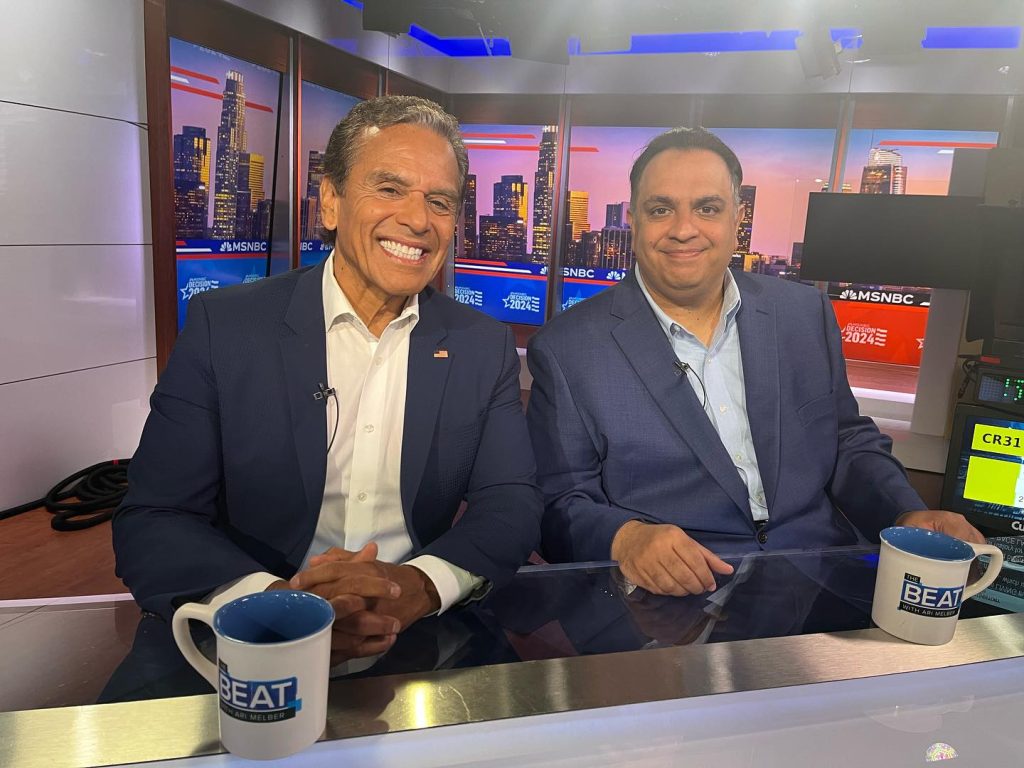
Chaitanya Komanduri ethnicity is a topic that draws enormous curiosity from fans and followers of this prominent American political commentator.
Chaitanya Komanduri, widely known as Chai Komanduri, is of South Asian ethnicity, with deep roots tracing back to Hyderabad, India.
Born and raised in Washington, D.C., he is a proud Indian-American who blends rich South Asian cultural heritage with modern American values.
His ethnic background has shaped his worldview, political philosophy, and media presence in powerful ways.
| Detail | Information |
|---|---|
| Full Name | Chaitanya K. Komanduri |
| Nickname | Chai Komanduri |
| Date of Birth | January 16, 1973 |
| Age (2026) | 53 Years Old |
| Birthplace | Washington, D.C., USA |
| Nationality | American |
| Ethnicity | South Asian-American (Indian Heritage) |
| Ancestral Roots | Hyderabad, Telangana, South India |
| Surname Origin | Telugu, Andhra Pradesh / Telangana Region |
| Religion | Not Publicly Confirmed |
| Parents’ Origin | South India (father: Krishna Komanduri) |
| Languages | English (primary); possibly Telugu |
| Profession | Political Strategist, MSNBC Commentator, UCLA Advocate |
| Net Worth (2026) | $1.5 Million – $3 Million (Estimated) |

Chaitanya Komanduri ethnicity is South Asian-American, rooted specifically in the Indian subcontinent. He is of Indian descent, with his family originating from Hyderabad, which today is the capital city of the Indian state of Telangana.
His ethnic background makes him part of the broader Telugu-speaking community of South India. The Komanduri surname itself is strongly associated with the Telugu-speaking states of Andhra Pradesh and Telangana, as confirmed by surname distribution data showing that over 90 percent of people bearing this name live in these two states.
Chai proudly identifies as a South Asian-American, representing a generation of Indian immigrants and their children who have risen to significant positions of influence in American public life.
The surname Komanduri is distinctly Telugu in origin. According to surname research data, approximately 56 percent of people with the Komanduri surname are found in Andhra Pradesh, while another 35 percent are in neighboring Telangana, with the remaining small percentage spread across Karnataka and other parts of India.
Like many Telugu surnames, Komanduri is believed to be a place-based or “Inti Peru” (house name) surname. Telugu family names are commonly derived from the village or town of ancestral origin, a naming tradition deeply embedded in South Indian culture.
The name carries significant cultural weight within the Telugu community. It connects Chai Komanduri directly to the rich civilizational history of the Deccan Plateau region, which produced some of India’s most distinguished dynasties, scholars, and cultural traditions.
Outside India, the Komanduri surname is most commonly found in the United States, reflecting the large Telugu immigrant population that settled in America from the 1960s onward following the Immigration and Nationality Act of 1965.
Chai Komanduri’s father is named Krishna Komanduri. His father emigrated from Hyderabad, India, to the United States before Chai was born. The name “Krishna” is a traditional Hindu name widely used in South India, reflecting the family’s cultural and religious roots in the Telugu tradition.
His mother’s identity has not been publicly confirmed. It is believed that both parents are of South Indian heritage, though the exact details of his mother’s background remain private.
Chai grew up in Washington, D.C., where his parents settled after emigrating from India. Growing up in the American capital as the child of South Indian immigrants gave him a unique bicultural identity — one foot in the rich traditions of Telugu India and the other firmly planted in the heart of American democracy.
He reportedly has two siblings, though their identities and backgrounds have not been shared publicly. The Komanduri family maintains a deliberately private profile despite Chai’s very public career.
Hyderabad, the city from which Chai Komanduri’s family originates, is one of India’s most historically significant and cosmopolitan cities. As the capital of Telangana state, it has a rich heritage spanning over four centuries.
Hyderabad was founded in 1591 by Muhammad Quli Qutb Shah and became famous for its blend of Hindu and Islamic cultures under the Nizam dynasty. This cultural synthesis produced a unique Hyderabadi identity known for sophistication, multilingualism, and intellectual achievement.
The city is also home to Osmania University, one of India’s oldest institutions of higher learning, and has long been a center of academic excellence. Today, Hyderabad is recognized globally as a major technology and business hub, earning it the nickname “Cyberabad.”
Families from Hyderabad who emigrated to the United States — like the Komanduri family — often brought with them strong values around education, intellectual rigor, and civic engagement. These values clearly shaped Chai Komanduri’s extraordinary career.
Chai Komanduri’s rise to prominence is part of a broader story of South Asian-Americans making their mark on American politics and media. The Indian-American community has grown significantly since the mid-20th century and is now one of the most educated and economically successful immigrant groups in the United States.
Indian-Americans have risen to prominence in politics, technology, medicine, and academia. Figures like Kamala Harris (of Indian and Black heritage), Nikki Haley, Bobby Jindal, Ro Khanna, Pramila Jayapal, and Ari Melber (whose mother is Israeli-Jewish) represent the growing visibility of South Asian and diverse heritage in American public life.
Chai Komanduri stands alongside these figures as a representative of South Asian-American political influence. His weekly “Chai Day” appearances on MSNBC with Ari Melber — himself of Jewish heritage — have been celebrated specifically as a symbol of multicultural American media.
A widely shared tweet celebrated the two commentators by saying “What could be better than 2 amazing #IndianAmericans” — a sentiment that encapsulates how their visible partnership on national television has resonated with diverse American audiences.
Chaitanya Komanduri’s South Asian heritage is not just biographical background — it actively informs the way he thinks and communicates about American politics. His multicultural perspective allows him to see political questions through a lens that many homogeneous commentators cannot.
His personal motto — “Instead of letting differences separate us, why not use these differences to bring us together” — reflects a philosophy deeply rooted in his experience as an Indian-American navigating multiple cultural identities. This message resonates powerfully in an era of increasing social and political division.
He draws on an unusually broad intellectual toolkit that includes psychology, evolutionary biology, social science, history, and philosophy. This interdisciplinary approach reflects an educational tradition common in South Indian families that places high value on comprehensive learning.
His ability to build coalitions and bridge divides — a skill he has demonstrated at the highest levels of American political campaigning — is also consistent with the mediating, bridge-building traditions of the cosmopolitan South Indian intellectual class from which his family emerges.
While there is no public confirmation of which Indian languages Chai Komanduri speaks, his family’s roots in Hyderabad strongly suggest a connection to the Telugu language. Telugu is the official language of Andhra Pradesh and Telangana, spoken by approximately 83 million people worldwide.
Telugu is known for being exceptionally rich in literary tradition. It is often called “the Italian of the East” due to its melodic quality and was the court language of some of South India’s greatest empires, including the Vijayanagara Empire.
The Telugu diaspora in the United States is particularly prominent in technology and academic fields. Cities like San Jose, San Francisco, Dallas, Houston, Chicago, and Washington, D.C. — where Chai grew up — have significant Telugu-speaking communities.
The cultural practices of Telugu families, including emphasis on education, discipline, storytelling, and public service, align closely with the professional values that Chai Komanduri has demonstrated throughout his career.
The Komanduri family’s immigration story is part of a larger wave of Indian professionals who came to the United States following the Immigration and Nationality Act of 1965. This landmark legislation abolished the national-origins quota system and opened the door for skilled immigrants from Asia, including India.
The Indian immigrants who arrived in the late 1960s and 1970s were predominantly highly educated professionals — doctors, engineers, academics, and scientists. Many settled in major American cities and worked their way into respected positions in American institutions.
Washington, D.C., where Chai was born and raised, attracted many Indian professionals drawn by opportunities in government, policy, diplomacy, and international organizations. Growing up in this environment gave Chai an early and intimate exposure to the workings of American political power.
The Komanduri family’s journey from Hyderabad to Washington, D.C. represents the classic immigrant story of sacrifice, education, and upward mobility. Chai’s extraordinary career is a direct reflection of that story.
Chai Komanduri embodies the dual cultural identity of the second-generation Indian-American experience. He was born in the United States and is American by nationality, yet he is deeply connected to his South Indian roots through family, heritage, and cultural values.
This duality is a source of both personal richness and professional strength. He understands America from the inside as a native-born citizen, while also understanding the experience of the immigrant and the outsider — a perspective that informs his empathetic, coalition-based approach to politics.
His ability to move fluidly between these two worlds — American political institutions and South Asian cultural traditions — gives him a distinctive voice that few commentators can replicate. It helps explain why he has been so effective at reaching diverse audiences on national television.
His South Asian-American identity is not something he conceals or separates from his professional life. It is, instead, woven into everything he does — from his philosophy of unity through diversity to his sharp, globally-informed analysis of American political trends.

The nickname “Chai” carries its own cultural significance. In South Asian languages, “Chai” (चाय) is the widely used word for tea — a central element of daily life across India, Pakistan, and the broader South Asian world.
The nickname humanizes Chaitanya’s somewhat formal full name while simultaneously evoking his Indian roots. For South Asian-Americans watching him on television, the name carries an instant sense of familiarity and cultural connection.
It is not clear whether the nickname was chosen deliberately for its cultural resonance or simply emerged naturally as a shortened form of “Chaitanya.” Either way, it has become one of the most recognizable personal brands in American political media.
“Chaitanya” itself is a Sanskrit name meaning “consciousness,” “life force,” or “divine energy.” It is a name with deep roots in Hindu philosophy, associated with the 15th-century Bengali saint Chaitanya Mahaprabhu, who founded the Gaudiya Vaishnava devotional tradition. The name reflects the spiritual and philosophical dimensions of South Indian cultural identity.
Chai Komanduri’s extraordinary career — from Democratic campaign strategist to UCLA government relations chief to MSNBC commentator — reflects values that are deeply embedded in South Indian immigrant culture.
The emphasis on education is evident in his degrees from NYU and UCLA. The commitment to public service is seen in his decades of work on Democratic campaigns and at a major public university. The intellectual breadth he displays on television reflects the multidisciplinary learning tradition that South Indian families have long valued.
His work building political coalitions mirrors the cultural skill of navigating complexity and bringing together diverse groups — a skill that Hyderabadi culture, with its blended Hindu and Islamic traditions, has practiced for centuries.
His success demonstrates that the values immigrants bring from their home cultures can become powerful assets in their adopted country. The Komanduri family’s journey from Hyderabad to Washington, D.C. has produced one of the most distinctive and respected voices in American political media.
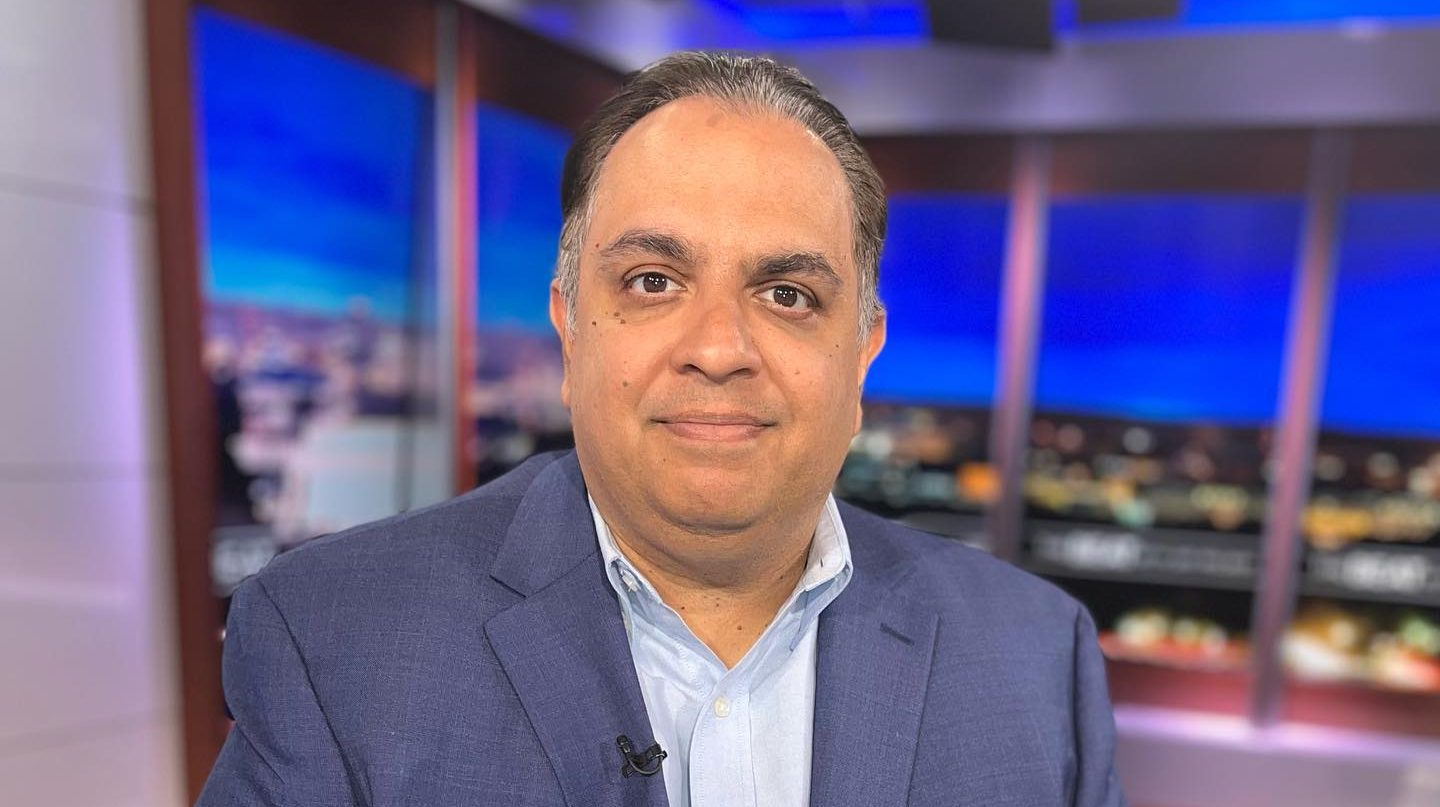
Chai Komanduri’s religion has not been officially confirmed. One source suggests he may follow Christianity, though this has not been verified by Chai himself or through credible public statements.
Given his family’s roots in Hyderabad and Telugu South India, his ancestral background is most likely Hindu — as the majority of Telugu-speaking people from the region practice Hinduism. However, Hyderabad is also home to a significant Muslim population and a smaller Christian community.
It is entirely possible that Chai practices a form of private spirituality that blends influences from multiple traditions — consistent with the syncretic cultural environment of Hyderabad. Without direct confirmation from Chai himself, his religious affiliation remains one of the few private aspects of an otherwise very public career.
Chaitanya Komanduri has been an outspoken advocate for diversity and inclusion throughout his career. His personal philosophy of using differences to bring people together is not just a professional motto — it reflects the lived experience of growing up between two cultures.
At UCLA, he has consistently championed policies that support diverse students, faculty, and staff. His work on government relations regularly addresses issues of equity, access, and representation in public institutions.
On MSNBC, he has used his platform to highlight the importance of multicultural voices in political commentary. His presence itself — as a Telugu Indian-American on prime-time national television — is a form of representation that matters deeply to South Asian-American communities across the country.
He models a form of American identity that is simultaneously deeply patriotic and proudly multicultural — a combination that represents the best of the American immigrant tradition.
Chai Komanduri’s visibility on MSNBC has had a meaningful impact on the representation of South Asian-Americans in political media. For decades, political commentary on American television was dominated by white commentators, with very few voices from South Asian or other non-European backgrounds.
His regular “Chai Day” appearances on “The Beat with Ari Melber” have helped normalize the presence of South Asian-Americans as authoritative voices on American politics. Young Indian-Americans watching him on television see someone who looks like them speaking confidently about the most important political issues of the day.
This visibility matters beyond symbolism. It expands the range of perspectives available to American viewers and helps counteract the implicit biases that have historically limited diverse voices in political media. Chai Komanduri’s success is not just a personal achievement — it is a contribution to the broader diversity and health of American democracy.
Washington, D.C. has long been home to one of America’s most vibrant Indian diaspora communities. As the political capital of the United States, it attracts Indian-Americans working in government, policy, law, international development, and academia.
Growing up in this environment gave Chai Komanduri an early and unusually direct exposure to the intersection of Indian heritage and American power. He could observe both how American political institutions function and how immigrant communities navigate and shape those institutions.
The D.C. Indian diaspora is particularly active in Democratic politics, policy think tanks, and nonprofit advocacy — fields that Chai himself went on to excel in. His upbringing in this community was a natural incubator for the career he eventually built.
This environment also reinforced the bicultural identity that defines Chai Komanduri. He was immersed in American political culture from childhood, while simultaneously being rooted in a South Asian immigrant community that maintained strong ties to Indian values, language, and traditions.

In 2026, the visibility of South Asian-Americans in American media and politics is greater than ever. Yet the journey to that visibility has been long, and figures like Chaitanya Komanduri have played an important role in making it possible.
Each time Chai Komanduri appears on MSNBC to break down a political story, he reinforces for millions of viewers that expertise, authority, and insight in American politics can come from a South Asian-American voice. This is not a trivial contribution in a media landscape that has historically been far less diverse.
His 2026 presence on national television, after more than two decades in political strategy and media, represents the maturation of a career and an identity. He has not had to choose between his Indian heritage and his American career. He has woven them together into something uniquely powerful.
Chaitanya Komanduri’s story is ultimately a story about what American identity really means — not a single monolithic culture, but a living, constantly renewing synthesis of diverse heritages all contributing to a shared democratic project.
Chaitanya Komanduri’s ethnicity is South Asian-American. His family traces its roots to Hyderabad, India, making him of Telugu Indian heritage.
Yes, Chaitanya Komanduri is of Indian descent. His parents emigrated from Hyderabad, South India, to the United States before his birth.
The Komanduri family is from Hyderabad, which is currently the capital of the Indian state of Telangana in South India.
The Komanduri surname is of Telugu origin and is primarily found in Andhra Pradesh and Telangana. Like many Telugu surnames, it is believed to be a place-based or ancestral house name.
Chai speaks English as his primary language. Given his Hyderabadi roots, he may also have some familiarity with Telugu, though this has not been publicly confirmed.
His religious affiliation has not been officially confirmed. His ancestral South Indian roots suggest a Hindu background, but some sources indicate possible Christian affiliation. No verified confirmation is available.
His South Asian-American identity informs his philosophy of unity through diversity, his coalition-building skills, and his unique multicultural perspective on American politics and policy.
Chaitanya is a Sanskrit name meaning “consciousness” or “divine energy.” It is associated with the 15th-century Hindu saint Chaitanya Mahaprabhu, founder of the Gaudiya Vaishnava tradition.
He is one of the most visible South Asian-American political commentators on national television, helping expand representation and diversity in American political media through his MSNBC appearances.
He was born in Washington, D.C., United States. He is an American citizen by birth, while his South Asian ethnicity comes from his parents’ Indian heritage.
Chaitanya Komanduri ethnicity is a fascinating story of Indian-American identity, cultural pride, and professional achievement.
His South Asian roots in Hyderabad, Telangana, have given him a rich cultural heritage that informs every aspect of his work as a political strategist, MSNBC commentator, and UCLA advocate.
The Telugu surname Komanduri connects him to centuries of South Indian history, intellectual tradition, and community values.
In 2026, Chai Komanduri stands as one of the most important South Asian-American voices in American political life — a living example of how immigrant heritage and American ambition can come together to create something truly exceptional.