
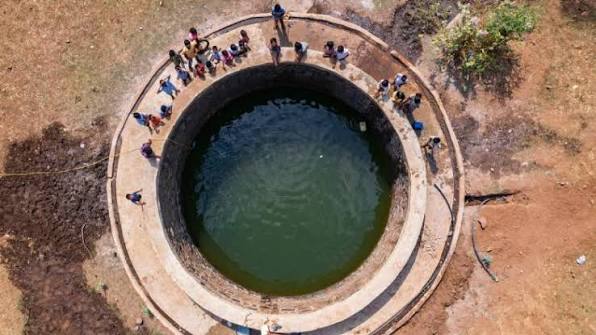
Why has groundwater use increased over time is a question tied directly to population growth, farming demands, and shrinking surface water supplies. As more people need freshwater for drinking, farming, and industry, groundwater has become the backup source many regions rely on.
This shift did not happen overnight. It built up gradually as rivers, lakes, and springs became polluted, overused, or simply insufficient for growing demand.
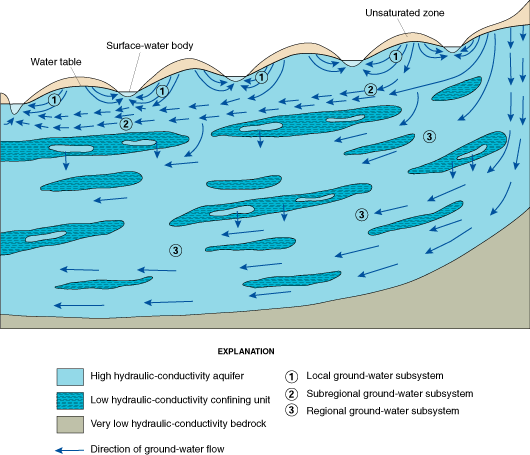
Groundwater is freshwater stored underground in soil and rock formations called aquifers. It makes up a large share of the planet’s total unfrozen freshwater supply.
People access groundwater by digging or drilling wells that reach down into these saturated layers below the water table.
Because groundwater is often hidden from view, many people underestimate how heavily modern life depends on it for drinking water, farming, and industrial use.
Groundwater use has risen steadily for several connected reasons. Population growth sits at the center, but it is far from the only factor.
Below are the core drivers behind this long-term increase in groundwater reliance.
1. Rapid Population Growth
As the global population has grown, so has the demand for freshwater. More people simply means more water needed for drinking, cooking, sanitation, and daily life.
Population growth alone has been described as the principal reason behind rising groundwater use across most regions of the world.
2. Pollution of Surface Water Sources
Rivers, lakes, and springs have become increasingly polluted from industrial waste, agricultural runoff, and urban development.
Once these surface sources become unsafe or unreliable, communities are forced to turn to groundwater as a cleaner alternative.
3. Urbanization and Shifting Settlement Patterns
In preindustrial times, people typically settled near visible surface water. Modern urban growth has changed that pattern significantly.
Cities now often expand into areas without direct access to rivers or lakes, making groundwater wells the more practical water source.
4. Expansion of Irrigated Agriculture
Farming is by far the largest consumer of groundwater worldwide. Irrigation systems expanded rapidly throughout the 20th century to boost food production.
Globally, about 70 percent of all groundwater withdrawals go toward agricultural irrigation, making farming the single biggest driver of increased use.
5. Climate Change and Reduced Surface Water Supply
Warmer temperatures increase evaporation rates, which reduces the amount of usable surface water available in rivers, lakes, and reservoirs.
As surface water becomes less predictable, groundwater is increasingly used to fill the gap during droughts and dry seasons.
6. Industrial and Economic Growth
Industries such as manufacturing, mining, and energy production require large volumes of water for processing and cooling.
As economies have grown and diversified, industrial groundwater demand has risen alongside agricultural and residential use.
7. Lifestyle and Consumption Changes
Modern diets and consumption habits require more water than in previous generations, especially diets higher in water-intensive foods like meat and dairy.
This shift in lifestyle has quietly added to overall freshwater demand, indirectly increasing pressure on groundwater resources.
| Driver | How It Increases Groundwater Use |
|---|---|
| Population growth | More people need water for daily life |
| Surface water pollution | Unsafe rivers and lakes push reliance to wells |
| Urbanization | Cities often lack direct surface water access |
| Agricultural irrigation | Farming consumes about 70% of withdrawals globally |
| Climate change | Reduces surface water through higher evaporation |
| Industrial growth | Factories and mining require large water volumes |
| Lifestyle shifts | Water-intensive diets raise overall demand |
Groundwater was used in preindustrial times, but on a much smaller scale than today. Most communities relied primarily on visible surface water sources.
As urbanization and population growth accelerated during industrial times, groundwater use expanded significantly to meet rising freshwater demands.
This shift marked a long-term change in how societies source their water, moving from surface-dependent systems to a mix of surface and underground sources.
| Period | Primary Water Source | Groundwater Role |
|---|---|---|
| Preindustrial times | Rivers, lakes, springs | Minimal, supplementary use |
| Early industrial era | Mixed surface and groundwater | Growing due to urban expansion |
| Modern era (2026) | Groundwater and surface water combined | Major, often primary source in many regions |
Global freshwater use has increased roughly six-fold since 1900, driven by population growth and more resource-intensive consumption patterns. This surge accelerated sharply after the 1950s.
Since 2000, the overall growth rate has slowed somewhat, though usage levels remain historically high across most of the world.
Groundwater specifically has followed a similar upward trend, with agriculture, industry, and urban demand all contributing to the long-term rise.
| Statistic | Data Point |
|---|---|
| Freshwater use increase since 1900 | About six-fold |
| Global groundwater withdrawals for agriculture | Approximately 70% |
| U.S. groundwater withdrawals for irrigation | About 71% |
| Aquifers depleted faster than they recharge | 21 of the 37 largest aquifers globally |
| U.S. groundwater depleted since 1950 | Around 1,000 cubic kilometers |
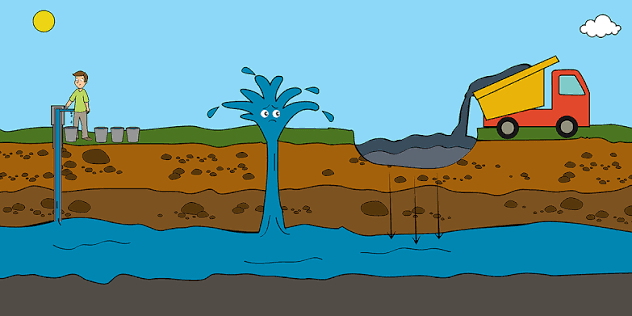
Irrigated farmland accounts for roughly 70 percent of all freshwater diverted by human activity worldwide. Food production simply requires far more water than direct drinking needs.
Producing food for one person can require far more water than that person drinks directly in a day, since crops and livestock both depend heavily on irrigation.
In arid and semi-arid regions, groundwater is often the only consistent water source available for agriculture, making it essential rather than optional.
The High Plains Aquifer, commonly known as the Ogallala, spans several U.S. states and has experienced some of the most severe groundwater depletion on record.
Groundwater levels in parts of this aquifer have declined by more than 50 meters in certain areas due to decades of heavy irrigation pumping.
Because natural recharge rates are extremely slow compared to pumping rates, much of this depletion is considered effectively irreversible within a human lifetime.
| Factor | Detail |
|---|---|
| Main cause of depletion | Decades of irrigation pumping |
| Maximum water-level decline | Over 50 meters in some areas |
| Natural recharge rate | Roughly 0.5 to 1 inch per year |
| Typical pumping rate | 15 to 20 inches per year |
| Recovery timeframe | Estimated thousands of years |
Higher temperatures increase evaporation from rivers, lakes, and soil, reducing the amount of surface water naturally available for human use.
This forces more communities and farms to depend on groundwater during dry periods, accelerating long-term extraction rates.
Climate models generally expect this trend to continue, meaning groundwater will likely play an even larger role in future water security.
Continued heavy groundwater extraction is not without consequences. Several serious issues tend to follow long-term overuse.
Groundwater Overdraft
Overdraft occurs when the rate of extraction exceeds the rate of natural recharge. Over time, this steadily lowers the water table.
Land Subsidence
As underground water is removed, the ground above can slowly sink or compact, sometimes causing lasting structural damage to roads and buildings.
Reduced Crop Yields
When groundwater becomes scarce or wells run dry, farmers face reduced irrigation capacity, which can directly lower agricultural productivity.
Water Quality Decline
Excessive pumping can allow saltwater or contaminants to intrude into freshwater aquifers, degrading the overall quality of remaining groundwater.
| Consequence | Impact |
|---|---|
| Groundwater overdraft | Water table drops steadily over time |
| Land subsidence | Ground sinking, infrastructure damage |
| Reduced crop yields | Less reliable irrigation for farmers |
| Water quality decline | Saltwater or contaminant intrusion |
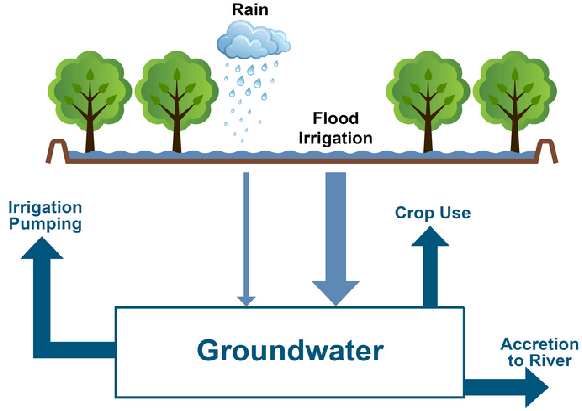
Groundwater use has not increased evenly across the world. Some regions rely on it far more heavily than others, based on climate, population density, and access to surface water.
United States
In the United States, roughly 71 percent of groundwater withdrawals go toward irrigating croplands, with the Great Plains and California’s Central Valley among the most affected regions.
India
India is the world’s largest consumer of groundwater, with wells supplying about 60 percent of the nation’s total irrigation supply. Rapid tube well construction since the 1960s greatly expanded this reliance.
Bangladesh
Shallow groundwater pumping in Bangladesh has grown dramatically, with the number of tube wells rising from around 0.1 million in 1981 to more than 1.5 million by 2013.
Arid and Semi-Arid Regions
In dry climates worldwide, groundwater is often the only consistent water source available, making these regions especially vulnerable to long-term depletion.
| Region | Key Groundwater Fact |
|---|---|
| United States | About 71% of withdrawals used for irrigation |
| India | Groundwater supplies ~60% of national irrigation |
| Bangladesh | Tube wells grew from 0.1M to 1.5M between 1981-2013 |
| Arid regions globally | Groundwater often the only reliable water source |
Every food item on your plate carries a hidden water cost, often referred to as virtual water. Producing crops and livestock requires far more water than most people realize.
Some crops grown specifically for export are cultivated using non-renewable groundwater, meaning the water used to grow them will not be replenished within a human lifetime.
This means groundwater depletion in one region can indirectly affect food security and pricing in completely different parts of the world through global trade.
Diets higher in water-intensive foods, such as meat and dairy, generally require significantly more groundwater-supported irrigation than plant-based diets.
Nearly half of the world’s megacities rely on groundwater as a significant part of their water supply, since surface water infrastructure often cannot keep pace with rapid urban growth.
Dense urban populations place concentrated demand on local aquifers, sometimes extracting water faster than natural processes can replenish it beneath the city.
This urban dependence adds yet another layer of pressure on groundwater resources that were historically used mainly for smaller rural communities.
Advances in drilling and pumping technology have made it far easier and cheaper to access groundwater than in previous generations.
Modern tube wells and electric pumps allow water to be extracted from much greater depths than older manual methods ever could.
While this technology improved water access for millions of people, it also made overextraction easier, since deeper aquifers could suddenly be tapped at scale.
| Technology | Effect on Groundwater Use |
|---|---|
| Tube wells | Enabled access to deeper aquifers |
| Electric and diesel pumps | Increased extraction speed and volume |
| Satellite monitoring | Improved tracking of depletion trends |
| Drip irrigation systems | Helped reduce water waste in farming |
Modern satellite technology, including data from NASA and USGS monitoring networks, now allows scientists to track groundwater changes across entire regions with much greater accuracy.
Observation wells measure water levels at regular intervals, generating long-term data that reveals whether an aquifer is recovering, stable, or steadily depleting.
This kind of monitoring has been essential for identifying critically overdrafted basins and prioritizing where conservation efforts are needed most urgently.
Shallow, unconfined aquifers located near the surface tend to recharge relatively quickly after significant rainfall events, especially during wetter seasons.
Deeper, confined aquifers are often isolated from surface influences, meaning they recharge extremely slowly, sometimes over centuries rather than years.
This is why some regional wells show quick seasonal recovery after rain, while others, like sections of the Ogallala, show almost no measurable recovery despite reduced pumping.
While large-scale groundwater management depends on policy and infrastructure, individual choices can still contribute to reducing overall pressure on local water systems.
Reducing outdoor water use, such as lawn irrigation, can meaningfully lower household water demand, especially in drought-prone regions.
Choosing water-efficient appliances and fixtures helps reduce daily household consumption without requiring major lifestyle changes.
Supporting local water conservation policies and staying informed about regional groundwater conditions also helps build long-term community awareness.
| Action | Benefit |
|---|---|
| Reducing outdoor irrigation | Lowers household water demand |
| Using water-efficient fixtures | Cuts daily consumption |
| Supporting conservation policies | Encourages sustainable regional management |
| Staying informed on local water data | Builds long-term awareness |
Certain warning signs typically appear before an aquifer reaches a critical depletion point. Recognizing them early can help guide better management decisions.
Wells producing less water than before or drying up entirely often signal that extraction has outpaced natural recharge in that area.
Noticeable land sinking or cracking in roads and foundations can also point to long-term groundwater depletion beneath the surface.
Rising water treatment costs or reduced water quality may indicate saltwater intrusion or contamination linked to overpumping.
Many regions have begun adopting groundwater management plans to slow depletion rates and protect long-term water security.
Managed aquifer recharge systems are increasingly used to redirect water back into aquifers, helping offset some of the water removed through pumping.
More efficient irrigation techniques, such as drip irrigation, are also being adopted to reduce the total volume of water required for farming.
Some governments have introduced regulations limiting extraction in critically overdrafted basins to prevent further long-term damage.
| Strategy | Purpose |
|---|---|
| Managed aquifer recharge | Redirects water back into aquifers |
| Efficient irrigation systems | Reduces total water used in farming |
| Extraction limits and permits | Slows depletion in overdrafted basins |
| Water reuse and recycling | Lowers overall freshwater demand |
A few misconceptions about groundwater tend to persist, even though they do not match the current scientific understanding of how aquifers work.
Myth: Groundwater Is an Unlimited Resource
Many people assume underground water supplies are endless. In reality, most aquifers recharge slowly, and heavy pumping can outpace natural replenishment for decades or longer.
Myth: Groundwater and Surface Water Are Unrelated
These two systems are closely connected. Overpumping groundwater can reduce nearby river and stream flows, since many surface water bodies are partly fed by underground sources.
Myth: Groundwater Depletion Only Affects Farmers
While agriculture is the largest user, depletion also impacts drinking water access, industrial operations, and infrastructure stability through issues like land subsidence.
Global population is expected to keep growing over the coming decades, which will likely continue pushing freshwater and groundwater demand higher.
At the same time, climate change is expected to make surface water supplies less predictable, further increasing reliance on groundwater as a buffer during droughts.
Experts generally agree that a combination of improved irrigation efficiency, stronger regulation, and expanded water recycling will be necessary to keep future groundwater use sustainable.
| Factor | Expected Effect |
|---|---|
| Continued population growth | Higher overall water demand |
| Climate change | Less predictable surface water supply |
| Improved irrigation technology | Potential to offset some demand growth |
| Stronger groundwater regulation | Slower depletion in critical basins |
Groundwater depletion is increasingly recognized as a global risk tipping point, particularly as more of the largest aquifers show depletion outpacing recharge.
Regions heavily dependent on groundwater for agriculture may face reduced food production stability if current extraction trends continue unchecked.
Understanding why groundwater use has increased is the first step toward supporting smarter, more sustainable water policies at both local and global levels.
Population growth, pollution of surface water, urbanization, and expanding irrigation have all driven groundwater use steadily upward.
Population growth is generally considered the principal driver, since it directly increases overall freshwater demand.
Roughly 70 percent of all groundwater withdrawn worldwide goes toward irrigating farmland and supporting crop production.
Groundwater use has generally increased for decades, though growth rates have slowed somewhat since the early 2000s.
Overuse can cause groundwater overdraft, land subsidence, reduced crop yields, and declining water quality in affected areas.
Recovery is possible but often extremely slow, sometimes taking centuries due to very low natural recharge rates.
Rapid population growth, urban expansion, and large-scale irrigation projects accelerated groundwater use sharply after the 1950s.
Higher evaporation rates reduce surface water availability, pushing more communities and farms toward groundwater during dry periods.
Overdraft happens when water is pumped from an aquifer faster than natural processes can replenish it.
Efficient irrigation, managed recharge systems, and extraction limits are common strategies used to slow groundwater depletion.
Why has groundwater use increased over time comes down to a mix of population growth, agricultural expansion, pollution of surface water, and the growing pressures of climate change. Each factor has added steady pressure on aquifers that were once used far more sparingly.
Data from sources like USGS, NASA, and the United Nations confirms that this trend has been building for decades, with agriculture alone responsible for roughly 70 percent of global groundwater withdrawals.
Left unmanaged, continued overuse risks long-term consequences like land subsidence, reduced crop yields, and degraded water quality. Understanding these causes is essential for supporting smarter water policies, since many aquifers take centuries to recover once heavily depleted. As demand keeps rising into 2026 and beyond, sustainable groundwater management will remain critical for global water and food security.