
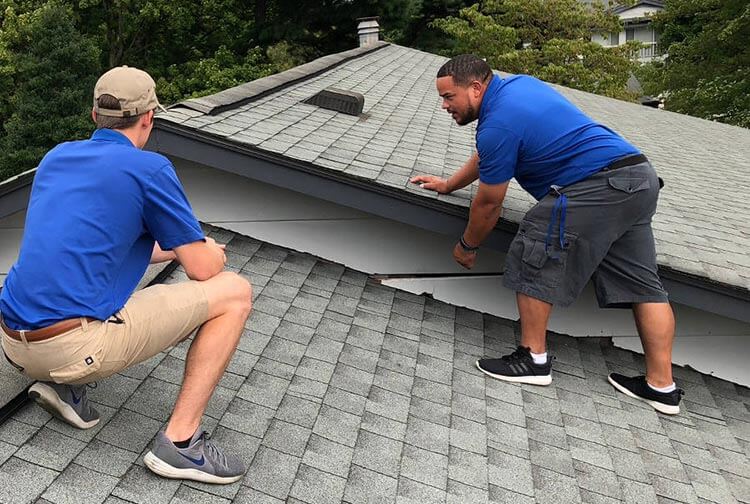
Commercial roofs protect everything valuable underneath them, but most building owners ignore that fact until water starts dripping onto expensive equipment or inventory. Here’s the problem with waiting for a ceiling stain to show up: by the time you see it, you’re already dealing with rot, ruined insulation, or structural decay that’s been building for months.
Building owners can’t afford to just react to water damage as it happens. They need to get ahead of it. Work with a certified commercial roofing contractor — American Dream Roofing, for instance — and hidden defects get caught before they turn into six-figure capital expenses. A methodical evaluation does three things: it tells you what you’re currently liable for, it protects your operational budget, and it stretches the service life of your building.
A professional roof inspection is a certified technical assessment that checks the structural, material, and operational integrity of a roofing system — nothing casual about it. It’s meant to catch hidden structural defects, active leaks happening below the surface, material breakdown, and code compliance problems, all of which put the building’s envelope and the people inside it at risk.
People mix this up constantly: a quick walkthrough of the property is not the same thing as a technical engineering assessment. You can’t spot trapped moisture under a single-ply TPO or EPDM membrane by glancing at it from a ladder. It doesn’t work that way.
Real inspections use tools like infrared thermal imaging to map out wet insulation pockets without ever puncturing the roof. And inspectors don’t look at each part in isolation — they look at the whole system, tracking how thermal expansion, building movement, and years of weather exposure wear down structural performance over time.
Inspectors are looking at structural integrity, material degradation, weathering, flashing stability around the perimeter, and any signs of leaks showing up inside the building. That means going over the membrane, the edge details, how well the drainage works, and the decking underneath — all to find active breaches or weak spots before they turn into full system failure.
This is the foundation of the whole inspection: how is the roof handling load stress, and is the membrane still doing its job as a protective barrier? Inspectors are watching for shifts, settling, anything that suggests the structural deck underneath has been compromised.
Water almost never breaks through the flat, solid field of a roof. It gets in through the seams, the edges, the places where something penetrates the surface — so that’s where inspectors spend a lot of their time.
Routine assessments stop minor leaks before they become catastrophic damage, they protect manufacturer warranties that are worth real money, and they open the door to cost-saving restoration instead of a full tear-off. Catch the small stuff early, and you preserve the substrate — which often means your building still qualifies for fluid-applied restoration rather than a complete, expensive replacement.
Skip regular evaluations, though, and you could void a manufacturer’s non-prorated warranty without even realizing it — leaving you on the hook financially if something fails prematurely. Get your roof documented annually through American Dream Roofing, and you stay in full warranty compliance while building a paper trail that insurance companies actually want to see after severe weather hits. Catch membrane wear early enough, and you can restore the roof using reflective cool roof technology — saving 50% to 70% compared to a full structural replacement, plus cutting your facility’s energy costs substantially in the process.