

Why does one side of my throat hurt when I swallow — this is one of the most searched health questions in 2026, and for good reason. One-sided throat pain feels different from a regular sore throat, and that difference often causes concern.
The pain may be sharp, dull, or burning. It might shoot toward your ear or feel like something is stuck. Most cases come from a temporary and treatable cause. But some need medical attention fast. This guide breaks down every possible reason, what to watch for, and how to find relief.
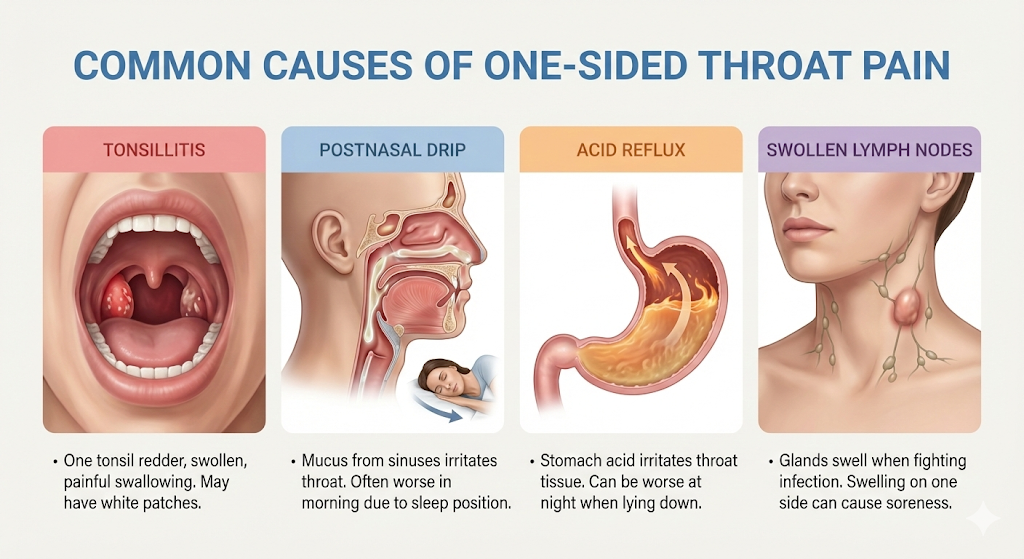
Your throat is not one simple tube. It contains tonsils, lymph nodes, muscles, nerves, and soft tissue — all working together on both sides independently.
When one part on just one side becomes irritated or infected, pain stays localized to that side. Swallowing puts movement and pressure through these structures, making the pain more noticeable.
The throat and ear share nerve pathways. This is why one-sided throat pain often radiates toward the ear on the same side, even when the ear itself is perfectly healthy.
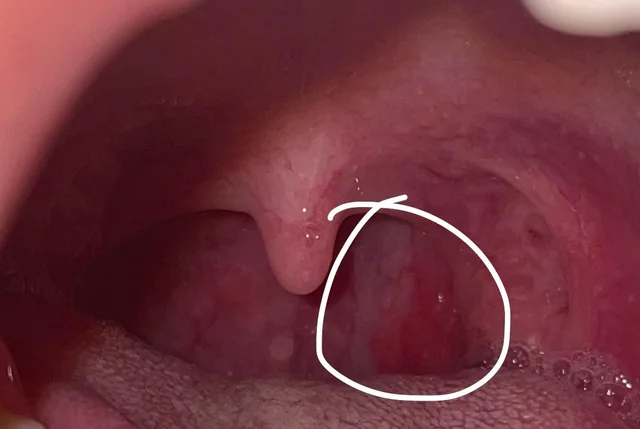
Tonsillitis is one of the most common reasons your throat hurts on one side. One tonsil can swell before the other, creating sharp one-sided pain.
The affected tonsil may appear red, enlarged, or have white or yellow patches. Swallowing becomes difficult and painful on that side.
Tonsillitis can be caused by viruses or bacteria. Streptococcus bacteria cause about 30% of bacterial tonsillitis cases.
Symptoms alongside tonsillitis:
| Symptom | Details |
|---|---|
| Fever | Often 100–103°F |
| Bad breath | From bacterial buildup |
| Ear pain (same side) | Due to shared nerve pathways |
| White spots on tonsil | Yellow or white coating |
| Difficulty swallowing | Pain increases with each swallow |
Strep throat is caused by Group A Streptococcus bacteria. It can begin on one side before spreading.
You may feel intense throat pain, especially when swallowing saliva. Swollen lymph nodes on one side of the neck are also common.
Strep requires antibiotics. Most people feel significantly better within 48 hours of starting treatment.
Common colds and flu viruses are the most frequent cause of a sore throat overall. The inflammation may settle unevenly and cause more pain on one side.
Other symptoms include runny nose, cough, watery eyes, and low-grade fever. These typically resolve within 7 to 10 days with rest and fluids.
No antibiotic is needed for viral throat infections. Over-the-counter pain relief and hydration are the main treatments.
A peritonsillar abscess is a pocket of pus that collects near one tonsil. It causes severe, one-sided throat pain that patients often rate 8 to 10 out of 10.
This condition, also called quinsy, is a medical emergency. It can block your airway if left untreated.
Warning signs of peritonsillar abscess:
Treatment requires draining the abscess with a needle or incision, followed by 2 weeks of antibiotics. Full recovery takes about a week after drainage.
Mucus draining from your sinuses into the back of your throat can irritate one side more than the other. This creates a sore, scratchy feeling that worsens when you swallow.
Causes include allergies, colds, sinus infections, and dry air. You may also feel a constant urge to clear your throat.
Antihistamines, saline nasal sprays, and staying hydrated usually relieve postnasal drip symptoms.
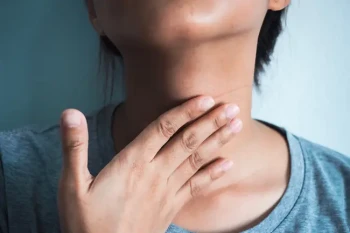
Lymph nodes sit on both sides of your neck. When your body fights an infection, one node may swell faster than the other.
A swollen lymph node presses on surrounding tissue, making swallowing painful on that side. The node itself may feel tender when you touch your neck.
It usually shrinks once the underlying infection clears. Persistent or painless enlarged nodes should be evaluated by a doctor.
Gastroesophageal reflux disease (GERD) sends stomach acid back up into the esophagus and throat. The acid often irritates one side more than the other, especially during sleep.
You may notice burning throat pain in the morning, a sour taste, or hoarseness. The pain can feel worse when lying flat.
Lifestyle changes, antacids, and proton pump inhibitors are first-line treatments for GERD-related throat pain.
Laryngitis is inflammation of the voice box (larynx). If one vocal cord is more irritated than the other, pain may be felt more on one side.
You may also experience hoarseness, a dry cough, and a tickling sensation. Laryngitis is usually caused by viruses, overuse of the voice, or bacterial infections.
Rest, hydration, and avoiding speaking loudly usually resolve laryngitis within a week.
A canker sore near the back of your mouth or on the soft palate can cause significant pain on one side when swallowing. These are small ulcers, not cold sores, and they are not contagious.
They typically heal on their own within 1 to 2 weeks. Topical gels, mouth rinses, and avoiding acidic foods can help manage the discomfort.
A bacterial tooth infection can radiate pain into the nearby throat and jaw. You may feel the pain on one side of your throat even though the source is a tooth or gum.
An impacted wisdom tooth can press against surrounding tissue and trigger one-sided throat discomfort. See a dentist promptly — tooth infections can spread if left untreated.
Glossopharyngeal neuralgia (GPN) is a rare nerve condition that causes sudden, severe, electric shock-like pain on one side of the throat, tongue, ear, or jaw. Swallowing is the most common trigger.
Pain episodes last seconds to a few minutes and can occur many times a day. The condition involves the ninth cranial nerve (glossopharyngeal nerve), which connects the brainstem to the throat, ear, and tongue.
In severe cases, GPN can also affect the nearby vagus nerve, potentially causing heart rate irregularities, low blood pressure, or even fainting.
Treatment options for GPN:
| Treatment Type | Options |
|---|---|
| Medication | Anticonvulsants (carbamazepine, gabapentin) |
| Nerve block | Lidocaine applied to the throat |
| Surgery | Microvascular decompression (MVD), rhizotomy |
| Minimally invasive | Percutaneous Stereotactic Radiofrequency |
Epiglottitis is inflammation of the epiglottis — the flap that prevents food from entering your airway. It is a medical emergency.
Symptoms include severe throat pain, difficulty swallowing, drooling, and stridor (a high-pitched breathing sound). It requires immediate hospital treatment with antibiotics and airway management.
Persistent one-sided throat pain that does not improve, especially with a lump in the neck, changes in voice, or unintentional weight loss, can be a sign of throat or neck cancer.
This is rare but important not to ignore. If your one-sided throat pain lasts more than 2 to 3 weeks without an obvious cause, see a doctor for evaluation.
| Cause | Pain Type | Other Key Signs | Urgency |
|---|---|---|---|
| Tonsillitis | Dull to sharp | White spots, fever | Moderate |
| Strep throat | Sharp, severe | Swollen lymph nodes | See doctor within 24–48 hrs |
| Peritonsillar abscess | Extreme | Muffled voice, drooling | Emergency |
| Postnasal drip | Mild, scratchy | Mucus, throat clearing | Low |
| Viral infection | Dull, aching | Runny nose, cough | Low |
| GERD | Burning | Morning worse, sour taste | Low to moderate |
| Swollen lymph node | Tender, dull | Lump in neck | Moderate |
| Canker sore | Sharp, localized | Visible ulcer | Low |
| Dental abscess | Throbbing | Jaw pain, tooth pain | Moderate |
| Glossopharyngeal neuralgia | Electric shock-like | Triggered by swallowing | See specialist |
| Epiglottitis | Severe | Breathing difficulty | Emergency |
| Throat cancer | Persistent | Lump, voice change, weight loss | Urgent |
Pain location gives important clues about the underlying cause.
Most mild cases of one-sided throat pain can be managed at home while the body heals. These remedies reduce inflammation and ease discomfort.
Most one-sided throat pain improves within 3 to 5 days. See a doctor if:
Go to the emergency room immediately if you have trouble breathing, cannot swallow at all, or feel your throat is closing up.
When you visit a doctor, they will begin with a physical examination of the throat and neck. They may press on your lymph nodes and look into your throat with a light.
| Condition | Primary Treatment |
|---|---|
| Viral sore throat | Rest, fluids, OTC pain relief |
| Strep throat | Prescribed antibiotics (10-day course) |
| Tonsillitis (bacterial) | Antibiotics; tonsillectomy if recurring |
| Peritonsillar abscess | Abscess drainage + antibiotics |
| GERD | Antacids, proton pump inhibitors, lifestyle changes |
| Postnasal drip | Antihistamines, nasal spray, hydration |
| Canker sore | Topical gel, mouth rinse, time |
| Dental abscess | Dentist treatment, root canal or extraction |
| Glossopharyngeal neuralgia | Anticonvulsants, nerve block, or surgery |
| Epiglottitis | Emergency hospital treatment, IV antibiotics |
| Laryngitis | Voice rest, hydration, steam inhalation |
Yes. COVID-19 can cause sore throat, and some people experience more discomfort on one side. The infection may inflame one tonsil or nearby lymph node more than the other.
If you have unexplained throat pain and are unsure of the cause, taking a COVID-19 test is a reasonable step. Other COVID-19 symptoms may or may not be present.
Yes, it can. Sleeping on one side of your body for a long time can cause postnasal drip to drain more heavily on that side. You may also dry out the throat tissue on the exposed side if you breathe through your mouth.
Waking up with pain on one side of your throat that gradually improves throughout the day is often related to sleep position, dry air, or morning acid reflux.
One-sided throat pain usually means the irritation or infection is isolated to one structure — like a single tonsil, lymph node, or area of soft tissue — on that side.
Yes. A dental abscess or impacted wisdom tooth can radiate pain into the nearby throat, jaw, and ear on the same side.
Rarely. Persistent one-sided throat pain lasting more than 2 to 3 weeks, especially with a neck lump, voice change, or weight loss, should be checked by a doctor promptly.
Most cases clear up within 3 to 7 days. Pain lasting more than a week or getting progressively worse needs medical evaluation.
Yes. Stomach acid can irritate one side of the throat more than the other, especially at night or in the morning.
The throat and ear share nerve pathways (especially the glossopharyngeal nerve). Pain from one area can travel to the other without the ear being directly affected.
A peritonsillar abscess is a pus-filled pocket near one tonsil. It requires urgent drainage and antibiotics. If untreated, it can block your airway and become life-threatening.
Mild cases can be managed with saltwater gargles, warm fluids, and over-the-counter pain relievers. Severe pain, high fever, or difficulty swallowing needs a doctor.
It is a rare nerve condition that causes sudden electric shock-like pain on one side of the throat, triggered by swallowing, talking, or chewing. It requires specialist care.
Go immediately if you have trouble breathing, cannot swallow, are drooling, have a very high fever, or notice your throat visibly closing up.
Why does one side of my throat hurt when I swallow — the answer depends on where the pain originates and what other symptoms are present. In most cases, the cause is something treatable like tonsillitis, a viral infection, postnasal drip, or a swollen lymph node. These typically get better within a week with rest, fluids, and simple home remedies.
However, some causes — like a peritonsillar abscess, epiglottitis, or glossopharyngeal neuralgia — require urgent or specialist care. Paying attention to warning signs like worsening pain, high fever, difficulty breathing, or ear pain on the same side helps you know when to act quickly.
If your one-sided throat pain has lasted more than a week, is getting worse, or is accompanied by any red flag symptoms, do not delay — see a doctor. Early evaluation leads to faster recovery and prevents complications. Your throat health matters, and the right diagnosis always makes treatment more effective.