
Why do I feel empty even when my life looks perfectly fine from the outside? This is one of the most searched questions in mental health today — and you are not alone in asking it.
Emotional emptiness is not weakness. It is not laziness. It is a real psychological experience that millions of people face across all ages and backgrounds. It feels like a hollow ache, a numbness, or a quiet disconnection from everything around you.
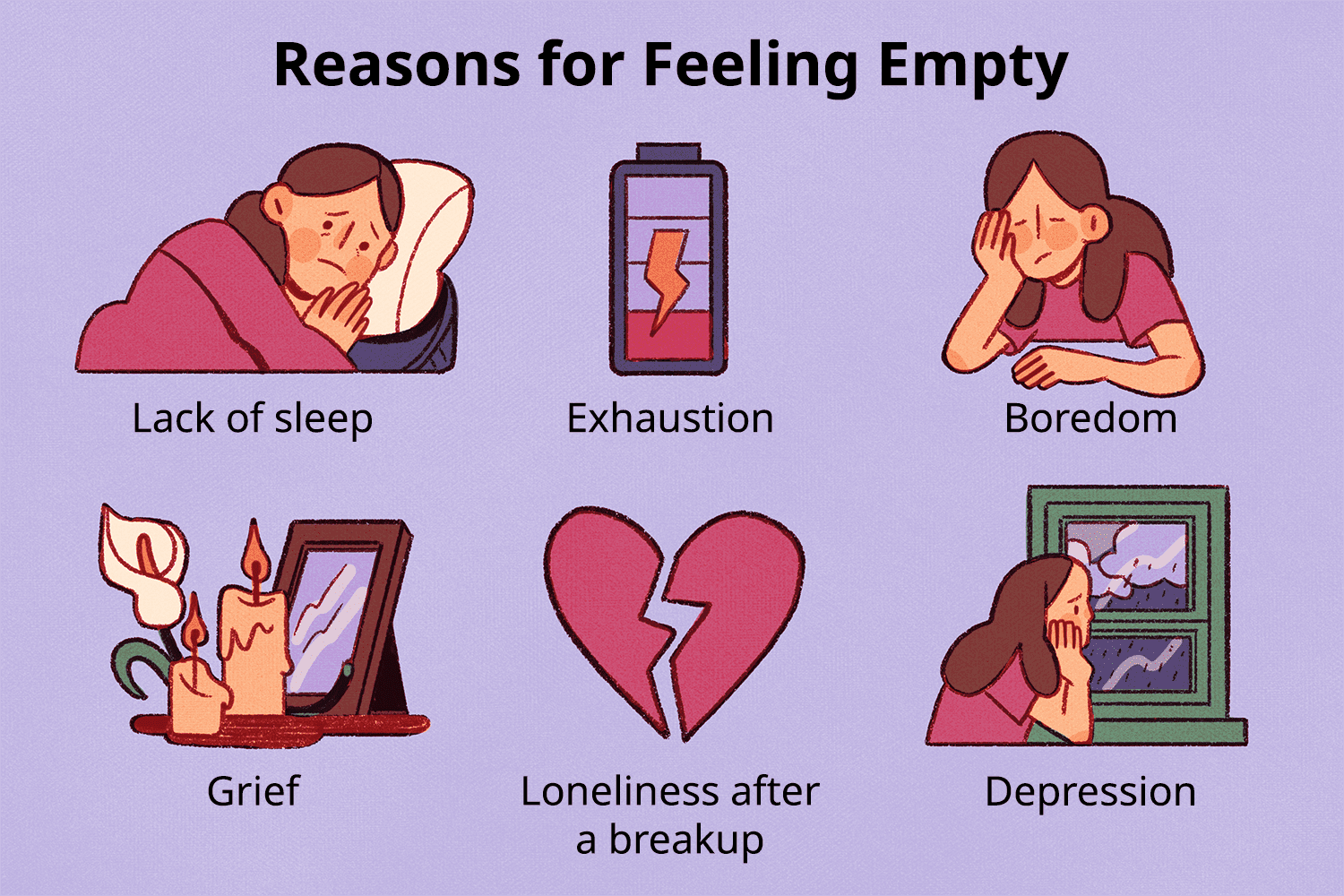
Feeling empty is not the same as feeling sad. Sadness has weight and texture. Emptiness is the absence of feeling altogether — like something was quietly removed and nothing took its place.
People describe it in different ways. Some say they feel hollow inside. Others say they feel numb, flat, or like they are watching their own life through a glass window.
It is a real and recognized emotional state, not a personality flaw or a sign that you are doing life wrong. Research in clinical psychology classifies emotional emptiness as a transdiagnostic experience — meaning it cuts across depression, anxiety, trauma, grief, and other conditions.
Many people confuse feeling empty with depression, and the two do overlap — but they are not identical. Understanding the difference helps you find the right path forward.
| Feature | Emotional Emptiness | Depression |
|---|---|---|
| Core feeling | Hollow, numb, disconnected | Persistent sadness, hopelessness |
| Motivation | Low or absent | Often very low |
| Pleasure | Reduced or flat | Anhedonia (loss of pleasure) |
| Cause | Often situational or relational | Neurological and psychological |
| Duration | Can be temporary | Tends to be prolonged |
| Physical symptoms | Often absent | Fatigue, appetite changes, sleep issues |
| Requires diagnosis? | Not necessarily | Yes, clinical criteria apply |
Depression can cause emptiness. But you can feel empty without meeting the clinical criteria for depression. Both deserve attention and support.
Burnout is what happens when your emotional reserves are drained completely. Long-term stress — from work, caregiving, or demanding relationships — forces the brain into survival mode.
In survival mode, the brain reduces emotional responsiveness to cope with overload. You stop feeling joy, excitement, or enthusiasm — not because they are gone, but because your nervous system is protecting itself.
Research shows that elevated cortisol levels from chronic stress can literally reduce the brain’s capacity to process positive emotions.
Depression does not always look like crying or sadness. For many people — especially high-functioning individuals — it presents as emotional flatness.
Anhedonia is the clinical term for losing the ability to feel pleasure. Your favorite music sounds dull. Food loses its appeal. Time with people you love feels like going through the motions.
When people ask “why do I feel empty inside,” anhedonia is frequently what they are experiencing without knowing there is a word for it.
Childhood emotional neglect happens when a child’s emotional needs are consistently unmet, dismissed, or ignored. The child learns that emotions are not safe or welcome.
Over time, the nervous system adapts by blunting emotional responses entirely. This protective shutdown can become the default emotional setting well into adulthood.
Adults who experienced emotional neglect as children often feel empty without understanding why — because the absence of feeling has simply become their normal.
When experiences are too overwhelming for the mind to process, the brain can shut down emotional channels as a protective response. This is a form of dissociation.
The resulting emotional numbness is not a choice. It is the brain doing its job — protecting you from feelings it learned were dangerous or too painful to have.
You do not need a formal PTSD diagnosis for trauma to affect your daily emotional life. Even partial trauma responses significantly impact mood, connection, and your sense of self.
Humans are biologically wired for connection. When meaningful connection is absent, the emotional system starts to signal distress through feelings of emptiness and hollowness.
Research consistently shows that social isolation — even low-level isolation — can cause emotional emptiness. Interestingly, you can feel this way even in a room full of people if the connection feels superficial.
Quality of connection matters far more than quantity. A single emotionally safe relationship can significantly reduce chronic feelings of emptiness.
When you do not have a clear, stable sense of who you are, that internal fragmentation often shows up as emptiness. You feel like you are playing roles without knowing who the real person underneath is.
A life without meaningful purpose creates a persistent, low-grade void. You can be busy, productive, and externally successful while feeling completely hollow if nothing you do feels truly connected to your values.
Identity confusion and emptiness tend to reinforce each other, creating a cycle that is difficult to break without deliberate inner work.
Loss does not always involve a death. Breaking up, losing a job, moving cities, becoming a parent, or even achieving a long-worked-for goal can all trigger grief.
Major transitions strip away the routines, roles, and relationships that gave life structure. When those anchors disappear, many people are left feeling unmoored and empty.
This form of emptiness is often temporary, but it can persist if the grief goes unacknowledged or the new life chapter lacks meaningful connection and direction.
Chronic emptiness is one of the nine official diagnostic criteria for Borderline Personality Disorder. People with BPD often describe it as a constant, overwhelming internal void.
This emptiness in BPD is closely tied to identity instability — the feeling of not knowing who you are beneath the shifting roles and relationships in your life.
If your emptiness is persistent, intense, and accompanied by difficulty regulating emotions or maintaining stable relationships, BPD is worth discussing with a mental health professional.
When you consistently push emotions down rather than processing them, the mechanism that suppresses negative emotions also begins to suppress positive ones.
Research shows that chronic emotional suppression increases emptiness and reduces the quality of genuine emotional connection. You keep the pain out — but you also keep the joy out.
Emotions do not disappear when they are suppressed. They go underground and emerge later as numbness, physical tension, or behavioral patterns you cannot easily explain.
The brain-body connection is real and powerful. Chronic sleep deprivation disrupts the hormonal systems responsible for mood regulation and emotional processing.
Nutrient deficiencies — particularly in vitamin D, B12, iron, and omega-3 fatty acids — are associated with emotional flatness and low mood. Poor gut health also affects neurotransmitter production, since roughly 90 percent of serotonin is produced in the gut.
Physical neglect is often an overlooked driver of emotional emptiness, especially when no obvious psychological cause is immediately apparent.
| Trigger | Why It Amplifies Emptiness |
|---|---|
| Excessive screen time and scrolling | Dulls emotional sensitivity to real-life experiences |
| Comparing your life to others online | Creates a sense of inadequacy and disconnection |
| Alcohol and substance use | Temporarily numbs pain but deepens emotional flatness |
| Isolation and avoiding people | Reduces the connection the brain needs to regulate mood |
| Ignoring or suppressing feelings | Amplifies the inner void over time |
| Overworking without rest | Depletes emotional reserves through burnout |
| Skipping sleep and meals | Disrupts the biological systems that support mood |
You might feel empty inside and not fully recognize it until you see it described. These are the most common signs:
You go through your daily routine but feel detached from it, like a spectator of your own life. Things that used to bring you joy now feel flat or uninteresting. You feel disconnected from the people around you, even those you love.
You struggle to identify what you want, what you feel, or what makes you happy. You feel a hollow ache in your chest with no obvious cause. Time passes but you feel like you are not really living it.
This is one of the most confusing and distressing versions of emptiness. Everything looks fine from the outside — but inside, there is a quiet void.
This often happens because external success does not automatically produce internal fulfillment. Checking off milestones does not guarantee a connection to values, purpose, or meaningful relationships.
It can also reflect anhedonia from depression, burnout, or the emotional numbness that comes from years of suppressing difficult feelings to keep functioning. The brain learns to go through the motions without actually experiencing them.
The first step is acknowledgment. Say — out loud or in writing — “I feel empty.” Naming an emotion increases clarity and begins to reduce its intensity.
Research confirms that labeling emotions activates the prefrontal cortex and reduces the stress response in the amygdala. You do not have to fix the feeling immediately. You just have to stop pretending it is not there.
Emotional emptiness often involves a disconnection from physical sensations. Gentle movement — walking, yoga, stretching — helps restore the mind-body link.
Try noticing physical sensations during the day. The warmth of a cup of tea, the feeling of sunlight, the rhythm of your footsteps. These small moments of presence rebuild the bridge between body and emotion.
You do not need a packed social calendar. Research shows that even one emotionally safe, honest relationship can significantly reduce feelings of emptiness.
Reach out to one person this week — not to talk about surface things, but to be genuinely seen. Vulnerability in connection is one of the fastest routes out of emotional isolation.
Emptiness thrives in the absence of meaning. Identify even one small thing that genuinely matters to you — not what should matter, but what actually does.
Purpose does not have to be grand. It can be learning a skill, caring for a plant, helping a neighbor, or creating something. Small, consistent acts of meaning rebuild the internal sense that life is worth engaging with.
Writing helps you access and process emotions that are buried beneath the surface. You do not need to write beautifully — write honestly.
Prompts that help: “What am I actually feeling right now?” or “What do I need that I am not getting?” or “What did I used to care about that I have stopped paying attention to?”
If emotional emptiness has a physical root, no amount of talking will fully fix it without also addressing the body. Prioritize seven to nine hours of sleep per night.
Eat foods that support brain health — oily fish, leafy greens, berries, whole grains, and protein. Reduce alcohol and processed sugar, which disrupt neurotransmitter balance and worsen emotional flatness.
Excessive scrolling and digital consumption dull emotional sensitivity over time. The brain adapts to constant stimulation by raising the threshold needed to feel anything.
Try replacing one hour of screen time per day with something tactile and present — cooking, walking, drawing, or a real conversation. The emotional system begins to reawaken when it has space to breathe.
Mindfulness is not about clearing your mind. It is about noticing what is actually happening — thoughts, feelings, sensations — without immediately reacting or suppressing.
Regular mindfulness practice has been shown to increase emotional awareness and reduce the chronic numbing that underlies emptiness. Even five minutes daily creates measurable change over time.
Therapy is not just for crisis situations. It is the most effective tool for exploring the deeper roots of emotional emptiness — especially when it traces back to trauma, attachment wounds, or identity issues.
Cognitive Behavioral Therapy (CBT), Acceptance and Commitment Therapy (ACT), and trauma-focused therapies like EMDR all have strong evidence for treating chronic emptiness. A therapist gives you a safe space to feel and understand what you have been unable to access alone.
| Warning Sign | What It May Indicate |
|---|---|
| Emptiness has lasted more than two weeks | Possible depression or burnout requiring support |
| You feel nothing, not even sadness | Significant emotional dissociation or depression |
| You are using substances to cope | Risk of dependency and worsening emotional health |
| You have thoughts of self-harm or hopelessness | Urgent — please contact a mental health professional |
| You feel empty even during positive events | Possible anhedonia linked to depression or BPD |
| Relationships are deteriorating | Emptiness is affecting your ability to connect |
If any of these apply to you, reaching out to a mental health professional is not overreacting. It is the wisest and most caring thing you can do for yourself.
| Condition | How Emptiness Shows Up |
|---|---|
| Depression | Emotional flatness, anhedonia, loss of interest in everything |
| Borderline Personality Disorder | Chronic, intense inner void; identity instability |
| PTSD and Trauma | Emotional numbness as a dissociative survival response |
| Anxiety Disorders | Emotional depletion from constant hypervigilance |
| Burnout | Detachment, depletion, loss of engagement with life |
| Grief | Hollowness following loss of a person, role, or chapter of life |
Healing emotional emptiness is not a one-time fix. It requires building new habits that consistently meet your emotional needs.
Maintain a small number of deep, honest relationships rather than many shallow ones. Practice regular emotional check-ins with yourself — at least once a day, ask what you are actually feeling.
Build routines that include both rest and meaningful engagement. Protect your sleep. Move your body regularly. Limit things that numb rather than nourish you.
The goal is not to feel good every day. The goal is to stay connected — to yourself, to others, and to something that matters.
Emptiness without an obvious cause often points to burnout, unprocessed emotions, or a slow disconnection from your needs and values. It is a signal, not a mystery — the reason is usually beneath the surface.
It can be, especially if it comes with low motivation, anhedonia, and disrupted sleep or appetite. However, emptiness also appears outside of depression, so a professional evaluation helps clarify the cause.
Feeling empty in a relationship often reflects a lack of emotional intimacy, unmet needs, or a gradual disconnect from your partner. It may also indicate personal emptiness that the relationship was masking.
It depends entirely on the cause. Situational emptiness linked to a life transition may lift in weeks. Chronic emptiness rooted in trauma or depression requires longer-term support and healing.
Mild, situational emptiness often resolves with rest, connection, and time. Persistent or intense emptiness rarely resolves without active intervention — therapy, lifestyle changes, or both.
This is sometimes called “arrival fallacy.” The brain anticipated the goal would bring lasting fulfillment, but the reward system adjusts quickly. It often signals a need to reconnect with deeper values rather than external achievements.
They are closely related. Numbness is usually a protective emotional shutdown, while emptiness is the broader experience of that absence. Both are signals that something needs attention in your emotional life.
Yes. Excessive passive scrolling raises the brain’s stimulation threshold, making real-life experiences feel dull by comparison. It also increases comparison and can amplify feelings of disconnection and inadequacy.
The most immediate relief comes from human connection — reaching out to someone who makes you feel genuinely seen. Pair this with physical movement and grounding, and the shift is usually noticeable within hours.
If emptiness has lasted more than two weeks, is affecting your relationships or daily functioning, or is accompanied by hopelessness, you should speak with a mental health professional as soon as possible.
Why do I feel empty? The answer is rarely simple — but it is always worth exploring. Emotional emptiness is a signal from your mind that something important is not being met: connection, purpose, rest, healing, or a sense of who you really are. It is not a life sentence. It is not a character flaw. It is information.
The causes range from burnout and depression to unresolved trauma, loneliness, and identity confusion — and every single one of them responds to the right kind of attention and care. Start small. Name what you feel. Reach out to one person. Move your body.
Limit what numbs you. Seek professional support if the emptiness persists. Healing is not linear, but it is always possible. You do not have to figure this out alone, and you do not have to keep feeling this way.