
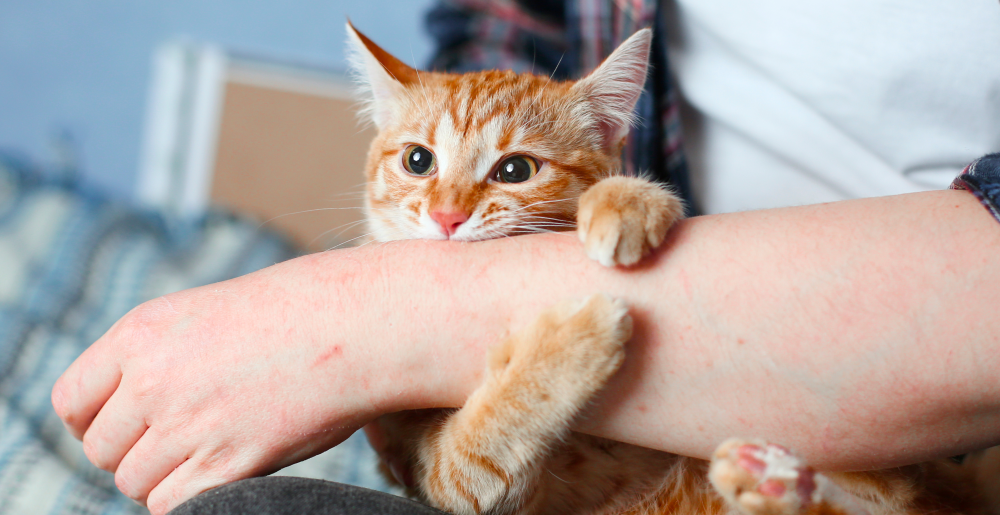
Why do cats bite when you pet them is one of the most common questions cat owners ask — and the answer is not that your cat hates you.
Cats bite during petting for very specific reasons rooted in biology, communication, and sensory limits.
Whether it is a gentle nibble or a sharp nip, every bite carries a message.
Understanding what drives each type of bite — and how to respond — can transform your relationship with your cat completely.
Petting-induced aggression is the clinical term for when a cat bites, scratches, or swats during what seemed like a pleasant petting session. It is one of the most widely reported feline behavior issues.
The cat is not suddenly turning evil. It is communicating that its threshold for physical contact has been reached. The problem is that many owners miss the early warning signals entirely.
This behavior is sometimes called overstimulation aggression and it happens across all breeds, ages, and temperaments — though some cats are more prone to it than others.
Cats have highly sensitive nerve endings distributed across their skin. When stroked repeatedly in the same area, those nerve endings can shift from sending pleasure signals to sending discomfort signals — often quite fast.
This is not a choice or a mood swing. It is a genuine physiological response. The nervous system goes into a kind of overdrive and the cat bites as a direct reaction to sensory overload.
Think of it like a tickle that starts pleasant but quickly becomes unbearable. The cat’s body tells it to make the stimulus stop, and biting is its most direct tool.
Understanding the specific cause behind your cat’s biting is the first step toward fixing it. Different causes need different responses.
| Reason | What It Looks Like | Type of Bite |
|---|---|---|
| Overstimulation | Sudden nip after prolonged stroking | Sharp, abrupt |
| Love bite / affection | Gentle nibble while purring, licking before | Soft, no pressure |
| Play aggression | Grabbing and biting hands during playtime | Energetic, with pouncing |
| Fear or defensive bite | Bite when cornered or startled | Hard, accompanied by hissing |
| Pain or medical issue | Biting when touched on a specific spot | Sudden, sharp |
| Redirected aggression | Biting you while watching a bird outside | Intense, seemingly unprovoked |
| Status or control behavior | Biting to end interaction on their terms | Firm, deliberate |
| Hormonal behavior | Biting with yowling or marking in intact cats | Unpredictable |
Knowing which category applies to your cat changes everything about how you respond.
Overstimulation is responsible for the majority of petting bites. According to PetMD, around 60 percent of bites during petting sessions stem from overstimulation alone.
It happens when a cat reaches its individual tolerance limit for physical contact. That limit varies widely — some cats enjoy long full-body strokes while others can only tolerate thirty seconds of chin scratching before they are done.
The tricky part is that overstimulation often builds gradually and invisibly. Your cat may look relaxed and content right up until the moment they snap.
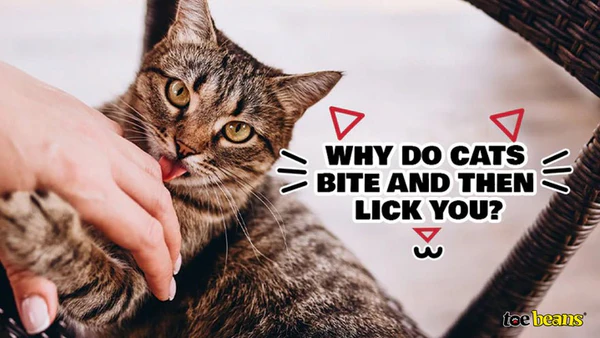
Not every bite during petting is a complaint. Some cats give what are known as love bites — gentle, pressure-free nibbles that express affection and bonding.
Love bites typically do not break the skin. They often happen when a cat is deeply relaxed, purring, and kneading. Many cats will lick you briefly before progressing to a soft nibble.
This behavior traces back to kittenhood, when littermates would gently bite each other during social grooming. Your cat is treating you the same way it would treat a trusted companion in a feline colony.
Misreading the type of bite leads to the wrong response. Knowing the difference protects you and helps your cat feel understood.
| Feature | Love Bite | Aggression / Overstimulation Bite |
|---|---|---|
| Pressure | Very light, no pain | Firm, can break skin |
| Body language | Relaxed, purring, kneading | Tail flicking, ears back, tense body |
| Timing | Unprompted, spontaneous | After prolonged petting |
| Before the bite | Often licking or grooming | Skin twitching, sudden stillness |
| After the bite | Cat stays calm and close | Cat pulls away or swats |
If the bite draws blood or is accompanied by scratching and hissing, it is not affection. It is a communication breakdown that needs addressing.
Cats rarely bite without warning. The problem is that their warning signals are subtle and many owners miss them entirely until they have already been bitten dozens of times.
These are the key pre-bite signals to learn and respect immediately.
Tail signals: A still or slow tail suddenly flicking with intent is one of the most reliable pre-bite signals. The faster and more deliberate the movement, the closer the bite.
Ear signals: Ears rotating backward or flattening against the skull indicate irritation. This often appears within seconds of overstimulation kicking in.
Skin signals: Rippling or twitching of the skin along the back — often called piloerection — is a classic sign of overstimulation. It is the skin literally reacting to sensory overload.
Eye signals: Pupils suddenly dilating or narrowing rapidly indicate a shift in arousal level. Combined with a tense body, this signals imminent biting.
Body signals: A cat that goes from relaxed and fluid to suddenly stiff and still is about to bite. This abrupt freeze is the final warning before the snap.
Vocalizations: Low growls, sudden meows, or hissing during a quiet petting session are direct verbal warnings that cannot be ignored.
Where you pet matters just as much as how long you pet. Most cats have very clear preferences about which body areas they tolerate — and which they do not.
| Body Area | Most Cats’ Response |
|---|---|
| Chin and cheeks | Usually enjoy — prime safe zone |
| Top of head and behind ears | Generally well-tolerated |
| Back and shoulders | Depends on the individual cat |
| Belly | Most cats dislike; rolling over is NOT always an invitation |
| Base of tail | Highly sensitive — often triggers biting immediately |
| Legs and paws | Most cats dislike being touched here |
| Spine (repeated long strokes) | Can rapidly cause overstimulation |
The belly is the most misread zone. When a cat rolls over and exposes its belly, many owners take this as an invitation. For most cats it is actually a sign of trust — not a request to be touched there. Petting the belly anyway is a very reliable way to get bitten.
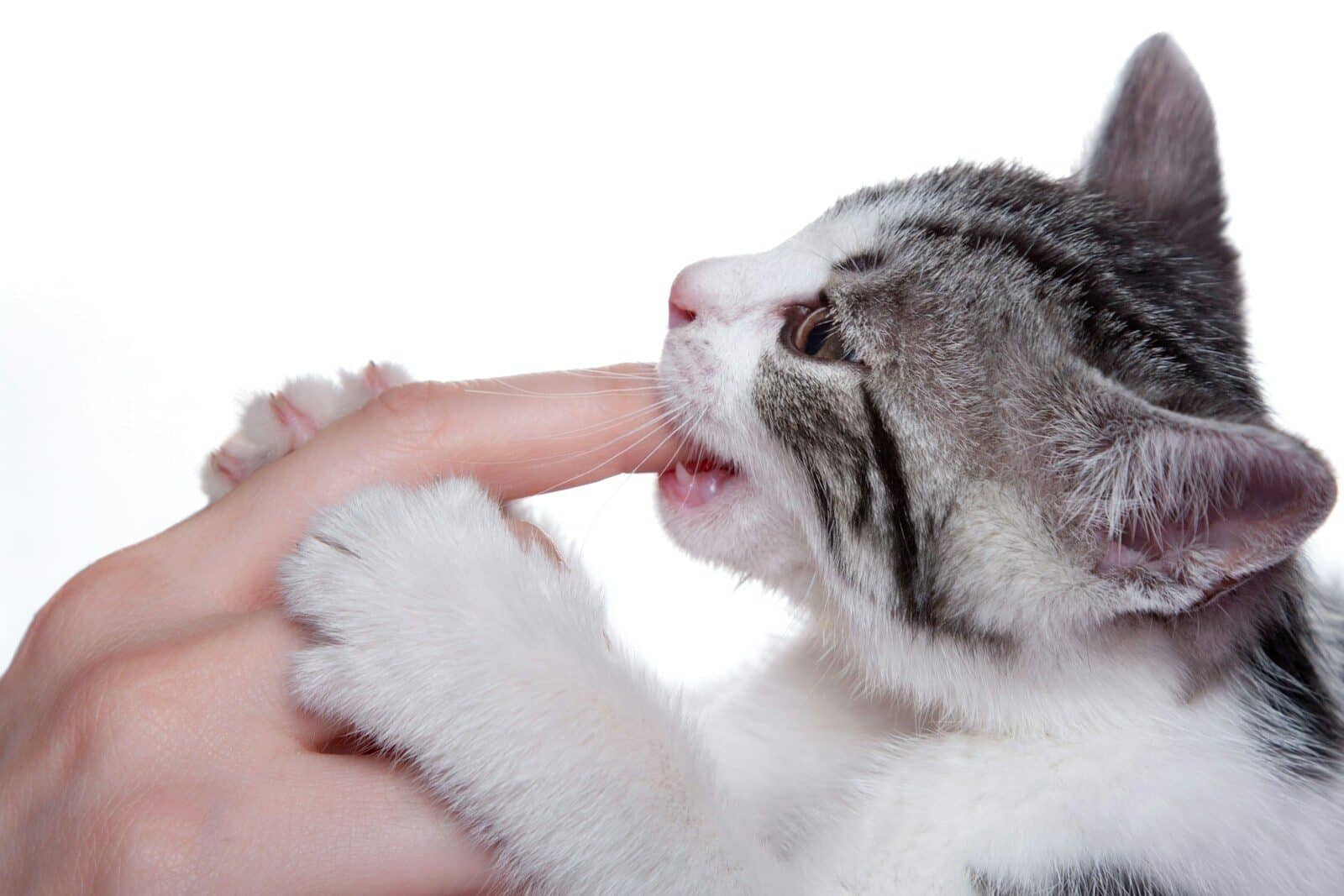
Play aggression is especially common in kittens and young cats — but adult cats engage in it too, particularly those who were not taught bite limits during kittenhood.
Cats are natural hunters. During play, they instinctively practice stalking, pouncing, grabbing, and biting. When hands and fingers are regularly used as play objects, the cat simply learns that hands are prey.
Kittens weaned too early from their littermates often show stronger play aggression because they missed the social training that littermates naturally provide — the feedback that biting too hard ends the play session.
Some cats bite during petting not because they are overstimulated but because they are genuinely frightened. Cats with a history of rough handling, trauma, or very limited early socialization often bite defensively when touched.
These bites tend to be harder and more sudden than overstimulation bites. They are accompanied by flattened ears, a low crouching posture, dilated pupils, and sometimes hissing or spitting before the bite lands.
The key to addressing fear-based biting is building trust slowly over time — never forcing contact and always allowing the cat to initiate or end interactions on its own terms.
A sudden change in biting behavior — especially in a cat that was previously tolerant of petting — should be taken seriously as a possible medical signal. Cats are well-documented pain hiders, and biting when touched in a specific area is often their only way of communicating that something hurts.
Common medical causes of increased petting aggression include arthritis (especially in older cats touched near their hips or spine), dental disease (a cat that bites when touched near the face or jaw), skin conditions and hypersensitia (feline hyperesthesia syndrome causes extreme sensitivity to back stroking), ear infections, and internal organ pain.
If the biting is new, sudden, or happens consistently when you touch the same area of the body, schedule a veterinary appointment before attempting any behavioral training.
Redirected aggression is one of the most confusing types of biting for owners because it appears completely unprovoked. The cat is sitting calmly in your lap, you reach over to pet them, and they bite hard and fast.
What is actually happening is that the cat was already in a state of arousal from something else — usually watching a bird, squirrel, or other cat through the window. When it could not reach its real target, it redirected that frustration onto the nearest available object: your hand.
The fix for redirected aggression is not touching an obviously aroused cat. If your cat is locked onto something outside with dilated pupils and a twitching tail, leave them alone until they have fully calmed down.
Intact cats — those that have not been spayed or neutered — often display more intense and unpredictable biting behavior driven by hormonal fluctuations.
Intact males can be more territorial and prone to aggression. Females in heat can become highly unpredictable, with biting accompanied by yowling, restlessness, and marking behavior.
Veterinary behavior experts consistently recommend spaying or neutering around four months of age to prevent hormone-driven behavioral issues from becoming ingrained patterns.
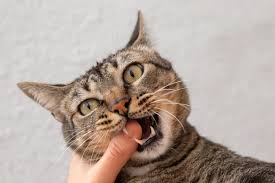
The goal is not to punish your cat into stopping. Punishment — hitting, yelling, squirting with water — does not address the cause and actively damages your cat’s trust in you, making the problem worse over time.
These are the evidence-based approaches that actually work.
Learn your cat’s individual limit. Time how long petting sessions last before the warning signals appear. Then consistently stop before that point. A cat that shows signs at two minutes should only be petted for ninety seconds at most.
Watch and honor the signals every single time. The moment you see a tail flick, an ear rotate, or skin ripple — stop petting immediately. Calmly withdraw your hand without making a big reaction.
Focus on the safe zones. Stick to the chin, cheeks, and top of the head. Avoid the belly, base of the tail, and legs. Short targeted contact in preferred areas is far better than long strokes that cover everything.
Use counter-conditioning. Pair petting sessions with high-value treats. Pet briefly, offer a treat, stop. This builds a positive association with touch and gradually extends the cat’s tolerance over time.
Never use hands as play toys. Always redirect play to wand toys, feather toys, or interactive puzzles. Your hands should never be the thing your cat practices hunting on.
Provide enrichment daily. Bored and understimulated cats have lower tolerance for petting. Daily interactive play sessions, puzzle feeders, and climbing structures reduce stress and frustration — which directly reduces biting.
Desensitization training. For highly sensitive cats, start with just one or two strokes then immediately stop. Gradually increase over many weeks as the cat builds confidence and tolerance. Patience is essential — this process cannot be rushed.
These are the most common mistakes that make the biting problem significantly worse.
Never jerk your hand away fast. Sudden movement triggers the prey instinct and causes the cat to bite harder or chase. Instead, go limp and still, then withdraw slowly once the cat releases.
Never punish physically. Hitting, flicking noses, or scruffing a biting cat causes fear and erodes trust. The cat does not connect the punishment to its biting behavior — it connects the punishment to you.
Never push through warning signals. Choosing to keep petting because “they seemed to be enjoying it” teaches your cat that warning signals do not work. The only effective escalation left is a harder bite.
Never ignore sudden changes. A cat that bites dramatically more than usual or bites when touched in a new place needs a vet visit, not more behavioral training.
Cats are not naturally inclined to long petting sessions the way dogs often are. Accepting this reality is the foundation of a harmonious relationship.
Short, frequent, mutually initiated interactions build more trust than long forced cuddle sessions. Let your cat come to you. Let it choose when to leave. Offer your hand to sniff before petting. Read the signals in real time during every single interaction.
Cats who are respected consistently become more tolerant over time — not less. The owner who always honors the warning signals is the owner whose cat eventually seeks out longer contact voluntarily.
The relationship requires patience, observation, and a willingness to communicate on the cat’s terms rather than your own.
Some breeds are statistically more prone to overstimulation and petting aggression than others.
High-energy breeds like Bengals and Abyssinians often reach their sensory threshold faster. Sensitive breeds like Persians and Siamese may give very subtle warning signals that are easy to miss. Ragdolls and Maine Coons are generally more tolerant of handling, though individual variation within any breed is always significant.
Rescue cats and cats with unknown early histories may have lower baseline tolerance for touch, especially if they were not well-socialized as kittens. These cats can absolutely learn to enjoy petting — but the process is slower and requires more consistency from the owner.
Most petting bites can be managed at home with patience and the strategies above. But certain situations warrant professional help.
See a vet immediately if the biting is sudden and out of character, if the cat bites when touched in a specific area consistently, if biting is accompanied by other behavioral changes like hiding, appetite loss, or lethargy, or if any bite breaks the skin and the wound shows signs of infection.
See a certified cat behavior consultant if the biting is escalating despite consistent home management, if the cat is showing other forms of aggression, or if the behavior is significantly impacting your daily life or relationship with your pet.
Cat bites carry a high risk of infection due to the bacteria naturally present in a cat’s mouth. Any bite that breaks the skin should be promptly cleaned, monitored closely, and evaluated medically if redness or swelling develops.
Use this as a daily reminder until reading your cat’s signals becomes second nature.
| Action | Why It Helps |
|---|---|
| Stop petting at first tail flick | Prevents escalation before it starts |
| Avoid belly and base of tail | Removes the highest-risk trigger zones |
| Keep sessions short (under 2 min) | Stays within most cats’ tolerance threshold |
| Provide 15+ min of play daily | Reduces stress and frustration baseline |
| Never use hands as toys | Stops hands from being classified as prey |
| Reward calm acceptance with treats | Builds positive associations with touch |
| Let cat initiate contact | Increases voluntary tolerance over time |
| Schedule vet check for sudden changes | Rules out pain as the underlying cause |
Purring does not always mean contentment — cats also purr when anxious or overstimulated. A bite during purring usually means sensory overload was already building and the warning signals were missed.
Yes, it is very common. Petting-induced aggression affects a large percentage of domestic cats and is considered a normal feline behavior response to overstimulation rather than a sign of a dangerous or broken cat.
A love bite is soft, pressure-free, and does not break the skin. An aggressive or overstimulation bite is firm, often sudden, and may leave a mark. The surrounding body language tells you which type you are dealing with.
Licking after biting is actually more typical of love biting behavior — it mimics mutual grooming between bonded cats. It signals that the interaction was affectionate, not hostile, and the cat is still comfortable with you.
No. Punishment — hitting, yelling, or squirting water — does not address the cause and damages trust. The cat will not connect the punishment to its bite but will associate you with something negative, making biting worse over time.
Watch for immediate skin twitching, ear rotation, tail flicking, or body tensing when you touch different areas. The belly and base of the tail are the most common problem zones across most cats.
This is likely redirected aggression. If your cat was watching something stimulating outside — another animal, a bird — and could not act on it, that arousal gets redirected to whatever is closest when you touch them.
Kittens can improve significantly with consistent training that redirects biting to toys and never uses hands as play objects. Without intervention, play biting habits formed in kittenhood often persist and intensify into adulthood.
Take your cat to the vet if biting is sudden and new, if it happens every time you touch a specific area of the body, or if it is accompanied by other changes like hiding, reduced eating, or unusual vocalizations — all signs of possible pain.
Yes, in cats whose biting is hormone-driven. Spaying and neutering reduces territorial and hormonal aggression and is generally recommended around four months of age to prevent these behavioral patterns from becoming established.
Why do cats bite when you pet them comes down to one core truth — cats communicate through their bodies, and biting is their clearest boundary signal.
Whether it is overstimulation overloading their nervous system, a genuine love bite expressing affection, a pain response signaling something medical, or redirected frustration from something they could not reach, every bite has a specific and readable cause.
The solution is never punishment but always understanding — learning your individual cat’s signals, respecting its tolerance limits, keeping sessions short, focusing on preferred zones, and giving it the daily enrichment and play it needs to stay calm and content.
Cats that feel consistently heard and respected become more open to contact over time, not less.
The relationship grows stronger not by forcing affection but by communicating on your cat’s terms.