
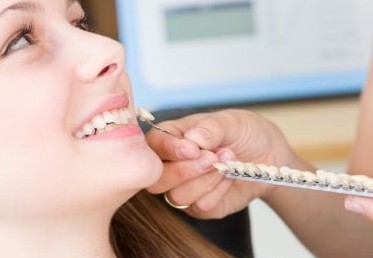
Veneer prices vary because the fee covers three separate things that are rarely priced the same way: the ceramic itself, the laboratory work behind it and the clinical time spent planning and fitting it. In the UK, porcelain veneers commonly run from around £700 to £1,500 per tooth, with central London practices quoting £1,500 to £2,500, while packages in Turkey, Hungary and Poland can advertise the equivalent of £200 to £400 per tooth. The porcelain is the smallest part of that difference.
The bigger driver is how much human time and skill sits behind each unit. A veneer designed from photographs, a wax up and a trial smile, then hand layered by a named ceramist and fitted across three appointments, absorbs many hours of expensive labour. A veneer milled from a stock block and cemented the same week absorbs very few. Both can be described accurately as porcelain veneers, which is exactly why the price comparison confuses people.
The laboratory bill is the first hidden variable. UK laboratory fees for a single anterior veneer typically fall between £150 and £450 depending on whether the unit is milled, pressed or hand layered, and whether a technician spends twenty minutes on it or two hours characterising the shade. Some practices send work offshore at a fraction of that cost, which is legal and disclosed on request, but it changes both the price and the ability to have the technician see you in person for a shade check.
Chair time is the second. A properly planned case involves a diagnostic appointment with photographs and impressions or a digital scan, a design stage, a preparation appointment of two to three hours for a full set, temporaries, a try in and a fit visit. Add a trial smile, where the proposed shape is mocked up in your mouth before anything is prepared, and you have added another appointment to the schedule.
Then there is everything you never see on the invoice. GDC registration, indemnity cover, nurse and reception salaries, sterilisation, and in central London, commercial rent and business rates that can exceed £100,000 a year for a small practice. A surgery with high fixed costs cannot charge provincial fees for the same procedure, regardless of how good the dentistry is.
Training explains a large share of the gap. A dentist who has completed several years of postgraduate restorative or aesthetic education, who works with the same ceramist on hundreds of cases a year, prices differently from a general dentist who places a handful of veneers annually. Neither is necessarily wrong. You are buying predictability, and predictability in cosmetic work is built on repetition.
Material choice creates another tier. Hand layered feldspathic porcelain, often only 0.3 to 0.5mm thick, gives the most convincing translucency but demands the most technician time. Pressed lithium disilicate is stronger and more forgiving where the bite is heavy. Monolithic milled units are the fastest and cheapest to produce and the least individual in appearance, which matters enormously if you are matching one veneer to a natural neighbour and matters far less across a full upper arch.
A clinic that sets out how veneer cases are planned makes these distinctions much easier to weigh, because the appointments, the materials and the design stages are stated rather than folded into one per tooth number. Warranty terms sit in the same category. A practice that guarantees remakes for five years and rechecks the bite annually has priced that risk into the fee, whereas a practice that treats a fractured veneer at year two as a new chargeable item has not. A £900 veneer with no cover and a £1,300 veneer with a five year guarantee are not the same product.
Labour and property costs do most of the work here. Dental salaries, technician wages, laboratory overheads and clinic rents in Istanbul, Budapest or Krakow sit well below UK equivalents, and clinics designed around international patients run high volume schedules that spread fixed costs across far more cases. That is a genuine structural saving, not a trick.
The part that deserves scrutiny is what is being fitted. A significant proportion of low cost overseas smile packages involve full coverage crowns rather than veneers, which means the tooth is reduced on all surfaces rather than lightly prepared on the front. That is a far more destructive procedure, and it is often described loosely as veneers in marketing material. The British Dental Association has surveyed dentists on the outcomes they are seeing from treatment obtained abroad, and its warning signs echo what UK clinicians report in practice. If the quote mentions zirconia and a five to seven day turnaround for twenty units, you are almost certainly looking at crowns.
Timescale compression carries its own risk. Compressing preparation, laboratory work and fitting into a single week removes the gap where you live with temporaries, notice that one tooth feels long, and have the shape adjusted before the porcelain is made. Getting a bite adjustment or a shade correction sorted afterwards means another flight, and UK dentists are often reluctant to take on remedial work on cases they did not plan. Budget for that possibility rather than assuming it will not happen.
A custom night guard, usually £250 to £450, is the most common follow on expense and the one most worth paying for, since grinding forces are a leading cause of early fracture. Hygiene visits at six month intervals add £90 to £150 each in most private practices. Neither is optional if you want the porcelain to reach its expected 10 to 15 year lifespan.
Replacement is the cost people forget entirely. Veneers do not last forever, and the second set is generally more expensive than the first because removing existing porcelain takes longer and sometimes reveals a tooth that now needs a crown instead. A clinic willing to discuss that second cycle openly, before you have paid for the first, is usually one that expects to still be treating you in fifteen years.
Financing changes how the numbers feel rather than what they are. Many UK practices offer 0 percent credit over 12 months or interest bearing plans over three to five years, which turns a £10,000 case into a monthly figure. That is useful, but a five year plan on veneers that may need attention in year eight is worth thinking through carefully.
Ask four specific questions of every quote and the differences usually resolve themselves. How many appointments are included, and is a trial smile part of them? Which laboratory makes the units, and where is it based? What porcelain system is being used and why that one for your case? What happens, and what does it cost, if a veneer chips in year three?
A quote that answers all four clearly is comparable. One that gives you a per tooth figure and nothing else is not, and the gap between them is exactly where the price variation lives. Before you commit to anything, ask to see photographs of cases the dentist has treated where the starting position looked like yours, taken with the same lighting at the same angles, because a portfolio of similar cases tells you more about the value of a fee than any price list will.