
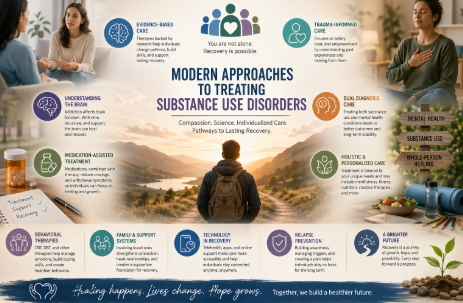
Substance use disorders have never been a simple issue, but the way we understand and treat them has evolved significantly over the years. What was once often viewed through a narrow moral lens is now recognized as a complex health condition influenced by biology, psychology, environment, and social factors. This shift has led to more compassionate, science-based, and individualized approaches to recovery.
Today, treatment is no longer about a one-size-fits-all model. Instead, it reflects a broader understanding of human behavior, brain chemistry, and the many pathways that can lead someone toward substance dependence—and eventually, toward recovery.
One of the most important changes in modern treatment is the strong emphasis on evidence-based care. This means that therapies and interventions are supported by scientific research and clinical outcomes, rather than tradition or assumption.
Approaches such as cognitive-behavioral therapy (CBT), motivational interviewing, and contingency management are now widely used because they have been shown to help individuals recognize harmful patterns, build coping skills, and strengthen motivation for change.
Rather than focusing solely on stopping substance use, evidence-based care addresses the underlying thoughts and behaviors that contribute to it. This makes recovery more sustainable in the long term.
Modern science has made it clear that substance use disorders are closely linked to changes in brain function. Repeated substance use can affect the brain’s reward system, decision-making abilities, and impulse control.
This understanding has helped reduce stigma and shift the conversation toward treatment rather than judgment. It also explains why willpower alone is often not enough for recovery. The brain needs time, structure, and support to heal and rewire itself.
This neurological perspective is a key reason why structured treatment plans are often more effective than unstructured attempts to quit on one’s own.
Medication-assisted treatment (MAT) has become an important part of modern recovery approaches, particularly for opioid and alcohol dependence. MAT combines behavioral therapy with carefully prescribed medications that help reduce cravings and withdrawal symptoms.
These medications do not replace one addiction with another, as some myths suggest. Instead, they stabilize brain chemistry so individuals can focus on therapy and rebuilding their lives.
When used appropriately and monitored by professionals, MAT has been shown to improve retention in treatment and reduce the risk of relapse.
Many individuals struggling with substance use have experienced trauma at some point in their lives. Trauma-informed care recognizes this connection and focuses on creating a safe, supportive environment for healing.
Rather than asking “What’s wrong with you?” this approach asks “What happened to you?” That subtle shift in perspective changes everything about how care is delivered.
Therapists trained in trauma-informed approaches prioritize emotional safety, trust, and empowerment. This helps individuals process past experiences without feeling re-traumatized during treatment.
It is increasingly understood that substance use disorders often occur alongside mental health conditions such as anxiety, depression, PTSD, or bipolar disorder. This is known as dual diagnosis or co-occurring disorders.
Treating only the substance use without addressing mental health often leads to incomplete recovery. Modern treatment models integrate both aspects, ensuring that individuals receive comprehensive care.
By addressing both conditions simultaneously, outcomes tend to improve significantly, and individuals are better equipped to maintain long-term stability.
No two recovery journeys are the same. This is why personalized treatment planning has become a cornerstone of modern care.
Factors such as age, history of substance use, mental health status, family environment, and personal goals all influence how treatment is structured. Instead of rigid programs, individuals now often receive flexible, tailored plans.
In addition, holistic approaches are gaining popularity. These may include mindfulness practices, physical wellness activities, nutrition support, creative therapies, and stress management techniques. While not replacements for clinical treatment, these methods support overall well-being and resilience.
Behavioral therapies remain central to recovery. They help individuals understand the connection between thoughts, emotions, and actions.
Cognitive-behavioral therapy, for example, helps people identify triggers and develop healthier responses to stress or cravings. Dialectical behavior therapy (DBT) focuses on emotional regulation and distress tolerance, which can be especially helpful for individuals with intense emotional experiences.
These therapies equip individuals with practical tools they can use long after formal treatment ends.
Recovery does not happen in isolation. Family involvement and strong support systems can significantly influence long-term success.
Modern treatment approaches often include family therapy or education programs that help loved ones understand addiction, improve communication, and rebuild trust. This creates a healthier environment for recovery and reduces the likelihood of relapse.
Support networks, whether through family, friends, or peer groups, provide accountability and encouragement during difficult moments.
Technology is also reshaping how treatment is delivered. Telehealth services, mobile recovery apps, and online support groups have made care more accessible than ever.
This is especially important for individuals who may face barriers such as distance, transportation, or stigma. Digital tools can offer reminders, coping strategies, virtual counseling sessions, and peer support at any time of day.
While technology does not replace in-person care, it enhances accessibility and continuity of support.
Modern treatment recognizes that recovery is not a single event but an ongoing process. Relapse prevention is therefore a key component of care.
Instead of viewing relapse as failure, it is now understood as part of a broader learning process. Individuals are taught to recognize early warning signs, manage triggers, and develop action plans for high-risk situations.
This proactive approach reduces shame and helps individuals stay engaged in their recovery journey.
Despite advances in treatment, stigma remains a significant barrier. Many individuals delay seeking help due to fear of judgment or misunderstanding.
Public education and awareness efforts are helping to change this, but there is still work to be done. Recognizing substance use disorders as medical conditions rather than personal failures is essential for encouraging early intervention.
In regions where access to care is expanding, including areas with resources like California drug and alcohol rehab options, more individuals are finding pathways to recovery earlier than before.
The evolution of substance use treatment reflects a broader cultural shift toward empathy, science, and individualized care. Instead of focusing solely on stopping substance use, modern approaches aim to understand the whole person—their history, environment, and emotional world.
Recovery is no longer seen as a rigid process but as a dynamic journey shaped by support, understanding, and evidence-based tools.
As research continues to grow and treatment methods become even more refined, the future of addiction care looks more hopeful than ever. The focus is increasingly on dignity, long-term wellness, and giving individuals the resources they need to rebuild their lives in meaningful ways.