
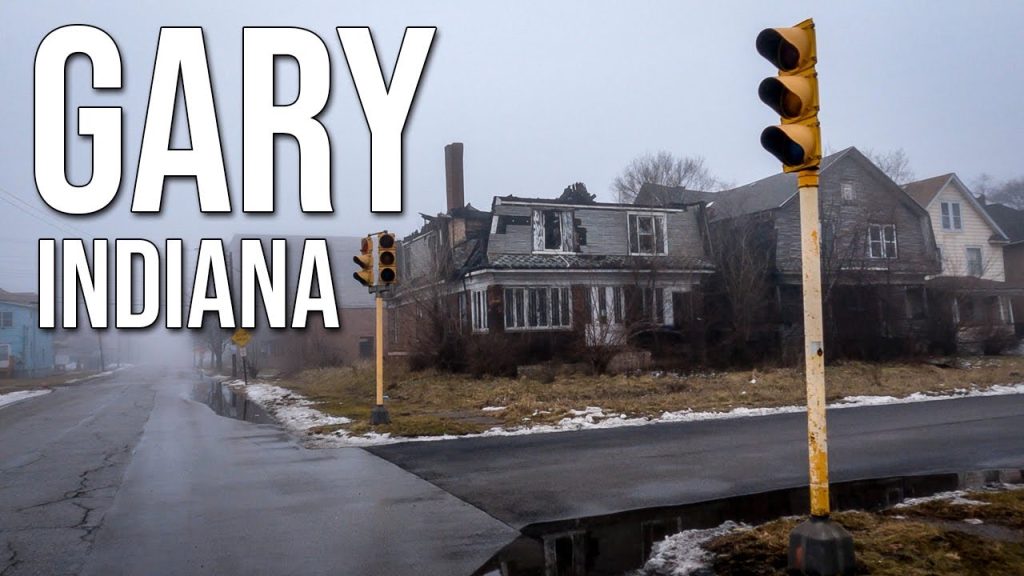
Why is Gary Indiana so dangerous? It is one of the most searched questions about the Midwest, and the answer goes far deeper than just crime statistics.
Gary, Indiana has been labeled the “Murder Capital of the World,” a ghost town, and one of America’s most dangerous cities — all for reasons rooted in decades of industrial collapse, racial inequality, poverty, and neglect.
Gary, Indiana was founded in 1906 by U.S. Steel Corporation as a company town to serve its massive Gary Works steel mill complex — the largest in North America.
The city was named after Elbert Henry Gary, the founding chairman of U.S. Steel. It was not built organically; it was engineered for industry.
By the 1950s, Gary was a booming city with over 200,000 residents. Jobs were plentiful, neighborhoods thrived, and the city earned the nickname “The Magic City.”
At its industrial peak in the 1970s, the Gary Steel Mill employed over 30,000 workers. For Black residents, who made up 70% of the population, those jobs were a direct path to the middle class.
Within two decades, the workforce shrank to just 6,000 workers as the American steel industry collapsed and manufacturing jobs moved offshore.
This single event triggered a chain reaction that destroyed the city’s economic foundation almost overnight.
| Era | Steel Workers | Gary Population |
|---|---|---|
| 1950s | Peak employment | ~200,000 |
| 1970s | ~30,000 | ~175,000 |
| 1990s | ~6,000 | ~115,000 |
| 2020 | Minimal | ~69,093 |
As the civil rights movement gained momentum in the 1960s, white residents and businesses began leaving Gary in large numbers — a phenomenon known as “white flight.”
James B. Lane, an emeritus history professor at Indiana University Northwest, described how white fear caused mass departures that collapsed the commercial district.
Black residents were left behind in a city with crumbling infrastructure, shrinking tax revenue, and disappearing opportunities. Systemic racism compounded every economic blow the city suffered.
Once the steel jobs disappeared and businesses closed, poverty spread rapidly across Gary’s neighborhoods.
The city’s median household income today stands at just $31,936, with a large share of residents living below the poverty line.
When people cannot meet basic needs, crime rises. Gary’s crime problem is not random — it is a direct consequence of generational poverty and economic abandonment.
Gary’s crime numbers tell a stark story that has made it one of the most dangerous cities in America for decades.
Current Crime Data (2024, FBI Release):
| Crime Type | Gary Rate (per 100K) | National Average |
|---|---|---|
| Violent Crime | 1,172 | ~380 |
| Property Crime | 6,275 | ~2,000 |
| Larceny/Theft | 4,398 | ~1,400 |
| Overall Crime Rate | 34 per 1,000 residents | ~4 per 1,000 |
Gary’s crime rate is 242% above the national average. Within Indiana, more than 98% of communities have a lower crime rate than Gary.
Your chance of becoming a victim of violent or property crime in Gary is 1 in 30. In the safest neighborhoods, that number improves to about 1 in 23.
The question “why is Gary Indiana so dangerous” became national news in the early 1990s when the city earned the grim title of murder capital of the United States.
In 1993, the city recorded 110 murders among a population of just over 100,000 — a rate three times higher than Chicago’s at the time.
By 1994 to 1995, Gary officially ranked as the most dangerous city in the entire United States. In 1995 alone, with a population of 115,269, the city reported over 3,000 crimes, including 129 murders.
Those numbers were not just statistics. They represented the complete breakdown of civic life in a city that had once been a model of industrial America.
When the jobs left Gary, the people followed. The population dropped from a peak of 200,000 to just 69,093 by the 2020 census — a loss of more than 65% of residents.
Empty neighborhoods meant empty tax coffers. The city could not maintain roads, schools, emergency services, or basic infrastructure.
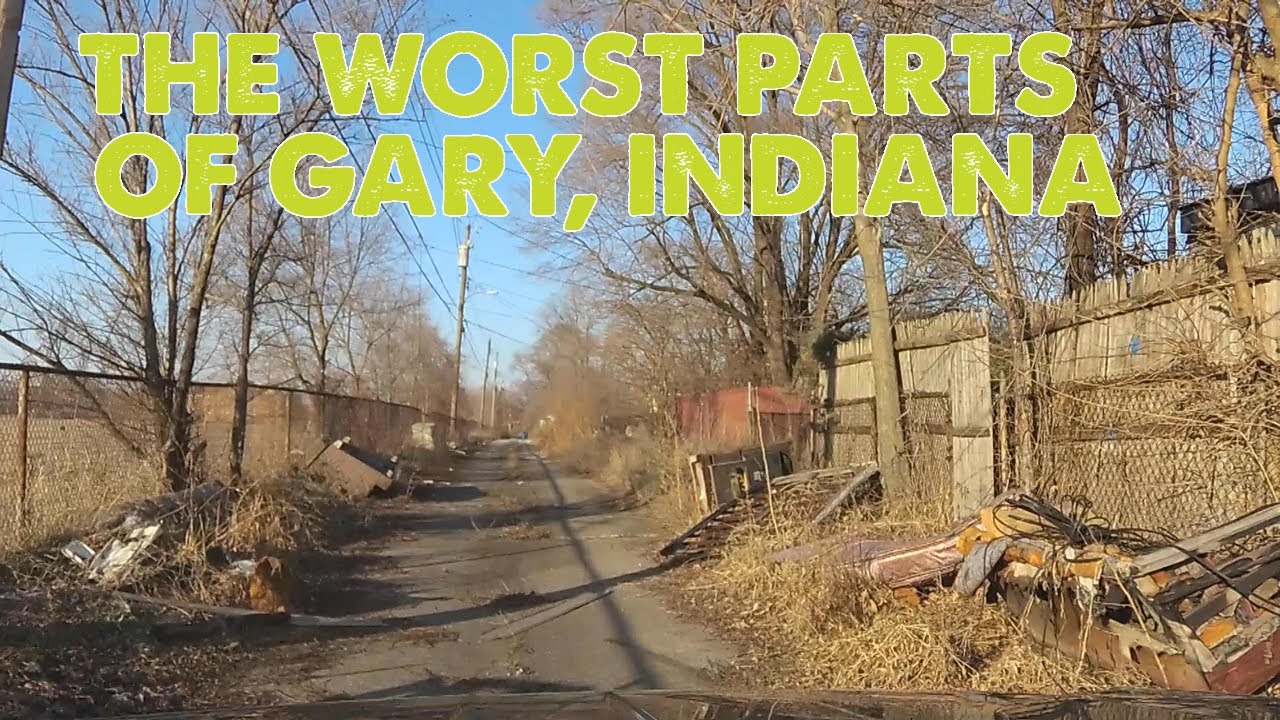
Today, Gary has over 13,000 abandoned structures within city limits. Empty churches, shuttered storefronts, collapsed auditoriums, and hollow train stations dot the landscape. These are not just visual reminders of decline — they are active contributors to crime by providing cover for illegal activity.
As legitimate economic opportunity dried up, Gary’s streets filled with a different kind of commerce. Drug trafficking networks moved in to fill the vacuum left by disappearing factories.
Gang activity grew steadily through the 1980s and 1990s, fueled by young men with no jobs, no prospects, and no alternatives.
Illegal guns became common currency in this underground economy. The connection between drug markets, gang territory disputes, and gun violence became the defining feature of Gary Indiana crime for decades.
Gary’s collapsing tax base directly starved its public services. Police departments were understaffed, schools were underfunded, and social safety nets frayed.
An underfunded police force struggles to respond to crime effectively. A low clearance rate for violent crimes — meaning few murders and assaults are solved — emboldens repeat offenders.
When criminals face little accountability, violence escalates. This is a cycle that plagued Gary for decades and continues to challenge the city today.
Not all of Gary is equally dangerous. Crime is heavily concentrated in specific neighborhoods, particularly in the eastern sections of the city.
According to CrimeGrade data, your chance of being a crime victim ranges from 1 in 14 in the most dangerous east neighborhoods to 1 in 23 in the safer west side neighborhoods.
Miller Beach, Gary’s easternmost neighborhood near the Indiana Dunes, is considered one of the more livable areas. Glen Park on the south side also has a more stable residential character.
Crime Risk by Area:
| Neighborhood Zone | Victim Risk | Safety Level |
|---|---|---|
| East Gary | 1 in 14 | High Risk |
| Central/Downtown | 1 in 18 | Elevated |
| West Gary | 1 in 23 | Moderate Risk |
| Miller Beach | Lower than average | Relatively Safer |
This is where the narrative gets more nuanced in 2026. Gary is no longer consistently ranked as Indiana’s most dangerous city.
Recent analyses have placed South Bend at the top of Indiana’s most dangerous cities list, with residents facing a 1 in 57 chance of being attacked. Terre Haute ranks second due to high property crime, and Evansville comes in third.
Gary still ranks among the highest per capita for violent crime in the state, but it no longer dominates every list the way it once did in the 1990s.
Rankings vary depending on methodology — some weigh violent crime more heavily, others use per capita formulas differently. The important point is that Gary has made measurable progress.
The most recent data offers cautious but real optimism about Gary’s trajectory.
According to the Gary Police Department’s 2025 reports, significant improvements were recorded:
A Homicide Task Force formed in 2023 improved clearance and conviction rates. Multi-agency collaboration between local police, the Indiana State Police, the ATF, and the U.S. Attorney’s Office has focused on repeat violent offenders and illegal firearms.
These are not trivial numbers. A city that once recorded 129 murders in a single year now has 24 — a transformation that deserves recognition even as challenges remain.
Crime does not just cost lives. It costs money in ways that trap communities in cycles of poverty.
According to CrimeGrade, in 2025 the total projected cost of crime in Gary was $79,330,422. That translates to approximately $1,151 per resident or $2,953 per household.
When intangible costs like pain, suffering, and trauma are factored in using research-based methodologies, the total estimated cost of crime rises to $309,779,087 — or $4,495 per resident.
For a city where the median household income is only $31,936, crime costs consuming nearly 5% of that income is a devastating burden on already struggling families.
Gary, Indiana is the birthplace of one of the world’s greatest entertainers. Michael Jackson and the entire Jackson family grew up in a modest home at 2300 Jackson Street in Gary.
The Jackson 5’s rise to fame in the late 1960s and 1970s gave the city a moment of national pride. Michael Jackson’s hometown status is still celebrated, and the Hard Rock Casino Northern Indiana that opened in 2021 includes Jackson 5 memorabilia in its design.
This is a reminder that Gary has a cultural richness that exists alongside its struggles. The city is not only defined by crime.
In May 2021, a $300 million Hard Rock Casino opened in Gary, branded as Hard Rock Casino Northern Indiana.
The facility includes a 1,950-seat Hard Rock Live performance hall and has brought new investment and jobs to an area desperate for both.
There is also ongoing speculation and discussion about Gary potentially becoming a future home for the Chicago Bears NFL franchise, which would represent a massive economic development if it materialized.
These are small but meaningful signals that the city is not without a future.
Gary’s population collapse is one of the most dramatic in American urban history. From over 200,000 residents in the 1950s to roughly 69,000 today, the city lost two-thirds of its people.
The current population is declining at a rate of approximately 0.76% annually, meaning the shrinkage has not stopped.
Fewer residents mean less tax revenue, fewer businesses, reduced city services, and more abandoned properties. Each of these factors independently worsens crime conditions, and together they create an almost self-reinforcing cycle of decline.
Gary frequently appears on national lists of the most dangerous American cities, though its relative position has shifted over the years.
| City | Violent Crime Rate (per 100K) | Comparison to National Avg |
|---|---|---|
| Gary, IN | ~1,172 | ~3x higher |
| South Bend, IN | High | 1 in 57 attack risk |
| Detroit, MI | Very High | Consistently top 5 nationally |
| St. Louis, MO | Very High | Often ranked #1 nationally |
| National Average | ~380 | Baseline |
Gary remains in the conversation nationally, though cities like St. Louis and Detroit consistently rank worse by some measures.
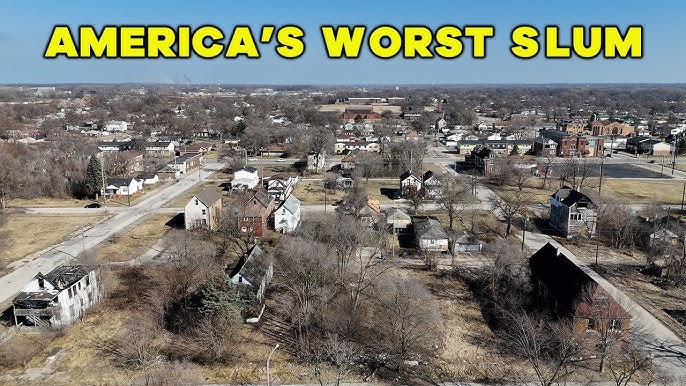
Gary’s decline is not unique. It is a case study in what happens when a single-industry city loses its economic engine, when racial segregation concentrates poverty, and when government investment dries up.
Cities like Detroit, Flint, and East St. Louis followed similar trajectories. The common thread is deindustrialization meeting systemic inequality with no adequate policy response.
Understanding why Gary Indiana is so dangerous means understanding that crime is rarely just crime. It is almost always the visible symptom of deeper economic and social wounds.
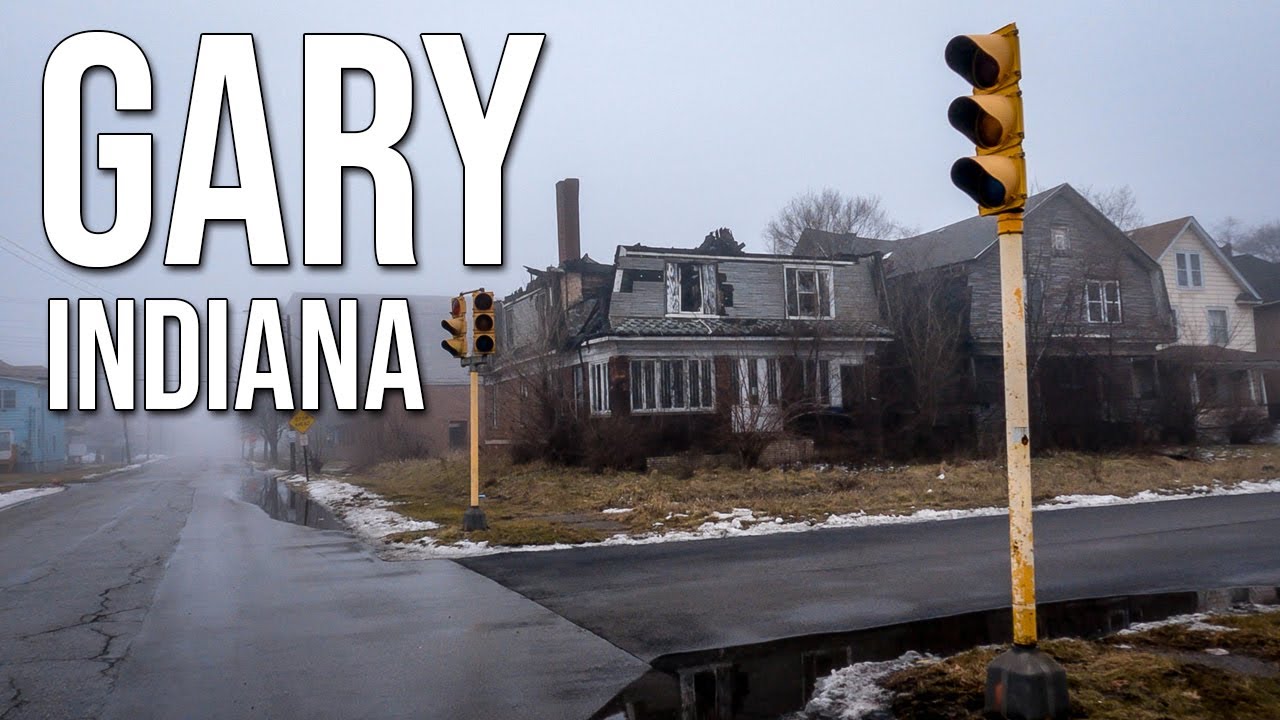
There are genuine reasons for cautious hope. The homicide numbers in 2025 reached their lowest point in over 50 years. Federal law enforcement partnerships are producing results. The Hard Rock Casino has brought investment. Community organizations are working.
But the structural problems — poverty, abandoned housing stock, a depleted tax base, low educational attainment — do not disappear quickly.
Gary needs sustained investment, not just in policing but in schools, jobs, infrastructure, and housing. The city’s residents have demonstrated extraordinary resilience. What has been missing is the external support to match that resilience.
Gary is dangerous primarily because of decades of poverty caused by the collapse of its steel industry, combined with racial inequality, population loss, and underfunded public services.
Yes. In 1993 and 1994, Gary was dubbed the murder capital of the United States, recording over 110 murders per year among a population of just over 100,000 residents.
Gary’s crime rate is 34 per 1,000 residents, which is 242% above the national average. Your overall chance of becoming a crime victim is 1 in 30.
No. As of recent rankings, South Bend has taken the top spot. Gary still ranks among the highest per capita but no longer dominates every state-level dangerous city list.
In 2025, Gary recorded 24 homicides — the lowest annual total since at least 1970, down from 38 the previous year and far below the 129 recorded in 1995.
The collapse of the U.S. steel industry in the 1970s-1980s eliminated tens of thousands of jobs, triggering white flight, business closures, poverty, population loss, and eventual urban decay.
Some areas, like Miller Beach near the Indiana Dunes, are relatively safer. Downtown Gary and eastern neighborhoods carry significantly higher risk. Daytime visits to specific attractions are generally safer than nighttime.
A Homicide Task Force formed in 2023, multi-agency collaboration with the ATF and FBI, data-driven policing, increased firearms seizures, and stronger federal prosecutions have contributed to measurable crime declines since 2023.
Gary has over 13,000 abandoned structures within city limits — a direct result of its population declining from 200,000 to under 70,000 over several decades.
Gary is the birthplace of Michael Jackson and the Jackson 5. It is also home to the largest steel mill complex in North America and serves as the western gateway to Indiana Dunes National Park.
Why is Gary, Indiana so dangerous? The answer is a 120-year story compressed into every pothole, every abandoned building, and every crime statistic the city produces.
Gary was built on steel, stripped of its economy, abandoned by investment, and burdened by systemic inequality — and crime was the inevitable result. But Gary in 2026 is not Gary in 1995.
Homicides hit a 50-year low in 2025. Federal enforcement partnerships are working. The Hard Rock Casino represents new investment. The city’s people — Black, working-class, resilient — have never stopped fighting for their community.
Gary does not need to be written off. It needs the same sustained investment and policy attention that built it in 1906. The story of Gary, Indiana is ultimately a story about what America does, and fails to do, for its most vulnerable cities.