
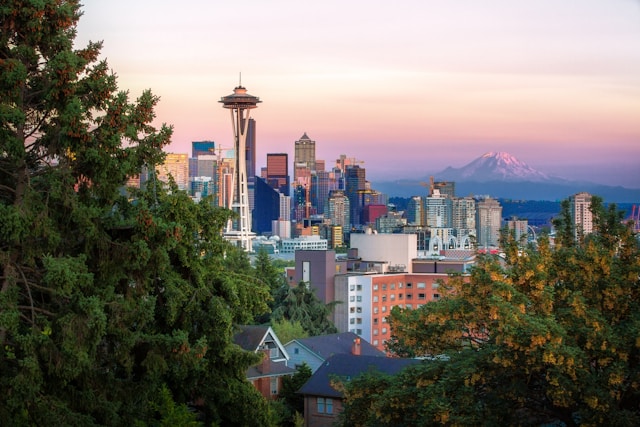
Why is Seattle called the Emerald City? The nickname comes from the city’s lush, year-round greenery, not from The Wizard of Oz or any hidden emerald mines.
Seattle earned the name in 1982 through an official tourism contest, and it stuck because the city truly lives up to it, surrounded by evergreen forests, parks, and the misty backdrop of the Cascade and Olympic mountains. Before this nickname, Seattle went by names like Queen City, Gateway to Alaska, and Jet City.
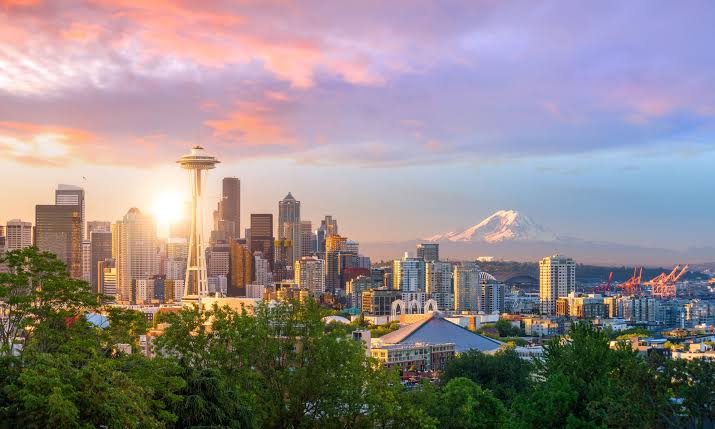
The Emerald City nickname refers to Seattle’s deep, natural greenery that stays vivid throughout most of the year.
Unlike a marketing gimmick with no basis in reality, the name reflects the city’s actual landscape of parks, trees, and forested hills.
It also connects Seattle to Washington’s official state nickname, the Evergreen State, tying the city’s identity to the region around it.
Seattle’s Emerald City nickname did not exist for most of the city’s history and only became official in the early 1980s.
In 1982, the Seattle-King County Convention and Visitors Bureau ran a public contest to find a new epithet for the city.
The bureau wanted a fresh, positive identity to help boost tourism during a difficult economic period.
Sarah Sterling-Franklin, a writer and photographer from California with a summer home on San Juan Island, submitted the winning phrase.
Her entry described Seattle as “the jewel of the Northwest” and “the many-faceted city of space, elegance, magic and beauty.”
Local artist Karen Holum designed the official Emerald City logo, which appeared on ads, brochures, and merchandise for the next two decades.
The logo was used until 2001, when Seattle rebranded with a new stylized “See-at-L” design.
Many people assume Seattle’s nickname is inspired by the fictional Emerald City in L. Frank Baum’s Oz books.
This is a common misconception, and it is not actually true, despite the similar name.
| Detail | Seattle, Emerald City | Oz, Emerald City |
|---|---|---|
| Origin year | 1982 | 1900, in Baum’s novel |
| Reason for name | Natural greenery | Fictional city built of emeralds and green glass |
| Creator | Tourism contest winner | Author L. Frank Baum |
| Real or fictional | Real city in Washington | Fictional capital of the Land of Oz |
Baum’s Emerald City was published more than 80 years before Seattle adopted its nickname, so the timing rules out a direct link.
The similarity in name is simply a coincidence rooted in both places being associated with the color green.
Seattle’s climate and geography combine to keep the city lush even outside the peak growing season.
Seattle has cool summers and mild winters, which allow plant life to stay green for most of the year.
The Olympic Mountains block heavy coastal rain, while the Cascade Range shields the city from extreme heat and cold.
Evergreen trees, unlike deciduous ones, keep their needles year-round, giving Seattle its signature green backdrop even in winter.
The nearby Olympic Peninsula and Cascade Range add dense forest scenery that frames the city from almost every angle.
| Factor | Effect on Greenery |
|---|---|
| Temperate climate | Supports plant growth most of the year |
| Olympic Mountains | Blocks harsh coastal storms |
| Cascade Range | Shields against extreme temperatures |
| Evergreen trees | Stay green even in winter months |
| City parks and greenbelts | Add lush vegetation within city limits |
Most cities across the country look their greenest during summer, but Seattle actually works differently.
Seattle receives less rainfall in summer, which causes many lawns to dry out and turn brown.
Because environmentalism is a strong local value, many residents choose not to water their lawns during the dry season.
This means Seattle’s most vivid green months are actually spring and fall, not summer as many visitors expect.
Seattle has carried several nicknames over the decades, each reflecting a different era of the city’s growth.
A promotional pamphlet called Seattle “The Future Queen City of the Pacific Northwest,” and the name stuck for years.
During the Klondike Gold Rush, over 100,000 prospectors departed from Seattle, earning it this nickname.
A 1942 city resolution encouraged residents to plant flowers, though this nickname never gained lasting popularity.
Boeing’s growing aerospace presence in Seattle led to this nickname, which remained popular for decades.
Following the tourism contest, Emerald City became Seattle’s dominant and most recognized nickname going forward.
| Nickname | Time Period | Reason |
|---|---|---|
| Queen City | 1869 onward | Promotional pamphlet branding |
| Gateway to Alaska | Late 1800s | Klondike Gold Rush departures |
| City of Flowers | 1940s | City beautification resolution |
| Jet City | 1950s to 1960s | Boeing’s aerospace industry |
| Emerald City | 1982 to present | Tourism contest, natural greenery |
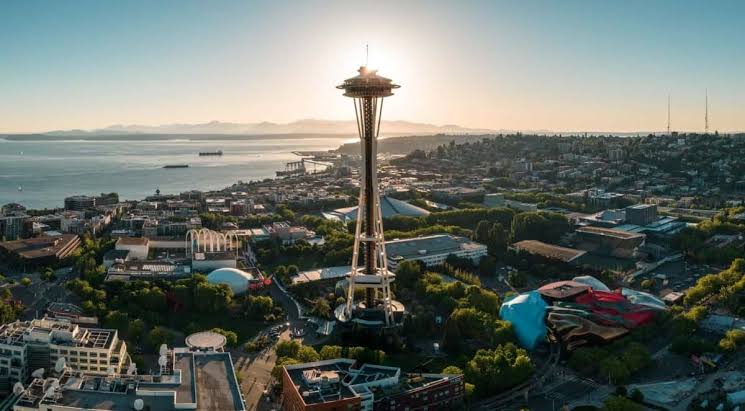
Emerald City is the most famous label, but Seattle also carries several informal nicknames used today.
This nickname reflects Seattle’s reputation for frequent drizzle, even though annual rainfall is lower than many East Coast cities.
Seattle is home to Starbucks and a strong coffeehouse culture, earning it this widely used title.
Even after the Emerald City name took hold, Jet City remains a nostalgic nod to Boeing’s local legacy.
More than 40 years after the contest, Emerald City remains an accurate description of Seattle’s identity.
The city continues to invest heavily in parks, green spaces, and environmental preservation across its neighborhoods.
Seattle’s skyline, framed by evergreen hills and views of Mount Rainier, still matches the vivid imagery the nickname promises.
Seattle is the most well-known city with this nickname, but it is not the only place to use it.
| Location | Reason for the Nickname |
|---|---|
| Seattle, Washington | Official nickname since 1982 |
| Eugene, Oregon | Known as part of the “Emerald Empire” since 1928 |
| Greenville, North Carolina | Local branding with an “emerald loop” art district |
| Land of Oz (fictional) | Capital city in L. Frank Baum’s Oz novels |
This shows the phrase “Emerald City” is not unique to Seattle, though Seattle is by far the most recognized real-world example.
A few lesser-known details add extra context to how the nickname became part of Seattle’s culture.
The Emerald City logo appeared on t-shirts, gifts, and brochures for nearly 20 years after its 1982 debut.
There is even a drink called “Emerald City” associated with Seattle’s cocktail and bar culture.
Washington State’s own nickname, the Evergreen State, reinforced the natural fit of Seattle’s new city branding.
The Emerald City name gave Seattle’s tourism marketing a fresh, positive identity during a challenging economic decade.
In the 1970s, Boeing and other aerospace companies cut thousands of jobs, leading to population and economic decline.
A famous billboard from that era read “Will the last person leaving Seattle turn out the lights,” reflecting the mood at the time.
The Emerald City branding offered a hopeful, nature-focused image that helped reposition Seattle as a desirable destination.
Decades later, the nickname remains central to how Seattle markets itself to tourists, businesses, and new residents.
| Fact | Detail |
|---|---|
| Year adopted | 1982 |
| Chosen by | Seattle-King County Convention and Visitors Bureau |
| Contest winner | Sarah Sterling-Franklin |
| Logo designer | Karen Holum |
| Logo used until | 2001 |
| Linked to Wizard of Oz | No, purely coincidental |
| State nickname connection | Washington, the Evergreen State |
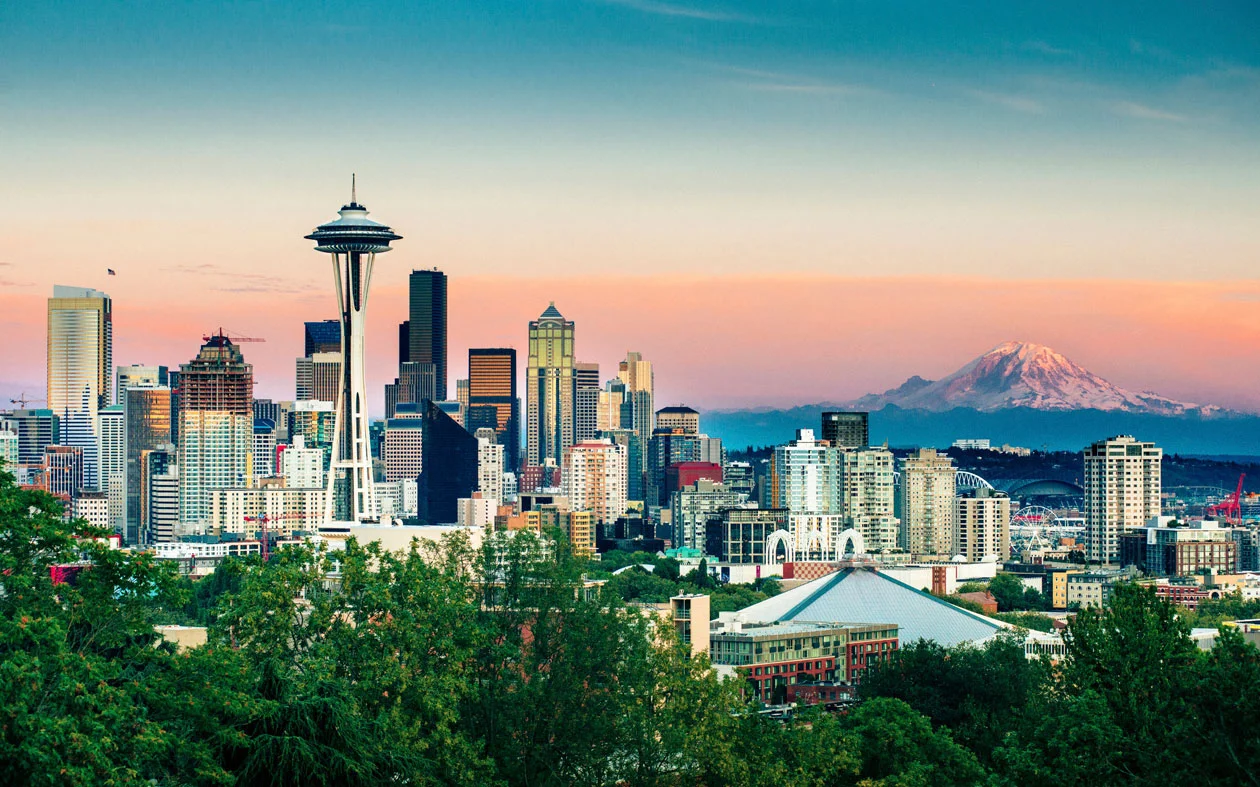
Certain spots around Seattle showcase exactly why the Emerald City nickname continues to feel accurate today.
One of Seattle’s largest green spaces, offering forested trails and sweeping views of Puget Sound.
A living showcase of trees and plants that highlights the city’s deep connection to nature.
A popular viewpoint offering a skyline view framed by greenery, with Mount Rainier visible in the distance.
A central, tree-lined park that locals and visitors use for walking, running, and relaxing near the water.
Seattle’s location plays a huge role in why the Emerald City nickname makes sense from a purely geographic standpoint.
Seattle sits between the Olympic Mountains to the west and the Cascade Range to the east, forming a natural buffer zone.
This positioning creates a microclimate that avoids the harsh extremes found elsewhere in the country.
The nearby waters of Puget Sound add moisture to the air, supporting plant life throughout the region.
Higher elevations nearby capture much of the incoming rain, leaving the city with milder, more manageable precipitation levels.
| Feature | Role in Seattle’s Greenery |
|---|---|
| Olympic Mountains | Blocks storms from the Pacific Ocean |
| Cascade Range | Shields the city from temperature extremes |
| Puget Sound | Adds humidity that supports vegetation |
| Temperate rainforest zone | Creates ideal conditions for evergreen trees |
Seattle’s extensive park system is one of the biggest reasons the Emerald City nickname continues to feel accurate.
Seattle maintains hundreds of public parks, ranging from small pocket parks to sprawling forested reserves.
Many of Seattle’s parks were designed under the influence of the famous Olmsted Brothers landscape architecture firm in the early 1900s.
Their design philosophy emphasized connected green corridors, which still shape how Seattle’s parks link together today.
Seattle protects several urban greenbelts, preserving forested land within city limits rather than allowing full development.
| Park Name | Highlight |
|---|---|
| Discovery Park | Largest park, forested trails, Puget Sound views |
| Washington Park Arboretum | Extensive tree and plant collection |
| Green Lake Park | Popular lake loop for walking and running |
| Kerry Park | Iconic skyline and Mount Rainier views |
| Seward Park | Old-growth forest remnant near Lake Washington |
Several myths persist about how and why Seattle got its famous nickname, and it helps to clear them up.
Seattle has no emerald mines, and this myth likely comes from people connecting the name too literally to the gemstone.
In reality, the nickname is relatively recent, dating only to 1982, unlike older nicknames like Queen City.
Seattle carried several other nicknames before Emerald City, including Jet City and Gateway to Alaska.
The name actually came from a public contest run by the tourism bureau, not a government decision alone.
Seattle is often mentioned alongside other American cities known for their environmental focus and greenery.
| City | Nickname or Reputation | Key Green Feature |
|---|---|---|
| Seattle, WA | Emerald City | Evergreen forests and extensive parks |
| Portland, OR | City of Roses | Rose gardens and strong sustainability culture |
| Eugene, OR | Emerald Empire | Forested valley setting |
| Austin, TX | Live Music Capital, eco-conscious | Greenbelt trail system |
Seattle stands out among these cities because its greenery is visible year-round, not just during a specific season.
Beyond tourism marketing, the Emerald City nickname has become deeply woven into Seattle’s local culture and identity.
Local sports teams and businesses often reference the Emerald City name in logos, slogans, and merchandise.
Seattle’s music scene and cultural events sometimes use “Emerald City” as a nod to local pride and identity.
The name reflects the region’s broader appreciation for nature, sustainability, and outdoor living.
Timing your visit right lets you experience Seattle’s greenery at its most impressive.
| Season | What to Expect |
|---|---|
| Spring | Blooming flowers, vivid green parks, mild rainfall |
| Summer | Drier lawns, but forests and trees stay green |
| Fall | Rich color contrasts as deciduous trees change |
| Winter | Evergreen trees remain vibrant despite cooler weather |
Spring brings blooming cherry blossoms, tulips, and fresh growth across the city’s many gardens and parks.
While some trees change color, the abundance of evergreens keeps the overall landscape feeling lush well into autumn.
A few simple tips help visitors appreciate the Emerald City nickname the way longtime residents do.
Smaller neighborhood parks often showcase Seattle’s everyday greenery better than the most crowded tourist attractions.
Ferry rides offer sweeping views of Seattle’s forested shoreline and mountain backdrop from the water.
Spring and fall offer fewer crowds while still showing off the city’s signature green scenery.
A city’s nickname often shapes how outsiders perceive it long before they ever visit in person.
For Seattle, the Emerald City name sets clear expectations of greenery, natural beauty, and a strong connection to the outdoors.
This expectation is rarely disappointed, since the nickname accurately reflects what visitors actually experience once they arrive.
Unlike many city nicknames that fade over time, Emerald City has only grown stronger as Seattle continues to prioritize parks and sustainability.
Seattle earned the nickname in 1982 through a tourism contest celebrating its year-round greenery and lush parks.
No, the connection is coincidental. Seattle’s nickname was created decades after Baum’s Oz books were published.
The nickname became official in 1982 after being chosen through a Convention and Visitors Bureau contest.
Sarah Sterling-Franklin, a California writer, submitted the winning entry in the 1982 naming contest.
Seattle was previously known as Queen City, Gateway to Alaska, City of Flowers, and Jet City.
A mild climate, mountain protection, and abundant evergreen trees keep Seattle green in most seasons.
Surprisingly, Seattle is least green in summer due to lower rainfall and dry, brown lawns.
Yes, Eugene, Oregon and Greenville, North Carolina also use similar Emerald City branding.
The original 1982 logo was retired in 2001, though the nickname itself remains widely used.
Seattle is also known as Rain City, Coffee Capital, and Jet City in casual and marketing use.
Seattle earned its Emerald City nickname in 1982 through a tourism contest designed to give the city a fresh, positive identity after a difficult economic decade.
The name has nothing to do with The Wizard of Oz or hidden emerald mines; it simply reflects the city’s abundant evergreen trees, forested hills, and lush parks that stay vivid for most of the year.
Before this nickname, Seattle carried names like Queen City, Gateway to Alaska, and Jet City, each tied to a different chapter of its history. More than four decades later, Emerald City remains the most recognized and fitting title for this Pacific Northwest gem.
Whether you are a longtime local or a first-time visitor, understanding this history adds a deeper appreciation for why Seattle’s nickname still feels so true today.