
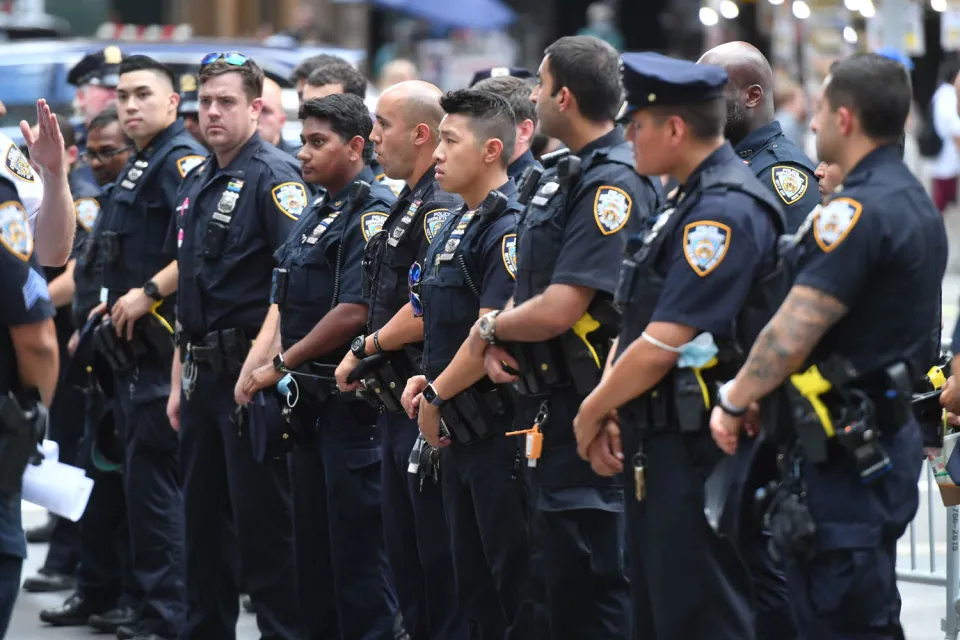
Why is police called 12 is one of the most searched slang questions on the internet today.
The term “12” is used daily in rap lyrics, social media posts, street conversations, and even protest signs across America. Yet most people who use it cannot explain exactly where it came from.
The truth is that no single origin has been confirmed, and the real story behind the term is a mix of radio codes, a legendary TV show, Atlanta street culture, and the global reach of hip-hop.
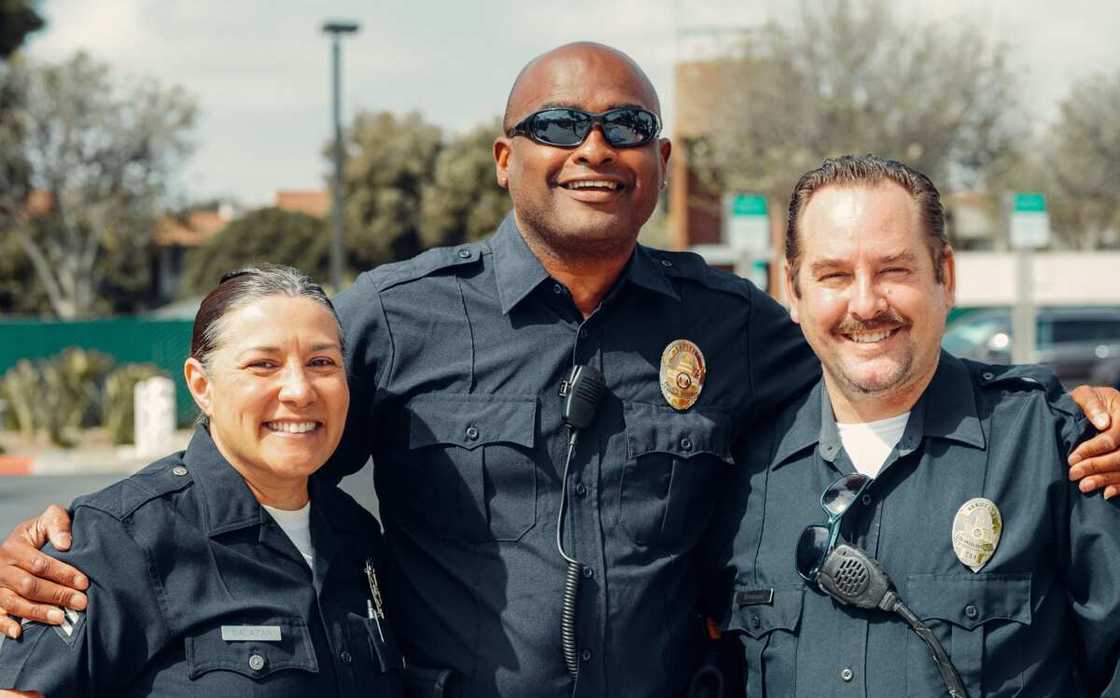
“12” is slang for police officers or law enforcement in general. When someone shouts “Watch out, it’s 12!” or texts “12 on the block,” they are warning others that police are nearby.
The term is used both as a neutral descriptor and as a defiant statement. In communities with strained relationships with law enforcement, saying “12” carries a specific weight that goes beyond just a nickname.
There is no single confirmed answer to why police is called 12. Instead, there are three major theories that researchers, linguists, and street culture historians have identified.
Each theory has real evidence behind it. The truth is likely a combination of all three, with each one reinforcing the others over different decades.
The strongest and most widely cited theory connects “12” to the 10-code system used in law enforcement radio communication. The code 10-12 means “stand by” or “visitors present,” signaling that bystanders or unauthorized people are nearby.
When someone in the community overheard officers using the 10-12 code on police scanners or CB radios, they began using the shorthand “12” to warn others that law enforcement was present. Over time, 10-12 was shortened to just “12,” and it entered everyday street vocabulary.
This theory is supported by the fact that police radio codes have directly created other slang terms. “187” is the California Penal Code for homicide, and it became widely known slang through music. “5-0” came from the TV show Hawaii Five-O. The pattern of radio codes and police numbers becoming public slang is well established in American culture.
A second major theory traces “12” back to Adam-12, a police procedural television drama that aired on NBC from September 21, 1968, to May 20, 1975. The show followed LAPD Officers Pete Malloy and Jim Reed as they patrolled Los Angeles in their patrol car, with the radio call sign “1-Adam-12.”
Every episode opened with the dispatcher’s iconic call: “One-Adam-12, One-Adam-12…” The show was produced with the full cooperation of the LAPD and aimed to be as realistic as possible. It ran for 174 episodes across seven seasons and helped introduce police procedures and jargon to a generation of American viewers.
In the LAPD radio call sign system, “Adam” designated a two-person patrol unit, and “12” identified the specific patrol beat. The show made this number one of the most recognizable identifiers for police in American pop culture.
| Show | Years Aired | Network | Police Connection |
|---|---|---|---|
| Adam-12 | 1968–1975 | NBC | LAPD patrol unit “1-Adam-12” |
| Hawaii Five-O | 1968–1980 | CBS | Origin of “5-0” police slang |
| Dragnet | 1967–1970 | NBC | Same universe as Adam-12 |
The limitation of this theory is timing. Adam-12 ended in 1975, but “12” as widespread police slang did not enter mainstream culture until the 2010s. Critics of this theory argue that a TV show from the 1960s would not directly produce slang four decades later without other intermediary factors.
The third theory is the most regionally specific and may be the most direct source of the term as it is used today. According to this theory, the Atlanta Police Department’s narcotics unit in the 1970s and 1980s used unit or badge numbers starting with “12.”
When drug dealers spotted these plainclothes narcotics officers on the street, they would shout “12!” as a quick warning to others. The term spread through Atlanta’s neighborhoods and eventually into the Southern hip-hop community that was based there.
Atlanta’s street culture created the warning. Atlanta’s music scene amplified it nationwide.
Atlanta is not just a geographic location in this story. It is the cultural engine that took a local warning code and turned it into national slang.
The city has been the center of American hip-hop since the early 1990s. Artists like OutKast, Goodie Mob, Lil Jon, and later Gucci Mane, Young Jeezy, Future, and Migos all came from Atlanta’s streets and brought Atlanta’s language with them to global audiences.
“12” was embedded in Southern rap vocabulary years before most of the country heard it. When Atlanta artists hit mainstream success, the term traveled with them.
Hip-hop has always been the fastest vehicle for spreading street slang across geographic and cultural lines. Terms from specific cities entered the national vocabulary through rap lyrics, and “12” was no exception.
The single most important moment in the national spread of “12” came on June 13, 2013, when Atlanta rap trio Migos released their song “F*ck 12” on their mixtape YRN (Young Rich Niggas). The lyrics referenced police and DEA agents raiding a trap house, using “12” as the term for law enforcement.
The song went viral almost immediately. Millions of listeners outside Atlanta heard the term for the first time. Because Migos was rapidly becoming one of the most influential rap groups in the country, the slang they used became the slang the country used.
By 2014, the phrase had moved beyond music and into protest. After the police shooting of Michael Brown in Ferguson, Missouri, “Fuck 12” appeared on protest signs, car windows, and social media posts across the country. In less than two years, a regional Atlanta slang term had become a national political statement.
One additional theory connects “12” to the acronym ACAB, which stands for “All Cops Are Bastards.” In number substitution, A=1, C=3, A=1, B=2, creating 1312. Some have suggested that “12” is a shortened version of 1312.
However, most researchers and linguists consider this connection weak. The ACAB acronym has roots in British punk culture from the 1970s, while “12” is distinctly American and specifically tied to Atlanta. The numerical connection to 1312 is likely coincidental rather than causal.
“12” is not the only nickname Americans use for police. Different regions developed their own terms, and each carries its own cultural history.
| Slang Term | Primary Region | Origin |
|---|---|---|
| 12 | Atlanta / South | 10-12 radio code or narcotics unit |
| 5-0 (Five-O) | National | TV show Hawaii Five-O (1968) |
| Pigs | National | British slang, 1960s protests |
| The Fuzz | National | British police helmet slang |
| Boys in Blue | National | Police uniform color |
| Po-Po | California / South | Slang reduplication of “police” |
| The Heat | National | Police pressure on suspects |
| Smokey | Trucking culture | Highway patrol hat resemblance |
| One Time | Southern US | Slang for “the police” |
| Narcs | National | Short for narcotics officers |
“12” stands out from this list for one specific reason: it is a number, not a word. That numerical quality gave it a coded, discreet quality that made it useful as a warning. You could text “12” or shout it in a crowd without it being immediately understood by outsiders.
To fully understand the radio code theory, it helps to know how the 10-code system works. The APCO (Association of Public-Safety Communications Officials) 10-codes were developed in 1937 to standardize radio communication between law enforcement officers.
These codes allowed fast, short communication over radio channels that were often monitored by the public. The codes were meant to be understood by officers and not easily decoded by civilians.
But the codes spread anyway. CB radio culture in the 1970s, police scanners in the 1980s, and later the internet gave civilians access to what these codes meant.
| Code | Meaning |
|---|---|
| 10-4 | Acknowledged / OK |
| 10-7 | Out of Service |
| 10-8 | In Service |
| 10-12 | Visitors Present / Stand By |
| 10-20 | Location |
| 10-33 | Emergency |
Once people knew that 10-12 meant someone was watching or visitors were present, using “12” as a street warning made complete logical sense. You were telling others the police were present, just as the code itself signaled unwanted observers were nearby.
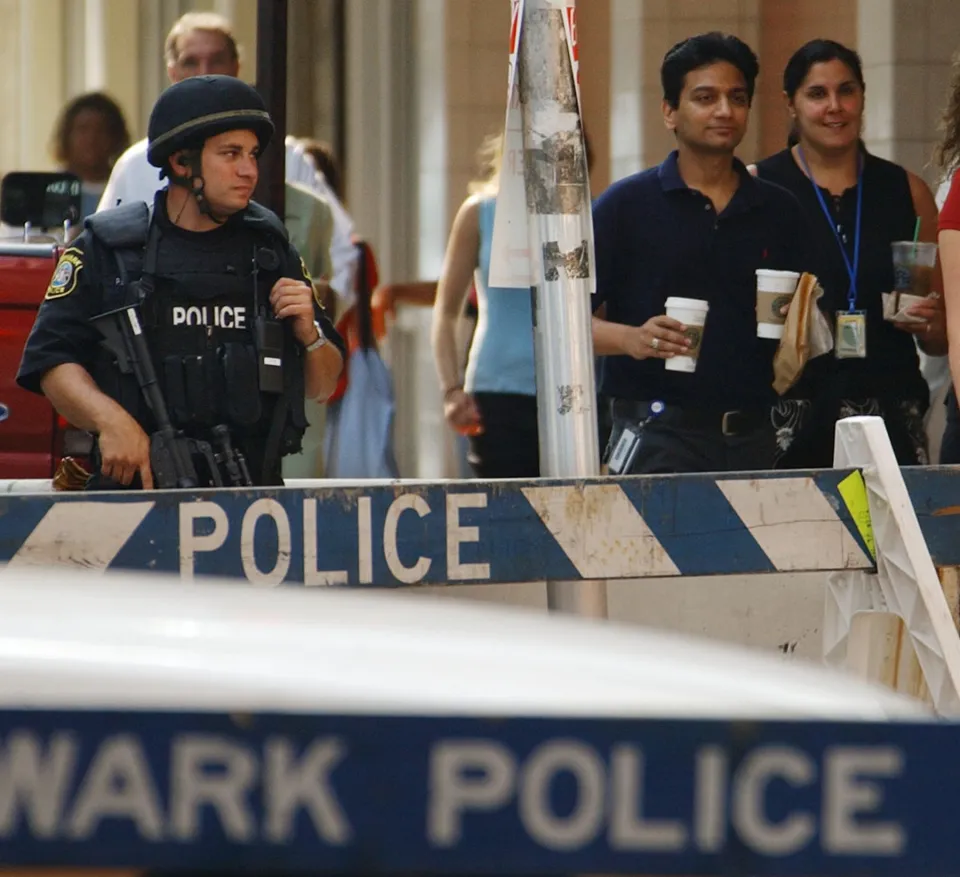
Today, “12” functions in several different ways depending on context, tone, and intent.
As a warning, it is shouted or texted quickly to alert others to police presence. As a descriptor, it appears in rap lyrics as a reference to law enforcement without necessarily being hostile. As a protest phrase, “Fuck 12” became a rallying cry during demonstrations against police violence.
Common uses of “12” in context:
In each case, the context makes the meaning clear to anyone familiar with the slang. No further explanation is needed within communities where the term is commonly used.
This depends entirely on who you ask. Some law enforcement officers take the term as a sign of community distrust. Others acknowledge it with indifference or even humor, noting that police have always had unofficial nicknames.
The term itself is not universally derogatory. In many contexts it is simply descriptive, like saying “the cops” or “the police.” The phrase “Fuck 12,” however, is explicitly hostile and intentionally anti-police.
Most linguists and cultural researchers agree that “12” sits in a gray area. Its level of disrespect depends on how it is said, by whom, and in what context.
The 2014 Ferguson protests following the shooting of Michael Brown changed “12” from street slang into a political identity marker. Signs reading “Fuck 12” appeared at protests in Ferguson, Missouri, New York, Los Angeles, and dozens of other cities.
The phrase then resurfaced even more powerfully in 2020 following the death of George Floyd. Across the global protest movements that followed, “Fuck 12” was seen on murals, spray-painted on walls, and printed on T-shirts. What had started as an Atlanta warning code had become an international protest symbol.
This political dimension is entirely separate from the slang’s original function. The word evolved because language always evolves under social pressure.
“12” is part of a broader pattern of using numbers and codes as police slang. Numbers carry a kind of neutral, technical quality that makes them useful as coded language.
“187” (California Penal Code for murder) is standard slang for a killing. “5-0” (from the TV show Hawaii Five-O) is the dominant police slang in many parts of the country. “12” fits perfectly into this pattern: a number that means something specific to insiders and nothing to outsiders.
Numbers as slang also resist direct censorship. A song or social media post that says “12 on the block” cannot easily be filtered by keyword algorithms that might catch “police” in certain contexts. This made numerical slang especially useful in online communities and hip-hop lyrics designed for commercial release.
Before social media, slang traveled at the speed of music distribution and word of mouth. After social media, slang can cross the country in hours.
Twitter, Instagram, and later TikTok all played significant roles in making “12” a nationally understood term. When Migos dropped “F*ck 12” in 2013, the song circulated on Twitter and music blogs before it ever received traditional radio play. The term arrived in cities that had no prior connection to Atlanta street culture.
TikTok in particular has accelerated the spread of slang in ways that no previous platform could. A video using “12” casually in conversation reaches millions of viewers instantly, normalizing the term across age groups and regions that would never have encountered it through traditional cultural pathways.
While “12” is distinctly American, other countries have their own long-standing slang for police that reflect similar cultural dynamics.
| Country | Slang Term | Approximate Origin |
|---|---|---|
| UK | The Feds / Fuzz / Bill | British street culture |
| Australia | Pigs / Coppers | Imported from UK |
| France | Les Flics | French informal term |
| Mexico | Chotas / La Jura | Mexican street slang |
| Jamaica | Babylon | Rastafarian culture |
| Germany | Bullen | German slang |
In nearly every case, these terms emerged from communities with complicated relationships to law enforcement. The pattern is global: wherever policing exists, unofficial naming exists alongside it.
Even if Adam-12 did not directly create the slang term “12,” the show left a lasting mark on how Americans understood policing. The show ran from 1968 to 1975, airing 174 episodes across seven seasons on NBC.
It was the first TV show to work in full cooperation with a real police department to depict accurate procedures. Officers used genuine LAPD badges and drove actual department-spec patrol cars. The voice of the dispatcher heard in every episode was a real LAPD radio operator named Shaaron Claridge.
The show helped shape public perception of police as professional, rule-following officers rather than corrupt or dangerous figures. That image would later be challenged by the very slang the show may have helped create.
Language scholars who study slang point out that police nicknames evolve in specific ways. They tend to emerge in communities where direct communication about law enforcement carries risk. They spread fastest through music and oral culture. And they shift in meaning over time as social conditions change.
“12” follows this pattern exactly. It started as either a radio code shorthand or a local warning in Atlanta. It spread through music. And it grew in meaning from a simple warning to a protest statement after high-profile police violence incidents.
Understanding why police is called 12 means understanding this full process of linguistic evolution, not just identifying a single origin point.
The term appears throughout hip-hop over the past decade, cementing its status as standard slang.
Migos’ “F*ck 12” (2013) was the breakout moment that introduced the term nationally. Lil Wayne referenced “12” in “6 Foot 7 Foot” (2010), using it alongside “feds” as interchangeable terms for law enforcement. Gucci Mane, YG, Rich Homie Quan, Young Thug, and 21 Savage have all used the term across multiple tracks, each reinforcing its meaning for new audiences.
By the mid-2010s, “12” required no explanation in a rap lyric. It was as commonly understood as “cops” or “the feds.”
Dozens of police slang terms have appeared and disappeared over the decades. “The heat,” “the law,” “the man,” and “Johnny Law” all peaked in specific eras and largely faded. “12” has proven more durable for several reasons.
It is short. One syllable, one sound, easy to shout or text. It is coded. A number means less to law enforcement and surveillance systems than a word. It has multiple plausible origins, which means multiple communities feel ownership over it. And it was carried by Atlanta hip-hop at exactly the moment when that scene had its greatest global influence.
The honest answer is no. Linguists, journalists, and researchers who have studied this question consistently arrive at the same conclusion: “12” does not have a single confirmed origin.
The most likely scenario is that the 10-12 radio code provided the base meaning, the Adam-12 TV show reinforced the number’s association with police in public consciousness, Atlanta’s narcotics unit culture turned it into a street warning, and Migos brought it to the national stage in 2013.
Each layer built on the previous one. The slang survived because multiple communities, across multiple decades, found it useful.
Police is called 12 primarily because of the 10-12 police radio code meaning “visitors present,” and the TV show Adam-12. The term was popularized nationally through Atlanta hip-hop culture and the Migos song “F*ck 12” in 2013.
The term most likely originated in Atlanta, Georgia, drawing from either the 10-12 radio code or the Atlanta Police Department’s narcotics unit numbers. The TV show Adam-12, which aired 1968–1975, also contributed to the number’s association with law enforcement.
10-12 is a standard police radio code meaning “visitors present” or “stand by,” signaling that bystanders or unauthorized people are nearby. This code is widely believed to be the direct source of the slang term “12.”
Adam-12 was a police procedural drama that aired on NBC from 1968 to 1975, following two LAPD officers whose patrol car had the radio call sign “1-Adam-12.” The show introduced police jargon and the number “12” to millions of American viewers.
No. Migos did not create the term, but they popularized it nationally. Their 2013 song “F*ck 12” introduced the slang to millions of listeners outside Atlanta and cemented it as mainstream American slang.
“Fuck 12” is an anti-police phrase that originated in Atlanta street culture. It became a protest slogan after the 2014 Ferguson demonstrations and again in 2020 following the death of George Floyd.
“12” started in Atlanta but is now used nationally across the United States. It is most commonly understood in urban communities and among hip-hop listeners regardless of region.
“5-0” comes from the TV show Hawaii Five-O (1968) and refers to police generally. “12” comes from the 10-12 radio code and Adam-12, and is more closely associated with Southern U.S. and Atlanta hip-hop culture specifically.
It depends on context. Used as a neutral warning or descriptor, “12” is not inherently disrespectful. The phrase “Fuck 12” is explicitly hostile. Intent and context determine the level of disrespect in any given use.
Common slang terms for police include 5-0, the fuzz, pigs, boys in blue, po-po, the heat, one time, smokey, and narcs. Each has its own origin rooted in different eras, regions, and cultural moments in American history.
Why is police called 12 is a question with no single clean answer, and that complexity is what makes the story worth knowing.
The term draws from at least three separate threads: the 10-12 police radio code that warned of bystanders, the iconic TV drama Adam-12 that burned the number into American pop culture for seven seasons on NBC, and Atlanta’s street-level narcotics slang that gave the term its modern warning function.
Hip-hop, particularly Migos in 2013, carried it from Atlanta to every corner of the country.
Protest movements in 2014 and 2020 transformed it from a neighborhood warning into a national statement.
Today, “12” stands alongside “5-0,” “pigs,” and “the fuzz” as part of the long American tradition of giving law enforcement unofficial names that reflect the relationship between communities and the police. The slang is simple.
The history behind it runs deep.