
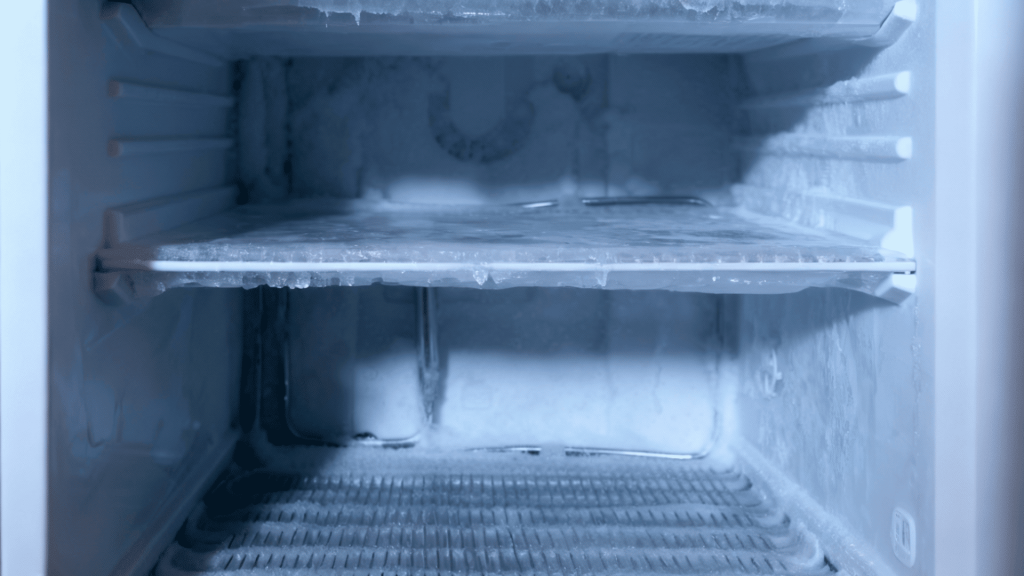
Why is my freezer frosting up is one of the most common appliance questions homeowners ask — and for good reason.
Frost buildup is more than an annoyance.
It reduces storage space, drives up energy bills, causes freezer burn, and can be a sign of a failing component that will only get worse over time.
The root cause is almost always warm, humid air entering the freezer and freezing on cold interior surfaces.
But what is letting that air in? This guide breaks down every cause, every fix, and every warning sign you need to know in 2026.
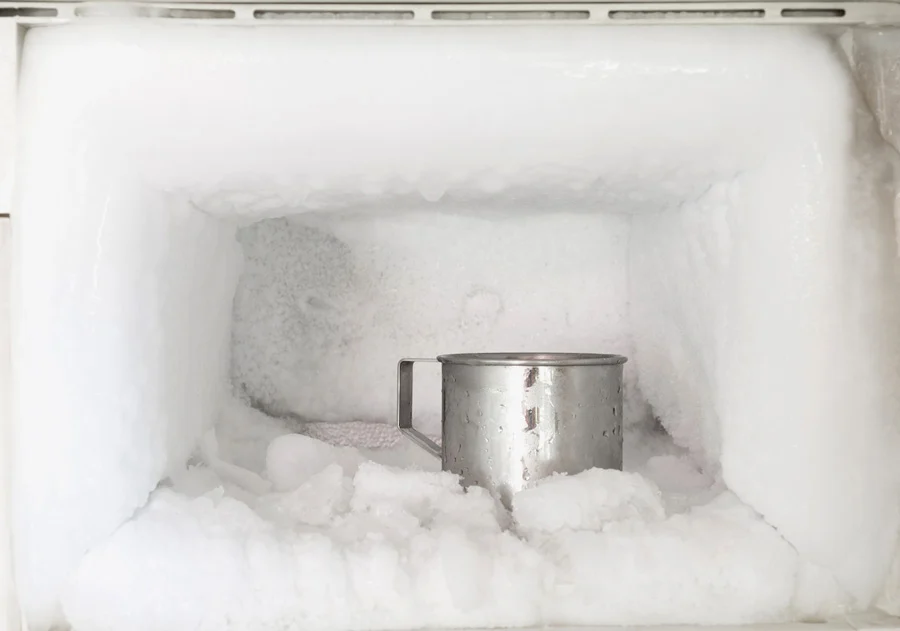
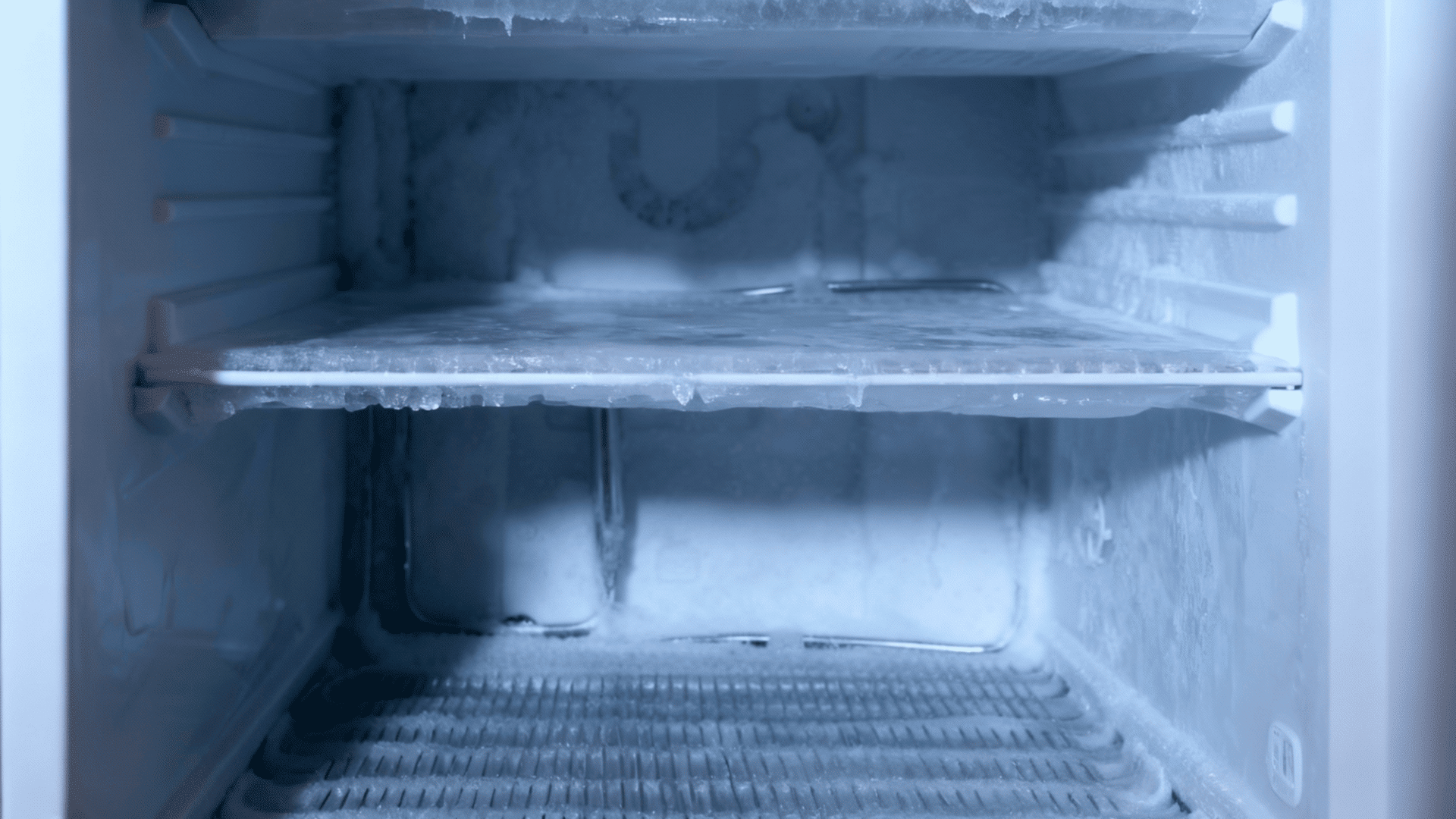
Frost forms whenever warm, moist air meets the sub-zero surfaces inside your freezer. The moisture in that air condenses and instantly freezes on contact — coating walls, shelves, and food packages with a layer of ice.
A small amount of frost is completely normal in manual-defrost models. The problem starts when frost accumulates faster than your freezer can remove it, or when something is continuously allowing warm air in.
Modern frost-free freezers have an automatic defrost cycle that periodically warms the evaporator coils to melt accumulated frost. When this system works correctly, you should never see heavy frost buildup. When it fails, frost takes over quickly.
The evaporator coils sit directly behind the back wall of your freezer. They are the coldest part of the appliance, which is why frost always forms there first.
During a normal defrost cycle, a small heater warms these coils just enough to melt any frost. The water drains through a tube into a pan underneath the unit and evaporates.
If anything disrupts this cycle — too much moisture entering, a blocked drain, or a failed defrost component — frost builds up on the coils and eventually spreads throughout the entire compartment.
The rubber seal running around the edge of your freezer door — called the gasket — is your primary defense against warm air. Over time it cracks, warps, or loses its flexibility.
Even a tiny gap in the gasket allows a constant stream of humid air to seep into the freezer 24 hours a day. Because it never stops, frost accumulates rapidly — often in a matter of days.
You can test the gasket right now with a dollar bill. Close the freezer door on it and try to pull it out. If it slides out easily, the seal is compromised and needs replacement.
Every second the freezer door is open, warm, humid kitchen air floods into the compartment. The moisture settles on everything cold and freezes almost immediately.
Opening the door frequently throughout the day — even for short periods — adds up to a significant amount of moisture entering the freezer. During hot, humid summer months this is especially noticeable.
A simple habit change — deciding what you need before opening the door — reduces frost formation significantly. Organize your freezer so items are easy to find and retrieve quickly.
Putting hot leftovers or warm cooked food straight into the freezer is one of the fastest ways to cause frost buildup. The steam and heat released by warm food creates a surge of humidity inside the compartment.
That moisture freezes on the walls, shelves, and other food items. Do it repeatedly and frost accumulates rapidly even in a frost-free model.
Always cool food to room temperature first, then refrigerate it briefly before freezing. Use airtight containers or sealed freezer bags to lock in moisture and prevent it from escaping inside the freezer.
If your frost-free freezer is developing heavy frost despite good habits and a good gasket, the automatic defrost system is likely failing. This system has three key components that can each fail independently.
Defrost timer — controls when the defrost cycle runs. If it stops advancing, the heater never turns on.
Defrost heater — physically warms the evaporator coils to melt frost. When it burns out, frost accumulates continuously.
Defrost thermostat — monitors coil temperature and tells the heater when to activate. A faulty thermostat prevents the heater from ever turning on, even when the timer signals it to.
Signs of defrost system failure include heavy frost concentrated on the back wall, the compressor running constantly, and food not staying as cold as it should. This type of repair generally requires a professional.
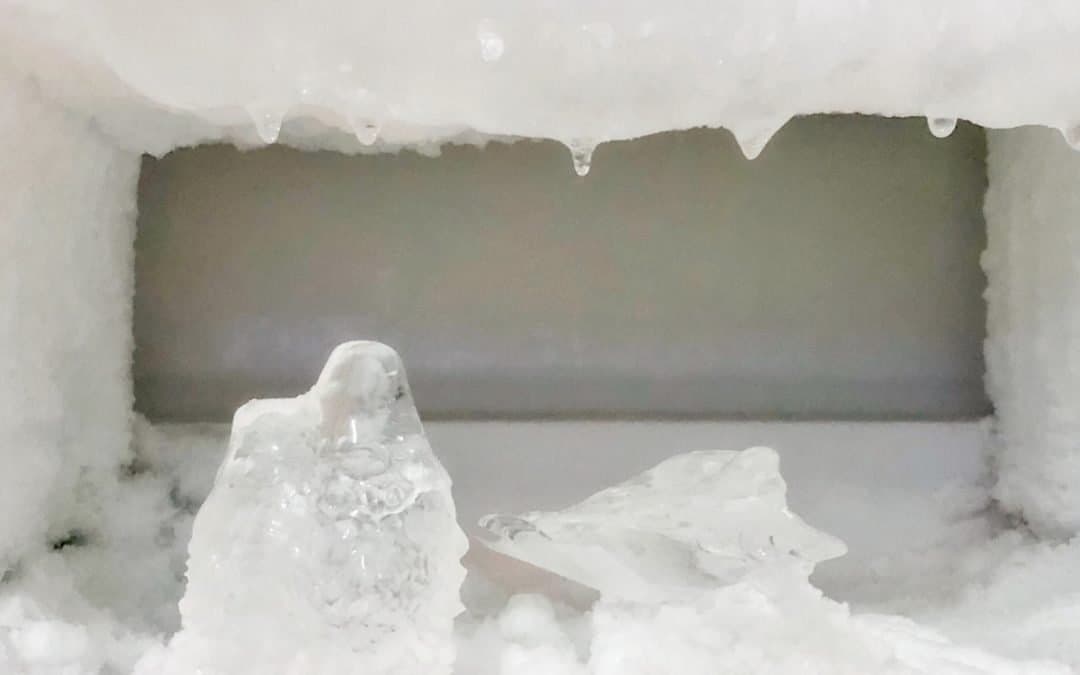
Even when the defrost system works perfectly, the resulting meltwater needs somewhere to go. A small drain tube carries water from the evaporator coils to a drip pan under the unit.
When this drain tube becomes blocked by ice, debris, or mold, the water cannot escape. It refreezes at the bottom of the freezer compartment — often creating a thick sheet of ice on the floor of the freezer.
A clogged drain often causes water to drip from inside the freezer or pool on the floor in front of the unit. Flushing the drain with warm water can clear minor blockages, but accessing the tube varies by manufacturer and may require a technician.
A freezer packed too tightly seems efficient, but it actually causes problems. Overcrowded food blocks the internal air vents, preventing cold air from circulating evenly throughout the compartment.
This creates warm pockets where frost forms readily. It also forces the compressor to work harder and run longer, increasing wear and energy costs.
Aim to keep the freezer about three-quarters full for optimal performance. Leave a clear path around the vents — usually located on the back interior wall — so cold air flows freely.
The recommended freezer temperature is 0°F (-18°C). Setting it significantly colder than this does not improve food preservation but it does increase frost formation by widening the temperature gap between the freezer interior and the surrounding kitchen air.
Setting it too warm — anything above 5°F — causes food preservation problems and temperature fluctuations that promote condensation and frost.
Use a standalone appliance thermometer placed in the center of the compartment to verify the actual temperature. Built-in digital displays are not always accurate.
The evaporator fan circulates cold air from the coils throughout the entire freezer compartment. If this fan breaks down, ices over, or its blades become obstructed, airflow becomes uneven.
Warm spots develop in areas where cold air doesn’t reach properly, and moisture settles and freezes in those zones. You may hear unusual clicking or grinding noises as the fan blades hit ice accumulation.
A frozen evaporator fan is sometimes fixable with a manual defrost. If the fan motor itself has failed, it will need replacement by a technician.
The environment around your freezer plays a role too. During summer months when indoor humidity is naturally higher, more moisture enters the freezer with each door opening.
Freezers located in humid basements, garages without climate control, or near exterior doors are especially vulnerable. Even if nothing has changed with the appliance itself, frost can increase seasonally.
This is one reason frost problems seem worse in summer. Running a dehumidifier in areas with high ambient humidity can reduce frost buildup noticeably.
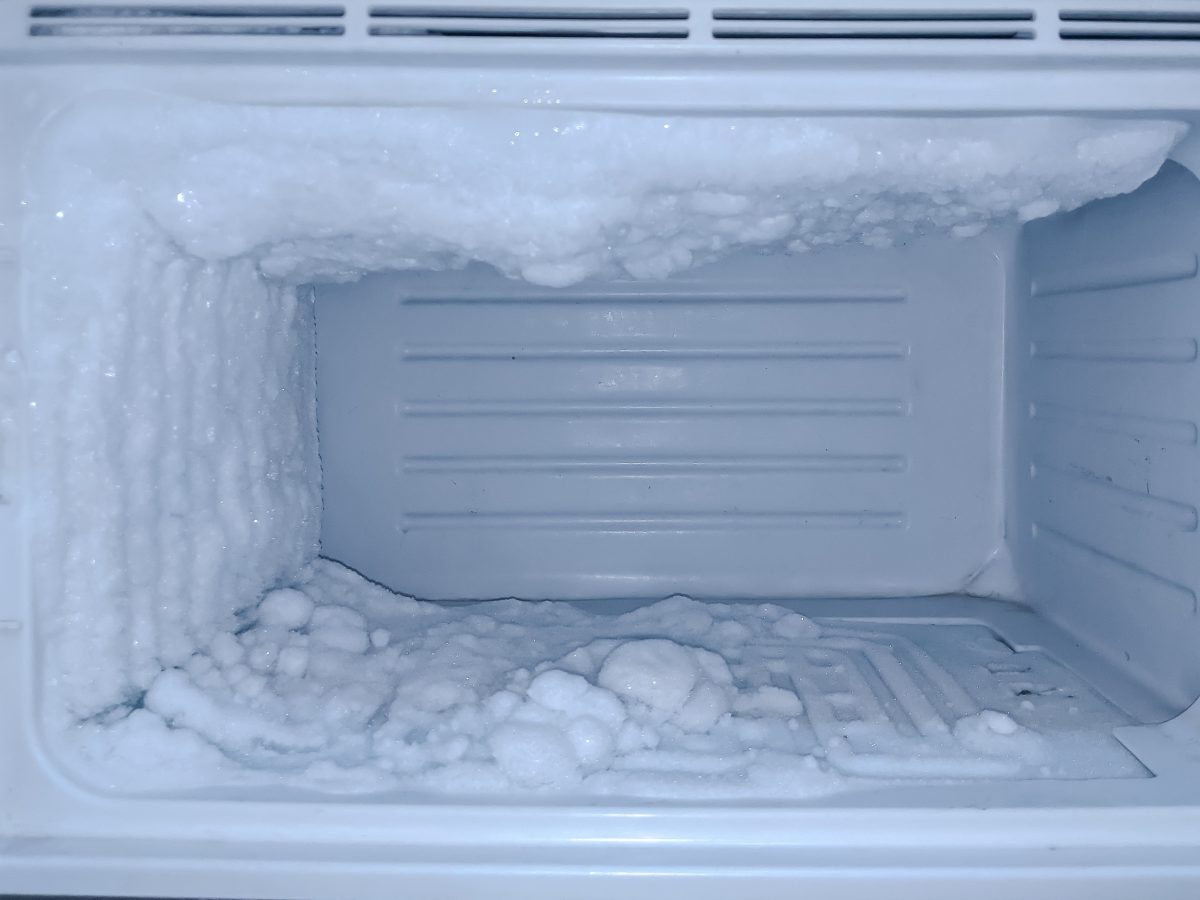
Even if the gasket is in perfect condition, a door that is slightly out of alignment will not seal properly. This is more common than most people realize, especially after moving the appliance or after heavy items on the door shelves shift the door’s balance.
Check that the freezer is level using a spirit level. Adjust the leveling feet at the base if needed — most refrigerators and freezers tilt very slightly back, which helps the door swing shut naturally.
Also check whether heavy items inside or on the door shelves are pushing outward and preventing the door from closing fully flush.
On freezers and refrigerators with built-in ice dispensers, a small flap inside the ice chute keeps the freezer sealed when the dispenser is not in use. If this flap fails to close fully — due to an ice blockage, debris, or mechanical failure — warm air enters continuously through the chute.
This is an easy thing to overlook because the opening is small. Check that the flap sits flush with its housing and swings freely. Remove any ice or debris that may be holding it open.
Where your freezer is frosting up is actually a valuable diagnostic clue. Different frost patterns point to different root causes.
| Frost Location | Most Likely Cause |
|---|---|
| Around door edges or front of compartment | Damaged or dirty gasket, door not sealing fully |
| Back wall only | Defrost system failure, evaporator coil issue |
| On food packages throughout | Too much warm air entering — door habits or gasket |
| Bottom of freezer / floor of compartment | Clogged defrost drain — water refreezing |
| Near vents or sides | Blocked airflow from overpacking, fan issue |
| All surfaces at once | Severe gasket failure or frequent door opening |
Using this table helps you narrow down the cause before spending money on a repair call.
The dollar bill test is the quickest way to check your freezer door seal.
Close the freezer door firmly on a folded dollar bill (or any piece of paper). Try to pull it out. If it slides out with no resistance, the seal at that spot is failing.
Repeat this test every few inches all the way around the door. A healthy gasket should grip the paper firmly at every point. If it releases easily anywhere, that spot is leaking warm air.
Also inspect the gasket visually. Look for cracks, tears, hardened spots, flattened areas, or sections that no longer sit flat against the door frame. A dirty gasket can also fail to seal properly — clean it thoroughly with warm soapy water and dry it completely before concluding it needs replacement.
If the gasket passes the dollar bill test and your door habits are good, but frost keeps returning heavily, the defrost system is the next suspect.
A quick test is to perform a full manual defrost — unplug the appliance, let all ice melt completely, dry the interior, and plug it back in. Then monitor carefully.
If heavy frost returns within just a few days, the defrost system has almost certainly failed. A working defrost system should prevent significant buildup for weeks or months even under normal use conditions.
Testing individual components requires a multimeter. The defrost heater should show electrical continuity across its terminals. The defrost thermostat should show continuity when cold. The defrost timer can often be tested by manually advancing it with a screwdriver until it clicks — you should hear the compressor stop and the heater activate within 30 minutes.
These tests are within reach of a competent DIYer, but replacing defrost components — especially the control board — is best handled by a certified appliance technician.
A manual defrost is necessary when frost has built up to a point where it is affecting performance or storage space. Here is how to do it correctly.
Move all food to coolers or a secondary freezer. Unplug the appliance completely. Leave the door open and place old towels on the floor around the base to catch meltwater.
Allow the ice to melt naturally. This takes several hours — sometimes up to 24 hours for heavy buildup. Speed it up by placing bowls of warm (not boiling) water inside.
Never use a knife, screwdriver, or any sharp tool to chip away ice. This can puncture the evaporator coils, causing refrigerant to leak — an expensive repair that may require replacing the entire unit.
Once all ice has melted, wipe the interior dry with clean cloths. Clean the walls with a mixture of warm water and baking soda to remove odors and residue. Dry thoroughly, plug the appliance back in, and allow it to reach temperature before restocking food.
If heavy frost returns within days, call a technician — the root cause has not been resolved.
Different freezer designs handle frost differently. Understanding your type helps set realistic expectations.
| Freezer Type | Frost-Free? | Maintenance Notes |
|---|---|---|
| Upright frost-free | Yes | Automatic defrost cycle; watch for component failure |
| Manual defrost upright | No | Requires manual defrosting every 6–12 months |
| Chest freezer | Usually manual | Frost-free versions exist; chest freezers frost less due to cold air sinking |
| Bottom-freezer fridge | Usually frost-free | Door gasket and drain most common issues |
| French door fridge freezer | Yes | Ice maker flap and gasket most common frost causes |
Chest freezers naturally develop less frost than uprights because cold air is denser and sinks — less warm air enters when you open the lid compared to swinging open a vertical door.
The best approach to freezer frosting is preventing it before it starts. Simple daily habits make a bigger difference than most people expect.
Keep door opening time short. Decide what you need before you open the door. Even shaving 10 seconds off each opening across multiple uses per day meaningfully reduces moisture entry.
Cool food before freezing. Let hot food reach room temperature, then refrigerate it until cool, before transferring to the freezer. Never put steaming food directly into the freezer.
Use airtight packaging. Seal food tightly in freezer bags or airtight containers. This stops moisture from escaping inside the compartment during storage.
Maintain three-quarters fill. Keep the freezer well-stocked but not jammed. A nearly empty freezer is inefficient — each door opening replaces more cold air with warm. An overfull freezer blocks airflow.
Clean the gasket regularly. Wipe the door seal down with warm soapy water every one to two months. Even clean-looking gaskets can harbor invisible grease or food residue that prevents a complete seal.
Check the temperature. Verify the freezer reads 0°F (-18°C) with a standalone thermometer every few months. Adjust if needed.
Inspect the gasket annually. Do the dollar bill test once a year even if everything seems fine. Catching a failing seal early prevents months of unnecessary frost buildup.
Some freezer frost problems are easy DIY fixes — cleaning a gasket, adjusting the temperature, improving door habits. Others require professional diagnosis.
Call a technician if you notice any of the following:
Heavy frost returns within days after a full manual defrost. The compressor runs constantly without cycling off. Food is not staying properly frozen despite a correct temperature setting. You hear clicking or grinding sounds from the fan area. Water is pooling inside the freezer or on the floor underneath it.
These signs point to failed defrost components, a clogged drain requiring professional access, or a failing evaporator fan. Attempting to repair these without proper tools and training risks further damage to the appliance.
If your freezer is over 10 to 15 years old and requires repeated defrost system repairs, replacement may be more cost-effective than continued fixes. Newer models are significantly more energy-efficient and have improved defrost systems.
Frost is not just an inconvenience — it is genuinely expensive to ignore. A thick layer of frost acts as insulation on the evaporator coils, forcing the compressor to work much harder to maintain temperature.
Studies show that even a quarter-inch of ice on the evaporator coils reduces cooling efficiency by up to 30%. A heavily frosted freezer may run its compressor nearly continuously, dramatically increasing electricity consumption.
A heavily frosted freezer also risks partial thawing of food during warm spots, leading to freezer burn and food waste. Addressing frost early saves money on both energy and groceries.
These two issues are related but not the same thing.
Frost buildup is ice forming on the walls, shelves, and surfaces inside the freezer. It is caused by moisture in the air freezing on contact with cold surfaces.
Freezer burn is damage to the surface of food caused by moisture leaving the food itself — the food dries out and oxidizes. It shows up as grayish-brown patches, dry spots, or off textures on meat, vegetables, and other items.
A frost-heavy freezer increases the risk of freezer burn because temperature fluctuations caused by excess frost allow food to partially thaw and refreeze repeatedly. Proper packaging and a frost-free environment protect food quality.
| Feature | Frost-Free | Manual Defrost |
|---|---|---|
| Requires manual defrosting | No | Yes — every 6–12 months |
| Risk of component failure | Higher (defrost system parts can fail) | Lower (simpler mechanics) |
| Energy efficiency | Slightly lower due to defrost cycle heater | Slightly higher when well-maintained |
| Food quality | Slightly drier air can cause more freezer burn | More stable humidity, better food preservation |
| Price | Generally higher | Generally lower |
| Best for | Convenience, busy households | Long-term food storage, budget buyers |
Manual defrost models tend to preserve food quality better because the more stable humidity inside prevents the slight drying that frost-free defrost cycles can cause. However, they require regular maintenance.
A frost-free freezer frosts up when the automatic defrost system fails — usually a faulty defrost heater, thermostat, or timer. A damaged door gasket letting in warm air is another common cause.
Check and replace the door gasket if it fails the dollar bill test, minimize door opening time, cool food before freezing, and ensure the temperature is set to 0°F (-18°C) — these four steps stop most frost problems.
A very thin layer of frost on the evaporator coils is normal in all freezers. Visible heavy frost on walls, shelves, or food packages is not normal and indicates a problem that needs addressing.
The recommended setting is 0°F (-18°C). Going colder wastes energy and increases frost formation without improving food preservation. Going warmer compromises food safety.
Yes — a blocked defrost drain causes meltwater to refreeze inside the compartment, creating a sheet of ice on the floor of the freezer and sometimes causing water to drip onto the floor outside.
Use the dollar bill test: close the door on a folded bill and try to pull it out. If it slides out easily, the gasket is failing at that spot. Repeat all the way around the door perimeter.
Frost concentrated on the back wall usually points to a defrost system failure. The evaporator coils sit directly behind the back wall, making it the primary frost accumulation point when defrost cycles stop working.
Yes — an overpacked freezer blocks the internal air vents, preventing proper air circulation, creating warm spots, and leading to frost buildup. Keep the freezer about three-quarters full.
Manual defrost models should be defrosted whenever frost reaches about a quarter inch thick — typically every 6 to 12 months. Frost-free models should not need manual defrosting unless the automatic system has failed.
Call a technician if heavy frost returns within days after a full manual defrost, the compressor runs non-stop, food is not staying frozen, or you hear fan noise combined with frost buildup — these all point to component failures.
Why is my freezer frosting up is a question with a clear answer once you know where to look.
In almost every case, frost comes down to warm air getting in — through a failing gasket, careless door habits, warm food being loaded directly inside — or the defrost system failing to remove frost at the rate it forms.
The fix is usually simpler than homeowners fear. Start with the door seal, check your habits, verify the temperature, and do a manual defrost to reset the situation.
If frost returns aggressively within days, a defrost system component has failed and a technician is the right next step.
Catching and fixing the problem early saves money on energy bills, prevents food waste from freezer burn, and extends the life of the appliance by years.
A frost-free freezer truly can be frost-free — it just needs a little attention to stay that way.