
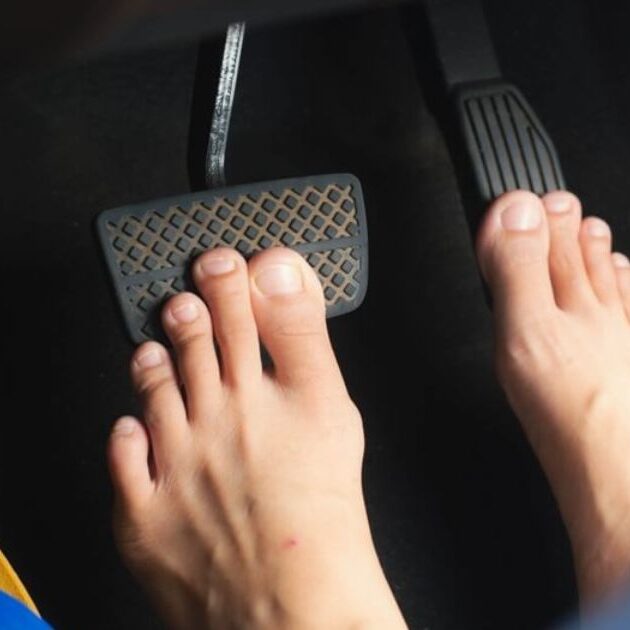
Why is it illegal to drive barefoot is one of the most Googled driving questions in America — and the answer will surprise you. It is not illegal. Not in any state. Not under any federal law.
Driving barefoot is completely legal in all 50 U.S. states as of 2026.
The idea that barefoot driving is against the law is a decades-old urban legend that got passed from parents to children, from driving instructors to students, and from myth to assumed fact.
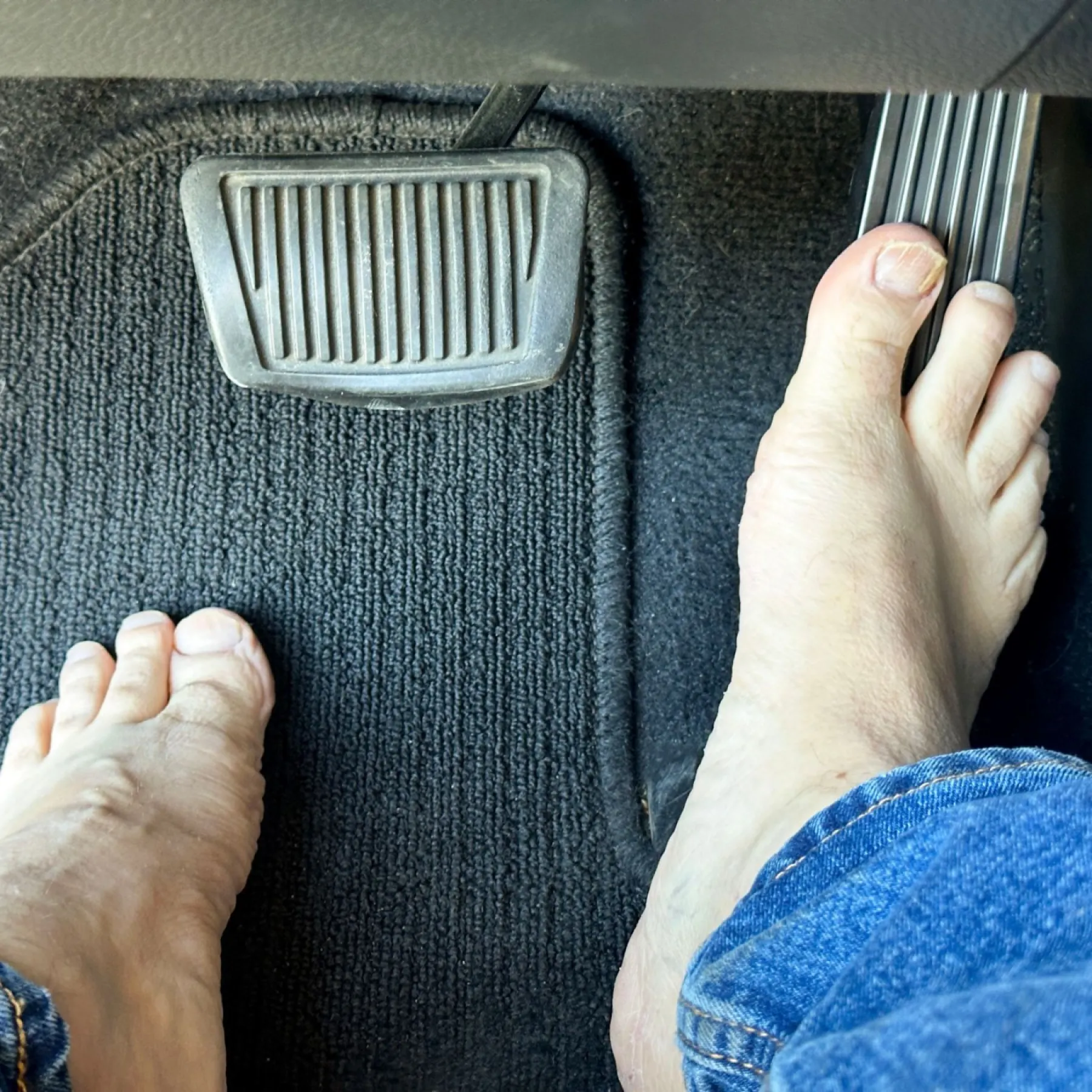
No. Driving barefoot is not illegal anywhere in the United States.
There is no federal statute banning it. No state has ever passed a law requiring drivers of passenger vehicles to wear shoes. You can legally drive without shoes in California, Texas, New York, Florida, and every single state in between.
The belief that barefoot driving is illegal has zero basis in actual traffic law. It is a myth — one of the most persistent and widely believed driving myths in American history.
The origin of this myth traces back to the 1960s and 1970s.
Driving instructors began warning students not to drive barefoot, citing concerns about pedal control. Students heard these safety warnings alongside actual traffic laws and assumed both carried equal legal weight.
Parents repeated the same advice to their children. Each generation passed it along as fact, never checking whether a real law existed. The myth spread for over 60 years without a single law ever being written to support it.
In 1994, a man named Jason Heimbaugh decided to settle the question once and for all. He wrote to the Department of Motor Vehicles in all 50 states and the District of Columbia, asking each one directly whether barefoot driving was illegal.
All 50 states and Washington D.C. confirmed that barefoot driving is legal. No state has passed a law banning it since that time.
Safety advice got confused with law. Driving instructors recommend shoes for better pedal grip. Students heard it and assumed it was a legal requirement, not just a suggestion.
Police officers sometimes discourage it. Some officers who do not know the law tell drivers to put shoes on. Discouraging something and banning it are entirely different things.
Insurance adjusters added to the confusion. When adjusters mentioned barefoot driving during accident investigations, people assumed it was because the act was illegal. In reality, adjusters were exploring civil liability, not criminal violations.
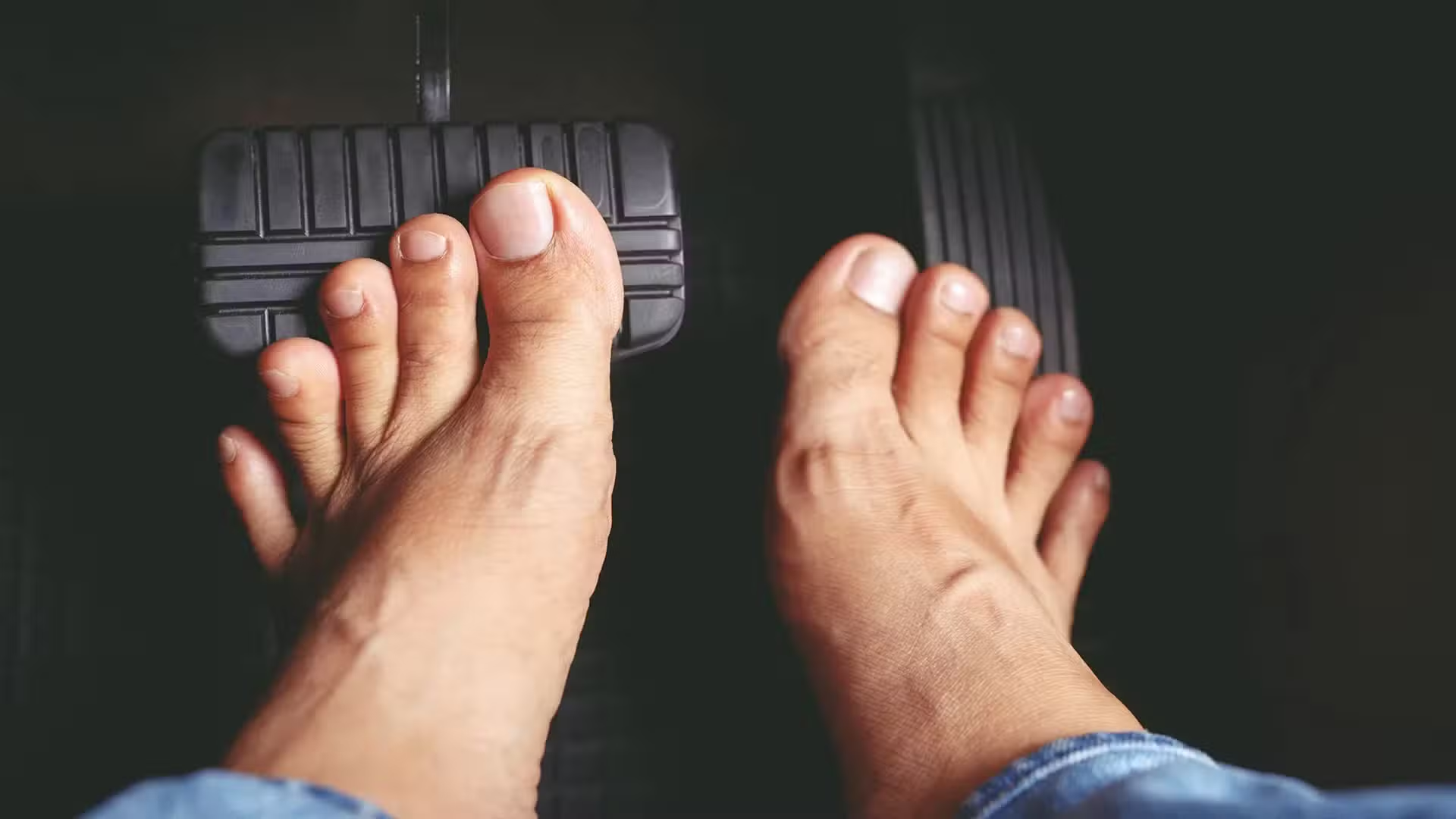
No state bans barefoot driving for passenger car drivers. But several states have taken official positions worth knowing.
| State | Official Position on Barefoot Driving |
|---|---|
| Alabama | Permitted for car drivers. Shoes required for motorcycle operators and passengers. |
| California | Not prohibited. Officers have confirmed no law bans it. |
| Texas | Legal. Drivers can operate barefoot as long as they maintain due care. |
| Florida | No prohibition. Comparative negligence may apply in accidents. |
| Ohio | Permitted but officially noted as “not recommended.” |
| Indiana | Legal but state guidelines formally state it is “unsafe.” |
| Iowa | Legal but guidelines call it unsafe. |
| Missouri | Permitted, classified as unsafe in policy documents. |
| Virginia | Legal with safety warnings in official guidelines. |
| Wyoming | Permitted, flagged as unsafe in state documentation. |
| Tennessee | Legal for most drivers. Local regulations may apply in some jurisdictions. |
| New York | No prohibition under state vehicle code. |
| All other states | Barefoot driving is legal with no formal restriction of any kind. |
Important distinction: states that label barefoot driving “unsafe” in policy documents cannot use those documents to issue a ticket or charge a driver. A policy note is not a law.
No. Barefoot driving alone gives a police officer zero probable cause to stop your vehicle.
There is no statute to cite. An officer cannot write a footwear citation because no such citation exists in any state traffic code. If they try, that ticket is challengeable in court and cannot be sustained.
The only scenario where barefoot driving enters a traffic stop is if you are already being pulled over for a different violation. The officer may notice you are barefoot and mention it, but it cannot add to any charge on its own.
Some officers genuinely do not know that barefoot driving is legal. An incorrectly issued ticket can be challenged in court.
No conviction can be sustained under a statute that does not exist. An attorney arguing that the cited conduct does not meet the legal definition of any traffic violation has a very strong position.
While passenger car drivers have nothing to worry about, commercial drivers operate under different rules.
The Federal Motor Carrier Safety Administration (FMCSA) requires commercial truck drivers to wear shoes or boots that provide a secure grip on pedals and adequate foot support. This applies to drivers operating large commercial vehicles under federal regulations.
Motorcycle rules vary by state. Alabama explicitly requires motorcycle operators and passengers to wear shoes. California allows motorcyclists to ride barefoot, though it is not recommended.
Taxi and rideshare drivers may face footwear requirements under local or state commercial regulations. Connecticut’s Taxicab Rules of Operation, for example, address driver appearance and conduct standards.
Company policies can be stricter than the law. If you drive for an employer, your employment contract or company safety policy may require shoes even if state law does not.
Legal and safe are two very different things. Barefoot driving is legal, but that does not make it risk-free.
Safety experts and law enforcement agencies generally discourage driving without shoes, even though they cannot legally require footwear. Here is what the research and experts say.
Reduced pedal grip. Bare feet can slip on smooth metal or rubber pedals, especially when wet or sweaty. Shoes with firm soles provide better traction and control during hard braking.
Slower emergency braking. Some safety experts argue that the heel-to-ball pressure needed to apply full brake force is easier to achieve with a shoe than with a bare foot.
Discarded shoes near pedals. This is actually one of the bigger hazards. If you remove your shoes while driving and leave them on the floor, a shoe can slide under the brake or gas pedal and prevent it from depressing fully.
Injury risk after an accident. If you are barefoot during a crash and need to exit the vehicle quickly, broken glass, hot pavement, and road debris can cause serious foot injuries.
Distraction. Driving barefoot in unfamiliar conditions — wet feet, sandy feet from the beach — can shift your attention from the road.
Many safety experts argue that certain types of footwear are actually more dangerous than bare feet.
Flip-flops can fold beneath the pedal or slide off the foot entirely. High heels prevent the heel from pressing down properly on the brake. Platform shoes reduce pedal sensitivity and natural foot movement.
Bare feet, in many scenarios, give a driver more direct pedal feel than poorly fitted or inappropriate footwear.
| Footwear Type | Pedal Control | Slip Risk | Emergency Braking |
|---|---|---|---|
| Bare feet | Moderate | Moderate (if wet) | Moderate |
| Flat closed-toe shoe | Best | Low | Best |
| Flip-flops | Poor | High | Poor |
| High heels | Poor | Moderate | Poor |
| Platform shoes | Poor | Moderate | Poor |
| Driving moccasins | Good | Low | Good |
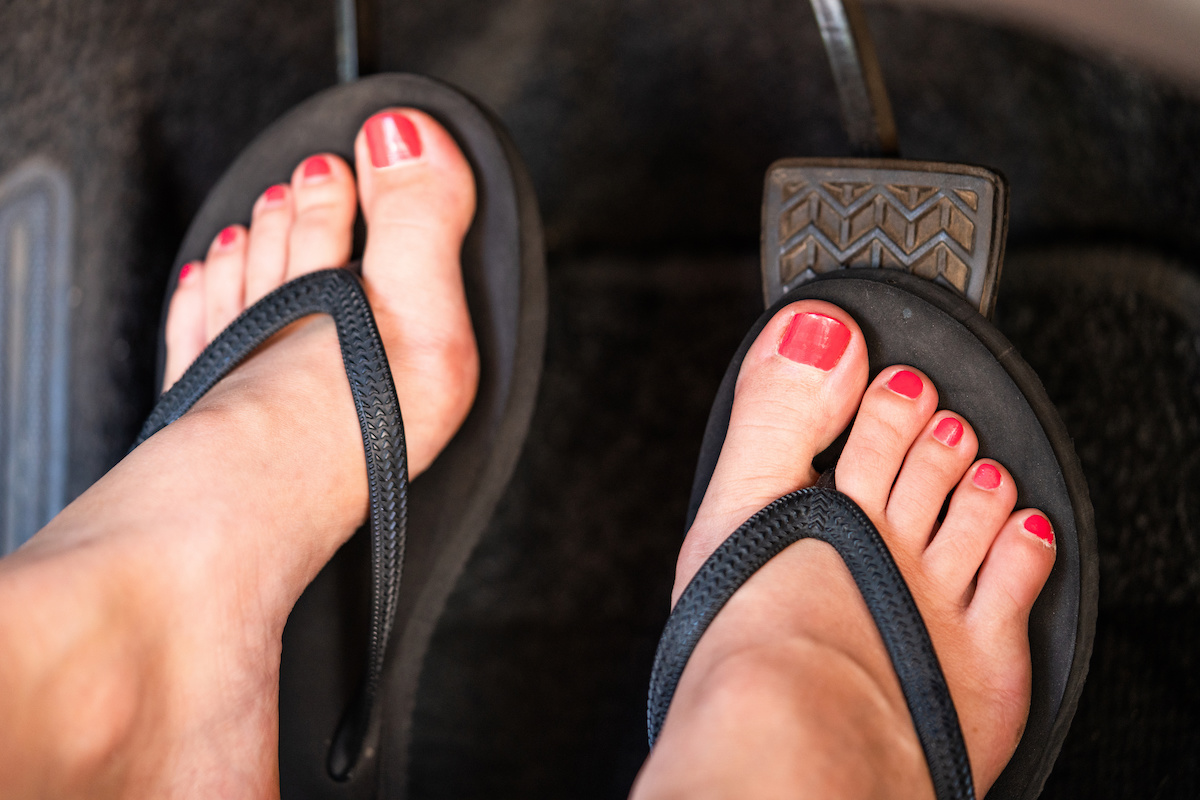
A girl is driving her car wearing flip flops.
This is the part most people do not know about — and it matters far more than the legal question.
Barefoot driving is legal, but it can become a liability issue after a crash.
Insurance companies do not charge higher premiums for barefoot driving. No insurer includes footwear in their rate calculations.
However, after an accident, an adjuster may ask whether you were wearing shoes. They are not asking because barefoot driving is illegal. They are asking because they may try to argue it contributed to the accident.
If an insurer can argue that your bare feet slipped on the pedals and caused delayed braking, they can attempt to assign partial fault to you. In comparative negligence states, partial fault reduces your compensation.
A police report that notes you were barefoot at the time of an accident becomes part of the case record. The opposing attorney or insurer can reference it during litigation as circumstantial evidence of unsafe driving habits.
This does not mean you automatically lose a case. It means the detail will be on the table. An experienced attorney can push back by arguing that barefoot driving did not cause or contribute to the crash.
Do not volunteer the information. You are not required to tell police or insurers that you were barefoot unless directly asked.
Document what actually caused the crash. Photos, witness statements, dashcam footage, and road conditions all shift focus to the actual cause rather than your footwear.
Consult an attorney before speaking with the opposing insurer. Insurance companies are skilled at using minor details to reduce settlement offers.
The United Kingdom takes a similar approach to the United States. There is no specific law in the UK banning barefoot driving.
However, the UK Highway Code does state that drivers must be in proper control of the vehicle at all times. If barefoot driving is judged to have impaired control, a driver could face a careless driving charge.
The difference from U.S. law is subtle but important. In the UK, there is an indirect legal hook that does not exist under most U.S. state traffic codes.
If you want comfort without the risk that comes with bare feet, high heels, or flip-flops, several footwear options strike the right balance.
Thin-soled flat sneakers give you direct pedal feel while protecting the foot and providing grip. Driving moccasins are specifically designed for pedal use — thin, flexible, and with a sole that wraps slightly up the heel.
Flat canvas shoes or loafers offer easy slip-on convenience and reasonable pedal control. If you spend the day at the beach or pool and want to drive home, keep a pair of flat shoes in your car specifically for driving.
| Footwear | Pedal Sensitivity | Safety Rating | Best For |
|---|---|---|---|
| Driving moccasins | Excellent | Excellent | Daily driving |
| Flat sneakers | Good | Good | Everyday use |
| Loafers | Good | Good | Comfort driving |
| Bare feet | Moderate | Moderate | Legal but not ideal |
| Sandals with strap | Moderate | Moderate | Short trips |
| Flip-flops | Poor | Poor | Not recommended |
| High heels | Poor | Poor | Avoid while driving |
The American Automobile Association (AAA) has addressed the barefoot driving myth multiple times in their publications.
Their official position confirms that barefoot driving is legal in all 50 states. They note that some footwear choices may be safer than others, but they do not classify barefoot driving as a traffic violation or recommend any law against it.
No state legislature has ever seriously considered banning barefoot driving. The documented connection between barefoot driving and accidents is not strong enough to justify legislation.
State law is not the only law that applies to you when you drive.
City and county governments can pass local ordinances that are more restrictive than state law in some areas. While no major city has a well-known ban on barefoot driving, local regulations are more specific and change more frequently.
Tennessee’s state policy notes that local regulations may prohibit barefoot driving. If you live in or drive through a municipality that has enacted such an ordinance, state law will not protect you.
The practical takeaway: check local regulations if you are in a jurisdiction known for strict traffic enforcement, or consult an attorney if you receive a citation for barefoot driving in an unfamiliar area.
| Common Belief | The Truth |
|---|---|
| Driving barefoot is illegal in the U.S. | False — legal in all 50 states for passenger car drivers |
| You can be ticketed for barefoot driving | False — no traffic statute exists to support a citation |
| Insurance won’t cover you if you drive barefoot | False — footwear does not affect coverage decisions |
| Barefoot driving was investigated and found illegal | False — all 50 states confirmed it is legal (Heimbaugh, 1994) |
| Barefoot is always safer than flip-flops | True in many cases — flip-flops are often more dangerous |
| Commercial drivers must wear shoes | True — FMCSA requires footwear for commercial truck drivers |
| Motorcyclists must wear shoes in all states | False — only some states (e.g., Alabama) require it |
| Barefoot driving can affect accident liability | True — insurers may use it in negligence arguments |
No. Driving barefoot is legal in all 50 states for passenger car drivers. No federal or state law bans it.
The myth started with driving instructors in the 1960s and 1970s who warned students against it for safety reasons. Those warnings got passed down for generations as if they were actual laws.
No. There is no statute to cite, so no valid ticket can be issued solely for barefoot driving. Any such ticket can be challenged and dismissed in court.
Barefoot driving does not raise your insurance premiums. However, after an accident, an insurer may try to use it as a negligence argument to reduce your settlement.
In many cases, yes. Flip-flops can slide under pedals or slip off the foot entirely, which is arguably more dangerous than bare feet on the pedals.
Yes. Indiana, Iowa, Missouri, Ohio, Virginia, Wyoming, and Tennessee have policy documents or guidelines calling barefoot driving unsafe. But a policy note is not a law and cannot result in a ticket.
Yes. The Federal Motor Carrier Safety Administration (FMCSA) requires commercial truck drivers to wear shoes or boots that provide secure pedal grip and foot support.
It depends on the state. Alabama requires shoes for motorcycle operators and passengers. California allows it. Always check the specific motorcycle laws in your state before riding barefoot.
No specific UK law bans it, but the Highway Code requires drivers to maintain full control of the vehicle. If bare feet are judged to have impaired control, a careless driving charge is possible.
Do not volunteer information about your footwear. Document the actual cause of the accident carefully and consult an attorney before speaking with the opposing party’s insurer.
Why is it illegal to drive barefoot is the wrong question — because it simply is not illegal.
The real question is where this myth came from and why it has survived for more than half a century.
The answer lies in a perfect mix of well-intentioned safety advice, generational repetition, and insurance industry confusion that turned a driving tip into an assumed law.
As of 2026, not a single state has ever passed legislation banning barefoot driving for passenger car operators.
Jason Heimbaugh confirmed it in 1994, and nothing has changed since. What has changed is how much this myth can cost you after an accident, when insurers and opposing attorneys use your bare feet as a negligence argument.
The smartest approach is simple: know that barefoot driving is legal, understand the genuine safety considerations, choose footwear that gives you proper pedal control, and keep a pair of flat driving shoes in your car for situations where you might otherwise drive barefoot.
Legal does not always mean ideal — but you now have the full picture to make an informed choice every time you sit behind the wheel.