

Why Has My Period Lasted 2 Weeks? A period that drags on for two weeks isn’t something you should just wait out. It’s your body sending a signal that something in your cycle has shifted.
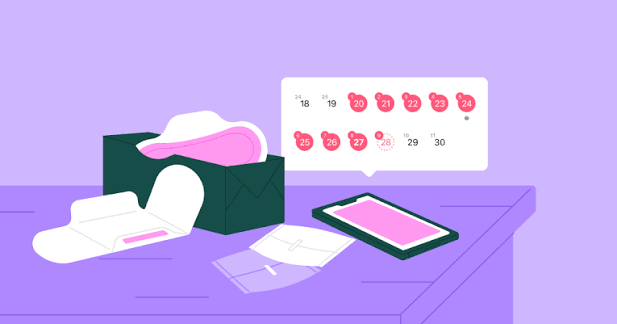
A period lasting 2 weeks or longer is medically called menorrhagia or prolonged menstrual bleeding. It’s not considered normal.
Common causes include hormonal imbalance, thyroid problems, PCOS, uterine fibroids or polyps, perimenopause, certain birth control methods, and, less often, bleeding disorders or pregnancy-related issues.
If it’s a one-time occurrence, stress or a missed pill may be the reason. If it happens repeatedly, see a doctor.
Most menstrual cycles run 21 to 35 days, and bleeding itself typically lasts 2 to 7 days.
Anything beyond 7 days of bleeding is classified by doctors as a long or prolonged period. Two weeks of bleeding is well outside that normal range.
| Factor | Normal Period | Prolonged Period |
|---|---|---|
| Duration | 3–7 days | More than 7 days |
| Cycle length | 21–35 days | Often irregular |
| Blood loss | Under 80 mL | Often heavier, with large clots |
| Daily impact | Manageable | May disrupt sleep, work, or activity |
| Medical term | N/A | Menorrhagia |
Estrogen and progesterone control when your uterine lining builds up and sheds. When these hormones are out of sync, the lining can shed unevenly over a longer stretch.
This is one of the most frequent causes of prolonged bleeding, especially around puberty or perimenopause.
PCOS disrupts ovulation, which throws off the hormonal signals that normally stop your period on schedule.
Women with PCOS often notice irregular timing along with longer, heavier bleeding episodes.
Your thyroid gland helps regulate the hormones tied to your cycle. An underactive or overactive thyroid can make periods longer, heavier, or unpredictable.
A simple blood test can rule this in or out.
Fibroids are noncancerous growths in the uterine muscle, and polyps are small growths in the uterine lining. Both can cause heavier flow and extended bleeding.
They’re a leading cause of prolonged periods in women over 30.
In these conditions, tissue similar to the uterine lining grows where it shouldn’t, causing heavier and longer bleeding along with pain.
Pain that’s worse than your usual cramps is a common clue pointing toward this cause.
As you approach menopause, hormone levels fluctuate more sharply. Periods can become longer, shorter, heavier, or lighter without an obvious pattern.
This is common in your 40s but should still be discussed with a doctor to rule out other causes.
Starting, stopping, or missing doses of hormonal birth control can cause breakthrough bleeding that feels like an extended period.
Copper and hormonal IUDs can also cause longer or spotty bleeding, especially in the first few months.
Bleeding that seems like a long period can sometimes be related to early pregnancy, implantation, or, in rare cases, miscarriage or an ectopic pregnancy.
A pregnancy test is a reasonable first step if there’s any chance of pregnancy.
Anticoagulants such as warfarin or enoxaparin, and even regular aspirin use, can extend menstrual bleeding by slowing clotting.
If you started a new medication around the time your period changed, mention it to your doctor.
Chronic stress affects the hypothalamus, the part of the brain that helps regulate your cycle. This can delay ovulation and stretch out bleeding.
A single stressful month is usually not a concern, but ongoing irregularity is worth addressing.
Conditions like von Willebrand disease affect how well your blood clots and can cause unusually long or heavy periods, sometimes starting from your very first period.
Pelvic inflammatory disease and other infections of the reproductive organs can cause abnormal, prolonged bleeding along with pelvic pain or unusual discharge.
In uncommon cases, prolonged or irregular bleeding can be linked to uterine or cervical cancer, especially in women past menopause.
This is rare, but it’s exactly why persistent prolonged bleeding should always be checked out rather than ignored.
Losing blood for two weeks straight adds up fast. Over time, this can lower your iron stores enough to cause anemia.
Watch for constant tiredness, pale skin, cold hands and feet, or trouble concentrating. These are signs it’s time to get bloodwork done.
Your doctor will likely start with questions about your cycle history, medications, and symptoms, followed by a physical exam.
Depending on the results, your doctor may also recommend an endometrial biopsy to check the uterine lining more closely.
Treatment depends entirely on the underlying cause, so it varies from person to person.
| Cause | Typical Treatment Approach |
|---|---|
| Hormonal imbalance | Hormonal birth control or hormone therapy |
| Fibroids or polyps | Medication, minor procedure, or surgery |
| Thyroid disorder | Thyroid medication |
| Heavy bleeding, no clear cause | Tranexamic acid or NSAIDs |
| Anemia | Iron supplements and dietary changes |
| Bleeding disorder | Specialist referral and targeted treatment |
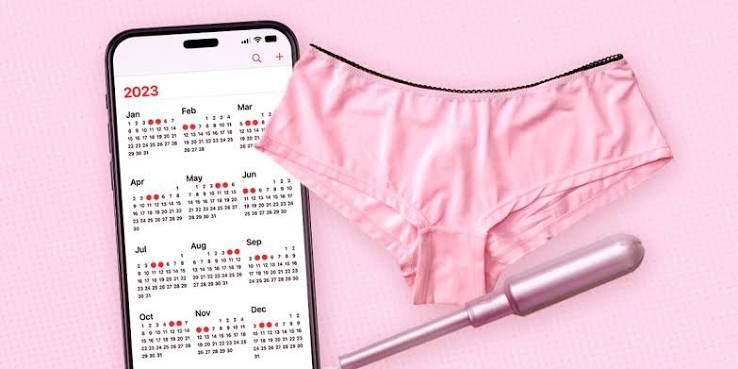
You can’t always prevent an underlying condition, but tracking your cycle helps you catch problems early.
Note your cycle length, flow intensity, and any symptoms each month. This record is genuinely useful information for your doctor and can speed up diagnosis.
No. A typical period lasts 3 to 7 days. Bleeding for 2 weeks is classified as prolonged menstrual bleeding and should be evaluated by a doctor.
Yes, chronic stress can disrupt the hormones that regulate your cycle and delay ovulation, which can extend bleeding. However, other causes should be ruled out too.
Yes. Starting, stopping, or missing doses of hormonal birth control, or adjusting to a new IUD, commonly causes breakthrough or extended bleeding.
It’s possible, especially with implantation bleeding or early pregnancy complications. A pregnancy test is a reasonable first step if pregnancy is possible.
Menorrhagia specifically refers to heavy bleeding, prolonged bleeding, or both, lasting more than 7 days. It’s the clinical term doctors use for what’s commonly called a “long period.”
Yes. PCOS disrupts ovulation and hormone balance, which often leads to irregular, longer, or heavier periods.
It can be if it leads to significant blood loss and anemia. It’s also sometimes a sign of an underlying condition that needs treatment, so it shouldn’t be ignored.
Yes. Uterine fibroids are a well-known cause of heavy, prolonged menstrual bleeding, particularly in women in their 30s and 40s.
Go to urgent care or the ER if you’re soaking a pad hourly for 2+ hours, feel faint or dizzy, or have severe pain. Otherwise, schedule a doctor’s visit soon.
Common tests include a complete blood count, thyroid panel, hormone levels, and a pregnancy test, depending on your symptoms and history.
Yes. Both an underactive and overactive thyroid can disrupt your cycle and lead to longer or heavier bleeding.
Losing more than about 80 mL per cycle, or needing to change a pad/tampon every hour for several hours, is considered heavy and worth medical attention.
Yes. Hormone fluctuations during perimenopause commonly cause periods to become longer, shorter, heavier, or more irregular.
Not always. It can be a one-off caused by stress or a missed pill. But if it repeats, it’s worth ruling out hormonal, structural, or bleeding-related causes.
Mild dietary iron support is generally safe, but talk to your doctor before starting supplements, especially if bleeding is ongoing and the cause isn’t confirmed yet.
It’s a medication sometimes prescribed to reduce heavy menstrual bleeding by helping blood clot more effectively during your period.
Yes, especially in the first 3–6 months after insertion. Both copper and hormonal IUDs can cause irregular or prolonged spotting during this adjustment period.
Rarely, but it can be, especially in postmenopausal women. This is one reason doctors recommend evaluating any bleeding that doesn’t resolve on its own.
Diagnosis usually involves a medical history review, physical exam, bloodwork, and often a pelvic ultrasound to check for structural causes like fibroids or polyps.
Yes. Significant weight gain or loss can disrupt hormone levels enough to affect cycle length and bleeding duration.
Ideally before any changes happen, but starting now is still useful. Track flow, duration, and symptoms for at least 2–3 cycles to share with your doctor.
A period lasting 2 weeks is your body’s way of flagging that something in your hormonal or reproductive system needs attention. It’s not something to just push through.
Most causes, from hormonal imbalance to fibroids to thyroid issues, are manageable once identified. The key is not waiting too long to get checked, especially if bleeding is heavy or repeats month after month.
If your bleeding has crossed the 7-day mark, book an appointment with your doctor. And if you’re soaking through pads hourly or feeling faint, treat that as urgent and seek care right away.