

Why does my crown hurt when I put pressure on it is one of the most common questions dental patients ask after getting a crown placed.
A dental crown is designed to restore strength, protect a damaged tooth, and allow you to chew without discomfort.
Yet pain under pressure is surprisingly common and almost always has a fixable cause.
Whether the pain just started, came back months later, or has been there since the crown was placed, this guide walks you through every possible reason and what your dentist can do about it

A dental crown is a cap placed over a damaged, decayed, or weakened tooth. It restores the tooth’s shape, size, strength, and appearance and is bonded over the visible portion of the tooth.
Crowns are used after root canals, to fix badly cracked teeth, to anchor dental bridges, and to top implants. They are designed to function like natural teeth.
Even though a crown is an artificial restoration, the tooth structure and sometimes the nerve beneath it remain very much alive. That is exactly why pain under pressure is possible and why understanding the cause matters so much.
Mild sensitivity for a few days immediately after crown placement is completely normal. Your gums and the surrounding tissues need time to settle after the dental procedure.
However, pain that persists beyond one to two weeks, pain that is getting worse instead of better, or pain that appears months after the crown was placed is not normal and needs professional evaluation.
The short answer is that a well-fitted, healthy crowned tooth should not hurt when you bite or chew. When it does, something specific is causing it.
One of the most common and most easily fixed reasons a crown hurts under pressure is that the crown sits slightly too high. When the crown is even a fraction of a millimeter too tall, it receives more force than the surrounding teeth during every bite.
This uneven pressure puts excessive stress on the periodontal ligament, the connective tissue that attaches your tooth to the jawbone, causing soreness and pain.
The fix is straightforward. Your dentist adjusts the crown’s height and contours in a short appointment to restore a balanced, comfortable bite. Many patients feel relief almost immediately after this adjustment.
Even though a crown covers the tooth, the nerve inside remains alive unless a root canal was performed first. If that nerve becomes irritated or inflamed, applying pressure triggers pain.
Pulpitis is the clinical term for inflammation of the dental pulp, which is the soft tissue inside the tooth containing nerves and blood vessels. It can develop from decay, trauma during crown preparation, or pressure from a crown that was placed on a tooth already under stress.
In mild cases, pulpitis resolves on its own. In more severe cases, root canal therapy is needed to remove the inflamed or infected nerve tissue and eliminate the pain permanently.
If you did not have a root canal before your crown was placed, your tooth still has a nerve. A dental crown can sometimes put pressure on a traumatized nerve, creating conditions that encourage infection.
Bacteria from old fillings beneath the crown can also leak and infect the nerve over time. Signs of infection include pain when biting, throbbing pain, swelling of the gum around the crowned tooth, temperature sensitivity, and in some cases fever.
Dental infections do not resolve without treatment. If an infection is suspected, your dentist will take X-rays to assess the situation and may prescribe antibiotics before proceeding with a root canal or other treatment.
A dental crown does not make the tooth underneath immune to decay. Decay can still develop at the margin, which is the border where the crown meets the natural tooth.
When bacteria enter through an imperfect seal between the crown and the tooth, a cavity can form in the vulnerable tooth structure beneath. If that cavity expands and reaches the nerve, the result is significant pain especially when pressure is applied.
Treatment depends on how far the decay has progressed. Early-stage decay at the margin may require crown replacement. Deeper decay that has reached the nerve typically requires a root canal followed by a new crown.
Sometimes the tooth underneath the crown develops a crack. This is especially common in teeth that were already weakened before the crown was placed, or in patients who grind their teeth.
A cracked tooth can cause sharp, unpredictable pain when biting, particularly when you release the pressure rather than when you first bite down. The crack may not be visible to the naked eye and might require X-rays, bite tests, or specialized examination tools to detect.
Depending on the severity of the crack, treatment ranges from crown replacement to root canal therapy to, in the worst cases, tooth extraction if the crack extends below the gum line.
The crown itself, not just the tooth beneath, can crack or fracture. Dental crowns are durable but not indestructible. Biting on very hard foods, a blow to the mouth, or long-term teeth grinding can all cause the crown material to crack.
A cracked crown may shift slightly when you bite, irritating the tooth and surrounding gums and allowing bacteria to enter. If you notice a visible crack, a rough edge, or the crown feels different when you bite, contact your dentist promptly.
A damaged crown usually needs to be replaced entirely. Your dentist will examine the crown and the underlying tooth to determine the best course of action.
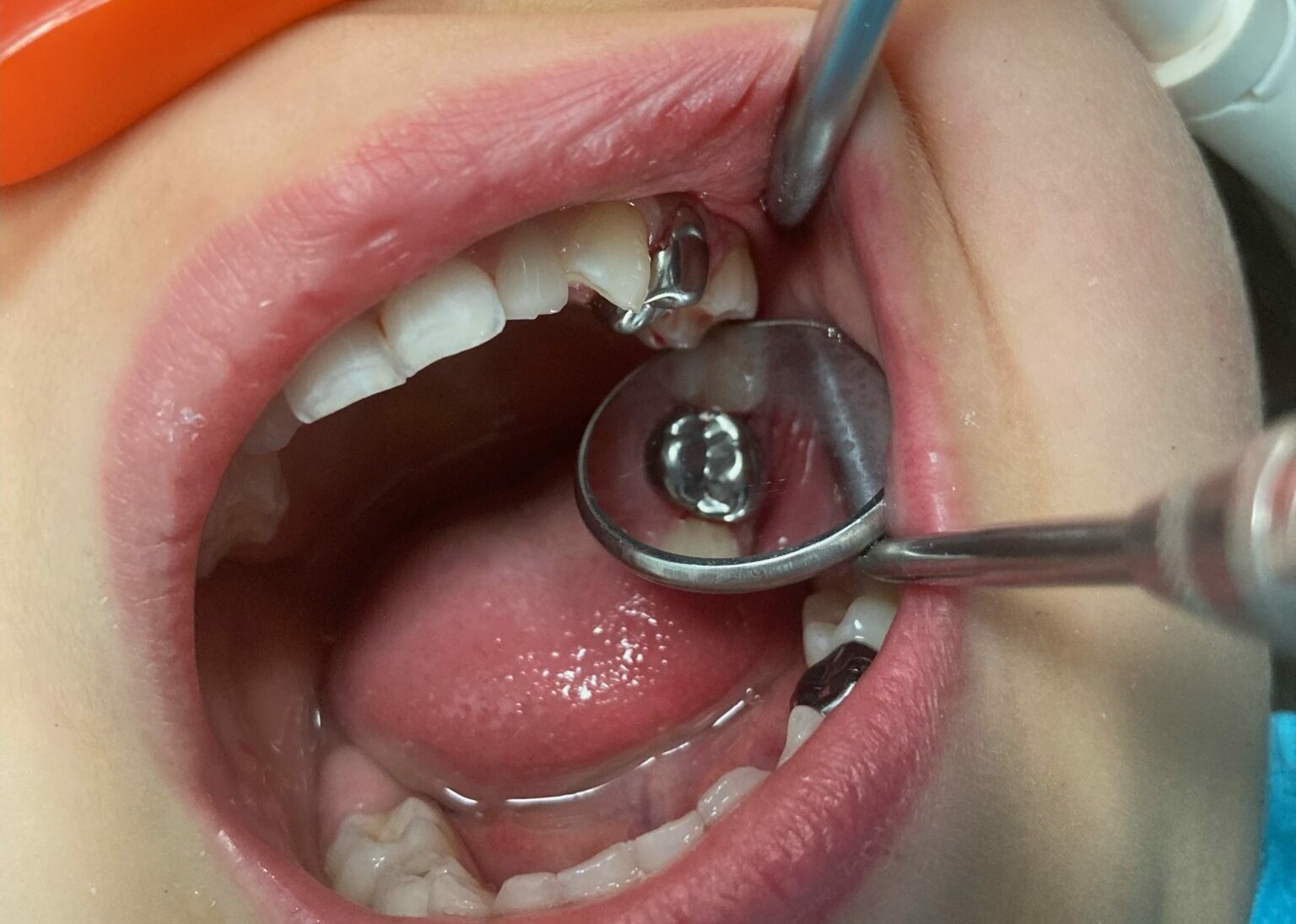
The cement that holds a crown in place can weaken over time, especially in crowns that have been in place for many years. A crown that is even slightly loose will move when you bite, creating friction, irritation, and pain.
A loose crown also creates a gap where bacteria and food particles can enter, increasing the risk of decay and infection underneath. If your crown feels wobbly, moves slightly, or if you notice a change in how it feels when biting, see your dentist without delay.
Treatment involves removing the crown, cleaning the tooth thoroughly, and re-cementing the crown with fresh dental adhesive, assuming the crown and tooth are otherwise in good condition.
Bruxism is the habit of grinding or clenching the teeth, most commonly during sleep. The forces generated by bruxism are far greater than those of normal chewing and can damage both natural teeth and dental restorations.
If you have a crowned tooth and you grind your teeth, that crown is at increased risk of cracking, loosening, and causing pain under pressure. Bruxism can also accelerate wear on the crown material and stress the underlying tooth structure and surrounding gum tissue.
A custom night guard is the standard protective treatment for bruxism. Your dentist will custom-fit a guard to your teeth that cushions the bite force during sleep and protects both the crown and the remaining natural teeth.
When gum tissue recedes around a crowned tooth, part of the sensitive root surface can become exposed. The root is not protected by enamel the way the crown of the tooth is, making it significantly more sensitive to pressure, temperature, and touch.
Gum recession can result from aggressive brushing, periodontal disease, or an ill-fitting crown that causes ongoing gum irritation. The exposed root area can cause pain or tenderness when biting down.
Treatment depends on the severity. Mild cases respond to improved oral hygiene practices and the use of sensitivity toothpaste. More significant recession may require periodontal treatment or, in some cases, crown replacement with a better-fitting restoration.
Periodontal disease, commonly known as gum disease, causes gum inflammation, bone loss, and eventual tooth instability. Gum disease around a crowned tooth can cause pain when pressure is applied because the supporting structures of the tooth are compromised.
Plaque and bacteria that accumulate around the crown margin, especially if the crown does not fit perfectly, can trigger or worsen gum disease in that area. Symptoms include red or swollen gums, bleeding when brushing, and pain when chewing.
Treatment involves professional cleaning, improved home oral hygiene, and in more advanced cases, periodontal therapy. The crown may also need to be adjusted or replaced if its fit is contributing to the problem.
When a new crown is placed, the tooth and surrounding soft tissues go through a period of adjustment. Some soreness, sensitivity to pressure, and general discomfort in the first few days are completely expected.
The gum tissue was likely manipulated during the procedure, and the tooth itself may have experienced some stress during preparation. This type of pain typically fades within a week to ten days.
If sensitivity is mild and gradually improving, simple over-the-counter pain relief and a soft diet for a few days is usually all that is needed. Pain that worsens or does not resolve within two weeks requires a dental evaluation.
A cracked or fractured tooth root is a more serious condition that can cause significant pain under pressure, often deep and persistent. Root fractures are more common in teeth that have had multiple dental procedures over the years.
Even after a root canal, a crack in the root itself can develop, especially under the stress of grinding or biting on hard foods. Root fractures are difficult to diagnose and often require X-rays and sometimes 3D cone beam imaging.
Treatment options for fractured roots are limited and depend heavily on where the fracture is located. In many cases, extraction is unfortunately necessary if the fracture extends too deep into the root.
| Symptom | Most Likely Cause |
|---|---|
| Pain only when biting down | High bite, bite misalignment |
| Sharp pain when releasing bite | Cracked tooth under crown |
| Throbbing persistent pain | Infection, pulpitis |
| Pain with hot and cold as well as pressure | Nerve irritation, decay, pulpitis |
| Swollen gum around the crown | Infection, gum disease |
| Crown feels loose or different | Loose cement, damaged crown |
| Pain at night or when not biting | Nerve infection, abscess |
| Pain that appeared months after crown placed | Decay, grinding damage, loose crown |
| Sensitivity along the gum line | Gum recession, exposed root |
If the crown is sitting too high, your dentist will identify the high spots using special articulating paper and carefully reshape the crown surface. This is one of the quickest and most effective fixes and often provides immediate relief.
When the nerve inside the tooth is inflamed or infected, root canal therapy removes the pulp tissue, cleans the inside of the tooth, and seals it to prevent re-infection. The crown is then typically retained or replaced after the root canal is complete.
If the crown itself is cracked, poorly fitted, or worn down to the point where it is causing problems, a new crown is made. The old crown is removed, the tooth is re-prepared, and a new, better-fitting crown is fabricated and placed.
A loose crown that is otherwise in good condition can be cleaned and re-cemented onto the tooth. This restores the seal, eliminates movement, and prevents bacteria from entering the gap beneath the crown.
A custom-made occlusal guard worn during sleep absorbs and redistributes the forces of grinding and clenching. This protects the crown, the underlying tooth, and all surrounding teeth from excessive wear and damage.
If a dental infection is present, antibiotics may be prescribed to control the spread of bacteria before definitive treatment. Antibiotics alone do not cure a dental infection but help manage it while root canal or extraction is arranged.
When gum disease is contributing to crown pain, professional deep cleaning, scaling, and root planing addresses the infection and inflammation in the gum and bone tissue surrounding the crown.
| Cause | Primary Treatment | Secondary Option |
|---|---|---|
| High bite | Bite adjustment | Crown replacement if severe |
| Nerve irritation / pulpitis | Root canal therapy | Monitoring if mild |
| Infection under crown | Root canal + antibiotics | Extraction if untreatable |
| Decay under crown | Crown replacement | Root canal if decay is deep |
| Cracked tooth | Root canal + new crown | Extraction if crack is severe |
| Cracked crown | Crown replacement | Temporary crown while waiting |
| Loose crown | Re-cementation | Crown replacement if damaged |
| Bruxism | Night guard | Bite adjustment if needed |
| Gum recession | Improved hygiene + sensitivity care | Gum treatment or new crown |
| Gum disease | Periodontal therapy | Crown adjustment or replacement |

These strategies will not fix the underlying problem but can help manage discomfort while you wait for your dental appointment.
Some situations require prompt professional attention rather than waiting for a routine appointment.
Do not ignore persistent crown pain. Early treatment is almost always simpler, less expensive, and less uncomfortable than waiting until the problem has progressed significantly.
Prevention is always easier than treatment. These habits help protect your dental crown and the tooth beneath it for as long as possible.
Dental crowns, when cared for properly, are built to last a long time. However, no crown lasts forever, and understanding their lifespan helps set realistic expectations.
| Crown Material | Average Lifespan | Best For |
|---|---|---|
| Porcelain fused to metal | 10–15 years | Back and front teeth |
| All-ceramic / all-porcelain | 10–15 years | Front teeth, aesthetic priority |
| Full metal (gold/alloy) | 20–30+ years | Back teeth, heavy chewing areas |
| Zirconia | 15–25 years | Both front and back teeth |
| Composite resin | 5–7 years | Temporary or budget option |
Regular dental care, avoiding habits that stress the crown, and prompt attention to early signs of problems all extend the functional life of any crown.
When you visit your dentist about a painful crown, here is what a thorough evaluation typically looks like.
Your dentist will ask you about the nature of the pain, including when it started, what makes it worse or better, whether it is constant or triggered only by pressure, and whether you have other symptoms like swelling or temperature sensitivity.
They will perform a clinical examination, which includes visually inspecting the crown and surrounding gum tissue, checking whether the crown is still securely in place, and evaluating the overall health of the area.
Your dentist will likely have you bite down on special articulating paper to identify whether the crown is sitting too high and interfering with your bite. They may also gently tap the crown to assess sensitivity and check whether the gum tissue around it is inflamed.
X-rays are typically taken to look for decay beneath the crown, signs of infection in the bone, problems with the root, or any other issue that is not visible externally. Once the cause is identified, a targeted treatment plan is created and discussed with you before anything is done.
Intermittent pain most commonly points to a bite that is slightly too high or a minor crack in the tooth or crown that only causes discomfort under certain conditions. See your dentist for a bite check and X-ray to identify the specific cause.
Mild tenderness for the first few days after placement is normal as tissues heal and you adjust to the new restoration. Pain that worsens or lasts longer than two weeks is not normal and needs to be evaluated by your dentist.
Yes. If the tooth did not have a root canal before the crown was placed, the nerve inside is still alive and vulnerable to infection. Even teeth that had root canals can develop new infections at the root tip over time.
Not necessarily. Crown pain can have many causes, including a high bite, loose crown, or gum irritation, none of which require a root canal. A root canal is only needed when the nerve inside the tooth is infected or severely inflamed.
Yes. Bruxism exerts far more force on teeth than normal chewing. It can crack or fracture the crown material, loosen the cement holding the crown, and irritate the nerve beneath it. A custom night guard is the best protection.
A loose crown may feel slightly wobbly, move when you press on it with your tongue, or feel different when you bite down. You may also notice a foul taste near the crown if bacteria have entered the gap. Contact your dentist immediately if you suspect the crown is loose.
Absolutely. Inflamed or receding gums around a crown can cause significant discomfort when pressure is applied, especially during chewing. Poor-fitting crowns that trap food and bacteria at the margin are a common contributor to gum issues around crowns.
Pain that develops months later most often indicates decay forming under the crown, a crack developing in the underlying tooth, bruxism-related damage, or the crown gradually becoming less well fitted over time. All of these require a dental examination.
Dental crowns do not self-repair. If the crown is cracked, loose, or the tooth beneath it is infected or decayed, professional dental treatment is necessary. Waiting typically allows the problem to worsen and increases the complexity and cost of eventual treatment.
If pain is mild and you just had the crown placed, waiting a few days to see if it improves is reasonable. However, if pain is severe, accompanied by swelling, throbbing, fever, or has lasted more than two weeks, call your dentist right away rather than waiting.
Why does my crown hurt when I put pressure on it is a question with many possible answers, but every answer has a solution.
From a simple bite adjustment that takes minutes to fix, to a root canal that addresses an infected nerve, to a night guard that protects against grinding damage, modern dentistry has an effective treatment for every cause of crown pain.
The most important thing you can do is not ignore the discomfort. Crown pain that is caught and treated early is almost always easier, faster, and less expensive to resolve than pain that has been allowed to progress for weeks or months.
Brush and floss around your crown daily, attend regular dental check-ups, protect your teeth from grinding, and speak up the moment something feels off.
Your crown was placed to protect your tooth and restore your comfort. If it is not doing its job painlessly, your dentist is ready to find out exactly why and fix it in 2026.