
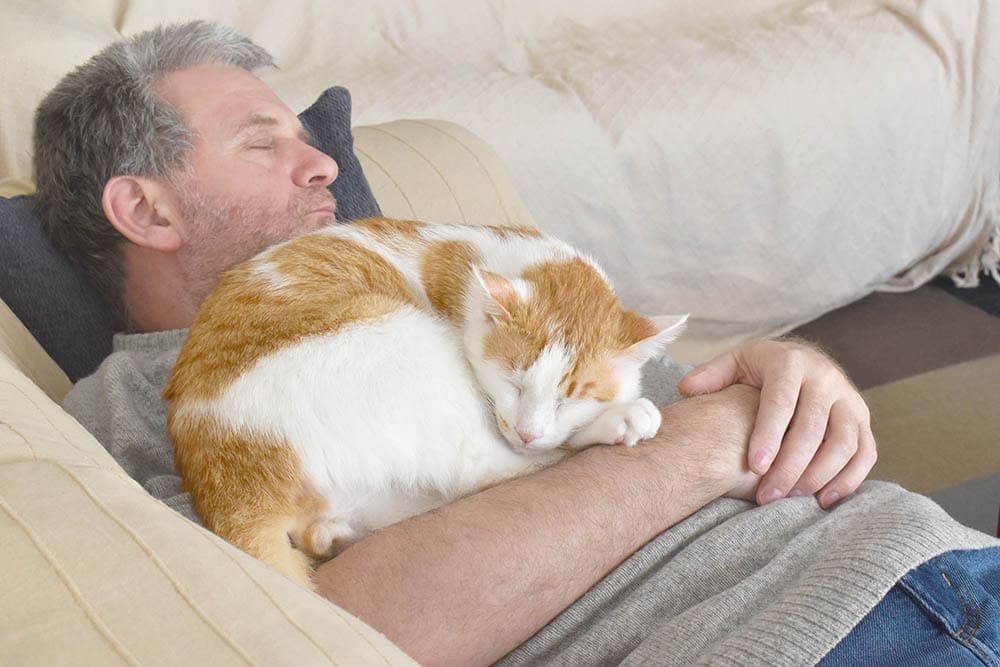
Why does my cat sleep on my chest? If you have ever woken up with your cat curled into a warm, purring ball right over your heart, you already know how special — and curious — that moment feels.
It is one of the most meaningful things a cat can do, rooted in instinct, trust, warmth, and deep emotional bonding.
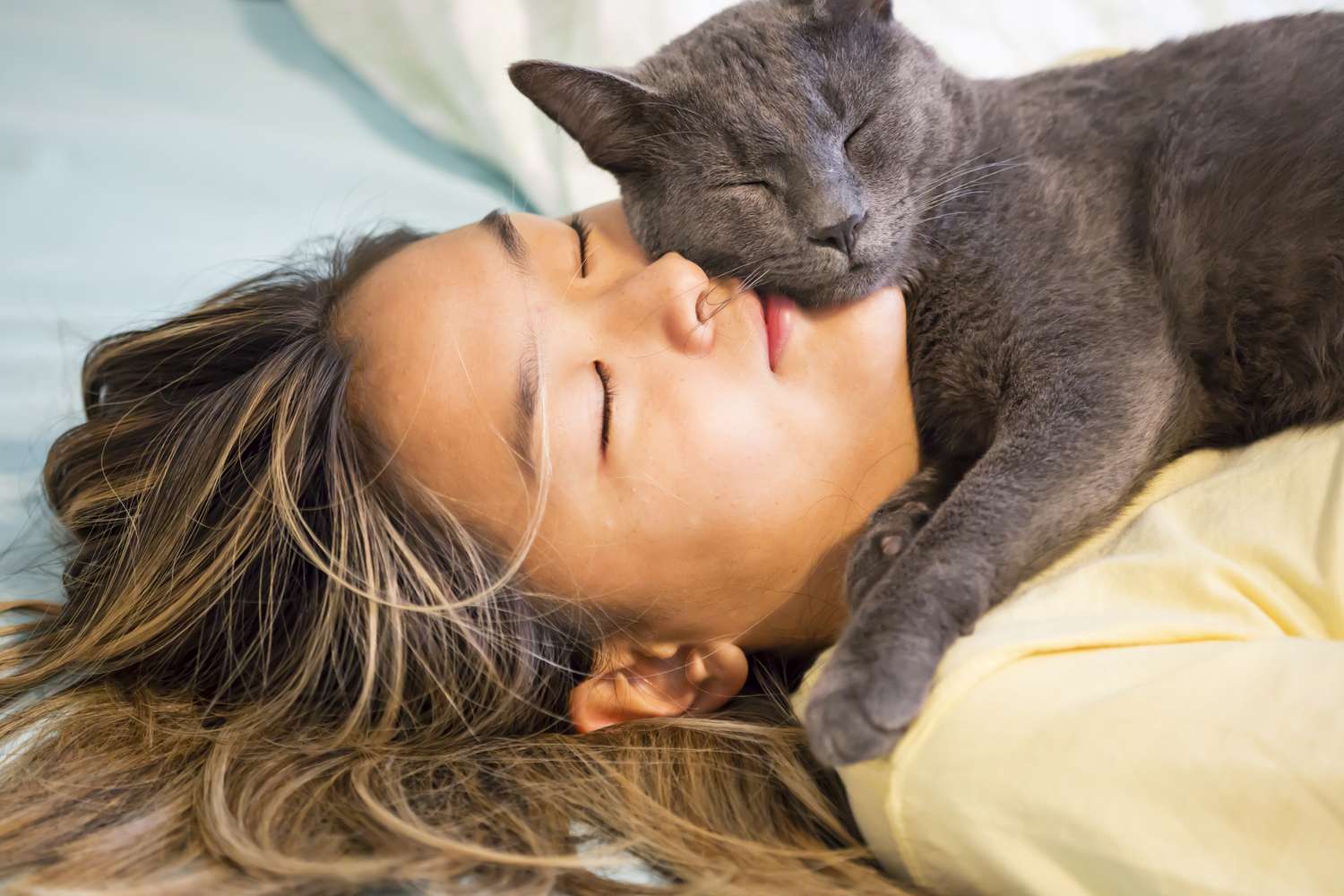
When your cat sleeps on your chest, it is a powerful sign of trust, affection, and security. Cats are naturally cautious and vulnerable when sleeping, so where they choose to nap says a lot about how safe they feel.
Your chest is not just any warm surface. It is a sensory package — your heartbeat, your breathing rhythm, your scent, and your body heat all combine into the most comforting spot your cat can find.
Understanding each of these reasons helps you appreciate what your cat is communicating every single time they settle on you.
The rhythmic sound of a beating heart is one of the most soothing sounds a cat can experience. It mirrors the very first comforting sensation kittens have — lying next to their mother and listening to her heartbeat.
Your chest places your cat directly over your heart. The steady, predictable thump acts as a natural sedative, calming their nervous system and signaling safety.
This is why cats who sleep on chests often fall into a deeper, more relaxed sleep than those who nap elsewhere. The heartbeat tells their brain: everything is okay.
Cats are natural heat seekers. Their ideal body temperature sits between 101°F and 102.5°F — slightly warmer than the human baseline of 98.6°F — which means they are always looking for external heat sources to supplement their own.
Your chest radiates consistent, steady warmth throughout the night. Unlike a heated blanket or sunbeam, your body heat never switches off, making you the perfect all-night warming station.
This is especially true in cooler months, for senior cats with thinner coats, and for cats who have recovered from illness. Warmth is not just comfort for cats — it is a biological need.
Cats are acutely aware of their own vulnerability during sleep. In the wild, a sleeping animal is a target. Cats choose their resting spots with survival instincts still very much intact.
Choosing to sleep on your chest means your cat trusts you completely. They are placing themselves in their most exposed state — eyes closed, guard down, body relaxed — and choosing to do that on top of you specifically.
This is one of the highest compliments a cat can pay. It means you are their safest space in the entire world.
Cats have an extraordinary sense of smell — roughly 14 times stronger than a human’s. Scent is the primary way they process their environment and recognize who belongs in their world.
Your unique scent is deeply familiar and associated with safety, food, play, and affection. When your cat sleeps on your chest, they are bathing in that reassuring scent, which lowers their stress hormones and helps them relax.
This is also why cats often seek out worn clothing or your side of the bed — your smell alone is a comfort signal.
Beyond just the heartbeat, the rhythmic movement of your chest as you breathe creates a gentle, rocking motion. This steady rise and fall mimics the sensation kittens felt while nursing — pressed against their mother’s warm, moving body.
For many cats, this subtle rocking acts as a natural lullaby. It reinforces the association between you and the earliest, most secure period of their life.
Cats who were well-socialized as kittens and had attentive mothers tend to seek this sensation more frequently as adults.
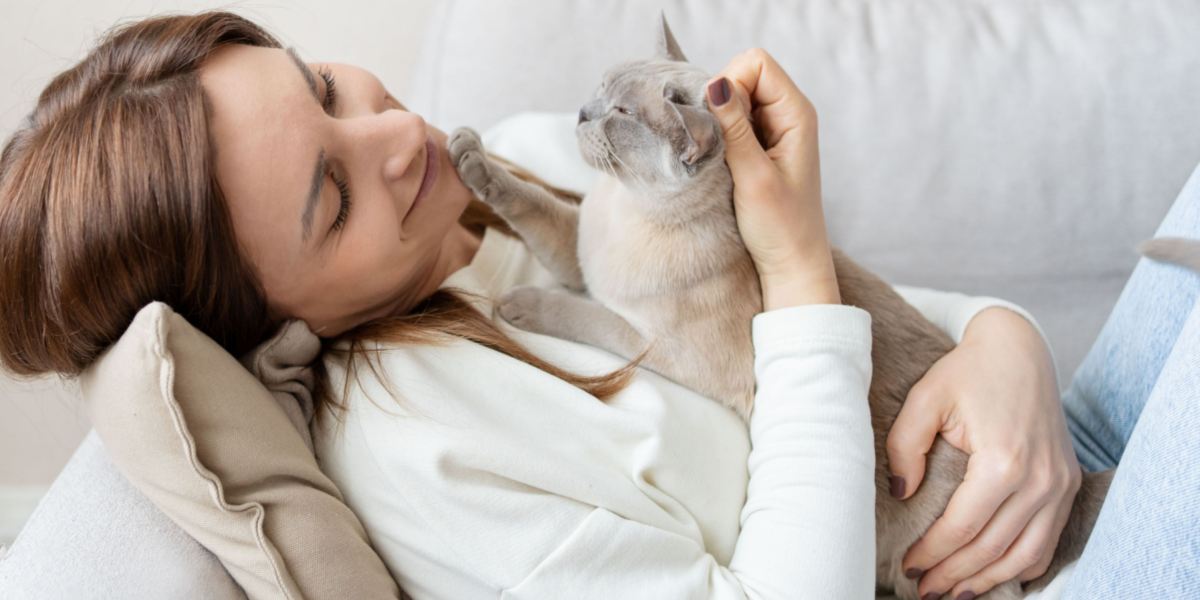
When your cat lies on your chest, they are not just receiving comfort. They are also leaving their scent on you. Cats have scent glands on their cheeks, paws, and face that deposit pheromones onto surfaces they contact.
By lying on you, your cat is marking you as part of their territory — in the most affectionate way possible. It is their way of saying: “This human is mine, and I am theirs.”
This behavior is not possessive in a negative sense. It is a social bonding ritual that communicates belonging and attachment within their world.
Cats are often labeled as independent, but many are deeply social animals who crave connection with their bonded humans. Lying on your chest is one of the most direct ways to demand — and receive — your full attention.
Notice how your cat often chooses your chest when you are reading, scrolling your phone, or watching TV. They are cutting through every distraction to put themselves literally in front of your face.
Responding with gentle pets, soft words, or simply letting them stay reinforces the bond and tells your cat their bid for closeness worked.
Cats are more emotionally perceptive than most people realize. Research suggests they can detect changes in human mood, stress levels, and even physiological states like elevated cortisol or irregular breathing.
When you are anxious, unwell, or emotionally drained, your cat may increase chest-sleeping behavior as a response. They are drawn to the changes they detect in your body and may be offering comfort in the only way they know how.
Many cat owners report that their cats become noticeably more attentive and chest-focused during periods of personal stress, illness, or grief.
Sometimes chest-sleeping increases not because your cat is happy, but because they are worried. A new pet, a new person in the home, a recent move, loud noises, or a change in routine can trigger clingy behavior.
In these cases, your chest becomes a safe anchor. Your presence, heartbeat, and scent help regulate their nervous system when their environment feels unstable.
If your cat suddenly becomes significantly more attached than usual, it is worth identifying any recent environmental changes that may be causing stress.
Sometimes there is no deeper psychological explanation. Your chest is warm, soft, elevated above the ground, close to your face, and smells like their favorite person. That is a very good spot.
Cats are creatures of habit. Once they discover that your chest checks every comfort box, it becomes their go-to napping location — morning, evening, and night.
This habitual preference is a good sign. It means your cat is comfortable, secure, and has associated you with nothing but good things.
Paying attention to how your cat positions itself while sleeping on you adds another layer of understanding to what they are communicating.
| Body Language | What It Means |
|---|---|
| Kneading your chest | Deep contentment, linked to nursing behavior from kittenhood |
| Slow blinking at you | “I love you” in cat language — slow blink back to respond |
| Purring loudly | Contentment and relaxation; also a self-soothing mechanism |
| Tucking paws under body (loaf position) | Fully relaxed, not on alert |
| Exposing belly while on you | Maximum trust — the belly is the most vulnerable area |
| Tail wrapped around body | Calm, settled, and at ease |
| Head bumping your chin | Affectionate greeting and scent marking |
| Watching you before sleeping | Alert bonding; they want eye contact before fully relaxing |
Kneading — the rhythmic pushing of paws against a soft surface — is one of the most misunderstood cat behaviors. It originates in kittenhood, when kittens knead their mother’s belly to stimulate milk flow while nursing.
When your adult cat kneads your chest before settling down, they are tapping into that earliest memory of warmth, nourishment, and maternal safety. You have become the emotional equivalent of their mother.
It is one of the most deeply affectionate things a cat can do for a human. If it is painful due to sharp claws, keep their nails trimmed or gently place a blanket between you and their paws.
Allowing your cat to sleep on your chest is not just emotionally rewarding — there is growing evidence that it offers measurable health benefits for both of you.
| Benefit | Who It Helps | Evidence |
|---|---|---|
| Reduced cortisol (stress hormone) | Human | Stroking and closeness linked to lower stress |
| Lower blood pressure | Human | Interaction with cats shown to reduce BP |
| Improved sleep quality | Both | Warmth and comfort promote deeper sleep |
| Reduced anxiety | Both | Physical contact lowers nervous system arousal |
| Emotional regulation | Human | Pet presence linked to reduced depression symptoms |
| Warmth and security | Cat | Body heat reduces physical stress |
| Strengthened bond | Both | Physical closeness deepens social attachment |
Cat purring occurs at frequencies between 25 and 150 Hz — a range that has been associated in research with promoting tissue healing, reducing inflammation, and lowering pain levels. Sleeping next to a purring cat may offer more physical benefit than most people realize.
Most of the time, your cat sleeping on your chest is entirely positive. However, there are situations where a change in this behavior is worth paying attention to.
If an independent cat suddenly starts sleeping on your chest every night, it could signal anxiety, illness, or pain. A cat in discomfort sometimes seeks the security of their bonded human more than usual.
Pair this with other observations — changes in appetite, litter box habits, grooming, or energy levels — before deciding whether a vet visit is needed.
If a cat who used to sleep on your chest suddenly avoids contact, that change also warrants attention. Pain, depression, illness, or a traumatic experience can cause a cat to withdraw from previously comfortable behaviors.
Do not assume this is a personality shift. A vet check and a calm, patient approach to rebuilding trust are both appropriate responses.
A cat who lies on your chest but does not settle — pacing, shifting repeatedly, vocalizing, or seeming uncomfortable — may be unwell or in pain. Healthy, content cats settle quickly once they find their preferred spot.
If your cat seems distressed while seeking this contact, that is a meaningful signal. A veterinary check is a good next step.
Your chest is a popular choice, but cats have other preferred sleeping spots that each carry their own meaning.
| Sleeping Location | What It Communicates |
|---|---|
| On your chest | Deep trust, bonding, warmth, heartbeat comfort |
| On your head | Warmth (heads release the most heat), scent of hair |
| Between your legs | Security and warmth in a sheltered space |
| Next to you but not on you | Trust with a need for personal space |
| At your feet | Companionship; protective instinct, keeps watch |
| On your pillow | Scent comfort; ownership and bonding |
| Back turned toward you | Respect and trust — they feel safe enough not to watch |
| In a separate room | Independent personality; still healthy if they join you sometimes |
For most healthy adults, yes — it is perfectly safe and even beneficial. There are a few situations where you may want to reconsider.
If you have allergies or asthma: Close contact with cat fur and dander at face level can worsen respiratory symptoms. Washing bedding frequently and using an air purifier nearby can help if you want to maintain the closeness.
If you are a very light sleeper: Some cats are active at night and may disturb your sleep cycle. If your quality of sleep is suffering, redirecting your cat to a cozy bed placed very close to yours is a good compromise.
If your cat has parasites or is unwell: Temporarily limit close contact until treatment is complete and your cat has been cleared by a vet.
If you are pregnant: Very large cats sleeping on a pregnant belly may be uncomfortable. Chest sleeping is generally still fine, but personal comfort should guide your boundaries.
For infants and young children: Keep cats out of cribs and away from sleeping infants as a precaution. Cats can be drawn to the warmth of small bodies.
If chest-sleeping is disrupting your sleep or uncomfortable, you can redirect your cat without hurting your relationship.
Place a soft, warm blanket or a heated cat bed directly next to your pillow. Your scent on a nearby item makes this an attractive alternative that still keeps them close.
Never push your cat away harshly or with frustration. Gently lift them and guide them to the alternative spot, then offer gentle petting and praise. Consistency over several nights usually produces results.
Maintaining other forms of closeness — lap time, play sessions, slow blinking, and grooming — ensures your bond stays strong even if the chest-sleeping changes.
Not every cat will sleep on your chest, and that does not mean they love you less. Personality plays a significant role.
| Personality Type | Chest-Sleeping Tendency |
|---|---|
| Secure and confident | Frequent — they feel safe anywhere near you |
| Anxious or rescue cats | May increase as trust builds over time |
| Highly independent cats | Rare; prefer nearby but separate spots |
| Kitten-bonded cats | Common — especially if bottle-raised |
| Multi-cat household cats | Varies; may decrease if other cats compete |
| Senior cats | Often increases — they seek more warmth and comfort |
A cat who chooses not to sleep on you but consistently stays in the same room, makes eye contact, slow blinks, and seeks you out for play is showing just as much love in their own way.
Research increasingly confirms that the bond between cats and humans is far deeper than popular culture gives credit for. A 2019 study published in Current Biology by researchers at Oregon State University found that cats form secure and insecure attachments to their owners, similar to the attachment patterns seen in human infants and dogs.
Around 64% of the cats studied showed a secure attachment to their owner — meaning they used their human as a base of security, sought them out when stressed, and were comforted by their return.
Cats who sleep on their owners regularly are very likely in this securely attached category. The behavior is not just habit — it reflects a genuinely meaningful emotional bond.
Your chest combines warmth, your heartbeat, your scent, and your breathing rhythm into the most comforting sensory package your cat can find. It is simply the best spot in their world.
Yes — it is one of the strongest signs of feline affection. Cats are vulnerable during sleep, so choosing your chest means they trust and love you deeply.
Loud purring on your chest signals deep contentment and relaxation. It is also a self-soothing behavior that helps your cat regulate their own nervous system during rest.
Kneading is a nursing behavior from kittenhood. When your cat kneads your chest, they associate you with the warmth and safety of their mother — it is a deeply affectionate signal.
If it is comfortable for you and does not disrupt your sleep or aggravate allergies, there is no reason to stop. It is healthy for both of you and strengthens your bond.
A sudden increase can signal stress from environmental changes, anxiety, or a health issue. If paired with other behavioral changes, a vet visit is a good idea.
Your cat is seeking eye contact and connection before relaxing. Slow-blink back at them — it is the feline equivalent of saying “I love you and I trust you.”
Cats bond primarily with the person whose scent, routine, and behavior makes them feel safest. Your cat has simply decided you are their person, which is quite an honor.
For most healthy adults without allergies or respiratory issues, yes. Use common sense, keep your cat treated for parasites, and wash bedding regularly.
Cats detect physiological changes through scent and breathing patterns. When you are unwell, they may be drawn to you instinctively to offer comfort and stay close to their primary source of security.
Why does my cat sleep on my chest? The answer is layered and beautiful — it is warmth, heartbeat comfort, ancient instinct, scent familiarity, emotional trust, and genuine love all wrapped into one small, purring bundle.
Your cat is not just finding a cozy spot. They are choosing you, specifically and intentionally, as their safest and most comforting place in the world. That is not a small thing.
Understanding this behavior deepens your appreciation for the quiet, wordless ways cats express their bonds.
Whether your cat settles on your chest every night or only occasionally, every time they do, they are communicating something that no meow could fully capture: you are their person, and they are exactly where they want to be.