
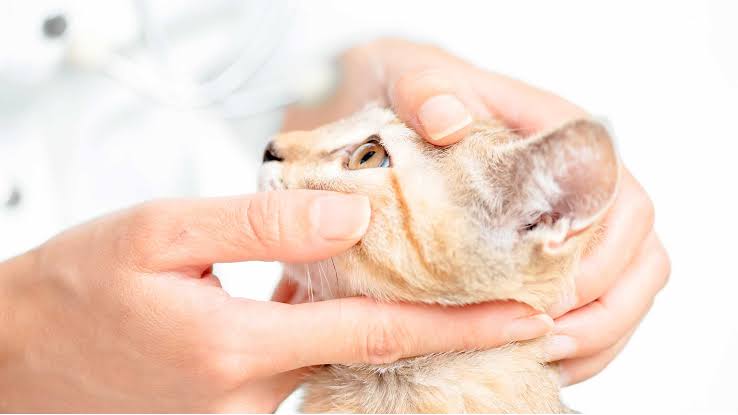
A little crust in the corner of your cat’s eyes after a nap is one thing. A cat with eyes that are constantly goopy, watery, or crusted shut is another. If you’ve been Googling “why does my cat have eye boogers,” you’re probably somewhere between mildly curious and genuinely worried.
The short version: occasional, small amounts of clear or light-colored eye discharge are normal in cats, similar to the “sleep” humans get overnight. But the color, texture, and frequency of that discharge can also point to allergies, infections, blocked tear ducts, or eye injuries that need veterinary care.
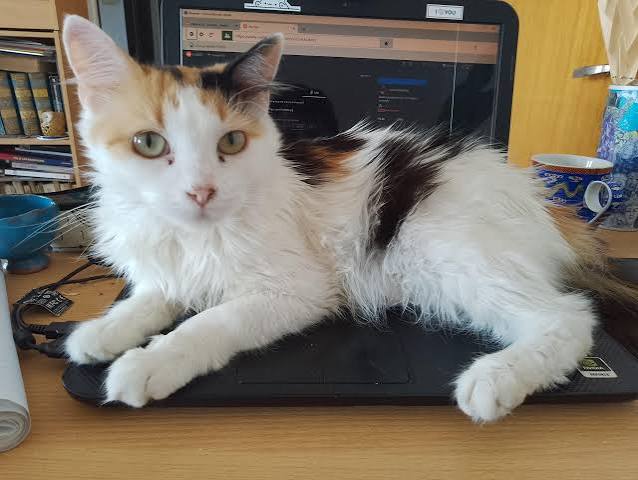
Why does my cat have eye boogers? Most cats develop a small amount of dried tear film — “eye boogers” — in the corners of their eyes, especially after sleeping. This is normal grooming residue. However, frequent, thick, colored (yellow, green, or brown), or excessive discharge usually signals an underlying issue such as conjunctivitis, an upper respiratory infection, allergies, a blocked tear duct, or eye trauma, and should be evaluated by a veterinarian.
Cat eye boogers — also called eye discharge, eye gunk, or eye “sleep” — are the dried or sticky residue left behind after tears do their job. A cat’s tear film is made of water, salts, proteins, mucus, and fatty oils, and it protects the eye from dust, debris, and microbes throughout the day. While a cat is awake, blinking spreads tears evenly and excess fluid normally drains through the tear ducts. During sleep, some of that mucus and residue can collect in the corners of the eyes instead of draining away, which is what you find as crust in the morning.
In healthy cats, this discharge is minimal, clear to light gray, and easy to wipe away. Anything beyond that — thick texture, strong color, bad odor, or discharge that reappears throughout the day — usually means something is irritating or infecting the eye.
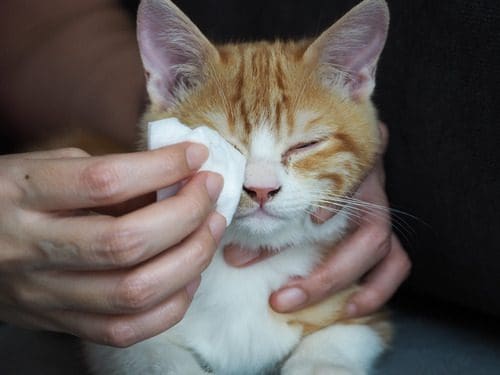
The most harmless cause: leftover components of the tear film drying at the corner of the eye overnight. This is expected and not a health concern on its own.
Dust, smoke, pollen, mold, cleaning products, scented candles, and diffuser oils can all irritate a cat’s eyes and trigger extra tearing. Allergic cats often show other signs too, such as sneezing or itchy, irritated skin.
Conjunctivitis is inflammation of the conjunctiva, the lining of the eyelid and white of the eye. It can be caused by infection, allergies, or irritants, and typically shows up as redness, swelling, squinting, and increased discharge that may be clear or thick and colored.
Cats, especially kittens and cats in multi-cat households or shelters, commonly develop upper respiratory infections from viruses or bacteria. Eye discharge is often paired with sneezing, nasal discharge, and sometimes a mild fever.
FHV-1 is considered the leading cause of recurring eye discharge and conjunctivitis in cats. Once a cat is infected, the virus stays in the body for life and can flare up during periods of stress, illness, or a weakened immune system.
When tear ducts don’t drain properly, tears overflow onto the face instead of draining internally, a condition called epiphora. This often causes persistent dampness and reddish-brown staining below the eyes, and can be linked to abnormal eyelid conformation (entropion) or duct blockages.
Dirt particles, plant material like grass awns, or scratches from another cat can lodge in or injure the eye, causing pain, tearing, and discharge. This typically comes on suddenly and often affects only one eye.
Corneal ulcers usually result from trauma, chemical irritation, foreign material, or infections like FHV-1. Symptoms include inflammation, excessive blinking, squinting, cloudiness, and discharge that can turn green if a secondary infection develops. Ulcers need prompt treatment to prevent vision loss.
A less common cause involving reduced tear production, leading to chronic thick, yellow, sticky discharge and a dull, dry-looking cornea. Left untreated, it carries a risk of permanent eye damage.
Flat-faced (brachycephalic) breeds such as Persians, Himalayans, and Exotic Shorthairs are more prone to visible eye discharge because of their shortened tear ducts and facial structure, and often need regular gentle cleaning as routine care.
| Discharge Color/Texture | Likely Cause | Urgency |
|---|---|---|
| Clear, watery, minimal | Normal tear residue, mild irritation, or allergies | Monitor; usually not urgent |
| Clear, watery, persistent | Possible viral infection or early irritation | Watch for 24–48 hours |
| Thick, mucus-like, sticky | Conjunctivitis or early infection | See a vet within a day or two |
| Yellow or green (pus-like) | Bacterial infection, often secondary to a viral URI | See a vet the same day |
| Brown staining | Chronic tearing or blocked tear ducts, common in flat-faced breeds | Non-urgent but should be discussed with your vet |
| Dark, sticky (with sneezing/fever) | Feline herpesvirus (FHV-1) flare-up | See a vet promptly |
| Bloody | Trauma, internal bleeding, high blood pressure, clotting disorder | Emergency — seek immediate care |
| Sign | Normal | Concerning |
|---|---|---|
| Amount | Small, only after waking | Constant, reappears throughout the day |
| Color | Clear or light gray | Yellow, green, brown, or bloody |
| Texture | Light crust, easy to wipe | Thick, pus-like, or crusting the eye shut |
| Eye appearance | White and clear | Red, swollen, cloudy, or squinting |
| Other symptoms | None | Sneezing, nasal discharge, lethargy, appetite loss |
| Number of eyes affected | Both, mildly | Often one eye suddenly, or both worsening |
| Duration | Resolves the same day with wiping | Persists more than 24 hours |
Occasional, mild eye boogers rarely need a vet visit. Contact your veterinarian promptly if you notice:
A veterinarian can perform simple diagnostics, such as a fluorescein stain test, to check for corneal ulcers within minutes, which is something that can’t be assessed accurately at home.
Home cleaning can keep mild discharge from crusting or irritating the skin, but it treats the symptom — not the underlying cause.
Yes, in small amounts. A little clear or light-colored crust after sleeping is normal tear film residue and not a cause for concern.
Mild morning crust that clears during the day is common, especially in flat-faced breeds. If it happens daily and is thick or colored, it should be checked by a vet.
Green, yellow, or bloody discharge is the most concerning and usually signals bacterial infection, a corneal ulcer, or trauma. These warrant a same-day vet visit.
Brown staining is often caused by chronic tearing or blocked tear ducts, which is especially common in flat-faced breeds like Persians.
Yes. Environmental allergens such as dust, pollen, mold, and smoke can irritate a cat’s eyes and increase tear production and discharge.
FHV-1 is a common virus that causes conjunctivitis and recurring eye discharge in cats. It stays in the body for life and can flare up during stress or illness.
No, FHV-1 is not contagious to humans, but it is contagious to other cats.
No. Human eye medications are not safe for cats and should never be used without veterinary guidance.
Discharge in a single eye often points to a foreign body, injury, or scratch rather than a systemic illness, and should be evaluated promptly.
Thick, sticky discharge usually points to conjunctivitis or an early eye infection.
Yes. Eye discharge combined with sneezing and nasal discharge is a common sign of an upper respiratory infection, especially in kittens or multi-cat households.
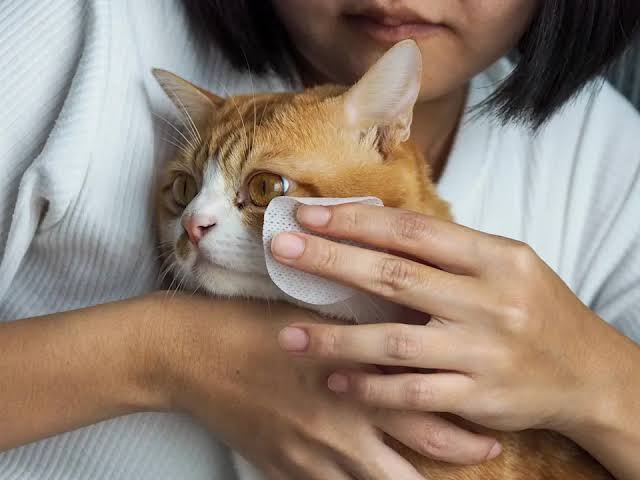
Use a soft cloth dampened with warm water or saline, wipe gently from the inner corner outward, and avoid pulling off dried crust.
If discharge is green, yellow, bloody, persistent beyond 24 hours, or paired with squinting, redness, or lethargy, yes — see a vet promptly.
Yes. Flat-faced breeds like Persians, Himalayans, and Exotic Shorthairs are more prone to eye discharge due to their facial and tear-duct anatomy.
Yes. Blocked or abnormal tear ducts prevent tears from draining properly, causing overflow, dampness, and staining around the eyes.
A corneal ulcer is an open sore on the surface of the eye, often caused by trauma, infection, or chemical irritation, and requires prompt veterinary treatment to prevent vision loss.
Yes, particularly in cats carrying FHV-1. Stress is a common trigger for flare-ups of viral conjunctivitis.
No. It can also result from allergies, irritants, blocked ducts, or normal tear residue. Persistent or colored discharge is more likely to indicate infection.
Mild, clear discharge can be monitored for 24–48 hours. Colored, worsening, or symptom-accompanied discharge should be seen the same day.
Yes. Kittens are more susceptible to upper respiratory infections and viral conjunctivitis, especially if exposed in shelters or multi-cat environments.
Mild, clear discharge from minor irritation often resolves on its own. Bacterial infections, corneal ulcers, and blocked ducts typically require veterinary treatment.
A vet may perform a fluorescein stain test to check for corneal ulcers, along with a general eye exam and possibly lab tests to identify infection type.
Diet isn’t a primary driver of eye discharge, but proper hydration and overall health support normal tear production and immune function.
Yes. Blood in or around the eye should always be treated as an emergency and evaluated immediately.
Keep the home free of irritants like smoke and strong scents, manage stress, keep vaccinations current, and gently clean the eye area regularly for prone breeds.
A little eye crust after your cat wakes up is completely normal — it’s simply dried tear film doing its job. What matters is paying attention to color, texture, frequency, and any accompanying symptoms like sneezing, squinting, or redness.
Clear, occasional discharge usually needs nothing more than a gentle wipe, while yellow, green, brown, or bloody discharge, or anything lasting more than a day, is your cue to call the vet. When in doubt, a same-day veterinary check is always the safest choice for protecting your cat’s eyes and vision.