

Why does my car shake at high speeds is one of the most searched car problems in 2026, and for good reason. A vibrating car above 55 mph is never just an annoyance.
It is your vehicle telling you that something mechanical is wrong and getting worse with every mile you drive. The shake can come from your tires, wheels, brakes, suspension, engine, or drivetrain, and each source has a different feel, location, and fix.
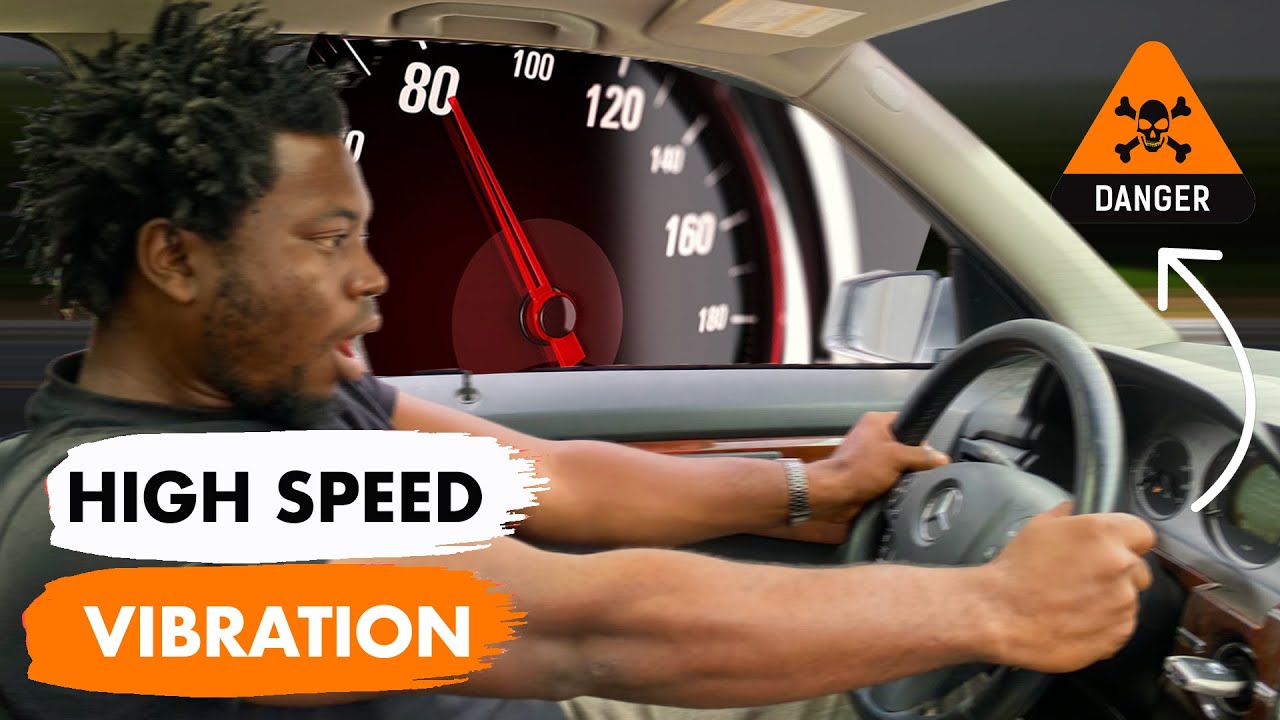
The physics behind high-speed shaking is straightforward once you understand it.
At higher speeds, centrifugal force multiplies even tiny imbalances in rotating parts. A weight discrepancy of just 0.25 ounces in a tire can create violent vibrations throughout the entire chassis at speeds above 60 mph. At low speeds, the same imbalance is barely noticeable.
This is why many car shake problems only appear at highway speeds and feel perfectly smooth in the city. The faster your wheels spin, the more dramatically any mechanical imperfection gets amplified through your steering wheel, seat, and floorboards.
Before diagnosing the cause, you need to identify where you feel the vibration.
| Where You Feel the Shake | Most Likely Source |
|---|---|
| Steering wheel only | Front tires, front wheel balance, front brake rotors, tie rods |
| Seat or floor | Rear tires, rear wheel bearings, rear brake rotors, driveshaft |
| Entire car | Severe tire imbalance, bent rim, bad engine mount, driveshaft |
| Only when braking | Warped brake rotors (front or rear depending on feel) |
| Only when accelerating | CV axle, driveshaft, engine misfire, loose motor mount |
| Starts at 55 mph and gets worse | Tire balance or wheel balance issue |
| Comes and goes with no pattern | Loose lug nuts, worn suspension bushing, intermittent misfire |
Knowing exactly where and when the shake happens cuts your diagnosis time in half and saves you money by pointing you toward the right repair.
Unbalanced tires are the single most common cause of car shaking at high speeds.
Tire balance refers to the even distribution of weight around the entire circumference of the tire and wheel assembly. During normal driving, tires wear gradually and lose their factory balance. Even a tiny imbalance becomes a significant vibration at highway speeds.
You will typically feel this as a steering wheel shake that starts around 55 to 65 mph and may smooth out at higher or lower speeds. The vibration has a rhythmic, consistent quality.
Fix: A tire balance service at any shop costs between $15 and $25 per wheel. It takes about 30 to 45 minutes. Tires should be balanced every 5,000 to 7,500 miles or any time you mount new tires.
Tires do not have to be unbalanced to cause shaking. The tire itself can be the problem.
Uneven tread wear, flat spots from hard braking, internal structural damage, or a separated tire belt all cause vibrations that cannot be fixed by balancing. If the internal steel belt inside a tire breaks or shifts, the tire becomes permanently out of round.
A vehicle with worn tires loses adherence and tread pattern consistency, making it pull and shake during steering. You may also notice a pulling sensation to one side, a humming noise, or a slight burning smell from tire friction.
Fix: Tire replacement. A single tire costs between $80 and $300 depending on size and brand. If one tire is damaged, it is usually recommended to replace it in pairs on the same axle.
A bent wheel rim causes a consistent, rhythmic vibration that no amount of balancing will fix.
Rims bend from hitting potholes, curbs, or road debris. Even a small bend of one millimeter can create noticeable vibration at highway speeds. The vibration is typically felt through the steering wheel if a front rim is bent, or through the seat if a rear rim is affected.
A visual inspection may not always reveal a bent rim. Shops use a balancing machine that spins the wheel to detect runout, which is the measurement of how far a wheel deviates from a perfect circle.
Fix: Rim repair costs between $75 and $150 per wheel for minor bends. Severely bent or cracked rims must be replaced, which costs between $150 and $500 per rim depending on size and material.
Loose lug nuts are one of the most dangerous causes of high-speed shaking and one of the easiest to overlook.
Lug nuts hold your wheels to the hub. If one or more lug nuts are loose, the wheel can wobble slightly with each rotation, creating a vibration that worsens with speed. In extreme cases, a loose wheel can detach from the vehicle entirely while driving.
This issue often occurs after a tire change or rotation when lug nuts are not torqued to the manufacturer specification. The vibration may feel irregular rather than rhythmic and can appear or disappear suddenly.
Fix: Check and torque all lug nuts to manufacturer specification immediately. This is a free fix if you have a torque wrench. Never ignore a sudden shake after recent tire work.
Wheel alignment is often confused with wheel balance, but they are different problems with different symptoms.
Alignment refers to the angle at which your tires contact the road. Misaligned wheels cause uneven tire wear, instability, and can contribute to vibration. However, pure alignment problems more commonly cause pulling to one side rather than the rhythmic shake of an imbalance.
If you notice your car drifting left or right when you release the steering wheel, combined with some shaking, alignment is likely part of the problem. Alignment problems can develop from hitting potholes, curbs, or after suspension work.
Fix: A wheel alignment service costs between $75 and $150 for a four-wheel alignment. It should be performed every 12 months or 12,000 miles, and always after suspension repairs.
Your suspension system is what keeps your tires in contact with the road at all times.
Shock absorbers and struts dampen the movement of your suspension as you drive over bumps and road imperfections. When they wear out, the car becomes unstable at highway speeds because the tire contact patch bounces and skips rather than staying firmly planted.
You will notice this as a general instability or bounciness at high speeds, especially on uneven road surfaces. The car may feel like it floats or wallows through curves. Worn shocks also cause other components to wear faster.
Fix: Shock absorber and strut replacement costs between $250 and $900 per axle depending on the vehicle. Struts should be inspected every 50,000 miles and replaced by 100,000 miles in most vehicles.

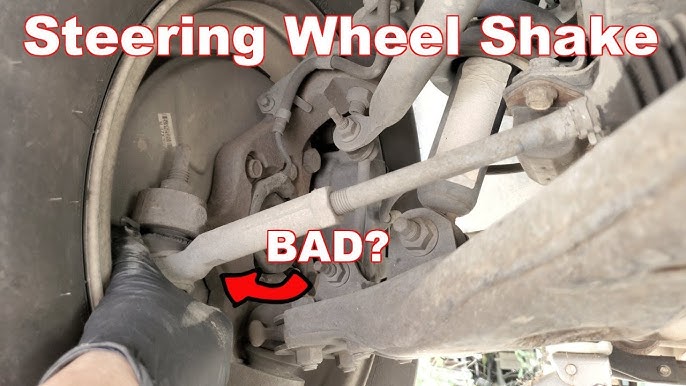
Ball joints and tie rods are the pivot points that connect your wheels to your steering and suspension system.
When these components wear out, they develop play or looseness. This allows the wheel to move side to side without corresponding input from the steering wheel. At highway speeds, this creates an unpredictable shake or wobble that can suddenly worsen if the part fails completely.
This is a serious safety issue. A failed ball joint or tie rod can cause loss of steering control at speed. If you feel a loose, wandering sensation in your steering along with shaking, inspect these components immediately.
Fix: Ball joint replacement costs between $200 and $500 per joint. Tie rod replacement costs between $100 and $350 per side. Always replace in pairs on the same axle.
A wheel bearing is the mechanical assembly that allows your wheels to spin freely with minimal friction.
When a wheel bearing wears out or fails, it allows excess movement in the wheel assembly, causing vibration and a characteristic humming, growling, or roaring noise that increases with vehicle speed. The noise often changes pitch when you shift your weight slightly by changing lanes.
You may feel a bad wheel bearing as a vibration through the seat if it is a rear bearing, or through the steering wheel if it is a front bearing. A worn bearing can fail completely and lock a wheel, which is an extremely dangerous situation at highway speeds.
Fix: Wheel bearing replacement costs between $150 and $400 per wheel including labor. Do not delay this repair.
CV axles transfer engine power from the transmission to the drive wheels in front-wheel-drive and all-wheel-drive vehicles.
The CV joint at each end of the axle is protected by a rubber boot filled with grease. When the boot cracks, the grease leaks out and the joint wears rapidly. A worn CV joint causes a clicking noise during turns at low speed and vibration during acceleration at higher speeds.
The shake from a worn CV axle usually occurs during hard acceleration, particularly when getting up to highway speed, and may stop once you reach a constant cruising speed.
Fix: CV axle replacement costs between $200 and $500 per side. If you notice a torn CV boot early, replacing just the boot costs between $75 and $200 and can prevent full axle replacement.
Rear-wheel-drive and four-wheel-drive vehicles use a driveshaft to transfer power from the transmission to the rear axle.
The driveshaft spins at very high speeds and is connected at each end by universal joints, commonly called U-joints. When a U-joint wears out, the driveshaft cannot rotate perfectly smoothly. This creates a vibration that is felt throughout the entire vehicle and increases with speed.
You may notice the shake during acceleration up to highway speed, then it may smooth out at constant cruising speed. A worn driveshaft U-joint can fail suddenly and cause serious damage to the underside of the vehicle.
Fix: U-joint replacement costs between $200 and $650 depending on vehicle type. Driveshaft replacement or rebalancing costs between $300 and $1,200. This should be addressed promptly.
If your car shakes specifically when you apply the brakes at high speeds, warped brake rotors are the almost certain cause.
Brake rotors are the large disc-shaped components that your brake pads clamp against to slow the vehicle. Frequent hard braking or overheating can warp the rotor surface, making it slightly uneven. When you press the brakes, the pads contact this uneven surface and create a pulsing vibration.
If you feel the shake in the steering wheel when braking, the front rotors are warped. If you feel it in the seat or floor when braking, the rear rotors are the issue.
Fix: Brake rotor replacement costs between $150 and $400 per axle including pads. Severely warped rotors cannot be machined back to flat and must be replaced entirely.
An engine misfire causes a different type of shaking than wheel or tire problems.
A misfire occurs when one or more cylinders fail to fire properly. This creates an irregular, rough vibration that you feel throughout the car, often accompanied by a loss of power, rough idle, hesitation during acceleration, and a drop in fuel economy. The check engine light often comes on with a misfire.
Misfires are caused by bad spark plugs, failing ignition coils, clogged fuel injectors, a vacuum leak, or a mechanical engine problem. Unlike tire-related shaking, misfire vibration is felt at all speeds and does not have a rhythmic quality.
Fix: Spark plug replacement costs between $100 and $300. Ignition coil replacement costs between $150 and $400 per coil. A diagnostic scan at any shop reads misfire codes and identifies the problem cylinder.
Engine mounts secure your engine to the vehicle’s frame and absorb engine vibration.
When an engine mount breaks or deteriorates, the engine moves more than it should during acceleration and deceleration. This excess movement creates a thudding or vibrating sensation that is especially noticeable at highway speeds under load. You may also hear a clunking sound when shifting from drive to reverse.
Fix: Engine mount replacement costs between $200 and $600 per mount depending on the vehicle. Most vehicles have two or three mounts.
Different vibration patterns point to different causes depending on when they start and stop.
| Speed When Shake Starts | Most Likely Cause |
|---|---|
| 30 to 45 mph | Tire balance issue, tire with flat spot |
| 50 to 65 mph | Unbalanced tires, bent rim, wheel bearing |
| 65 to 75 mph | Driveshaft imbalance, worn suspension, CV axle |
| Only when braking | Warped brake rotors |
| Only when accelerating | CV joint, engine misfire, loose motor mount |
| Constant at all highway speeds | Worn wheel bearing, driveshaft problem |
| Comes and goes | Loose lug nuts, intermittent misfire |
Understanding the cost range for each repair helps you budget and prioritize.
| Cause | DIY Cost | Professional Repair Cost |
|---|---|---|
| Tire balance | $0 (if you have equipment) | $15–$25 per tire |
| Tire replacement | $80–$200 per tire | $100–$300 per tire installed |
| Wheel alignment | Not DIY | $75–$150 |
| Shock absorbers / struts | $150–$400 parts | $250–$900 per axle |
| Ball joint replacement | $50–$150 parts | $200–$500 per joint |
| Tie rod replacement | $30–$100 parts | $100–$350 per side |
| Wheel bearing | $50–$150 parts | $150–$400 per wheel |
| CV axle | $80–$200 parts | $200–$500 per side |
| Driveshaft U-joint | $20–$60 parts | $200–$650 |
| Brake rotor replacement | $60–$150 per axle | $150–$400 per axle |
| Spark plugs | $20–$80 | $100–$300 |
| Engine mount | $50–$150 parts | $200–$600 |
A simple pre-diagnosis check before visiting a mechanic can save you from being upsold on repairs you do not need.
Start by checking your tire pressure and visually inspecting all four tires for uneven wear, bulges, cracking, or obvious damage. Check all lug nuts for tightness by hand or with a lug wrench. Look under the car for any obvious broken or hanging components. Drive at the speed where shaking occurs and note exactly where you feel it, when it starts, and whether it changes when braking or accelerating.
Note whether any warning lights are on. A check engine light combined with shaking almost always points to an engine or ignition issue rather than a wheel problem. Taking this information to a mechanic helps them diagnose faster and reduces unnecessary diagnostic charges.
Some causes of high-speed shaking are inconvenient. Others are genuinely dangerous.
Stop driving immediately and have the car towed if the shaking is sudden and violent, especially after recent tire work (possible loose wheel). Also stop driving if the car pulls hard to one side combined with shaking, which may indicate a failing tire or wheel bearing. If you hear a loud grinding or knocking noise with the vibration, that signals imminent component failure. If the steering feels loose or unpredictable with the shaking, you may have a failing tie rod or ball joint.
Mild rhythmic shaking from an unbalanced tire is safe to drive short distances but should be addressed within a week or two. Severe or sudden shaking should never be ignored.
Most causes of highway vibration are preventable with regular maintenance.
| Maintenance Task | Recommended Interval |
|---|---|
| Tire rotation | Every 5,000–7,500 miles |
| Tire balance | Every 5,000–7,500 miles or with each rotation |
| Wheel alignment | Every 12 months or 12,000 miles |
| Tire replacement | Every 25,000–60,000 miles depending on tire type |
| Shock / strut inspection | Every 50,000 miles |
| Brake rotor inspection | Every 25,000 miles or with each brake pad change |
| Spark plug replacement | Every 30,000–100,000 miles depending on plug type |
| CV boot inspection | Every 25,000 miles |
| Wheel bearing inspection | Every 30,000–50,000 miles |
Staying on top of these intervals dramatically reduces the chance of developing high-speed vibration and extends the life of every related component.

Many car owners confuse tire balance and wheel alignment, leading to the wrong repair.
Tire balance addresses uneven weight distribution around the wheel and tire assembly. It causes rhythmic vibration at specific speed ranges, especially 55 to 65 mph. Wheel alignment addresses the angle at which your tires contact the road surface. It primarily causes pulling to one side and uneven tire wear rather than vibration.
Shaking at high speeds is almost always a balance issue first, not an alignment issue. Alignment problems rarely cause vibration directly, but misalignment accelerates tire wear that then causes balance problems. Always address balance first when diagnosing highway shake.
At low speeds, minor wheel and tire imbalances are too small to feel. At highway speeds, centrifugal force multiplies those imbalances dramatically, turning a tiny weight difference into a noticeable vibration throughout the car.
Mild shaking from unbalanced tires is safe for short-term driving, but any sudden, severe, or steering-affecting vibration means you should stop driving and have the car inspected immediately to avoid an accident.
The cost ranges from $15 for a tire balance to over $1,000 for driveshaft or suspension repairs. The most common fix, tire balancing, is inexpensive, which is why it should always be the first thing you check.
Yes. Low or uneven tire pressure changes how the tire contacts the road, creating instability and vibration at highway speeds. Always check tire pressure first as it is the quickest and cheapest thing to rule out.
Steering wheel shaking at highway speeds almost always points to a front-end issue such as unbalanced front tires, a bent front rim, worn front wheel bearings, worn tie rods, or warped front brake rotors.
Shaking specifically when braking at highway speeds is almost certainly warped brake rotors. Feeling it in the steering wheel means front rotors are the problem and feeling it in the seat means the rear rotors need to be replaced.
Yes. Worn or failed spark plugs cause engine misfires, which create a rough, irregular vibration felt throughout the car at all speeds. This is usually accompanied by a check engine light and reduced fuel economy.
Tires should be balanced every 5,000 to 7,500 miles, which coincides with recommended tire rotation intervals. Always balance tires after any new tire installation or after hitting a significant pothole or curb.
Wheel alignment rarely causes vibration directly. Misalignment causes pulling to one side and uneven tire wear. However, the uneven wear it creates over time leads to tire imbalance, which then causes high-speed shaking.
Shaking only during acceleration points to CV axle problems, driveshaft U-joint wear, a loose motor mount, or an engine misfire. These components are all under load during acceleration and the stress reveals their weakness.
Why does my car shake at high speeds is one of the most important car questions you can ask because the answer almost always reveals a mechanical problem that will get worse and more expensive the longer it goes unaddressed.
The most common causes in 2026 remain unbalanced tires, worn suspension components, bad wheel bearings, warped brake rotors, and failing CV axles or driveshaft U-joints.
The good news is that most causes are identifiable by noting exactly where you feel the shake and when it occurs. Start with the cheapest and most common fix first, which is a tire balance, and work methodically from there.
Your car’s high-speed shaking is a warning signal. Treat it as one, get it diagnosed promptly, and you will save yourself from a much larger repair bill or a dangerous roadside breakdown.