
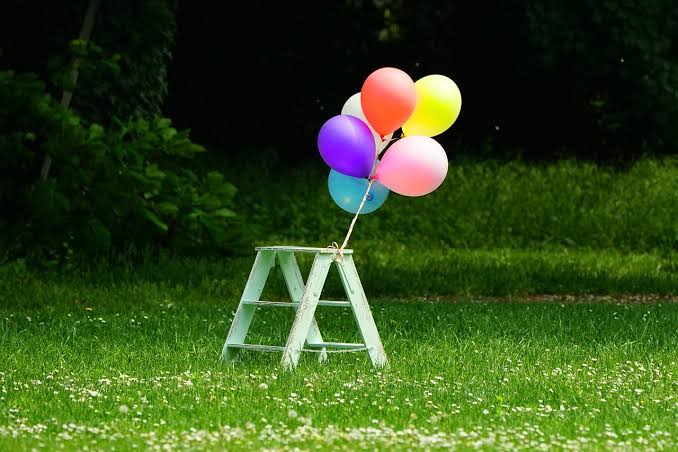
Why does grass pop balloons? The honest answer has nothing to do with oxygen, photosynthesis, or anything grass “releases.” It comes down to simple physics: sharp blade tips meeting tightly stretched latex.
If you have ever set a bunch of balloons down on a lawn only to hear them burst one by one, you already know how strange it feels. It looks like the grass itself is attacking your decorations.
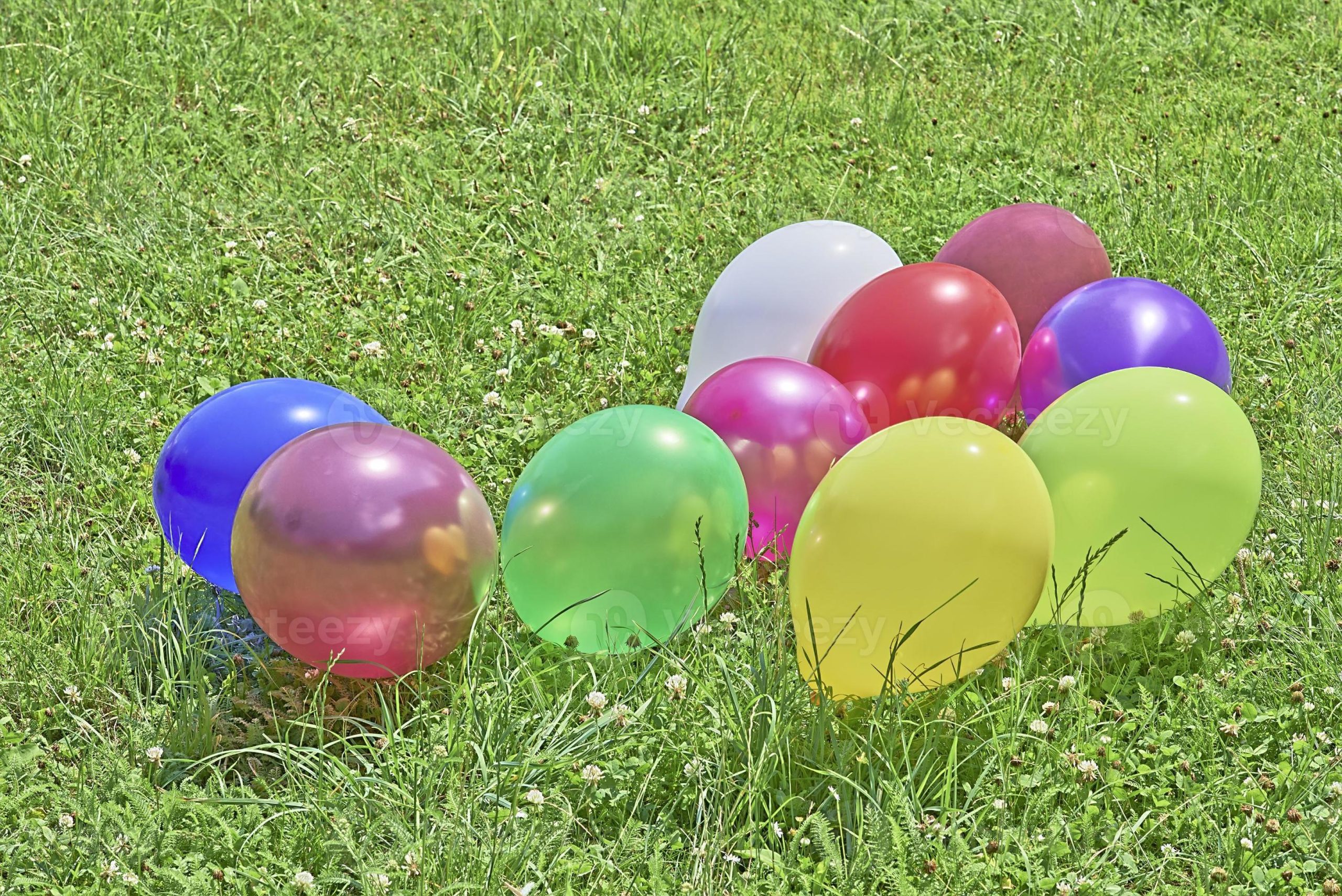
Grass pops balloons because sharp blade tips, seed heads, and tiny debris concentrate enough force to puncture stretched latex. The balloon’s thin, tension-filled surface is extremely sensitive to any small point of pressure.
Claims that grass releases oxygen or gas that pops balloons are not accurate. The cause is mechanical, not chemical.
An inflated balloon is a thin membrane stretched far beyond its natural resting size. That stretching creates constant tension across the entire surface.
When even a tiny sharp point touches that tensioned surface, it can break through in an instant. Grass blades, though they look soft, often have narrow, rigid tips capable of doing exactly that.
One theory circulating online claims that grass pops balloons because of oxygen released during photosynthesis. This explanation is not scientifically accurate and does not match how balloon material actually fails.
Photosynthesis does release oxygen, but in quantities far too small and far too slow to build pressure against a balloon’s surface. Balloons burst almost instantly on contact, which points to a mechanical cause rather than a gradual gas buildup.
| Claim | Accurate? | Real Explanation |
|---|---|---|
| Grass releases oxygen that pops balloons | No | Popping is caused by physical puncture, not gas |
| Grass blades have sharp tips | Yes | Rigid blade tips can pierce stretched latex |
| Static electricity always causes the pop | Partially | Static can play a minor role, but pressure and puncture dominate |
| Heat weakens balloon material | Yes | Sunlight and warmth make latex more brittle over time |
Myths like this one usually start from a partial truth stretched into an oversimplified explanation. Grass does perform photosynthesis, so the underlying science of oxygen release is real, even if the conclusion is wrong.
It is easy to see how someone watching a balloon burst near a lawn might connect the two unrelated facts. Without testing the actual mechanism, the coincidence of location can look like causation.
Separating the real science from the coincidental story is the key to understanding why this particular myth spread so easily online.
To understand why grass is such an effective balloon popper, it helps to understand what inflation actually does to the material. This applies to latex, foil, and vinyl balloons alike, though each reacts differently.
Because latex balloons are thinnest at full inflation, they are by far the most vulnerable to grass contact.
| Material | Stretch Level | Puncture Resistance | Typical Burst Pressure |
|---|---|---|---|
| Latex | High stretch | Low resistance | Roughly 0.07 psi |
| Foil (Mylar) | Low stretch | Moderate resistance | Higher than latex |
| Vinyl | Minimal stretch | High resistance | Up to 35 psi |
Grass may look uniformly soft from a distance, but individual blades often taper into narrow, semi-rigid points. Dried grass, seed heads, and small embedded debris make this effect even stronger.

Not all lawns pose the same level of risk to balloons. Grass species, mowing height, and recent lawn care all influence how sharp and rigid individual blades are.
Freshly mowed grass often leaves behind stiff, angled cut edges that can be more dangerous than longer, softer blades. Certain grass species also naturally grow coarser or more rigid blade structures than others.
Walking the event area ahead of time and checking the grass condition can help you judge how much risk your specific lawn presents.
Puncture is not the only mechanical factor at play. Friction and pressure from movement across a lawn can also weaken a balloon before it fully bursts.
Temperature also affects how easily a balloon fails outdoors. Warm conditions make latex more brittle and less able to absorb small impacts.
The way you inflate a balloon has a direct effect on how vulnerable it becomes to grass contact. Fuller balloons stretch the material thinner, leaving far less margin for error.
An underinflated balloon has more slack in its surface, which can absorb small impacts without tearing. A fully stretched balloon has almost no give left, so even a light touch from a sharp blade tip can be enough.
Understanding the causes makes prevention much easier. A few adjustments can significantly reduce popping during outdoor events.
Not every balloon on the market is designed with outdoor durability in mind, and picking the right type can make a noticeable difference. Thickness, material, and brand quality all factor into how well a balloon survives contact with grass.
Even well-prepared events can run into balloon trouble from a few avoidable missteps. Watch for these common issues when planning an outdoor setup.
Understanding why grass pops balloons is not just useful trivia for event planners. It touches on genuine physics and material science concepts that apply well beyond a single lawn party.
Teachers sometimes use this exact phenomenon as an approachable way to introduce concepts like tension, pressure, and material failure to students. It offers a hands-on, visible example of abstract physics ideas.
Beyond the grass itself, a few less obvious environmental conditions can influence how often balloons pop outdoors. These factors are easy to miss during event planning but can meaningfully change the outcome.
Accounting for these smaller variables, alongside the main causes already covered, gives you the most complete picture of outdoor balloon durability.
The physical explanation for balloon punctures aligns with basic material science: thin, tensioned membranes fail at points of concentrated stress. This mechanical explanation is consistent across independent sources describing latex behavior under pressure.
By contrast, claims involving gas released by grass do not appear in any peer-reviewed or authoritative science source, which is a strong signal that the theory is inaccurate.
Grass is far from the only outdoor surface that poses a risk to balloons. Comparing it to other common surfaces helps put the actual danger level into perspective.
| Surface | Puncture Risk | Why |
|---|---|---|
| Grass | Moderate to high | Sharp blade tips and hidden debris |
| Gravel | High | Numerous sharp, rigid edges |
| Sand | Low to moderate | Mostly smooth, but shells or debris add risk |
| Smooth pavement | Low | Flat surface with minimal sharp points |
| Carpet or tarp | Very low | Soft, even surface with no sharp points |
This comparison shows that grass sits in the middle of the risk spectrum, more dangerous than smooth flooring but less extreme than gravel or rocky ground.
Planning decor placement with this hierarchy in mind can help you decide where to concentrate protective barriers and where balloons can safely sit without extra precautions.
Before moving into common questions, here is a quick summary of the core facts covered above. These points sum up the entire explanation in a few lines.
Sharp grass blade tips and hidden debris puncture the thin, stretched surface of an inflated balloon. The pop is mechanical, caused by pressure meeting a weak point.
No, this is a myth. Photosynthesis does not produce enough oxygen quickly enough to cause a balloon to burst.
No, latex balloons are the most vulnerable due to their thin, highly stretched material. Vinyl balloons are much more resistant to punctures.
Yes, dry or dead grass tends to be stiffer and sharper than fresh grass. This makes punctures more likely.
Static electricity can play a minor role in some cases, but it is not the primary cause. Physical puncture from sharp points is the main factor.
Use thicker balloons, avoid overinflating them, and place a smooth barrier like a tarp between the balloons and the grass. Keeping balloons shaded also helps.
Heat causes the air inside a balloon to expand, increasing internal pressure. Sunlight also weakens latex through UV exposure over time.
Foil balloons generally resist punctures slightly better than latex, but they are not immune. Vinyl balloons offer the strongest overall resistance, and water balloons follow the same puncture mechanics as air-filled ones.
Latex balloons can burst at pressures as low as around 0.07 psi. This is why even small sharp points can trigger a pop so easily.
You do not need to avoid grass completely, but using a barrier and choosing durable balloons is recommended. Testing a few balloons beforehand can help you gauge the risk.
Grass pops balloons because of simple mechanical physics, not because of oxygen or gas released by the plant itself. Sharp blade tips, hidden debris, and the extreme tension inside an inflated balloon combine to create the perfect conditions for a puncture.
Heat, sunlight, friction, and overinflation can all make the problem worse, especially with thin latex balloons. Choosing sturdier materials, avoiding overinflation, and adding a barrier between your balloons and the ground can prevent most outdoor mishaps.
The next time a balloon pops the moment it touches your lawn, you will know exactly what caused it, and how to stop it from happening again at your next event.
Armed with this understanding, you can plan outdoor balloon decor with confidence instead of guessing which lawn spots are safe.