

Why do people cheat is one of the most searched relationship questions of 2026 — and the honest answer is far more complex than most people expect. Infidelity is not simply about sex, boredom, or a bad partner.
It is rooted in psychology, brain chemistry, unmet emotional needs, and sometimes deeply buried personal wounds.
Whether you have been cheated on, are trying to understand your own behavior, or simply want to learn how the human mind approaches loyalty and betrayal, this guide breaks down every angle of cheating backed by current research and real psychological insight.
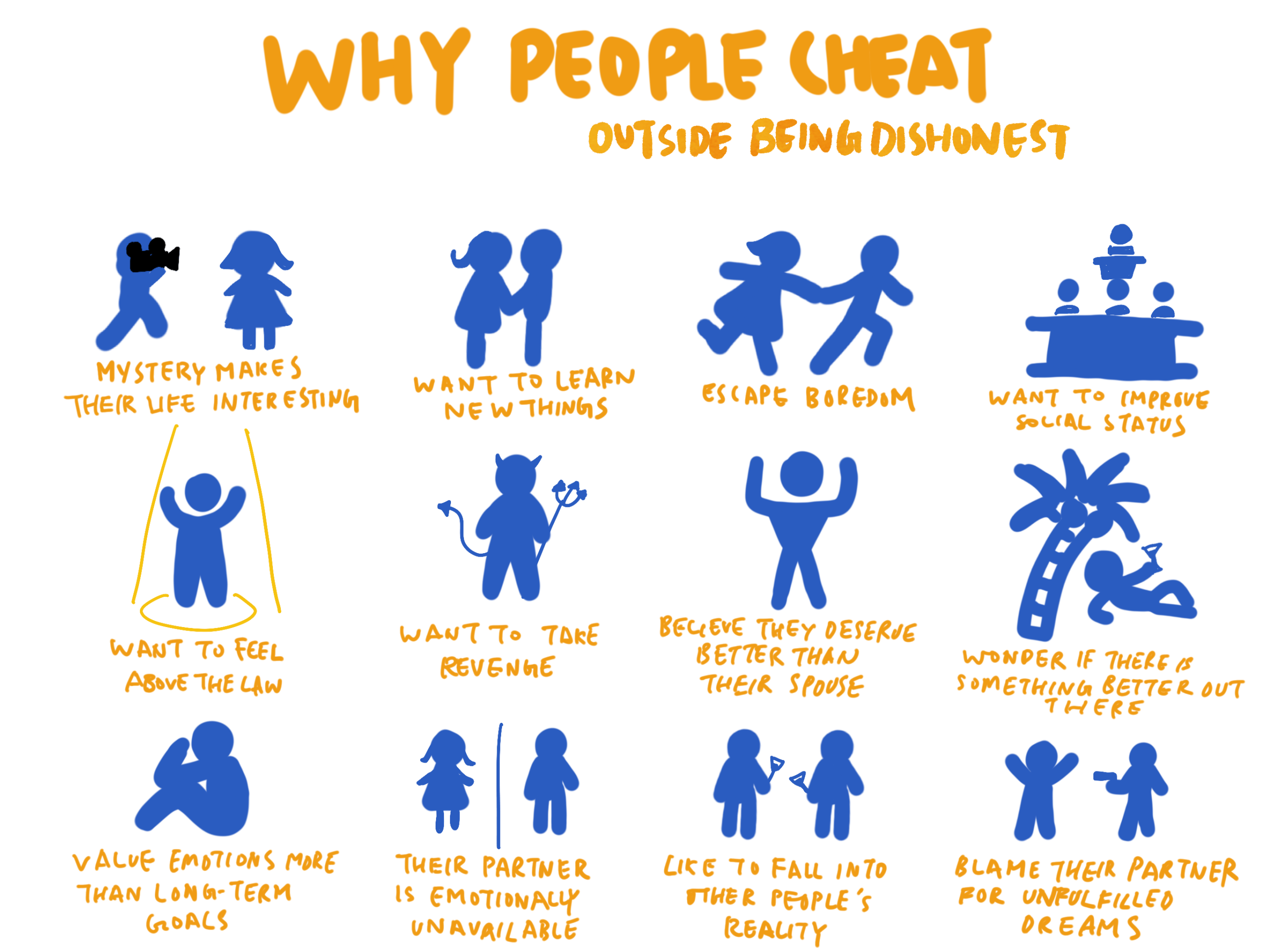
Cheating does not have a single universal definition. What one person calls betrayal, another might consider harmless.
Most psychologists agree that infidelity involves any sexual, emotional, or romantic act that violates the agreed boundaries of a committed relationship.
This includes physical affairs, emotional affairs, sexting, and even sustained secret online relationships. The only true definition that matters is the one both partners have — either stated or mutually understood.
Research consistently shows that infidelity is far more common than most people openly admit.
The probability of someone cheating at some point during a long-term relationship has been estimated at between 40 and 76 percent across multiple studies.
A 2026 study found that 27% of cheaters identified opportunity — not dissatisfaction — as the main trigger for their infidelity. This alone challenges the popular belief that cheating always signals a broken relationship.
| Statistic | Finding |
|---|---|
| Lifetime infidelity probability | 40–76% across long-term relationships |
| Adults who have thought about cheating | ~54% |
| Adults who have actually cheated | ~39% |
| Cheaters citing opportunity as primary trigger | 27% |
| Adults under 35 citing digital secrecy as increasing temptation | 46% |
| Infidelity as most common reason for breakup | Confirmed across 160 cultures |
Research by psychologists studying 495 self-admitted cheaters identified eight key motivations for infidelity — most of which had nothing to do with sex.
Understanding why do people cheat begins with recognizing that these motivations are distinct, and each produces a different type and duration of affair.
Some people cheat as a direct response to feeling wronged by their partner.
It functions as revenge — a way of inflicting emotional pain that feels proportional to their own hurt.
Affairs driven by anger tend to be longer-lasting, because the emotional charge fueling them does not dissipate quickly.
When the emotional bond between partners weakens, cheating can emerge as a search for that missing connection.
This is one of the most emotionally satisfying forms of infidelity for the person cheating — they often describe the affair as more intellectually and emotionally fulfilling than the primary relationship.
When lack of love was the motivation, research found that the cheater felt more emotional closeness in the affair than in the original relationship.
Some individuals simply never felt fully committed to their partner in the first place.
Low commitment lowers the psychological cost of crossing boundaries. The affair does not feel like a true betrayal from the inside — because the emotional investment was never fully there.
This is closely linked to avoidant attachment style, which is discussed in detail later in this guide.
Some people cheat not because they are unhappy with their partner, but because they are unhappy with themselves.
An affair can feel like proof of desirability — confirmation that someone else wants them, finds them attractive, and sees value in them.
This type of infidelity is driven by internal insecurity and self-worth issues, not external relationship failure.
A significant number of people cheat because the opportunity simply presented itself — and their impulse control was not strong enough to resist.
This type of affair tends to be shorter and less emotionally invested than others. The cheater often describes it as a mistake rather than a deliberate decision.
Situational infidelity is not correlated with relationship dissatisfaction. It can happen even in couples who describe their relationship as healthy and satisfying.
Evolutionary psychology suggests that some people are biologically wired to seek novelty.
The brain’s reward system — particularly dopamine pathways — responds more strongly to new stimuli than familiar ones. Over time, even a satisfying sexual relationship produces less dopamine than it once did.
Research has linked genetic differences in the dopamine receptor D4 to higher rates of infidelity. People with this variation may experience a magnified neurological response to new and exciting experiences.
Emotional neglect — feeling ignored, unimportant, or invisible in a relationship — is one of the most common female motivators for infidelity.
Women were more likely than men to cite neglect as the primary reason for cheating in research studies.
When a person feels chronically unseen by their partner, and someone else shows genuine attention and care, the psychological pull toward that new connection can become extremely powerful.
Work environments, travel, alcohol, and proximity to attractive alternatives all increase the statistical probability of infidelity.
People who work in environments with many potential partners and spend extended time in those settings face significantly higher infidelity risk — not because of character flaws, but because opportunity is a crucial contextual factor.
Having a crush on someone does not typically lead to cheating. Research shows that a crush only escalates to infidelity when the attraction is communicated and reciprocated — creating a real opportunity.

The most powerful driver of why people cheat is unmet emotional needs — specifically the hunger for intimacy, validation, and connection.
Many people cheat not for physical reasons but because they feel emotionally unfulfilled. They seek external validation, attention, or closeness that is absent in their primary relationship.
The affair fills a psychological gap. It is not primarily about the other person — it is about what that person provides that feels missing at home.
The brain plays a central role in infidelity. Affairs trigger the same neurological reward circuits activated by new romantic relationships — flooding the brain with dopamine, norepinephrine, and serotonin.
The early stages of an affair feel genuinely exciting — not because the person is bad, but because their brain is responding to novelty the same way it responds to any new reward.
Over time, this neurochemical high fades — and many serial cheaters move from affair to affair chasing the same dopamine rush they no longer get from a settled relationship.
Individuals with poor impulse control are significantly more likely to cheat when opportunity arises.
Poor self-control does not cause cheating on its own — but when it combines with opportunity and emotional frustration, it dramatically lowers the barrier between temptation and action.
Personality research consistently finds that people low in agreeableness and high in extraversion show higher rates of infidelity. These traits predict impulsive decision-making and lower empathy for a partner’s pain.
One of the most important psychological frameworks for understanding why people cheat is attachment theory — the system of emotional bonding patterns formed in early childhood.
A meta-analysis of 17 studies covering 13,666 participants found that higher levels of anxiety and avoidance in attachment were significantly associated with increased marital infidelity.
| Attachment Style | Relationship to Infidelity |
|---|---|
| Secure | Lowest infidelity rates — comfortable with intimacy and commitment |
| Anxious | Higher infidelity risk — fear of abandonment, low self-worth, emotional neediness |
| Avoidant (Dismissive) | Higher infidelity risk — discomfort with intimacy, preference for short-term connection |
| Fearful Avoidant | Highest infidelity risk — combination of anxiety and avoidance, deep ambivalence |
| Preoccupied | No significant association found with infidelity |
Avoidant individuals are particularly interesting. For them, infidelity functions as a regulatory emotional strategy — a way of keeping distance from a committed partner while still satisfying emotional and physical needs.
Anxiously attached individuals cheat from a different place: fear of abandonment, chronic self-doubt, and a desperate need for external validation that their primary relationship cannot fully provide.
Not all infidelity looks the same. Two primary types produce very different emotional responses and have different psychological roots.
Emotional affairs involve deep romantic connection, intimate communication, and emotional investment in another person — without necessarily including any physical contact.
They typically arise when someone feels lonely, unappreciated, or emotionally disconnected in their primary relationship. The affair partner listens, cares, and makes them feel valued in ways that feel missing at home.
Research shows that emotional infidelity triggers significantly more anxiety and jealousy in betrayed partners than physical infidelity does.
Physical affairs involve sexual contact with someone outside the relationship — often with less emotional involvement than emotional affairs.
Men are statistically more likely to cheat for physical reasons — sexual desire, variety, and situational opportunity.
Physical infidelity triggers significantly more anger in betrayed partners. It is often perceived as more intentional and therefore less forgivable than emotional infidelity.
Many affairs eventually include both emotional and sexual dimensions. Combined infidelity is considered the most damaging form of betrayal because it attacks both the physical and emotional foundation of the relationship simultaneously.
| Type | Primary Trigger | Emotional Impact on Betrayed Partner | Average Duration |
|---|---|---|---|
| Emotional | Loneliness, neglect, unmet emotional needs | High anxiety and jealousy | Longer |
| Physical | Desire, opportunity, variety | High anger and humiliation | Shorter (situational) |
| Combined | Multiple unmet needs | Maximum distress | Variable |
Research consistently shows that men and women tend to have different primary motivations for infidelity — though both are fully capable of both types.
Men are more likely to cite physical reasons — sexual desire, wanting variety, and situational circumstances.
Women are more likely to cite emotional reasons — particularly neglect, emotional disconnection, and a need for intimacy.
Women also tend to have longer affairs on average than men. Affairs driven by emotional unmet needs are more sustained because the emotional investment is deeper.
The gender gap in infidelity rates itself appears to be narrowing. Historical data showed men admitted to cheating more often — but current research suggests the difference is becoming smaller as social norms shift.
| Category | Men | Women |
|---|---|---|
| Primary motivation | Physical desire, variety | Emotional neglect, intimacy |
| Average affair duration | Shorter | Longer |
| Emotional satisfaction in affair | Moderate | High |
| Link to relationship dissatisfaction | Weaker | Stronger |
| Gender gap in infidelity rates | Historically higher | Narrowing toward men’s rates |
A significant but often overlooked reason why people cheat is unresolved childhood trauma.
Insecure attachment styles — anxious or avoidant — are directly formed by inconsistent, neglectful, or abusive parenting in childhood. These patterns then play out in adult romantic relationships.
Fear of abandonment, developed in early childhood, can push adults toward multiple relationships simultaneously as a coping mechanism — keeping emotional options open in case one relationship fails.
Emotional regulation challenges caused by childhood trauma make it harder to manage dissatisfaction, conflict, or stress through healthy communication. Instead, impulsive decisions like cheating become the escape route.
Infidelity in these cases functions as a maladaptive coping mechanism — a way of managing emotional pain that ultimately creates more pain for everyone involved.
Personality psychology has identified a cluster of traits — collectively called the Dark Triad — that strongly predict higher rates of cheating.
The Dark Triad consists of narcissism, Machiavellianism, and psychopathy. People with subclinical levels of these traits show consistently elevated infidelity rates across multiple studies.
Narcissists cheat because they feel entitled to fulfillment without consequences. They often believe the rules of commitment do not apply to them.
Machiavellian individuals approach relationships strategically — using them for personal gain and discarding loyalty when a better opportunity appears.
People with psychopathic traits lack empathy for their partner’s pain and have poor behavioral inhibition — both of which dramatically lower the psychological cost of cheating.
The digital landscape has fundamentally changed the risk environment for relationship fidelity.
Social media platforms create constant access to past partners, new connections, and anonymous interactions. A 2025 survey found that 46% of people under 35 said digital secrecy — hidden apps, private accounts, secondary phones — increases their temptation.
Online interactions feel lower-stakes than in-person ones. People push boundaries they would never cross face-to-face because the anonymity of a screen reduces the psychological consequences.
The same emotional affair that might have required months to develop through in-person meetings can now form within days through messaging, late-night conversations, and shared digital intimacy.
Dating apps, private messaging platforms, and social media have compressed the timeline from attraction to infidelity — making opportunity far more accessible than in previous generations.
This is one of the most debated questions in the psychology of infidelity.
The honest answer is: both, depending on the individual and the circumstances.
For most people, cheating is a choice — enabled by opportunity, justified by internal narratives, and carried out despite knowing it is wrong. The decision is not made in a single moment but in a series of smaller boundary-crossing steps that escalate gradually.
For a smaller group, compulsive sexual behavior driven by trauma, neurological factors, or addiction patterns makes infidelity feel more compulsive than chosen. These individuals require therapeutic support, not just moral accountability.
As one researcher put it clearly: humans may have evolved with certain drives that make fidelity challenging — but that does not make cheating inevitable. Biology is not destiny. Personal values and deliberate choices ultimately govern behavior.
Research on infidelity reveals predictable behavioral patterns that often accompany an affair.
| Warning Sign | Psychological Explanation |
|---|---|
| Sudden emotional withdrawal | Emotional investment shifting to affair partner |
| Increased secrecy with phone or devices | Protecting digital communication with affair partner |
| Sudden change in appearance or habits | Impression management for new person |
| Becoming defensive when questioned | Guilt projected as anger |
| Less interest in physical intimacy | Emotional or physical satisfaction found elsewhere |
| Unexplained time gaps | Time spent with affair partner |
| Public dates with affair partner | Seen in cheaters motivated by lack of love or low self-esteem |
People who cheated due to lack of love or low self-esteem were actually more likely to be seen in public with their affair partner — suggesting a reduced concern about concealment driven by emotional investment in the new relationship.
Being cheated on is a genuinely traumatic experience — not a metaphor. Research confirms it.
Several studies have found that victims of infidelity meet all diagnostic criteria for PTSD except one. Symptoms include hyperarousal, rumination, intrusive flashbacks, emotional dissociation, and depression.
Sexual infidelity tends to trigger more intense anger and humiliation. Emotional infidelity triggers more anxiety and jealousy — a sense that something has been taken that cannot easily be replaced.
Both experiences erode self-esteem, create significant trust disruption, and can impact a person’s ability to form trusting relationships in the future.
Research shows that some couples do rebuild successfully after an affair — but it requires genuine effort, professional guidance, and honest self-examination from both partners.
Couples therapy provides a space for the betrayed partner to express pain without judgment and for the cheating partner to understand the real impact of their actions.
The key factors in recovery include whether the cheating has stopped completely, whether the unfaithful partner takes genuine accountability, and whether both partners are willing to address the root causes — the unmet needs, the communication failures, and the personal vulnerabilities that created the conditions for infidelity.
High relationship satisfaction and emotional closeness are the strongest protective factors against future infidelity. Couples who prioritize emotional connection, honest communication, and physical intimacy significantly reduce the risk of affairs.
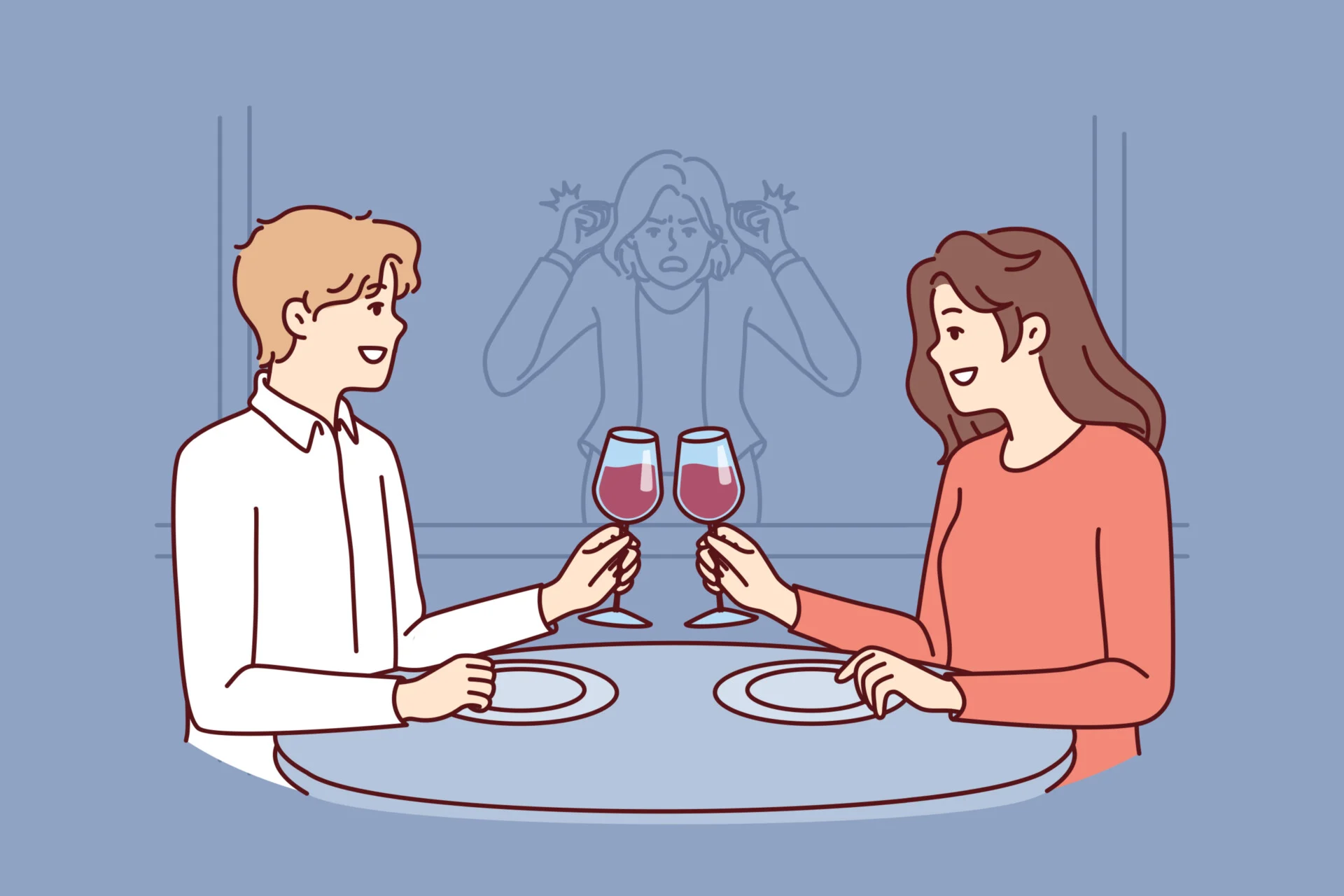
Prevention is more effective than recovery. These evidence-based strategies reduce infidelity risk:
Communicate openly about emotional and sexual needs before dissatisfaction reaches a breaking point.
Maintain physical intimacy intentionally — not because passion comes naturally in long-term relationships, but because letting it fade entirely opens psychological space for external attraction.
Recognize and name the conditions that create risk: emotional withdrawal, digital secrecy, close friendships with attractive people, and prolonged time in high-opportunity environments.
Address unresolved personal wounds — childhood trauma, attachment insecurity, and self-worth issues — through individual therapy before they become relationship problems.
Establish clear shared boundaries. What counts as cheating in your relationship needs to be an explicit conversation, not an assumption.
Even happy relationships are not immune — situational opportunity, impulse control failures, and internal needs for novelty or validation can drive cheating regardless of relationship satisfaction.
No. Research shows most people cheat for emotional reasons — feeling neglected, unloved, unseen, or emotionally disconnected — not primarily for physical gratification.
Most do experience guilt, though its intensity varies. People who cheat due to low self-esteem or lack of love are actually more likely to be seen publicly with their affair partner, suggesting reduced guilt in some cases.
Yes. People compartmentalize emotional and physical experiences. Cheating does not always indicate an absence of love — it more often indicates unmet needs, unresolved personal issues, or poor impulse control.
Past infidelity is one of the strongest predictors of future infidelity. Brain patterns, attachment issues, and unresolved emotional wounds do not disappear after one affair unless actively addressed.
Generally yes — men more often cite physical desire and opportunity, while women more often cite emotional neglect and the need for intimacy. However, the gap is narrowing.
People with Dark Triad traits — narcissism, Machiavellianism, and psychopathy — and those with insecure attachment styles (particularly avoidant and fearful) show consistently higher infidelity rates.
Yes. Social media, dating apps, and private messaging dramatically expand opportunity and lower psychological barriers, particularly for people under 35.
Yes. Couples therapy provides a structured space to rebuild trust, address root causes, and decide whether the relationship can survive. Individual therapy helps both partners process trauma and personal patterns.
Partially. Research has linked genetic differences in the dopamine receptor D4 to higher infidelity rates — particularly in individuals whose neurological response to novelty and excitement is amplified. But genetics are not destiny.
Why do people cheat is never answered by a single reason. It is the product of unmet emotional needs, brain chemistry, attachment wounds, personality traits, opportunity, and the slow erosion of boundaries that happens when couples stop investing in their connection.
Psychology in 2026 makes one thing clear: cheating is rarely random and almost never truly about the other person. It is a symptom of something deeper — within the individual, the relationship, or both.
Understanding the real psychology behind infidelity does not excuse betrayal. But it does create the possibility of genuine insight, healing, and prevention.
Whether you are rebuilding after an affair, protecting a relationship you value, or simply trying to understand human behavior more honestly, the answer always starts with understanding what was truly missing — and why.