
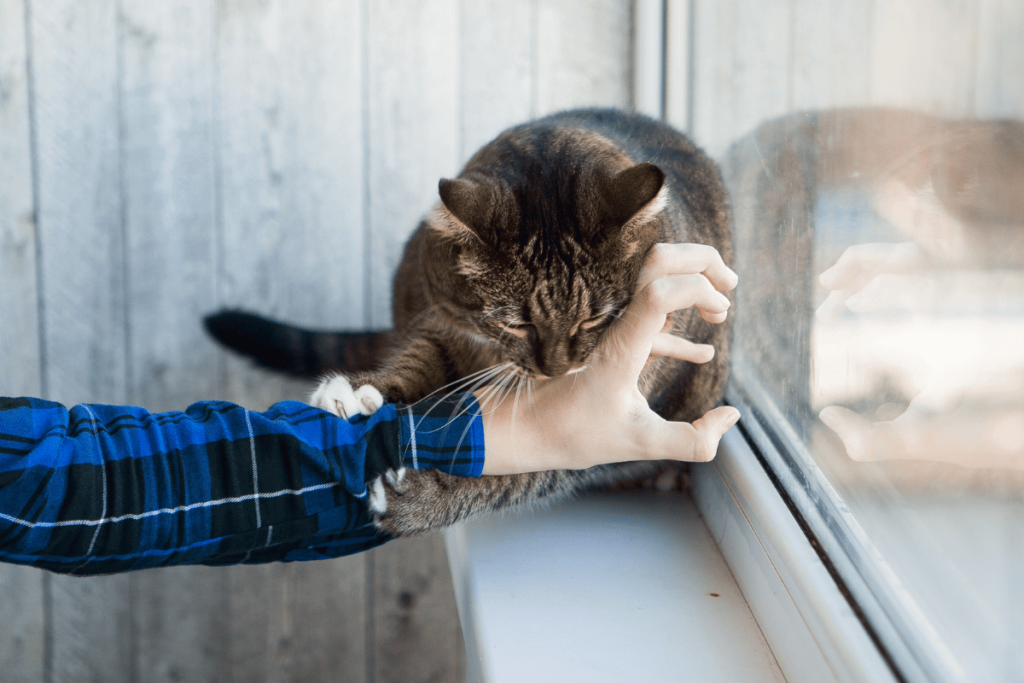
Why do cats bite — this is one of the most Googled pet questions in 2026, and the answer is more layered than most owners expect. Cats do not bite out of spite or random aggression.
Every bite has a reason rooted in instinct, communication, pain, or overstimulation. Whether your cat nips gently during petting or launches a sudden hard bite, understanding the cause is the first step to stopping it.
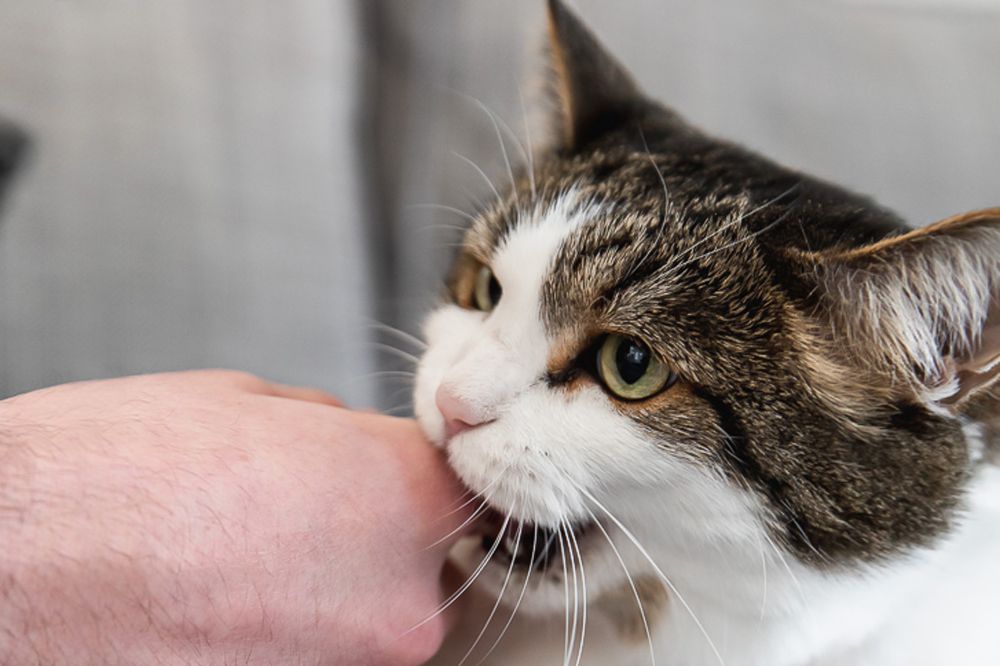
Cats use biting as a form of communication. It is one of the most direct signals in their behavioral toolkit.
A bite can mean anything from “I love you” to “back off immediately.” The meaning depends entirely on the context, the intensity, and the body language that comes with it.
Understanding the difference between a gentle love bite and a hard defensive bite is essential. It protects you from injury and protects your relationship with your cat.
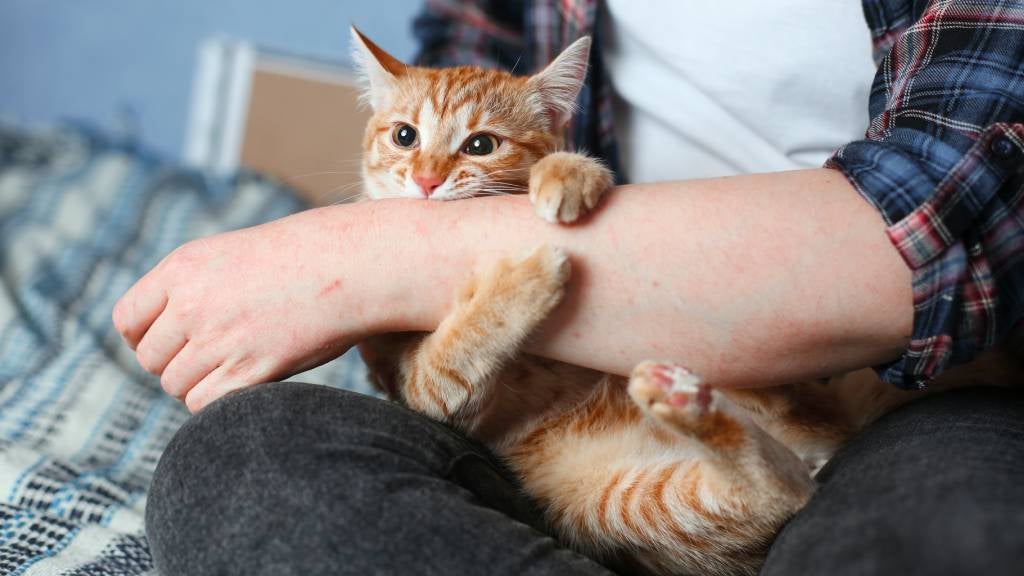
Play biting is the most common reason cats bite humans, especially kittens and young cats. Cats are natural hunters, and biting is a core part of hunting behavior — stalk, chase, pounce, and bite.
When cats play, they are rehearsing predatory skills. If they have no appropriate prey substitute — such as toys — they redirect this instinct onto your hands, feet, and ankles.
Kittens separated from their littermates too early often develop stronger play biting habits. Littermates teach each other bite inhibition naturally. Without that feedback, kittens do not learn how hard is too hard.
This is one of the most misunderstood causes of cat biting. Your cat is purring in your lap, everything seems perfect — then they suddenly bite your hand and jump away.
This is called petting-induced aggression or overstimulation. Repetitive stroking can cross a threshold from pleasurable to irritating very quickly for some cats. The repetition of the sensation — especially in sensitive areas — becomes overwhelming.
Some researchers also suggest that static electricity from repeated petting can create small shocks along the cat’s skin, creating a negative association with being touched. The bite is the cat’s way of saying, “I need this to stop right now.”
When a cat feels trapped, threatened, or unable to escape, biting becomes their last resort. Cats almost always prefer to flee danger — biting is defensive, not offensive.
Loud noises, unfamiliar people, new animals in the home, or being held against their will can all trigger fear-based biting. A cat that feels cornered will escalate from warning signals to a bite if those signals are ignored.
Cats with a history of poor socialization, abuse, or rough handling are far more likely to bite defensively. They have learned that humans are unpredictable, so their threat threshold is much lower.
A cat in pain will bite to protect themselves from further discomfort. Sudden biting behavior that is new or out of character is one of the most important warning signs of an underlying medical issue.
Conditions like dental disease, arthritis, skin abscesses, ear infections, or joint pain can make even gentle contact extremely uncomfortable. A cat that has never bitten before may suddenly bite when touched near a painful area.
If your cat’s biting behavior changes suddenly, a veterinary exam should be the first step — not behavioral training. Pain must be ruled out before any behavioral intervention begins.
Love bites are gentle, soft nips that occur during relaxed, bonded moments. Your cat is calm, purring, and may have been grooming you — then they give you a light bite.
These nibbles are part of normal feline bonding behavior. Mother cats groom their kittens with gentle bites, and cats extend this behavior to humans they feel safe with. It is a sign of trust and affection, not aggression.
Love bites do not break the skin and are accompanied by relaxed body language — soft eyes, slow blinking, a loose tail, and no tension in the body. If the bite is hard or causes pain, it is not a love bite.
Redirected aggression happens when a cat becomes aroused or agitated by something they cannot reach — such as a neighborhood cat outside the window — and bites the nearest available target, which is often you.
The cat is not actually angry at you. They are flooded with predatory or territorial arousal and have nowhere to direct it. This type of bite can be sudden, severe, and very confusing to cat owners.
Signs that your cat is in a state of redirected aggression include dilated pupils, a lashing tail, tense muscles, and a highly focused stare at something you may not even see. Do not approach or touch a cat in this state.
Some cats learn that biting gets an immediate response. If you pet your cat after they bite you, you have rewarded the behavior — and they will do it again.
Attention-seeking biting is most common in cats who have been inadvertently taught that nipping produces results. Even a negative reaction — yelling or pulling away — can reinforce the behavior because it generates excitement.
This type of biting is usually mild and repetitive. The cat nips, waits for a response, and nips again if ignored. The fix is simple: completely withhold attention when biting occurs.
Cats are territorial animals. If a new pet, person, or change in the home environment makes your cat feel their territory is under threat, biting can follow.
This is especially common when a new cat is introduced to the household, or when furniture is rearranged, a baby arrives, or a new pet moves in. The cat’s sense of security and resource ownership is disrupted.
Territorial biting is often directed at other pets but can be redirected toward humans. Creating separate resource zones — food, water, litter, resting areas — for each cat in a multi-cat home significantly reduces territorial tension.
A mother cat (queen) with kittens will bite to protect them. This is a strong, hormonally driven defensive response and should not be challenged.
Even a normally gentle cat can bite hard when she perceives a threat to her litter. The best approach is to give a nursing mother cat maximum space and minimal handling until the kittens are older.
Spaying female cats eliminates maternal aggression entirely and also prevents the hormonal swings that can contribute to general irritability and aggression.
Kittens that were not properly socialized between two and seven weeks of age may grow into cats with a lower tolerance for handling and a higher likelihood of biting.
During this socialization window, kittens learn what is safe, what is not, and how to interact with humans and other animals. A kitten raised in isolation, without human contact or littermate feedback, misses this learning entirely.
These cats are not “mean” — they are anxious and under-equipped for normal social interaction. Gradual desensitization, positive reinforcement, and patience are the most effective tools for helping them.
Cats almost always give warning signals before biting. Most owners miss them because the signals are subtle. Learning to read them prevents the majority of bites.
| Warning Signal | What It Means |
|---|---|
| Tail flicking or lashing | Irritation is building — stop what you are doing |
| Ears flattening or rotating backward | Discomfort or fear — give space immediately |
| Skin twitching or rippling | Overstimulation threshold is being reached |
| Pupils suddenly dilating | Arousal spike — potential bite incoming |
| Body tensing or freezing | Fight-or-flight is activating |
| Turning head toward your hand | Direct warning — they are targeting your hand |
| Hissing or low growl | Final warning before a defensive bite |
| Tail wrapping tightly around body | High stress or fear — do not approach |
If you see any of these signals during petting or play, stop immediately. Move away calmly, do not make sudden movements, and give the cat space to settle.
Not all bites are equal. Identifying the type of bite helps you understand the cause and choose the right response.
| Bite Type | Intensity | Skin Broken? | Likely Cause |
|---|---|---|---|
| Love bite | Very gentle, holding | No | Affection, grooming, bonding |
| Play bite | Moderate, grabbing | Sometimes | Predatory play, overstimulation |
| Overstimulation bite | Sudden, firm | Sometimes | Petting-induced aggression |
| Fear bite | Hard, quick | Yes | Feeling trapped or threatened |
| Pain bite | Sudden, hard | Yes | Medical condition, injury |
| Redirected bite | Hard, intense | Yes | Arousal from external trigger |
A bite that breaks the skin — regardless of type — should always be cleaned immediately with soap and warm water. Cat bites carry a high risk of infection due to oral bacteria, and a puncture wound that becomes swollen, red, or warm requires medical attention.
Understanding sensitive body zones prevents many bites before they happen.
Most cats dislike having their belly touched, even when they roll over and expose it. This is not an invitation to touch — it is often a display of trust that does not include consent to be stroked there.
The base of the tail, the back legs, and the paws are also commonly sensitive areas. Avoid these zones during petting, especially with a cat you do not know well.
The safest areas to start petting are the top of the head, behind the ears, and under the chin. These are areas cats rub against objects to deposit their scent — touching them there aligns with natural feline comfort zones.
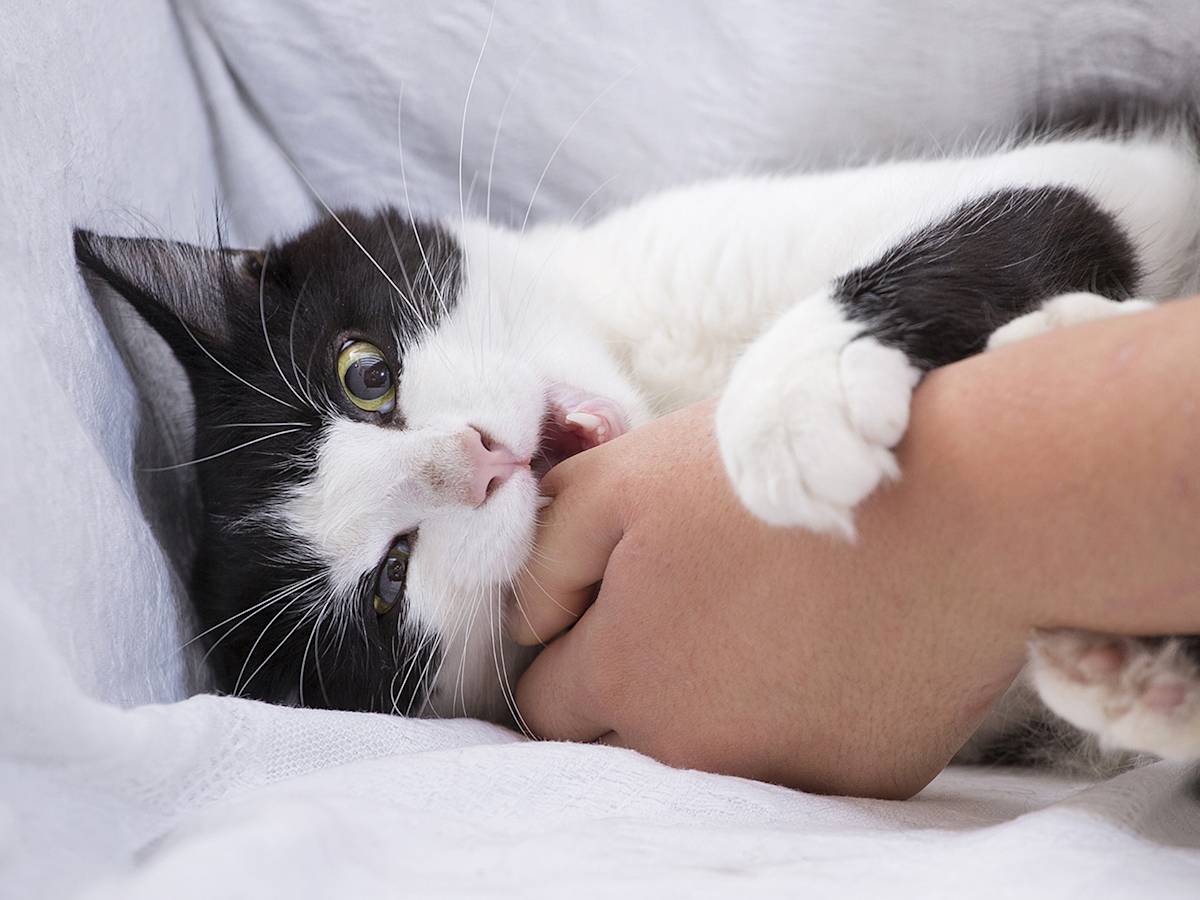
Stopping cat biting requires understanding the root cause first. There is no single fix that works for every type of biting behavior. Here are the most effective, vet-endorsed methods.
Physical punishment, yelling, scruffing, or spraying with water does not stop biting. Research consistently shows that punishment increases fear and anxiety in cats, which makes biting worse, not better.
Cats do not understand punishment as a consequence of their behavior. They simply learn that you are unpredictable and dangerous — which lowers their threshold for defensive biting.
Always respond calmly. Remove yourself from the situation quietly and give the cat space. This signals that the interaction ends when biting occurs, which is far more effective.
The moment a cat begins to bite during play, redirect them to an appropriate toy. Feather wands, toy mice, crinkle balls, and kicker toys give cats a safe, stimulating target for biting and grabbing.
Never use your hands or feet as play objects. Once a cat learns that hands equal prey, it is very difficult to untrain. Start every play session with a toy from day one.
For cats that bite ankles while you walk, a dragging toy tied to your belt or a trail of small toys can redirect their ambush instinct away from your feet.
Before reaching out to pet your cat, offer your hand close to their face and let them decide. If they lean in and rub against your hand, they are consenting to contact. If they pull back or ignore it, do not initiate petting.
This single technique dramatically reduces petting-induced biting. The cat feels in control of the interaction, which reduces anxiety and overstimulation.
Keep petting sessions short and focused on safe areas — head, chin, and ears. Stop before the cat shows any warning signals, not after.
For attention-seeking biting, the only effective response is zero reaction. Stand up, walk away, and give the cat no attention at all for several minutes.
Do not push the cat away, do not say “no,” do not make eye contact. Any response — including a negative one — can be perceived as attention, which reinforces the behavior.
When the cat is calm and not biting, reward them with affection, play, or a treat. This creates a clear pattern: calm behavior produces attention; biting produces nothing.
Many biting problems are caused or worsened by boredom. A cat that is under-stimulated will find ways to create excitement — and biting a human is reliably exciting.
Aim for two or more interactive play sessions per day, at least 10–15 minutes each. Use toys that simulate prey movement — things that dart, flutter, and hide. A tired cat is a calm cat.
Food puzzles, cat trees, window perches, and cat-safe plants like catnip or silvervine also provide mental stimulation that reduces the arousal buildup that leads to biting.
Hormonal fluctuations in intact cats contribute significantly to aggression, territorial behavior, and biting. Spaying and neutering reduces these hormonal drivers considerably.
Intact male cats are especially prone to territorial and inter-cat aggression, which can involve biting humans caught in the crossfire. Female cats in heat can become highly irritable and bite more readily.
This is one of the simplest and most impactful steps you can take to reduce overall aggression and biting behavior in cats.
If biting is sudden, severe, escalating, or linked to any physical symptoms, a veterinary visit is essential. Pain-induced biting will not respond to behavioral training until the underlying medical cause is treated.
A veterinary behaviorist can create a specific desensitization and counter-conditioning plan for cats with serious biting problems. This is especially valuable for cats with a history of trauma, poor socialization, or severe anxiety.
In some cases, short-term anti-anxiety medication prescribed by a vet can create enough calm to allow behavioral training to take hold.
Early training is the most powerful tool available. Kittens that learn bite inhibition before 12 weeks of age rarely develop serious biting problems as adults.
When a kitten bites too hard during play, make a sharp, high-pitched sound — similar to what a littermate would make when hurt — and immediately stop play. This mimics the feedback kittens give each other and teaches them that hard biting ends the fun.
Never allow kittens to bite fingers, toes, or clothing during play. Always redirect to a toy. Small habits formed in kittenhood become deeply ingrained adult behaviors.
Provide kittens with a wide variety of toys and rotate them regularly to keep engagement high. A bored kitten is a biting kitten.
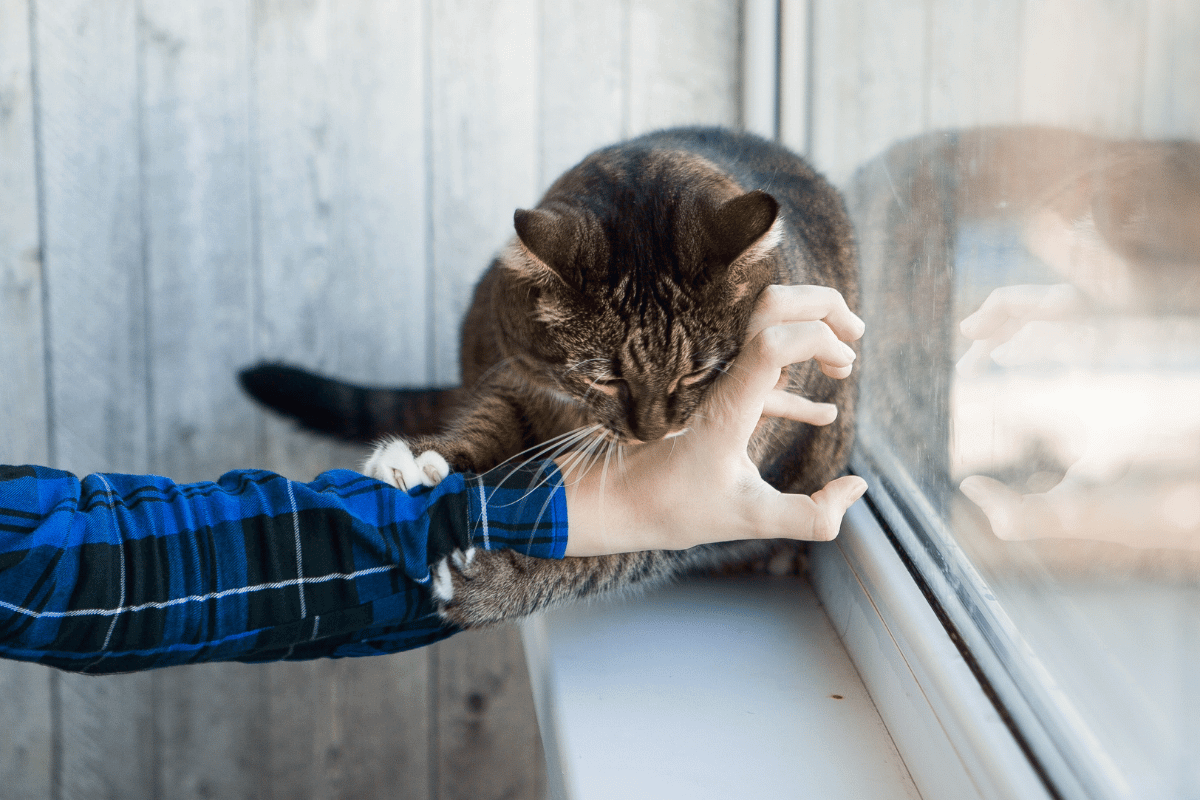
Even a minor cat bite should be taken seriously. Cat mouths contain bacteria such as Pasteurella multocida that can cause rapid, severe infections in humans.
If the skin is broken, wash the wound thoroughly with soap and warm water for at least five minutes. Apply antiseptic and cover with a clean bandage.
Watch for signs of infection over the next 24–48 hours: redness, swelling, warmth, pus, or a red streak spreading from the wound. Any of these signs — or if you have a weakened immune system — require prompt medical attention. Some cat bite infections can progress within hours and may require antibiotics or IV treatment.
Cats that have been declawed lose their primary defense mechanism — their claws. As a result, they rely more heavily on biting as their only available means of defense.
Declawed cats often bite more quickly and more severely than cats with claws because they have no graduated response available. They go from warning signals directly to biting because there is no claw swipe as a middle step.
If you have a declawed cat, it is especially important to respect their space, read their body language carefully, and never force interaction. Their lower threshold for biting is a direct consequence of their declawing.
If your cat grabs your arm or hand, holds it with their front legs, and bites while rapidly kicking with their back legs — that is bunny kicking. This is a classic large-prey killing behavior.
Your cat is not attacking you as an enemy. They are engaging their predatory programming and misdirecting it onto your body. It means they need a more appropriate outlet for vigorous predatory play.
A kicker toy — a long stuffed toy they can grab and bunny kick — is the ideal redirect for this behavior. Give them one whenever the bunny kicking starts.
Cats never bite for no reason — there is always a trigger, even if it is subtle. The most common causes are overstimulation from petting, a missed warning signal, or redirected arousal from something they saw outside.
This is petting-induced aggression caused by overstimulation. Your cat reached their tolerance threshold and used a bite to communicate that they needed petting to stop.
Gentle, unprovoked bites are usually love bites — a sign of affection and bonding. If the bite is soft, your cat is relaxed, and there is no aggression in their body language, it is affectionate behavior.
Your cat wants more petting and is using a bite to demand it. The correct response is to not resume petting when bitten — this teaches them that biting does not produce the result they want.
Yes. Cat bites that break the skin carry a high infection risk due to oral bacteria. Clean any puncture wound immediately and seek medical attention if signs of infection develop within 24–48 hours.
Yes. Love bites are gentle, soft nips that occur during relaxed, bonded moments. They are a form of communication and affection, not aggression, and are accompanied by calm, relaxed body language.
Kittens bite as part of normal play and predatory development. Teething between 2–7 months also increases biting. Consistent redirection to toys and stopping play when biting occurs will reduce it over time.
No. Punishment increases fear and anxiety, which makes biting worse. The most effective responses are calm disengagement and consistent redirection to toys and positive reinforcement for gentle behavior.
This is normal feline grooming and bonding behavior. Cats groom each other with biting and licking, and they sometimes extend this to humans. It is affectionate — unless the bite becomes hard or painful.
See a vet immediately if biting is new, sudden, or has changed in intensity. Sudden biting behavior is one of the clearest signs of underlying pain or a medical condition that needs diagnosis before any behavioral training begins.
Why do cats bite is a question that deserves a real, detailed answer — because biting is never random. Every bite is communication.
Whether it is a love nip during a cuddle, a sharp warning during overstimulation, or a hard defensive bite triggered by pain or fear, your cat is always telling you something important.
The key to stopping unwanted biting is to identify the root cause, respect your cat’s body language, redirect their instincts appropriately, and never respond with punishment.
A cat that bites too much is usually a cat that is overstimulated, under-enriched, in pain, or poorly socialized. Address the cause, and the biting reduces. In 2026, the science is clear — patience, consistency, and positive reinforcement are the only tools that truly work.