
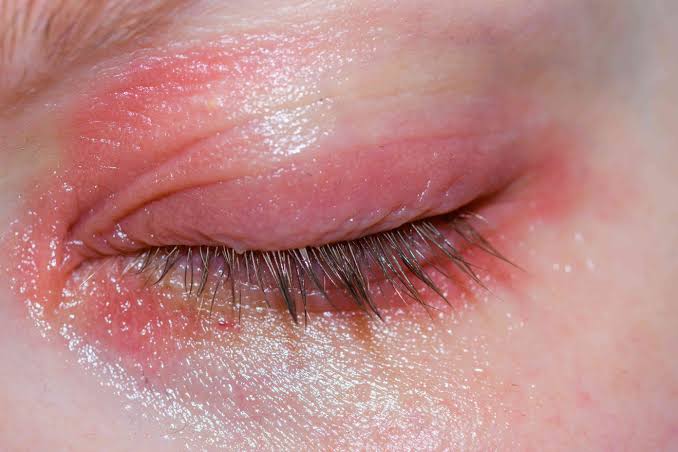
Why Are My Eyelids Red? Red eyelids are common, and in most cases they aren’t dangerous.
The three most frequent causes are allergic reactions, blepharitis (inflammation of the lash-line glands), and simple skin irritation from rubbing, dryness, or a new product.
Red eyelids are usually a sign that the skin or glands along your lash line are irritated, inflamed, or reacting to something. Allergies, infections, and even crying can cause eyelids to redden, and trauma near the eye can do the same. Most cases clear up within a few days with gentle care. See a doctor promptly if redness comes with pain, vision changes, fever, or spreading swelling.

Allergies are one of the most common causes of red eyelids, and the reaction can be local — such as a response to eye makeup — or more generalized, like hay fever. When the reaction affects the membrane covering the eye and inner eyelid, it’s called allergic conjunctivitis. Common triggers include:
Blepharitis, inflammation of the eyelid edge where the eyelashes grow and tiny oil glands open, is the single most common cause of red eyelid margins. It typically develops when bacteria build up at the base of the eyelashes, or when the oil glands in the eyelids become clogged or irritated. Signs include swollen or greasy eyelids, itching or burning, crusty lashes that stick together, flaking skin, and sometimes excessive tearing or blurred vision.
When the meibomian oil glands along the lid margin don’t produce enough oil or become blocked, the result is inflammation and redness at the lash line, a major contributor to evaporative dry eye.
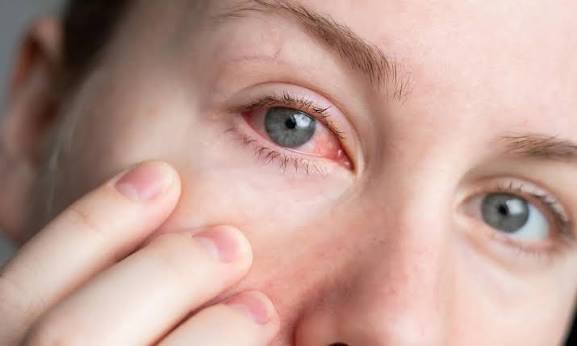
Microscopic Demodex mites naturally live in the eyelash follicles and are harmless in small numbers, but overpopulation triggers red, inflamed lids and intense irritation.
Eyelid dermatitis is a temporary, treatable reaction to an allergen or irritant, and while it doesn’t damage the eye itself, scratching can make the eye red and sore too. It’s a skin-only reaction, not a sign of anything more serious, and it typically clears once the trigger is identified and avoided.
People with eczema or sensitive skin often notice eyelid redness during a flare, since the eyelid skin is thinner and more reactive than skin elsewhere on the face. Acne rosacea can also inflame facial skin, including the eyelids.
Dry, red eyelids often develop when the skin barrier is compromised — from over-cleansing, harsh soaps, cold weather, or frequent eye rubbing. Rubbing can create a cycle: irritation leads to itching, itching leads to rubbing, and rubbing further damages the skin barrier and can introduce bacteria.
A stye is a red, painful bump near the eyelashes caused by a localized bacterial infection, while a chalazion is a similar-looking bump caused by a blocked gland rather than bacteria. Both cause redness around the affected spot rather than the whole eyelid.
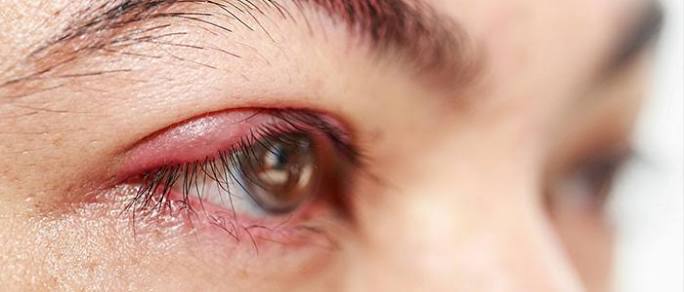
Prolonged screen use, dry indoor air, smoke, or wind can dry out and irritate the eyelid skin, especially when combined with reduced blinking.
Crying temporarily dilates the blood vessels around the eyes, and minor bumps or scratches near the eye area can cause short-lived redness that fades on its own.
| Symptom pattern | Likely cause | Typical accompanying signs |
|---|---|---|
| Sudden redness, puffiness, watery eyes after exposure to pollen, pets, or a new product | Allergic reaction | Itching, swelling, clear discharge |
| Redness along the lash line, crusty lashes in the morning, gritty feeling | Blepharitis | Flaking, burning, mild blurred vision |
| Flaky, tight, or scaly skin with no discharge | Dry skin / eczema | Itching, rough texture, worse in cold weather |
| Small painful bump with localized redness | Stye or chalazion | Tenderness, swelling at one spot |
| Redness with severe pain, fever, or vision loss | Medical emergency | Seek immediate care |
Most mild cases respond well to simple care within a few days.
If home treatment doesn’t help within two to three days, or you notice eye pain or vision changes, see an eye doctor promptly. Other reasons to seek care include persistent redness, swelling, burning, dryness, crusting, watery or foamy tears, and light sensitivity that doesn’t improve.
Non-itchy redness is more often linked to dry skin, sun exposure, mild irritation from a product, or minor trauma than to an allergic reaction, since allergies typically bring itching along with redness.
A single red eyelid often points to a localized issue like a stye, chalazion, insect bite, or contact with an irritant on one side, rather than a systemic allergy.
Stress itself doesn’t directly redden eyelids, but it can worsen eczema, rosacea, and eye-rubbing habits, which in turn cause redness.
Yes, this is common. Mascara, eyeliner, and lash glue are frequent triggers, and switching to hypoallergenic, fragrance-free products often resolves it.
Fluid naturally pools in the face overnight, and combined with sleeping on an allergen-covered pillowcase or rubbing your eyes in your sleep, this often produces morning redness and puffiness.
Dehydration can dry out the thin eyelid skin and make it more prone to irritation and redness, though it’s rarely the sole cause.
Crying dilates the blood vessels around the eyes and increases blood flow to the area, which causes temporary redness and puffiness that fades within an hour or two.
Not necessarily. Redness alone is more often caused by allergies or irritation. Discharge, crusting, and pain are stronger indicators of infection and warrant a doctor’s diagnosis, since treatment differs by infection type.
Blepharitis usually doesn’t disappear completely, but symptoms can be managed with regular eyelid cleaning and ongoing care; flare-ups often improve within one to two weeks of consistent treatment.
It’s best to avoid eye makeup until the redness resolves, since products and applicators can reintroduce irritants or bacteria to already-inflamed skin.
Blepharitis and allergic or contact reactions are not contagious. Viral or bacterial conjunctivitis, however, spreads easily and calls for careful hand hygiene.
Nutritional deficiencies are an uncommon cause; eyelid redness is far more often related to allergies, skin barrier issues, or gland inflammation than to diet.
Yes. Contact allergens on the eyelid skin, such as makeup or skincare, can cause localized eyelid redness without affecting the eye’s surface at all.
Cold, dry air strips moisture from the thin eyelid skin, weakening the skin barrier and making it more prone to redness and flaking.
Use a warm compress for crusting, styes, or clogged glands, and a cool compress for swelling, itching, or allergy-driven redness.
Red eyelids are rarely a medical emergency, but the right fix depends on the actual cause.
Allergies call for trigger avoidance and antihistamines, blepharitis calls for warm compresses and gentle lid cleaning, and dry or irritated skin calls for barrier repair and less rubbing.
If redness doesn’t ease within a few days, or if you notice pain, discharge, or vision changes, an eye doctor can pinpoint the cause and get you the right treatment.