
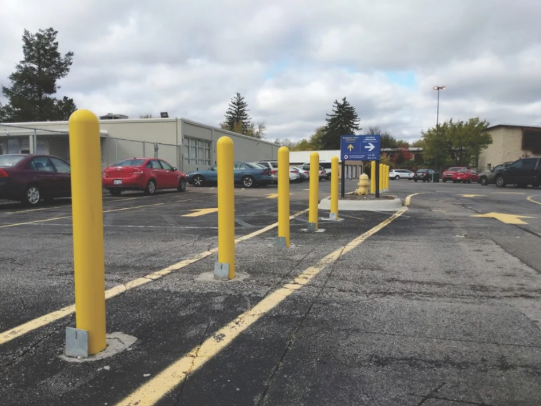
Parking lots and driveways may have to remain open at one time and shut down the next. A fixed bollard is not able to do both. This poses a genuine issue to property managers who have to allow emergency crews or delivery trucks into the premises without abandoning the premises in between. Conventional bollards present a trade-off between security and accessibility, and both cannot be easily used independently.
Such a trade-off need not exist. A removable bollard system can be used to address both issues simultaneously. It secures unauthorized vehicles when locked in position and releases the path immediately when required, as the post can be moved out of its base and can be installed back in minutes.
This strategy is a direct solution to that trade-off, and there are a number of benefits that this technique has that you should be aware of before you make the decision. Here’s a closer look at what it offers.
Any house has times when a door that is clogged must be opened momentarily. Fire trucks, ambulances, and maintenance vehicles require clear paths at any time of the day or night. The removable bollard allows you that flexibility but not at the cost of protection when it is not in use.
This kind of unit, unlike a fixed post, raises off the base plate when necessary. After the vehicle passes by it, the post is returned into place, and the barrier is replenished. This helps it to be a convenient fit in loading docks, service entrances, and any other place where access varies during the day.
Since it can be performed in just a few minutes, employees do not require special training or heavy machinery to use it. Speed is the most important thing in case of an emergency, and every second counts. It is also useful in events that one plans, whereby a space has to be opened and closed on a schedule but without any additional hustle.
Security systems tend to slow down individuals. That friction leads to workarounds, and those workarounds weaken the very protection the system was meant to provide. A removable bollard prevents this issue. It remains tight and stable unless it should be moved by an authorized person.
Many models have a self-closing lid that provides additional protection. When the post is taken off, the lid closes over the base plate automatically. This prevents pedestrians and cyclists from stumbling on an open socket in the ground. That is the most important detail in high-traffic areas, and safety cannot be considered an afterthought.
Together with fixed bollards on both sides, a transportable unit allows you to create a barrier line to meet various requirements on one property. Certain parts remain open permanently, whereas others open on request. Such a combination provides coverage and control to property managers without any gaps.
Construction timelines and budgets both benefit from hardware that does not need extensive labor. Removable bollards are built for straightforward installation. This means less downtime and lower setup costs. Fixed systems with custom fabrication often take much longer to put in place.
Once installed, daily use is just as simple. Most units have a locking mechanism that one person can operate without tools. Lift the post out, and the path opens. Put it back, and the barrier is restored.
This is a clear advantage over gates or retractable arms. Those systems often need electrical wiring or moving parts. Wiring and motors also mean more things that can break.
For property managers running multiple sites, this simplicity saves time. Staff needs less training. Service calls happen less often, too, which keeps ongoing costs predictable.
Outdoor security equipment faces constant exposure to weather and vehicle contact. A well-built removable bollard is made to handle that wear without frequent repairs. Steel construction holds up under repeated use. Finishes like galvanized coating help resist rust over time.
Because the design has few moving parts, there is less that can break down. Fewer parts mean fewer failures. This keeps maintenance costs low. It also lowers the risk of the barrier failing when it matters most.
Weather should not weaken a security system. Rain, heat, and cold all take a toll on outdoor hardware over the years. A bollard built with solid materials resists that damage far better than lighter alternatives.
For property owners, this durability pays off over years, not months. A barrier that keeps working season after season is worth more than one that needs constant attention.
No two properties have the same layout or needs. A one-size-fits-all barrier rarely fits well anywhere. Removable bollards come in different diameters, heights, and finishes. This allows the hardware to match the exact demands of a driveway, loading zone, or walkway.
Color options also serve a functional purpose. Bright covers in yellow, red, or blue improve visibility for drivers and pedestrians. Better visibility means fewer accidental collisions. This matters most in low-light conditions or busy foot-traffic areas.
Finish options matter too. Galvanized, raw, or sleeved finishes each suit different settings and budgets. A property near the coast may need stronger rust resistance than one further inland. Sleeved options also allow for branding, which helps some businesses maintain a consistent look across their property.
Size matters as well. A 4-inch post may suit a narrow walkway, while a 6-inch post offers more presence for a vehicle entrance. Being able to adjust these details means the barrier fits the property, not the other way around. That adaptability is part of what makes this option practical across so many different settings.
A removable bollard system solves a problem that fixed barriers cannot: the need for security that adapts to changing access requirements. From emergency response to daily deliveries, this flexibility keeps a property protected without slowing down the people who need to get through.
Combined with durable construction and simple operation, it offers a practical long-term solution for driveways, parking lots, and pedestrian areas. Before choosing a barrier for your property, it helps to weigh how often access needs change and how quickly that access needs to happen. That answer will point you toward the right setup.