
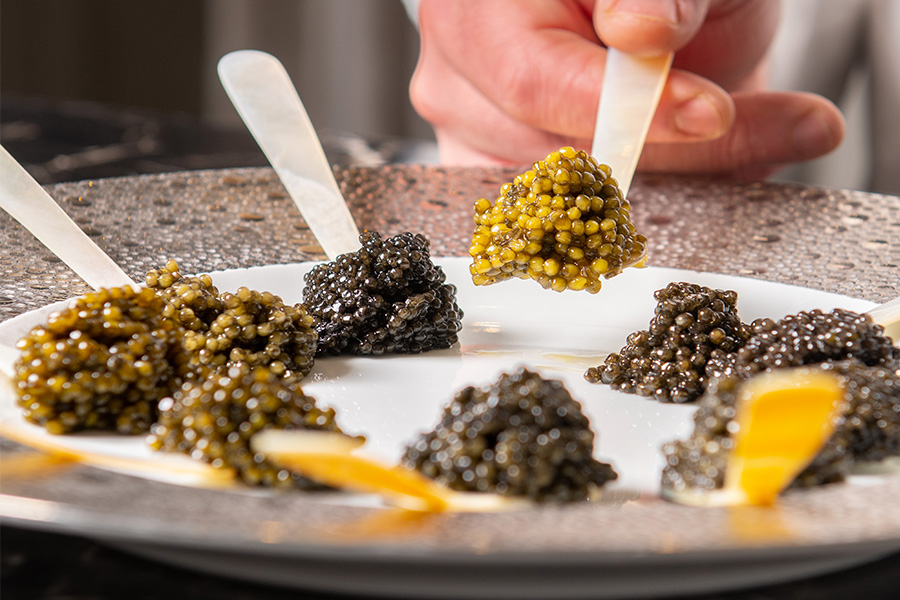
Caviar is more than just a luxury delicacy; it is a symbol of elegance, sophistication, and culinary refinement. Often associated with fine dining, celebrations, and high-end cuisine, caviar is the salted roe of sturgeon fish and has a history that spans centuries. Its delicate flavor, unique texture, and cultural significance have made it a sought-after delicacy worldwide. However, not all caviar is the same. There are several varieties, each with its own characteristics, flavor profiles, and price points. Understanding the different types of caviar can elevate your culinary knowledge and appreciation for this exquisite treat.
Beluga caviar is widely regarded as the most luxurious and rare type of caviar. It comes from the Beluga sturgeon (Huso huso), primarily found in the Caspian Sea. This variety is known for its large, delicate eggs that range from light gray to almost black in color. Beluga caviar is prized for its buttery texture, mild flavor, and subtle nutty undertones. The eggs are soft and tender, offering a melt-in-the-mouth experience.
Due to overfishing and conservation concerns, Beluga caviar is extremely rare and expensive. It is often considered the pinnacle of luxury caviar and is typically reserved for special occasions. Because of its delicacy, it is best served simply, often on blinis, with a dollop of crème fraîche, or accompanied by champagne to complement its nuanced flavors.
Osetra caviar, sourced from the Osetra sturgeon (Acipenser gueldenstaedtii), is known for its medium-sized eggs that range in color from golden brown to dark brown. The flavor is more pronounced than Beluga, often described as nutty and slightly fruity, with a firmer texture.
Osetra is a favorite among caviar connoisseurs because of its complex flavor profile and versatility in culinary pairings. For those new to caviar, an Osetra caviar sampler can be a perfect way to explore its unique taste along with other varieties. It can be enjoyed on its own or used to enhance dishes such as seafood appetizers, pasta, or scrambled eggs. Osetra caviar is less expensive than Beluga but still commands a premium price due to its rich taste and relative scarcity.
Sevruga caviar comes from the Sevruga sturgeon (Acipenser stellatus) and is known for its smaller, darker eggs, usually gray or black. Compared to Beluga and Osetra, Sevruga has a more intense flavor with a noticeable brininess and slightly stronger aftertaste.
This type of caviar is often chosen by those who enjoy a more robust, oceanic taste. Because the Sevruga sturgeon matures faster than Beluga or Osetra, it is generally more abundant, making Sevruga caviar relatively more affordable while still maintaining high quality. Its distinct flavor pairs well with simple accompaniments such as toast points, eggs, or mild seafood dishes.
Kaluga caviar is an increasingly popular alternative to Beluga, produced from the Kaluga sturgeon (Huso dauricus), which is native to the Amur River basin in China and Russia. Kaluga caviar is often compared to Beluga due to its large, firm eggs and buttery, rich flavor. The eggs are typically dark gray to black and provide a luxurious mouthfeel.
Kaluga sturgeon are farmed sustainably, making this type of caviar more accessible than traditional Beluga while still offering a premium experience. Kaluga caviar’s versatility makes it suitable for both traditional serving methods and modern culinary creations, such as sushi or gourmet pasta dishes.
With growing interest in sustainable aquaculture, American caviar has emerged as a popular choice. Produced primarily from sturgeon raised in the United States, such as White Sturgeon (Acipenser transmontanus), American caviar is available in various grades and flavors. The eggs are typically medium to large in size, with colors ranging from black to deep brown.
American caviar is known for its clean, slightly nutty flavor and firm texture. It is often more affordable than traditional European caviar, making it accessible to a wider audience. Many American caviar farms prioritize ethical and environmentally friendly practices, ensuring that the product is not only delicious but also sustainable.
Hackleback caviar comes from the Shovelnose sturgeon, native to North America. It features small, shiny black eggs with a mild, earthy flavor and a crisp texture. Hackleback caviar is less intense than Sevruga but offers a satisfying taste that appeals to those new to caviar.
This type of caviar is often recommended as a beginner-friendly option due to its affordability and approachable flavor. It can be enjoyed on crackers, in dips, or even as a garnish for gourmet dishes.
Paddlefish caviar is another American caviar variety, sourced from the freshwater paddlefish (Polyodon spathula). The eggs are small to medium in size and dark gray to black in color. Paddlefish caviar is known for its earthy, slightly smoky flavor and firm, crunchy texture.
Because paddlefish are abundant in certain parts of the United States, this caviar is generally more affordable than traditional sturgeon caviar, making it a great option for those looking to enjoy high-quality caviar without the high price tag. It pairs well with eggs, seafood, and light hors d’oeuvres.
Although technically not traditional sturgeon caviar, salmon roe is another popular type of caviar, particularly in Japanese cuisine. Known as ikura in Japan, salmon roe features large, bright orange eggs with a firm, juicy texture and a briny, slightly sweet flavor.
Salmon roe is commonly used in sushi, garnishes, and pasta dishes. Its bold color and pop-in-your-mouth texture make it visually appealing and a favorite among seafood lovers. While it is less expensive than sturgeon caviar, it offers a distinct experience that is uniquely satisfying.
Caviar is a delicacy that transcends cultures and culinary boundaries, offering a range of flavors, textures, and experiences. From the rare and luxurious Beluga to the accessible and sustainably farmed American varieties, there is a type of caviar to suit nearly every palate and occasion. Understanding the differences between caviar types—from egg size and color to flavor and texture—enhances appreciation and ensures that each tasting experience is memorable.
Whether you are a seasoned connoisseur or a curious newcomer, exploring the world of caviar can be a delightful journey into one of the most exquisite foods known to humankind. The next time you encounter a tin of caviar, consider the type, origin, and flavor profile—it may just transform a simple bite into an extraordinary culinary adventure.