Jan 01, 1970
0 years old
What does the color purple mean on a mood necklace? It typically represents romance, passion, and emotional balance, often showing that the wearer is feeling happy, calm, or affectionate. Mood necklaces, like mood rings, shift colors based on body temperature, which is linked to emotional states.
Among all the shades, purple stands out because it blends the calming energy of blue with the passion of red, symbolizing a mix of relaxation and excitement.
Many people view purple on a mood necklace as a sign of creativity, deep thought, or even love. Whether worn for fun or symbolism, a purple glow often reflects positive emotions and an open, warm-hearted mindset.
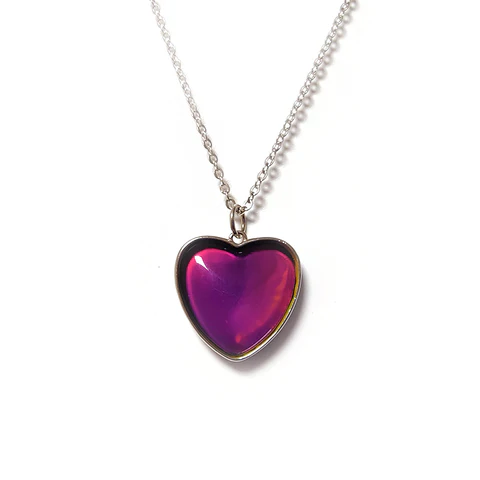
Mood necklaces are a modern take on the classic mood ring, designed to be worn around the neck as a stylish and interactive piece of jewelry. Like mood rings, they contain thermotropic liquid crystals that react to temperature changes by shifting their molecular structure, which causes them to display different colors.
These color changes happen in response to the wearer’s body temperature, which can subtly vary depending on their emotional state. The necklace might resemble a typical piece of jewelry made of metal or glass, but it carries an emotional significance far beyond aesthetics.
As the wearer experiences feelings such as relaxation, excitement, or stress, the thermochromic properties of the necklace respond by changing its hue.
This color change provides a visual representation of the wearer’s changing moods, turning the necklace into a conversation starter as well as a personal mood indicator.
The captivating color changes seen on mood necklaces stem from their unique design that includes thermotropic liquid crystals. These crystals are sensitive to temperature shifts caused by the wearer’s body heat, which fluctuates in response to emotions.
When a person feels calm and serene, their body temperature might be slightly lower, causing the necklace to display cooler colors like blue or green. Conversely, when emotions heighten, such as in excitement or stress, the body temperature shifts subtly, prompting the necklace to show warmer colors such as pink, orange, or even red.
The molecular structure of these liquid crystals changes shape as temperature changes, altering the wavelength of light they reflect, which in turn leads to a visible change in color.
Hence, mood necklaces can change color based on both the wearer’s mood and their surrounding environment. This dynamic interplay between internal emotions and external temperature makes mood necklaces not just decorative but communicative pieces of art.
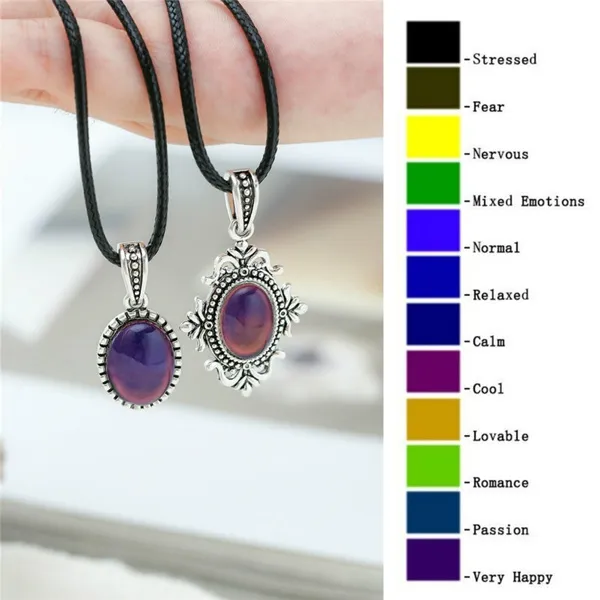
Mood necklaces display a spectrum of colors, each carrying specific color meanings tied to emotional states and body temperature. Common colors include:
Blue: Indicative of calmness, serenity, and relaxation. Wearing a mood necklace that shows a blue mood ring color often suggests the wearer is feeling peaceful or content.
Green: Associated with growth and new beginnings, green on a mood ring or necklace is symbolic of balance and harmony.
Pink: This color means affection, love, or excitement, often reflecting a joyous state.
Orange: A vibrant color that can indicate enthusiasm, creativity, or even stress and anxiety, depending on the shade and context.
Black: Typically means the necklace is not responding to temperature changes or that the wearer is feeling tense, stressed, or guarded.
Each color in the mood ring color chart serves as a guide to interpreting the wearer’s mood, making the necklace a unique emotional barometer.
The purple color on a mood necklace is often regarded as one of the most intriguing mood ring color meanings. Purple is associated with mystery, creativity, and spirituality.
When your mood necklace turns purple, it could signify that you are in a reflective or imaginative state or that you are experiencing a deeper connection to your intuition and feelings.
Purple is less common than colors like green or blue on mood jewelry, making it a unique indication of the wearer’s mood. It might also hint at sophistication and an aura of calmness combined with emotional depth.
In some interpretations, purple on mood jewelry is seen as a sign that the wearer is feeling balanced yet mysterious, evoking a sense of calm inner strength and creativity.
The core principle behind mood rings and mood necklaces is their sensitivity to the wearer’s body temperature. When the body heats up due to excitement or stress, the liquid crystals inside the jewelry respond by changing color to warmer tones.
Conversely, when the body cools down, indicating calm or relaxation, the colors shift toward cooler hues. Because body temperature fluctuates throughout the day and with emotional states, the color of the mood necklace is always in flux.
It’s important to remember that external factors like ambient temperature also influence these changes, so color must be interpreted in context. Therefore, a purple mood ring could emerge when the wearer’s temperature is in a middle range, reflecting moderate energy and a calm yet alert emotional state.
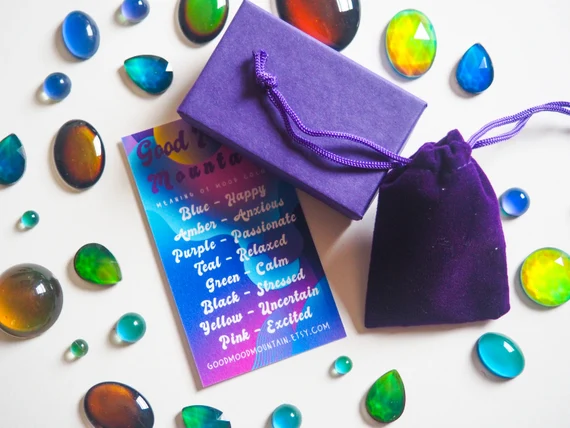
A black mood ring or necklace hue typically means that the thermotropic liquid crystals are not reacting to temperature changes. This could happen if the wearer’s body temperature is too low or too high, or if the mood jewelry has become too cold or lost its sensitivity.
Black often signifies tension, stress, or emotional withdrawal in the wearer. Dark blue, on the other hand, generally represents deep calmness, peace, or a stable emotional state. It suggests that the wearer is feeling serene or reflective.
Blue hues on mood jewelry are among the most common and are often linked to tranquility and restfulness. If your necklace transitions from blue to black, it might be indicative of a shift from calmness to emotional or physical stress.
While purple is primarily associated with mystery, spiritual awareness, and creativity, certain shades or combined hues on mood necklaces can also hint at more complex emotional states like stress or anxiety. Mood jewelry colors are not absolute and must be understood in context with the wearer’s known feelings and circumstances.
Purple could sometimes emerge during emotional transitions, where the wearer feels both calm and alert but also overwhelmed by internal thoughts or creativity. It’s less likely to signify pure stress compared to orange or black but can indicate a nuanced mood involving contemplation with underlying tension.
The magic of mood rings and necklaces lies in the thermochromic liquid crystals embedded within. These crystals have a molecular structure that changes shape when exposed to different temperatures, causing changed light wave reflections.
This thermotropic behavior is what makes mood rings and necklaces change color in response to the wearer’s body heat. Invented by two New York inventors, Josh Reynolds and Maris Ambats, the original mood ring contained these crystals layered between glass and metal, creating a unique, heat-sensitive piece of jewelry.
The same principles apply to modern mood necklaces, which have embraced contemporary designs but keep the classic thermochromic liquid technology at their core.
Mood necklaces offer a fresh alternative to the traditional mood ring while maintaining the hallmark thermochromic color-changing features. Typically worn around the neck, mood necklaces can be larger, more decorative, and versatile as a color-changing accessory.
Mood rings are typically made of metal and designed to fit snugly around a finger, while mood necklaces may feature stones or pendants exhibiting the same thermotropic liquid crystals to display changing colors.
Both serve as a way to express or observe the wearer’s emotional state through color means, but necklaces can often be seen as more of a fashion statement or conversation starter.
Although mood necklaces are indeed beautiful and fashionable pieces of jewelry, they offer something beyond simple decoration. By reflecting changes in the wearer’s emotional state through color changes, mood necklaces serve as unique tools for emotional insight.
The colors mean more than just aesthetics; they provide subtle cues about the wearer’s mood, stress levels, or relaxation state, helping to raise awareness of internal feelings.
Many wear mood rings or necklaces as a way to connect with their emotions, making these pieces much more than mere accessories – they are enhancers of self-expression and emotional well-being.
What does purple mean in mood jewelry?
In mood jewelry, purple often represents a mix of calmness, creativity, and balance. It can also suggest romantic or passionate feelings, depending on the shade.
What does purple mean on a necklace?
When a mood necklace turns purple, it usually indicates a happy, relaxed, or romantic state of mind. Darker purples may symbolize deeper emotions or passion.
What do the colors of mood necklaces mean?
Mood necklaces change colors based on temperature, reflecting emotional states. For example:
Black = stressed or tense
Blue = calm, relaxed
Green = normal, balanced
Purple = happy, passionate
Yellow/Amber = nervous or mixed emotions
Gray = anxious
What is purple mood?
A purple mood suggests someone is feeling romantic, passionate, or deeply thoughtful. It’s often linked to creativity and emotional balance.
Is purple a happy or sad color?
Purple is generally seen as a happy and uplifting color in mood jewelry, symbolizing passion or excitement. However, in broader psychology, purple can also represent mystery or introspection rather than sadness.
What color is sad on a mood ring?
On a mood ring or necklace, black or gray usually represents sadness, stress, or negative emotions.
How do mood necklaces work?
Mood necklaces use thermochromic liquid crystals that change color based on body temperature. Since emotions can alter body heat, the jewelry shifts shades to reflect a person’s “mood.”
What does “purple” mean?
In general symbolism, purple represents royalty, creativity, spirituality, and passion. In mood jewelry, it specifically leans toward romance, happiness, and emotional balance.
Mood necklaces change color through thermochromic liquid crystals reacting to the wearer’s body temperature.
Purple on a mood necklace symbolizes mystery, creativity, spirituality, and calm emotional depth.
Purple is a less common mood ring color and can indicate a state of balance mixed with introspection and artistic energy.
Changes in body temperature, driven by emotional states, influence how the necklace’s color shifts.
Black means a lack of response in the necklace and may indicate stress, while dark blue signifies serenity.
Mood necklaces offer a modern, stylish take on traditional mood rings and can serve as emotional insight tools.
The technology behind mood jewelry was first developed by New York inventors using thermotropic liquid crystals.
Interpreting mood necklace colors requires understanding the wearer’s mood and contextual physical factors.
Wearing mood necklaces is a fun, expressive way to communicate your emotional state with the world.
Purple on your mood necklace invites curiosity, creativity, and an appreciation of the deeper emotional connections within you.
By understanding what the color purple means on your mood necklace, you gain a fascinating insight into how your wearable color of the stone mirrors your unique emotional world. Whether for fun or emotional self-reflection, mood necklaces offer an enchanting window into the many moods that color our daily lives.
The color purple on a mood necklace is often associated with feelings of romance, passion, creativity, and emotional balance. Unlike colors such as black, which symbolize stress, or blue, which reflects calmness, purple suggests a deeper emotional state tied to love, happiness, and thoughtful reflection.
Its appearance on a mood necklace usually means the wearer is experiencing uplifting emotions or a spark of passion. In broader symbolism, purple has long represented royalty, mystery, and imagination, which further enhances its meaning in mood jewelry.
While shades may vary in interpretation, a purple reading on your necklace is generally a positive sign, pointing to an energized, romantic, or joyful state of mind that resonates with inner peace and creativity.
Macron wife age difference is approximately 24 years, with Brigitte...

Fortune Justin Bieber: Justin Bieber’s fortune is estimated to exceed...