
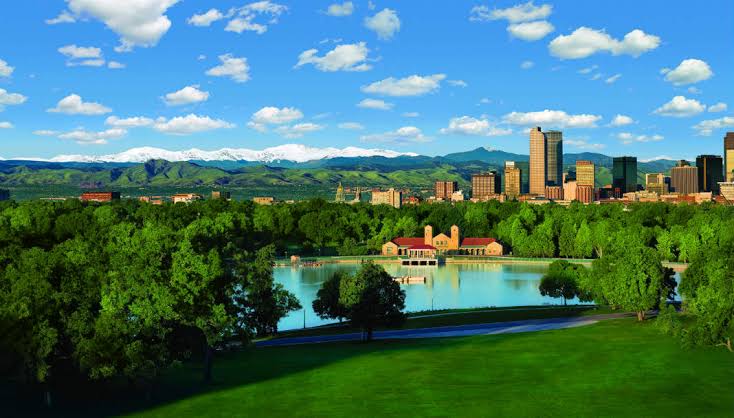
Why Is Denver Called the Mile High City? Denver is called the Mile High City because it sits exactly one mile, or 5,280 feet, above sea level. It’s one of the simplest nicknames in America, but it carries a lot of history.
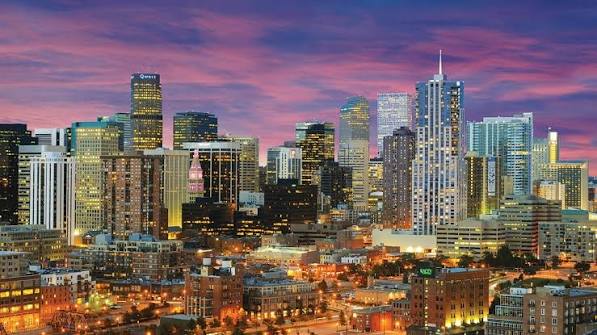
The nickname is not a marketing exaggeration. Denver genuinely sits at 5,280 feet, which is precisely one mile above sea level.
That makes it one of the highest major cities in the United States, and the highest large city outside the Rocky Mountain foothills.
The commonly cited figure is 5,280 feet above sea level, though early surveys were inconsistent for decades.
In 2002, a more precise survey found Denver’s official elevation to be a few feet higher than earlier measurements, but the city still rounds to the tidy “one mile” figure for its identity.
Denver traces its roots to 1858, when gold prospectors settled near the confluence of the South Platte River and Cherry Creek.
The town was named after James W. Denver, who was governor of the Kansas Territory at the time.
For much of the 1800s, nobody agreed on Denver’s exact height. Surveys varied from around 5,170 feet to 5,300 feet.
A local tramway company even carved “one mile above sea level” into a cornerstone in 1888, only for engineers to later find the measurement was off.
The “Mile High City” identity did not fully take hold until the early 1900s, after earlier slogans like “Queen City of the Plains” and “Top of the World” faded.
By the 1950s, the U.S. Postal Service recognized Denver as the Mile High City, cementing the nickname for tourism and civic branding.
One of the most famous physical markers of the nickname sits on the west steps of the Colorado State Capitol Building.
A step is carved to mark the exact one-mile elevation point, though re-surveys over the decades have shifted which step actually qualifies. Visitors can find markers on three different steps today.
At 5,280 feet, air pressure is roughly 17 to 20 percent lower than at sea level.
This means less oxygen per breath, which is why visitors sometimes feel short of breath or mildly fatigued during their first day or two in the city.
Because of the lower air pressure, water boils at about 202°F in Denver instead of 212°F.
That’s why recipe instructions often include separate “high-altitude” baking adjustments for Denver residents.
With less atmosphere overhead to filter ultraviolet rays, sunburn happens faster in Denver than at sea level.
Locals often treat sunscreen as a year-round essential, not just a summer habit.
Until the body acclimatizes, alcohol can affect people more strongly at altitude.
Combined with Denver’s dry climate, this is why visitors are commonly advised to drink extra water and pace themselves with cocktails.
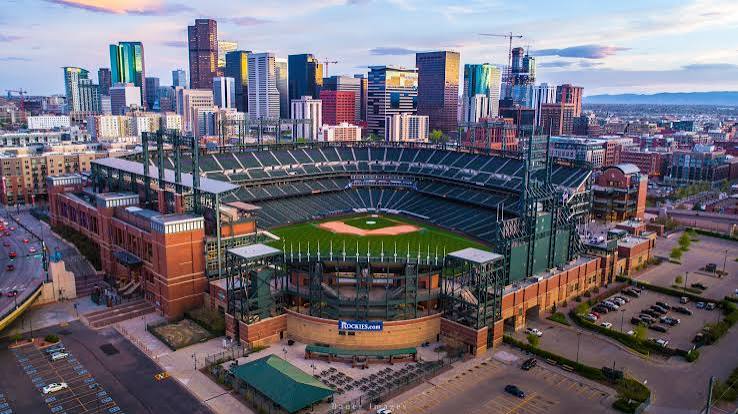
At Coors Field, home of the Colorado Rockies, a row of purple seats marks the exact one-mile elevation line.
Thinner air also means fly balls travel farther, which briefly turned Coors Field into a hitter’s paradise before the team began storing baseballs in humidors to counteract the effect.
Golfers get a natural distance boost in Denver. A ball that would normally travel 250 yards at sea level can travel roughly 260 to 275 yards in Denver’s thinner air.
The reduced air resistance is the main reason, with a tiny added assist from slightly different gravity.
Visiting football teams often tire faster at Denver’s altitude, giving the Broncos a recognized home-field edge.
Kickers also benefit, since footballs can travel several extra yards through the thinner air.
Before “Mile High City” stuck, Denver was known by a few other names.
Denver sits exactly 5,280 feet, or one mile, above sea level, which is the direct source of the nickname.
The identity took hold in the early 1900s and was widely recognized by the U.S. Postal Service by the 1950s.
Yes, though the exact spot has shifted slightly after re-surveys. The Colorado State Capitol has markers on three different steps reflecting different survey years.
Denver was previously nicknamed the Queen City of the Plains and the Queen City of the West.
Mild symptoms like fatigue, headache, or shortness of breath are common for visitors during their first day or two, especially without enough water.
Lower air pressure at altitude reduces the boiling point of water to around 202°F instead of 212°F.
Yes. Thinner air creates less resistance, so golf balls can travel roughly 6 to 10 percent farther than at sea level.
The thinner air at Coors Field lets fly balls travel farther, though the team now stores baseballs in humidors to reduce the effect.
Yes. With less atmosphere to filter UV rays, sunburn can happen faster than at sea level, even on cool days.
Until the body acclimates to the altitude, alcohol can have a stronger effect, and Denver’s dry climate adds to dehydration risk.
Denver’s official elevation is 5,280 feet, or about 1,609 meters, above sea level.
Denver is the highest major city among large U.S. metro areas, though smaller cities like Leadville, Colorado sit at a higher elevation.
Denver earned the Mile High City nickname because of its exact one-mile elevation, a fact that has shaped its identity since the early 1900s.
From thinner air and stronger sun to farther-flying golf balls and baseballs, that altitude touches nearly every part of daily life and sports in the city.
Whether you’re visiting for the mountains, the beer, or the Broncos, understanding why Denver sits a mile high makes the city’s quirks make a lot more sense.