
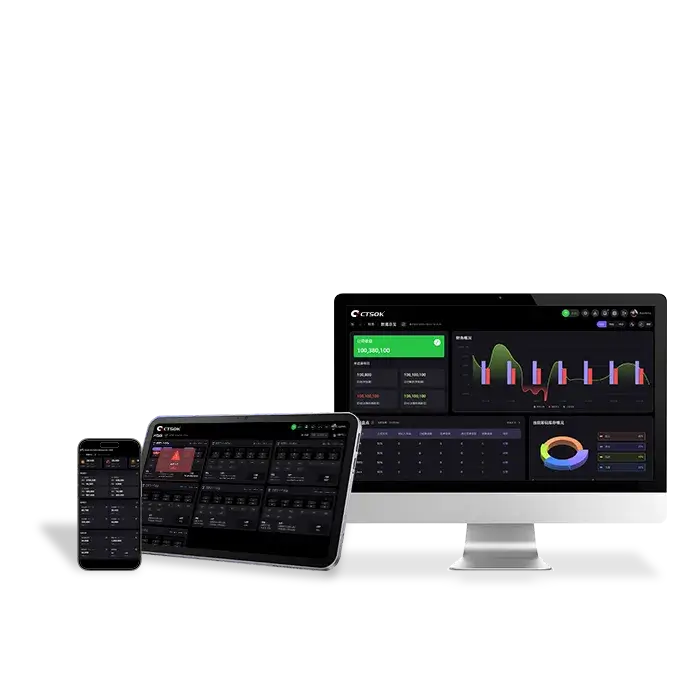
A casino management system is often described through its dashboard: live tables, chip values, player records, alerts and reports displayed on a central screen. But those screens are only the final layer. The system begins much closer to the game—with the physical table, the chips placed on its layout, the cards delivered by the shoe and the actions performed by the dealer.
During a single baccarat round, several events must remain connected. The system needs to know which table is active, which RFID chips have entered each betting area, when betting closes, what result is recorded and whether the settlement follows the configured game rules. If something does not match, an authorized employee needs enough context to review the event.
That connection between physical play and operational records is what makes a casino management system useful. It is not simply software installed in a back office. It is an operating environment built around tables, RFID equipment, dealer-side devices and centralized data.
Before a table can send meaningful information to a management platform, it must have an identity within the system.
The table identity is normally associated with its game type, location, operational status and connected devices. A baccarat table, for example, may be connected to RFID antennas, an intelligent chip tray, an electronic card shoe, a dealer terminal and a roadmap display.
Each component has a different responsibility:
The software cannot create reliable operational records if these physical components are treated as unrelated products. The table, reading zones, equipment interfaces and game procedures have to be configured as one connected workflow.
Figure 1: The connected table architecture brings together the dealer terminal, smart chip tray, RFID-enabled betting layout, roadmap display, electronic card shoe and physical gaming table.
A conventional chip communicates most of its information visually. Its color, design and printed denomination allow staff and players to recognize its value. An RFID gaming chip adds an electronic identifier that compatible equipment can read.
That identifier allows the management system to distinguish registered chips even when several of them share the same design and denomination. Inside the database, the chip identity can be associated with configured information such as value, chip category and operational status.
When RFID chips enter a defined reading zone, the equipment can report which registered chips have been detected. This gives the system more detail than a simple visual count.
Depending on the hardware and deployment, RFID identification can support:
RFID does not decide why a chip has moved or whether a transaction is authorized. It provides identification data. The management platform, operating rules and authorized personnel determine the meaning of that data.
A reader detecting a particular chip does not automatically prove that a payout was correct, that a transfer was approved or that the chip can be redeemed. Those conclusions require related records and the venue’s established procedures.
When a player places chips on a baccarat layout, the chips enter a defined betting area such as Player, Banker or Tie. Additional zones may be configured for side bets, depending on the game offered at the table.
RFID antennas installed beneath or around the layout read registered chips within the intended zone. The table system can then associate the detected chip identities and values with a specific betting position.
Timing is important because wagers can change while betting remains open. Players may add chips, remove part of a stack or move a wager before the dealer closes betting. The system therefore needs a defined point at which the detected chips become the confirmed wager for that round.
Once betting closes, the system can connect the confirmed chip information with the current table and round. A structured record may include:
This is more useful than recording only a total amount. A total shows how much value was recognized, but a structured record also explains where it appeared, when it was confirmed and which chips contributed to it.
RFID performance depends on the physical table and the way it is used.
Betting positions can be close together, chips may be stacked and different materials inside the table may affect antenna installation. A reading configuration that works on one table design cannot automatically be assumed to work identically on another.
The goal is not to create the largest possible reading range. It is to create a controlled zone that recognizes chips in the intended position without unnecessarily including chips from a neighboring area.
This normally requires testing under realistic conditions. Tests should include mixed denominations, tall stacks, chips placed near zone boundaries and wagers moved immediately before betting closes.
The same principle applies to the chip tray and cage equipment. Each RFID reader should have a defined operational purpose, and the management system should know which table, station or process generated the record.
RFID chip data shows how value was positioned before the outcome, but it does not determine the outcome itself.
For baccarat and other card games, result information may be supplied by a compatible electronic card shoe, a card-recognition device or an authorized manual process. The method depends on the equipment, software interface and procedure selected for the venue.
A connected electronic card shoe can supply dealing-related information to the table system. The system can then associate that information with the current table and round. Where AI-assisted visual recognition is included, it may provide an additional source for identifying cards or checking table activity.
AI recognition should remain an assistive function. Its output depends on factors such as camera position, lighting, visibility and system configuration. A result that cannot be confirmed reliably should enter an exception workflow instead of being treated as unquestionably final.
There will also be situations that require human handling. A card may need to be read again, a round may be voided under venue procedure, or a device may temporarily lose its connection. The system should preserve these events and allow authorized employees to review them without erasing the original record.
Once the system has a confirmed wager and a confirmed game result, it can apply the configured rules to support win-and-loss calculations or payout verification.
This requires the software settings to match the rules actually used at the table. Baccarat operations may have different commission settings, side bets, table limits or local procedures. A correct device reading can still produce an incorrect comparison if the system has been configured for a different settlement method.
During settlement, losing wagers are collected and winning positions are paid. Depending on the table configuration, RFID reading can provide further information about the chips present during or after this process.
The management platform can compare several parts of the round:
If these elements do not align, the system can mark the round for review. That alert should not be treated as an automatic accusation.
A stack may need to be read again. A chip may have been placed between zones. A device may have briefly disconnected. A supervisor may have made an authorized correction. The value of the alert is that it directs attention to a specific table, round and time.
Automated devices can collect large amounts of table data, but live casino operations still depend on dealers and supervisors.
The dealer terminal provides a controlled interface between table staff and the management system. Depending on the user’s permissions, it may be used to open or close a table, manage round status, confirm a result, report an exception or request supervisor assistance.
It also helps the platform distinguish between information generated by equipment and actions completed by people.
A table record may show that chip data came from an RFID reader, result information came from an electronic shoe and a later adjustment was approved through a supervisor account. If a record changes, the system can retain the time, user and nature of the action according to the venue’s audit policy.
This provides more context than displaying only the final number. When an incident is reviewed, the management team can examine the sequence that produced the record.
The terminal also gives employees a defined way to respond when automation cannot resolve a situation. Properly designed automation should support staff decisions, not remove staff from the operational chain.
The flow of chips continues beyond individual wagers.
Every live table begins with a working inventory. During a shift, players may exchange value for chips, the table may receive additional chips from the cage, or excess chips may be returned through an authorized procedure.
An RFID-enabled chip tray can provide information about chips held at the table. When this information enters the management platform, it can be compared with related operational records, including:
RFID visibility does not replace formal approval. A chip detected in a tray does not automatically mean that an accounting transfer has been completed. Fills, credits and handovers must still follow authorized procedures.
The advantage is that staff have an additional data source when performing those procedures. If the expected and detected inventories differ, they can begin their review with a more precise table and time reference.
A single connected table can produce useful information, but the wider objective is to organize activity across the gaming floor.
When multiple tables send data to a centralized platform, management teams can view activity by table, pit, game type, time period or shift. They can also see whether connected equipment is online and which records are waiting for review.
A casino management system such as the CTSOK platform connects RFID chip identification, table activity, dealer-side devices and centralized operational records. Its specific modules and equipment depend on the selected games, infrastructure and management procedures.
The platform also needs role-based permissions because different departments require different information.
A dealer may need access only to the current table. A pit supervisor may need to monitor several tables. Cage employees may require chip inventory and transfer records. Security or compliance personnel may review exceptions, while technical staff monitor equipment connections.
Not every employee should be able to modify a confirmed record or view all player information. Permissions determine who can access, enter, approve, change or export each category of data.
Figure 2: CTSOK connects gaming tables, RFID chips, card shoes, result displays and multi-device management interfaces within a centralized operational environment.
A chip’s operational life does not begin or end in a betting area.
Chips may be issued from secure inventory, transferred to the cage, delivered to a table, exchanged by a player, returned from the gaming floor or retired from circulation. Each movement has different responsibilities and approval requirements.
RFID counting stations can extend chip visibility beyond the table. When their records are connected to the central platform, authorized employees can compare chip identities and values at different operational points.
This can make reconciliation more focused. Instead of knowing only that two final totals do not agree, reviewers may be able to locate the last confirmed record and examine the transfer or table event that followed it.
However, visibility depends on system coverage. A management platform cannot reliably describe a movement that took place outside its configured reading points or established procedures. Deployment planning must therefore define which locations need RFID equipment and which events still require manual confirmation.
Some management projects also include player or membership functions.
When an identified player joins a table, permitted account information can be connected with the table session. Depending on the venue’s policies, this may support visit records, loyalty activity, service management and authorized operational review.
The ability to collect player data also creates responsibilities. The venue must determine what information may be collected, why it is required, who can access it and how long it should be retained.
Player records should be protected through role-based permissions and appropriate audit controls. The system should also retain a record of important changes or access events where required by the venue’s policies or applicable rules.
A management platform should not collect personal data simply because the technology makes it possible. The purpose and limits of collection need to be established during the project design.
Dashboards and reports are the most visible outputs of a management system, but their reliability depends on the layers below them.
If chips are registered incorrectly, betting zones are poorly configured, devices are connected to the wrong table or manual changes are not recorded, a polished dashboard cannot correct the underlying problem.
Before generating useful reports, the system needs to establish:
Once these relationships are established, the platform can organize information into table-status views, chip-inventory records, round histories, exception queues and device reports.
These outputs help management locate relevant information and prioritize review. They should support operational decisions, not replace the context provided by staff procedures and other records.
A live system should not be designed around the assumption that every data source will always agree.
A reader may temporarily miss a chip. A result may require manual confirmation. A device may reconnect after a network interruption. A dealer or supervisor may make an authorized correction.
The important question is how the system handles the exception.
A controlled workflow should preserve the original device record, identify the affected table and round, record the type of inconsistency and send it to an authorized role. If a correction is approved, the system should retain who made the decision and when it occurred.
This approach helps separate a technical issue from a procedural mistake or an event requiring further investigation. It also prevents the final record from appearing as though no exception ever occurred.
An alert begins a review. It is not a verdict on its own.
There is no single configuration that fits every gaming venue.
A VIP room, a multi-pit casino and an integrated resort may use different table quantities, chip categories, user roles and levels of hardware coverage. Even two baccarat operations may use different side bets, commission procedures or table layouts.
Before installation, the project team needs to examine the actual environment:
Testing should also reflect real operating conditions. It should include mixed chip stacks, chips placed near reading boundaries, rapid wager changes, interrupted connections and authorized manual corrections.
Staff training is equally important. Dealers, supervisors, cage personnel and system administrators need to understand which events are captured automatically, which actions require confirmation and how exceptions should be handled.
A casino management system does not change the rules of baccarat or another table game. It changes how the operation records, connects and reviews the events surrounding the game.
Without a connected system, information may remain divided between handwritten documents, equipment logs, surveillance footage and departmental reports. Reconstructing a single incident may require several teams to compare records created at different times.
With a connected system, a reviewer can begin with a specific table and round. From there, the reviewer may examine the chips detected, the result recorded, the actions performed through the dealer terminal and the status of any exception.
RFID chips provide identifiable physical assets. Table readers associate those assets with betting areas and operational events. Electronic card shoes add dealing-related information. Dealer terminals preserve human actions. Smart trays and cage devices extend visibility beyond the betting area. The central platform connects these records and applies permissions, review states and reporting rules.
When those components are configured around the venue’s real procedures, the result is not simply more data. It is a clearer operational record of what happened, where it happened and how it was handled.