
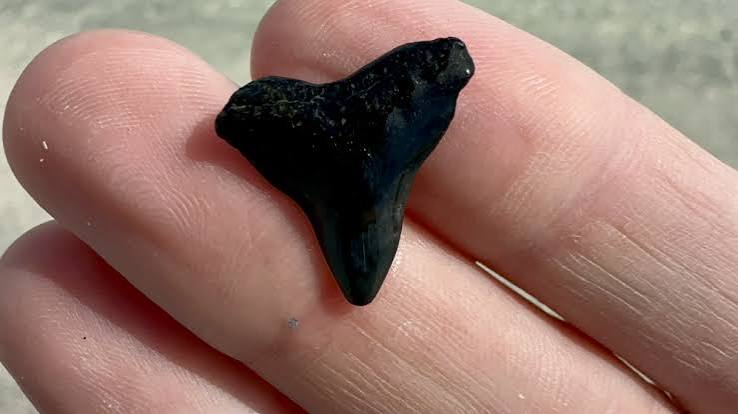
If you’ve ever picked up a dark, glossy tooth on the beach, you’ve probably wondered why are shark teeth black instead of the bright white you’d expect. The answer isn’t about diet, disease, or dirty water.
It’s actually a fossilization story that can take thousands to millions of years to unfold. Living sharks have completely normal white teeth, just like most other animals.
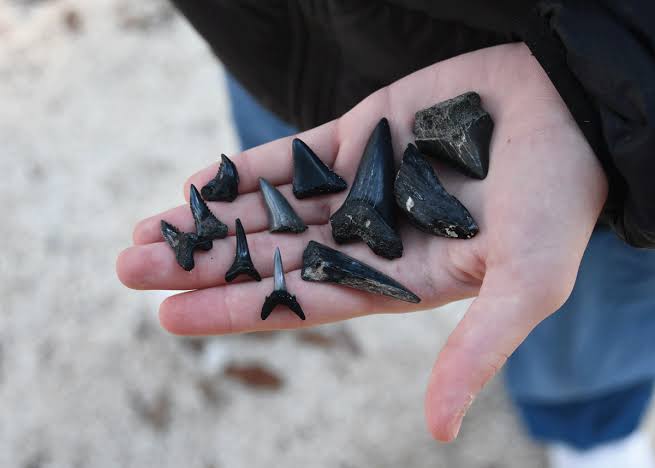
Shark teeth turn black through fossilization, a process where minerals from the surrounding sediment slowly replace the tooth’s original material. Phosphate-rich sediment is especially common in fossil deposits, and it typically turns teeth jet black over time.
Living sharks never have black teeth. Black coloring only appears after a tooth has been buried and fossilized for a very long time.
Fossilization of a shark tooth begins the moment it’s lost or the shark dies and the tooth sinks to the ocean floor. Sediment like sand, mud, or clay quickly buries it, cutting off oxygen and slowing decay.
Over thousands of years, groundwater carrying dissolved minerals moves through that sediment. This mineral-rich water gradually replaces the tooth’s original material through a process called permineralization.
Phosphate is one of the most common minerals found in marine fossil deposits. As it seeps into a shark tooth over time, it replaces the original tissue and leaves behind a dense, dark, jet-black material.
This is why so many fossil shark teeth found on beaches like those in Florida or Myrtle Beach appear black. Those regions sit on geological layers that are especially rich in phosphate.
Not every fossil tooth turns black, since the surrounding sediment plays the biggest role in the final color. Different minerals leave behind very different results.
| Feature | Black Shark Teeth | White Shark Teeth |
|---|---|---|
| Origin | Ancient, fossilized teeth | Recently lost, modern teeth |
| Age | Thousands to millions of years old | Days to a few years old |
| Cause of color | Phosphate mineral replacement | Natural enamel, no fossilization |
| Where commonly found | Phosphate-rich fossil beaches | Any beach or coastline |
It’s tempting to assume a black tooth is older or from a specific shark species, but that’s usually not accurate. Color mainly reflects the burial environment, not the exact age or species of the shark.
Two teeth from completely different time periods can end up the same color if they fossilized in similar sediment. Shape and size are far more reliable clues to species than color alone.

Fossil hunters often confuse black shark teeth with dark shell fragments, especially on busy beaches. A few simple checks can help you tell them apart.
Black fossil shark teeth are easiest to find at low tide, especially in areas with coarse sand mixed with small shell fragments. Coastal regions with phosphate-rich geological layers tend to produce the most finds.
Popular fossil-hunting spots in the United States include parts of Florida and South Carolina’s Myrtle Beach area, both known for phosphate-heavy sediment.
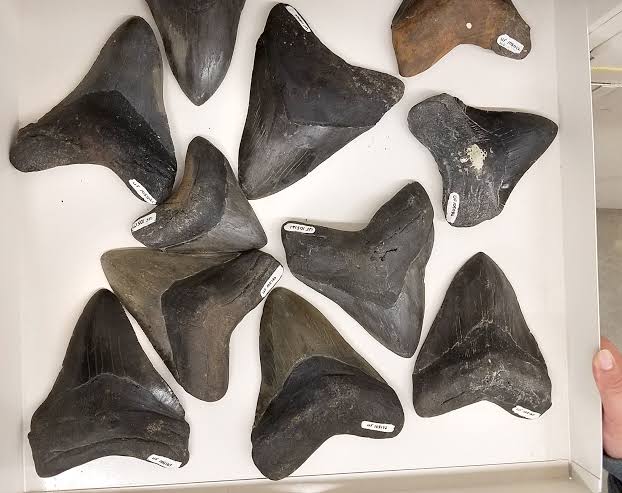
No, fossil shark teeth can also be gray, brown, red, orange, blue, green, yellow, or even white, depending on the surrounding sediment.
No, living sharks always have white or off-white teeth, just like most animals. Black coloring only develops after fossilization.
Fossilization typically takes at least 10,000 years, though many black shark teeth are hundreds of thousands or millions of years old.
Phosphate is the mineral most commonly responsible for turning fossil shark teeth jet black during the fossilization process.
Not reliably, since color mainly reflects the sediment type rather than the exact age or species of the shark.
Florida and Myrtle Beach, South Carolina are two well-known locations with phosphate-rich sediment ideal for finding black shark teeth.
Shark teeth are typically glossy and have a defined root and ridged edges, while shell fragments often look rippled or dull.
Iron-rich sediment tends to produce reddish, orange, or brown fossil teeth instead of black ones.
No, color is determined mostly by the burial environment, not the specific shark species the tooth came from.
In most areas, casual collecting is allowed, but it’s worth checking local regulations before searching in protected parks or preserves.
Permineralization is the process where minerals from sediment gradually replace the original material inside a tooth or bone.
Surface texture depends on the specific minerals involved and how much polishing occurs from sand and water movement over time.
Yes, shark teeth can fossilize in river sediment, lake beds, or other mineral-rich environments, not just ocean floors.
Many megalodon teeth are black due to phosphate-rich fossilization, though they can also appear gray, brown, or tan depending on location.
Low tide is generally the best time, since receding water exposes more sediment and recently uncovered fossils.
Some rare or well-preserved fossil shark teeth, especially from extinct species, can be valuable to collectors.
Different parts of a tooth can absorb different minerals at different rates, creating multi-colored patterns in a single fossil.
Yes, acidic sediment can erode enamel and expose the dentine layer, influencing both texture and final coloration.
Almost always, since natural black coloring on a shark tooth strongly indicates it has gone through the fossilization process.
Start by learning basic shapes and textures, then practice at known fossil-rich beaches with guidance from local fossil hunting resources.
So, why are shark teeth black? It comes down to millions of years of fossilization, where phosphate and other minerals slowly replace the tooth’s original material.
The exact shade, whether black, red, gray, or brown, depends entirely on the sediment a tooth was buried in. Next time you find one on the beach, you’re holding a small piece of ancient ocean history.