
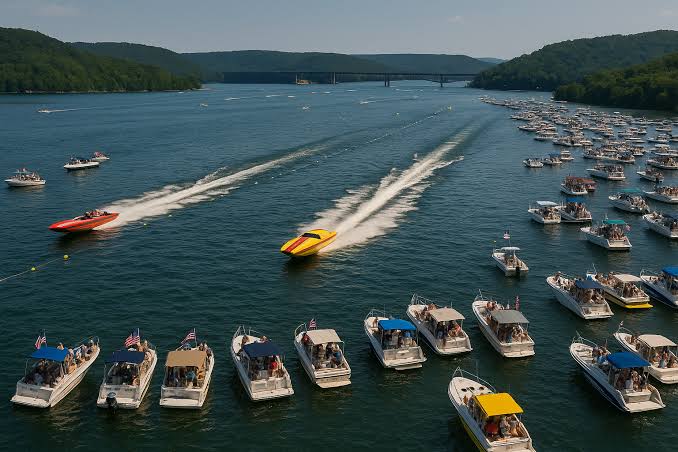
Why Is Lake of the Ozarks So Dangerous? Lake of the Ozarks has earned a reputation as one of America’s most dangerous lakes mainly because of human factors, not natural ones. Its winding, man-made shape creates blind corners for boaters. Heavy summer traffic mixes with high-horsepower boats and no speed limit on most of the main channel.
Alcohol-fueled boating, especially around “Party Cove,” raises the risk further. Add in swimmers entering deep, murky water with no lifeguards, and you get a lake where most fatalities come from drowning and boating collisions rather than any unique hazard in the water itself.
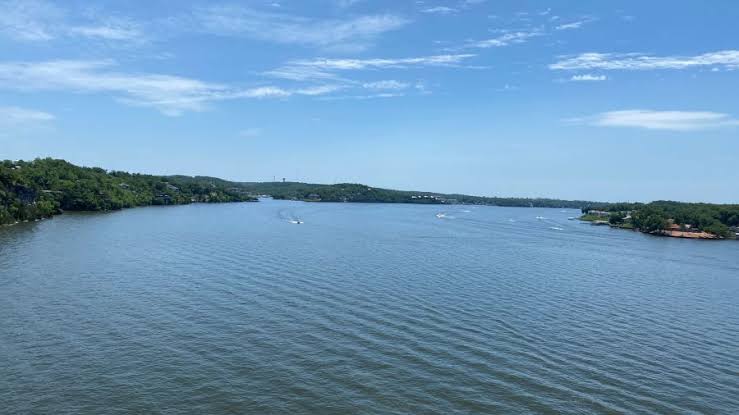
Lake of the Ozarks regularly appears on lists of the most dangerous lakes in the United States, and the ranking isn’t just internet hype. It’s a genuinely large, heavily trafficked lake with a design and culture that combine to raise risk.
The lake itself is artificial. It was created in the early 1930s when Union Electric built Bagnell Dam across the Osage River, flooding the valley and submerging the original town of Linn Creek.
A new Linn Creek was rebuilt on higher ground, but the old town’s cemetery still sits underwater — a detail that adds to the lake’s slightly eerie folklore. More recently, the lake gained mainstream attention as the setting for Netflix’s crime drama Ozark, which introduced the name to millions of viewers who’d never heard of the real Missouri vacation spot.
But the “dangerous lake” reputation predates the show. Data tracking site Insider Monkey has ranked Lake of the Ozarks as the number one most dangerous lake in America, citing the number of deaths that occur there relative to its size.
Exact year-by-year death tolls aren’t always published in one place, and figures vary by source and year, so treat any single number as an estimate rather than a fixed fact. Still, the pattern across multiple years and sources is consistent:
The consistent thread: fatalities cluster around drowning and boating collisions, not exotic hazards like wildlife or extreme currents.
Unlike a natural lake, Lake of the Ozarks was carved by flooding a river valley, which gave it a long, twisting, finger-like shape rather than a simple round or oval basin.
The lake stretches 92 miles long across roughly 55,000 acres, and because it’s man-made, its shape is unusually serpentine, with numerous small fingers branching off the main body of water. That layout is scenic, but it also means boaters constantly round tight bends without being able to see oncoming traffic until the last second.
Those sharp corners create blind spots for boaters both on the main channel and for anyone merging in from a side cove, and while operators are supposed to slow down at these intersections, not everyone does. According to the explore.com analysis of Missouri Highway Patrol figures, most injury incidents on the lake happen at exactly these blind intersections.
Local tip: Locals navigate using mile-marker (MM) signs posted throughout the lake rather than street addresses — learning to read these markers helps you anticipate blind corners before you round them.
The lake attracts large numbers of boats built for speed, and because most of the main channel has no speed limit or horsepower restriction, these bigger, faster boats consistently threaten smaller watercraft nearby. A boat traveling at high speed simply has less time to react to a water-skier, tuber, jet-ski rider, or swimmer suddenly in its path, and high speeds also raise the odds of collisions with debris or other boats — especially once the sun goes down.
Missouri law does set a 30 mph nighttime speed limit on the lake, along with requirements for proper navigation lights, but reduced visibility after dark remains one of the higher-risk windows for collisions.
Peak danger periods line up with peak tourism: during summer, visitor and resident activity increases sharply, creating heavy boat traffic that raises the risk of accidents, especially on holiday weekends when congestion and inexperienced operators combine.
If there’s one factor competitors and authorities agree on most, it’s this one.
Party Cove — officially Anderson Hollow Cove, on the Grand Glaize Arm of the lake — is a no-wake anchorage known for large recreational gatherings centered on music and alcohol, a tradition dating back to the 1960s. The area is considered the most dangerous section of the entire lake by Missouri authorities. During peak weekends, anywhere from 500 to 1,000 boats can pack into the cove, anchoring and tying together in dense clusters that make patrolling nearly impossible for the handful of officers assigned to the lake.
Drinking while operating a boat is widely considered the single biggest risk factor for accidents at Lake of the Ozarks, and because enforcement on such a large, crowded body of water is difficult, many boaters take liberties they wouldn’t take behind the wheel of a car. Missouri applies the same .08 blood alcohol limit to boat operators that it applies to drivers, and violators face serious consequences if caught. Missouri has historically had only 18 water patrol officers covering the entire lake, which makes consistent enforcement in a crowded cove genuinely difficult.
Alcohol doesn’t just impair judgment — it interacts with conditions unique to a day on the water. Sun exposure, engine noise, constant wave motion, and the general instability of standing on a boat all combine with alcohol in ways the body isn’t used to, and alcohol is typically the last thing the body processes out of that mix.
Not every visitor grew up boating, and Lake of the Ozarks draws huge numbers of first-timers every summer.
Boaters without training or familiarity with local waters face a higher accident risk — two common examples are not knowing where coves open into the main channel and not knowing local navigation rules. Many visitors rent boats or bring their own without knowing local laws, and some receive only minimal instruction before heading out, leading to common mistakes like failing to yield, ignoring no-wake zones, and oversteering.
This problem spikes hardest during the lake’s signature event.
The Lake of the Ozarks Shootout: Held annually in August, the Shootout is the largest unsanctioned powerboat race in the country, with boats reaching speeds over 200 mph on a short course, drawing hundreds of spectator boats anchored close together with little room to maneuver. Tight, crowded conditions during Shootout weekends also slow emergency response times if something does go wrong.
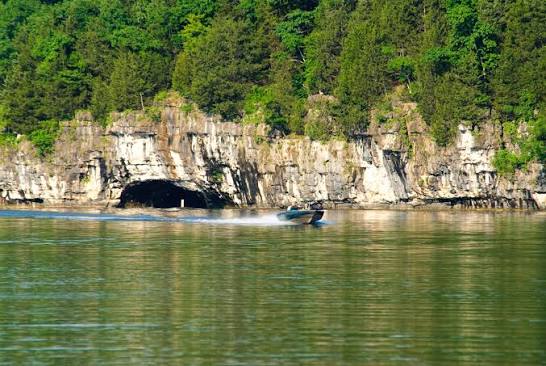
Boating accidents get most of the headlines, but drowning is the more common cause of death overall.
Lake of the Ozarks State Park has two sandy beaches, and neither one has a lifeguard on duty. The same is true of many private and resort beaches around the lake — most operate on a “swim at your own risk” basis. One near-tragedy at a Lake-area pool, where an off-duty officer pulled a five-year-old from the bottom after nobody noticed him go under, is a reminder of how quickly unsupervised swimming can turn dangerous, even in a controlled setting.
Swimming in the lake is very different from swimming in a pool — at certain depths, swimmers can’t see the bottom, and unlike a pool’s predictable concrete floor, swimmers never know exactly what’s beneath them. The lake bottom includes trees, rocks, and other submerged objects invisible from the surface, which is exactly why diving into unfamiliar water is so risky. Beyond drop-offs, the lake is known for unexpected depth changes and currents that can shift without warning, making it a genuinely risky place to swim casually.
Even strong swimmers can experience cold water shock, an involuntary gasp reflex triggered within seconds of entering cold water that can cause a swimmer to inhale water even while still submerged — and deeper lakes tend to run colder, which raises this risk.
Several recent incidents illustrate the human cost of these conditions. In one weekend alone, a Missouri man drowned after going under while trying to pull other swimmers to shore, and he wasn’t wearing a life jacket at the time. Another 2025 case involved a 46-year-old man who drowned attempting to help others reach shore safely — a pattern that shows up repeatedly in incident reports.
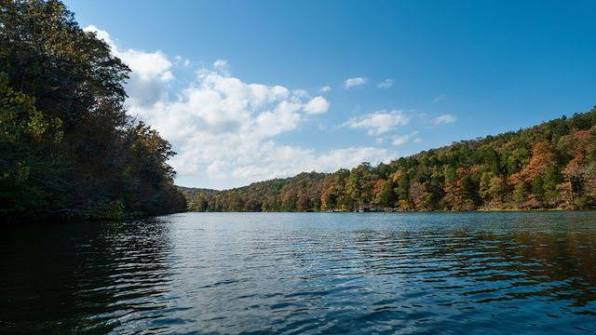
Beyond physical hazards, water quality is a periodic concern. The Missouri Department of Natural Resources has found elevated levels of E. coli in parts of the lake at times, though confirmed illness cases directly tied to swimming exposure have been rare in recent reporting. It’s a good reason to avoid swallowing lake water and to rinse off after swimming, without being a primary driver of the lake’s fatality statistics.
Risk at Lake of the Ozarks isn’t constant — it spikes around specific dates:
If you’re visiting during any of these windows, expect the highest congestion — and plan accordingly.
| Factor | Lake of the Ozarks | Typical Natural Lake |
|---|---|---|
| Shape | Long, serpentine, man-made with many blind coves | Usually open, round, or oval — fewer blind corners |
| Speed limits | Largely unrestricted on main channel | Often regulated basin-wide |
| Party culture | Nationally known “Party Cove” scene | Varies widely, usually less concentrated |
| Lifeguards at public beaches | None at state park beaches | Varies by location |
| Primary cause of fatalities | Drowning and boating collisions | Usually drowning; boating varies by traffic volume |
| Wildlife-related danger | Minimal (no sharks; reported piranha catches are rare anomalies, not a real threat) | Varies by region |
The takeaway: Lake of the Ozarks isn’t dangerous because of what’s in the water. It’s dangerous because of how many people, boats, and blind corners share the same crowded space — often with alcohol involved.
Mainly due to its winding, man-made shape with many blind corners, heavy boat traffic with no speed limit on most of the lake, alcohol-fueled boating culture, and a lack of lifeguards at public swimming areas.
It’s frequently ranked at or near the top of “most dangerous lakes” lists based on fatality counts relative to its size, though rankings and methodology vary by source.
Figures vary by year and source; recent reporting has documented roughly a half-dozen to over a dozen water-related fatalities in a given year, mostly from drowning and boating incidents.
Swimming is generally safe with normal precautions, but the lake has no lifeguards at public beaches, sudden depth changes, and submerged debris, so caution is warranted.
A combination of blind corners, no speed limit on most of the channel, alcohol use, and inexperienced boaters unfamiliar with local waters.
Party Cove (Anderson Hollow Cove) is a large anchorage known for alcohol-heavy gatherings where hundreds of boats tie together, creating crowded conditions authorities consider the most dangerous area of the lake.
No. Neither of the two beaches at Lake of the Ozarks State Park has a lifeguard on duty.
Most of the main channel has no daytime speed limit, though a 30 mph limit applies at night, and no-wake zones exist near docks, coves, and marinas.
The same as driving a car: .08 BAC.
Because it’s a flooded river valley rather than a natural basin, giving it a long, winding shape with numerous coves and sharp turns.
The lake can have unpredictable depth changes and localized currents, particularly near the dam and narrower channel sections, though it’s not known for extreme currents overall.
Water quality is generally monitored, though elevated E. coli levels have been detected in some areas at certain times; check current advisories before swimming.
Summer, especially holiday weekends (Memorial Day, Fourth of July, Labor Day) and Shootout weekend in August.
An annual unsanctioned powerboat race held in August where boats can exceed 200 mph, drawing large crowds of spectator boats.
No sharks — it’s a freshwater inland lake. Occasional reports of caught piranhas exist but are rare anomalies, not an established population or real threat.
Depths vary significantly by location, from shallow coves to much deeper sections near the dam; exact depth varies by arm and season.
Stay calm, keep your life jacket on (or swim to the nearest boat/shore if you’re not wearing one), and signal other boats for help; avoid swimming against strong currents.
It can be, with active supervision, life jackets for weaker swimmers, and swimming only in designated, shallower areas away from boat traffic.
A properly fitting, Coast Guard–approved life jacket for every passenger, functioning navigation lights, and standard safety equipment like a working fire extinguisher.
The Missouri State Highway Patrol’s Water Patrol division, along with local fire protection districts that respond to emergencies.
Several documented cases involve victims who drowned while attempting to pull struggling swimmers to shore — a reminder that rescuing someone without a flotation device is extremely risky, even for confident swimmers.
Yes — multiple sources, including law enforcement officials, describe alcohol as the single biggest contributing factor to both boating accidents and drownings at the lake.
Yes. Reduced visibility combined with the lake’s blind corners makes nighttime boating one of the higher-risk activities, even with the 30 mph limit and lighting requirements in place.
Learn the mile-marker system, avoid alcohol while operating a boat, stay well clear of Party Cove and Shootout-course areas unless experienced, and slow down at every blind corner.
Lake of the Ozarks isn’t dangerous because of anything unusual lurking in the water — it’s dangerous because of scale, shape, and behavior.
A 92-mile, blind-corner-filled reservoir packed with unrestricted-speed boats, heavy alcohol use, and unsupervised swimming will always carry more risk than a smaller, calmer lake. The good news: nearly every major risk factor here is preventable.
Slow down at coves, skip the alcohol if you’re driving a boat, wear a life jacket, and never leave swimmers unsupervised, and you dramatically cut your odds of becoming part of next year’s statistics.