
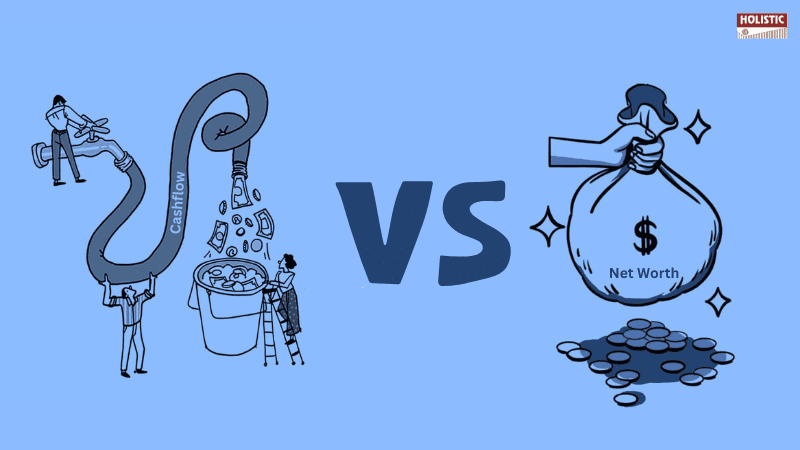
Celebrity net-worth figures make wealth look like a single number. In real life, however, a person can own valuable assets and still have limited cash available each month. That distinction matters whenever entertainment moves from an occasional purchase to a recurring digital habit.
Streaming subscriptions, mobile games, premium communities and online gaming platforms all compete for the same pool of discretionary money. The safest way to enjoy them is not to ask, “Can I afford this today?” but, “Does this fit the system I use to protect tomorrow’s goals?” A clear entertainment budget turns that question into a practical decision rather than a mood-based one.
Net worth measures what remains after liabilities are subtracted from assets. It can include a home, retirement accounts, business equity or investments that are not intended for everyday spending. Cash flow is different: it shows what enters and leaves your accounts during a given period.
Digital entertainment should be funded from free cash flow after essential expenses, debt commitments, emergency savings and planned investments are covered. Treating an asset value, a future bonus or an expected investment gain as permission to spend creates a false sense of affordability. A high net worth can coexist with weak liquidity, while a modest net worth can coexist with disciplined and comfortable monthly finances.
A reliable budget starts before the first payment. Divide monthly income into three layers: obligations, financial goals and flexible spending. Entertainment belongs in the third layer. Set one fixed monthly amount for the whole category, not a separate “small” allowance for every app or platform. Otherwise, several harmless-looking payments can quietly become a significant total.
The same rule applies when researching online gaming services. Before creating an account or claiming an offer, review access rules, payment conditions, bonus terms, security information and responsible-play options. A brand-focused resource such as Jetton is useful as a starting point for due diligence, not as proof that any level of spending is affordable. Compare the information with current platform terms, confirm that access is permitted where you live, and decide your maximum cost before entering the service.
This order is important. Choosing a platform first and calculating the budget later makes the budget vulnerable to welcome offers, countdown timers and other prompts designed to accelerate a decision.
A discount is valuable only when it reduces the cost of something you had already planned to buy. The same logic applies to digital promotions. A larger package, matched deposit or collection of free features is not a saving if it causes you to spend more than your original limit.
For online gaming offers, check the complete conditions rather than the headline number. Important details can include wagering requirements, eligible games, contribution rates, expiry dates, maximum stakes, withdrawal limits and identity-verification rules. The most attractive-looking offer may have the highest practical cost if it requires more time or money than you planned to commit.
A simple test helps: would you still make the same payment if the promotion disappeared? If the answer is no, the offer is driving the purchase rather than improving it.
Define the maximum amount that can be spent across all paid digital entertainment during the month. Once it is reached, no transfer from savings, credit or another budget category should refill it.
For activities with variable outcomes, decide the maximum cost of one session in advance. Budget the full amount committed as an entertainment expense. Do not assume that part of it will return.
Money is not the only cost. Set a start and finish time, especially for activities built around continuous feeds, repeated rounds or autoplay. A session that stays within budget can still be expensive if it disrupts sleep, work or relationships.
Good financial systems make planned actions easy and impulsive actions slightly inconvenient. Use a separate low-balance payment method for entertainment, disable one-click purchases where possible and avoid funding leisure with credit. A 24-hour pause for any payment above a personal threshold can prevent a short-lived impulse from becoming a permanent expense.
Notifications also matter. Turn off promotional alerts that create urgency, and remove saved payment details from services you use rarely. These steps do not eliminate choice; they restore enough time to make the choice deliberately.
Comparing entertainment only by price can be misleading. Divide the total cost by the hours of genuine use, then consider the after-effect. Did the activity leave you relaxed and satisfied, or did it create pressure to continue spending? A service that looks inexpensive but produces repeated unplanned purchases may have a high real cost.
Variable-outcome gaming deserves especially conservative accounting. Its cost should be recorded as the amount spent, not the amount you hoped to keep or win. Gambling is entertainment with a risk of losing the entire amount committed; it is not income, investing or a method for improving net worth.
Entertainment accounts can contain payment history, identity documents and personal data. Use a unique password, enable two-factor authentication when available and verify the domain before entering credentials. Never share one-time login codes or a cryptocurrency wallet seed phrase with support agents, bots or other users.
Be cautious with links received through messages and social media, particularly when they promise urgent rewards. If a platform offers browser, app and messenger access, begin from a verified official source and confirm that each channel belongs to the same operator.
A single good or bad session does not show whether your entertainment plan is working. Review the full month. Compare planned spending with actual spending, note the time used and identify the situations that triggered unplanned payments. The goal is to improve the system, not to justify one result.
Repeatedly breaking limits is a stronger warning sign than the size of one purchase. In that situation, take a pause, use platform blocking or self-exclusion tools where available, and speak with a qualified support service if control feels difficult. Protecting financial and emotional stability is more important than maintaining access to any form of entertainment.
Are essential expenses, savings goals and debt payments already covered?
What is the maximum entertainment amount for this month?
What is the maximum cost and duration of one session?
Does the platform clearly identify its operator, rules and payment process?
Have you read the full promotion and withdrawal conditions?
Is the service legally available to you in your location?
Are your password, two-factor authentication and payment method secure?
Would the purchase still make sense without a bonus or countdown timer?
What action will you take when the limit is reached?
A healthy entertainment budget does not require avoiding every paid experience. It requires separating wealth from liquidity, setting limits before exposure to promotions and measuring value honestly. When those rules are clear, digital entertainment can remain what it should be: a controlled part of life rather than a hidden threat to long-term goals.