
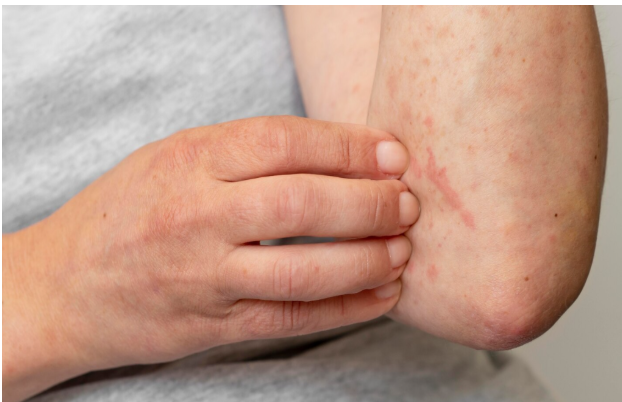
Picture this: your fever finally breaks, but overnight your skin erupts into itchy, raised welts that seem to come from nowhere. You did not eat anything new. You did not touch a stray plant. You certainly did not encounter some mystery allergen. What you did have, just days earlier, was a cold, a stomach bug, or a bout of the flu.
That timing is not a coincidence. Viral infections are one of the most common reasons adults break out in hives, both while they are sick and for a stretch of days or weeks afterward. The good news is that this kind of rash, while uncomfortable and sometimes alarming to look at, is usually manageable at home and tends to clear completely once your immune system settles back down.
Hives do not occur due to a virus present on your skin. Rather, they occur as a consequence of the activation of your body’s immune system as a response to the presence of a virus in your system. This causes the production of a substance called histamine, which causes leakage of fluid from the blood vessels, resulting in the development of bumps.
According to Nature Reviews, some viruses that may cause hives include the common cold, infectious mononucleosis, and even hepatitis, which affects about one in five individuals throughout life. The resemblance of viral hives to allergic hives can make it difficult to know which of the two you are experiencing, making it necessary to determine this first before treating viral hives symptoms.
Most individuals will be able to cope with their hives at home during the course of the viral infection that causes them. Using a cool, moist washcloth on the welts for periods of ten to twenty minutes is a great way to soothe the itch without causing additional irritation.
The American Academy of Dermatology also advises against fragrant lotions, taking showers with very warm water, and wearing tight-fitting clothes made of non-cotton material because both heat and friction tend to cause hives to become irritated. The practice of scratching may give temporary relief from the itch but is more likely to make things worse, as scratching causes an increase in the release of histamines.
Antihistamines are recommended as the first step in treatment by doctors and include cetirizine, loratadine, or fexofenadine. Antihistamines can be used regularly rather than only when the itchiness becomes bothersome, making the welts less severe and reducing the viral infection.
An oatmeal bath is also a good remedy to consider, particularly if the welts have spread across a large area of your skin. The anti-inflammatory properties of colloidal oatmeal will help soothe itching enough to enable you to sleep, which is as important as any other medicine in the fight against the virus.
Viral hives typically follow the timeline of the infection that caused them. Many people notice welts fading within a few days once the fever or other symptoms let up, though for some the skin reaction lingers a week or two after everything else has resolved.
A review in the National Library of Medicine found that about 99.5% of new hives cases, many of them linked to a recent infection, clear up within 6 weeks. Cases that stretch beyond that window get reclassified as chronic urticaria, which usually calls for a longer-term treatment plan with a doctor rather than home remedies alone.
That six-week mark is a useful guidepost. If hives are still showing up regularly well after your cold or flu symptoms are a memory, it is worth mentioning to a healthcare provider instead of assuming the rash will simply wear itself out.
Most viral hives are uncomfortable but not dangerous. That changes if swelling spreads to your face, lips, tongue, or throat, or if you notice chest tightness or trouble breathing. Those symptoms point toward a more serious reaction, and they need immediate medical attention rather than a wait-and-see approach.
The Cleveland Clinic notes that widespread hives paired with fever or other illness symptoms are also worth a same-day visit, since a provider can rule out a more serious infection and adjust your treatment plan if antihistamines alone are not enough.
Viral hives are frustrating, but they are also one of the more predictable skin reactions out there. Cool compresses, antihistamines, and a little patience handle most cases, and the welts usually clear on their own once the virus runs its course.
Pay attention to how your skin behaves as the days pass, though. A rash that fades on schedule is doing exactly what it is supposed to do. One that spreads, worsens, or refuses to quit past a few weeks is your cue to get an extra set of eyes on it.
Although viral hives can appear suddenly and look alarming, they are usually a temporary response to your body’s immune system fighting off an infection. Simple measures such as taking antihistamines, using cool compresses, avoiding common triggers like heat and friction, and giving your body time to recover are often enough to ease symptoms until the rash disappears.
Keep an eye on how your hives progress, and don’t hesitate to seek medical care if they become severe, last longer than six weeks, or are accompanied by swelling of the face or difficulty breathing. In most cases, viral hives are just one more sign that your immune system is doing its job—and with the right care, your skin should return to normal as your recovery continues.