
Why are the Cleveland Browns called the Browns is one of the most searched questions in NFL history, since the name doesn’t come from an animal, city feature, or color scheme like most other professional sports teams.
The Cleveland Browns are officially named after their original coach and co-founder, Paul Brown, who built the franchise into a dominant football powerhouse starting in 1946 and forever changed the sport.
Here is a quick summary of the most important facts about the Cleveland Browns name before we explore the full story.
| Fact | Detail |
|---|---|
| Team founded | 1944 |
| First season played | 1946 |
| Founder | Arthur B. “Mickey” McBride |
| Namesake | Paul Brown, first head coach |
| Original league | All-America Football Conference (AAFC) |
| Naming contest year | 1945 |
| Most popular contest name | Cleveland Panthers (rejected) |
| Alternate name theory | “Brown Bombers,” after boxer Joe Louis |
| Official team stance today | Named after Paul Brown |
| Unique NFL trait | No logo on their helmets |
Paul Brown was a highly successful football coach who built his reputation at Ohio high schools and later at Ohio State University before turning professional.
Coach Bill Walsh later called him the “father of modern football” due to his many coaching innovations that shaped the game for decades to come.
Brown became the first coach in football to call plays for his quarterback, give players intelligence tests, and use game film to study opponents.
The Cleveland Browns franchise began in 1944 when taxicab businessman Arthur B. “Mickey” McBride secured a Cleveland franchise in the newly formed AAFC.
McBride was not a passionate football fan himself, but he saw an opportunity to bring a top-tier professional football team to Cleveland, Ohio.
He wanted a coach with vision and a proven winning record, which led him directly to Paul Brown, already a celebrated name in Ohio football.
The primary and officially supported explanation for the team’s name centers entirely around founding coach and general manager Paul Brown.
When Brown accepted the head coaching and general manager role in 1945, local sportswriters almost immediately began referring to the team as “Paul Brown’s team.”
This nickname stuck quickly among fans and media, since Brown had complete control over coaching decisions and player personnel from the very start.
In May 1945, owner McBride held a public contest inviting fans to submit name suggestions for the new Cleveland franchise.
The most popular submission was “Cleveland Panthers,” but this name was ultimately rejected due to its connection to a previously failed Cleveland football team.
Interestingly, Paul Brown initially rejected the idea of naming the team after himself, feeling it seemed boastful and immodest for a coach in his position.
Despite his objections, the public and media continued referring to the team as the Browns, since the name had already become common shorthand.
By August 1945, McBride gave in to popular demand and officially named the franchise the Cleveland Browns, despite Paul Brown’s ongoing objections to the tribute.
The name stuck permanently from that point forward, becoming one of the most recognizable and unusual team names in professional sports.
For several years, Paul Brown himself occasionally cited an alternate explanation for the team’s name that had nothing to do with his own surname.
Brown claimed that a second naming contest produced the name “Brown Bombers,” inspired by heavyweight boxing champion Joe Louis, nicknamed “The Brown Bomber.”
According to this version, Brown wanted his team associated with a champion’s nickname rather than his own name, which felt more modest to him.
This alternate story gained renewed attention in 1995 when a Washington Post article revived it following the team’s controversial move to Baltimore.
The timing made for compelling sports trivia, especially since Baltimore had historical ties to bombers through its wartime aircraft manufacturing industry.
Joe Louis had no direct personal or historical connection to the city of Cleveland, which makes the theory logically weaker upon closer examination.
Later in life, Paul Brown himself acknowledged in interviews and his own reflections that the team was, in fact, named directly after him.
Here is a side-by-side comparison of both name origin theories to help clarify the historical record.
| Theory | Origin | Supported By |
|---|---|---|
| Paul Brown Theory | Named after founding coach Paul Brown | Official Browns organization, most historians |
| Brown Bombers Theory | Named after boxer Joe Louis’s nickname | Paul Brown’s early personal claims, later disputed |
Before becoming the Browns, the team came dangerously close to being named the Cleveland Panthers, based on the results of the original fan contest.
This name was rejected specifically because “Cleveland Panthers” had already been used by an earlier, unsuccessful local football franchise.
Paul Brown reportedly stated he wanted “no part of that name,” directly leading to the search for an alternative team identity.
Superstition and branding concerns played a role in avoiding the Panthers name, since the earlier Cleveland Panthers team had failed to succeed.
Owner McBride and Coach Brown wanted a fresh identity that wouldn’t carry the negative association of a previously unsuccessful Cleveland sports franchise.
This rejection ultimately opened the door for the Browns name to take hold, even though it wasn’t the original contest’s top choice.
Once the name was settled, the Cleveland Browns quickly became one of the most dominant teams in early professional football history.
From 1946 to 1949, Cleveland won all four AAFC championship games before the league eventually dissolved and merged into the NFL.
The team then continued its dominance in the NFL, reaching the championship game every year between 1950 and 1955, winning three titles during that stretch.
Here is a quick timeline of the Browns’ early championship success across two different professional football leagues.
| Years | League | Championship Result |
|---|---|---|
| 1946-1949 | AAFC | Won all four championship games |
| 1950-1955 | NFL | Reached championship every year, won three titles |
| 1956-1973 | NFL | Won eight division titles, one more NFL championship |
In January 1963, owner Art Modell controversially fired Paul Brown as head coach and general manager after a lengthy power struggle within the organization.
Despite this dramatic departure, the franchise kept the Browns name, showing just how deeply tied the identity had become to the team’s history and fans.
No serious effort was ever made to rename the franchise, even decades after Paul Brown’s coaching tenure had ended.
In 1995, owner Art Modell announced he would relocate the franchise to Baltimore, sparking major backlash from Cleveland fans and city officials.
Legal action and public pressure led to a unique resolution, allowing Modell to start a new team in Baltimore, later named the Ravens.
As part of the agreement, the NFL awarded Cleveland a new expansion franchise in 1999 that retained the original Browns name, colors, and history.
The Browns’ colors are brown, orange, and white, chosen to complement the team name after it was already established, according to historical records.
The team’s helmets remain famously unadorned, without a logo, one of the most distinctive and recognizable traits among all 32 NFL franchises.
This logo-less helmet design has become as much a part of the Browns’ identity as the name itself over the decades.
Several misconceptions continue to circulate about the origin of the team’s name, despite historical evidence pointing clearly to Paul Brown.
Historical records show the name was chosen before the brown-and-orange color scheme was finalized, not the other way around.
While a contest was held, its top choice was actually “Cleveland Panthers,” not “Browns,” which came about through public and media momentum instead.
No historical evidence connects Joe Louis directly to Cleveland, making the Brown Bombers theory more folklore than documented fact.
Several legendary players have helped build the legacy behind the Cleveland Browns name across different eras of the franchise’s rich and storied history.
Otto Graham led the team to championship success during the Paul Brown coaching era in the late 1940s and early 1950s.
Jim Brown, one of the greatest running backs in NFL history, played during and after Paul Brown’s coaching tenure, further cementing the franchise’s legendary status.
More recent notable players have included Myles Garrett, Nick Chubb, and Joe Thomas, continuing the tradition established under the franchise’s namesake coach and his winning philosophy.
Understanding the origin of the Browns name adds meaningful context to why the franchise carries such a unique identity within the NFL.
Unlike teams named after animals or geographic features, the Browns name represents a direct tribute to a single individual’s impact on football history.
This personal connection helps explain why the name remained unchanged even through ownership battles, relocations, and decades of both success and rebuilding.
Paul Brown’s legacy extended beyond Cleveland when he later founded the Cincinnati Bengals, creating one of the NFL’s most personal team rivalries.
The “Battle of Ohio” rivalry between the Browns and Bengals was fueled partly by the personal animosity between Paul Brown and former Browns owner Art Modell.
Interestingly, Brown even used the exact same shade of orange for the Bengals that he had originally used for the Browns, adding another layer to the rivalry’s history.
Local Cleveland sportswriters played a surprisingly large role in cementing the Browns name before it was ever made official by ownership.
By consistently referring to the team as “Paul Brown’s team” and eventually just “the Browns,” media coverage created public momentum that ownership eventually followed.
This organic, fan-and-media-driven naming process makes the Browns unique compared to teams whose names were selected purely through corporate branding decisions.
Beyond the naming story, Paul Brown’s coaching legacy is a major reason his name became so closely tied to professional football success.
He was the first coach to use a facemask on helmets, call offensive plays from the sideline, and systematically grade players using film study.
These innovations were so influential that many coaching practices considered standard today can be traced directly back to Brown’s original methods in Cleveland.
While the Browns are named after a person rather than a mascot, the franchise has used various promotional logos and characters throughout its history.
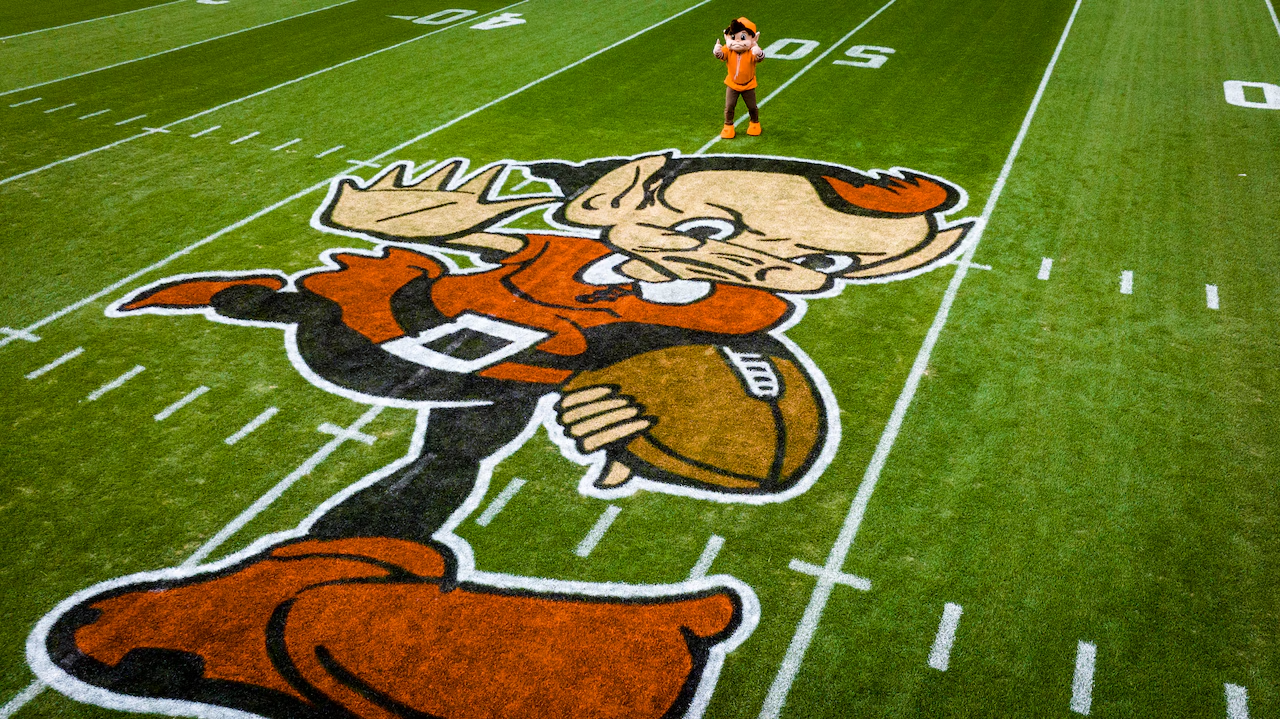
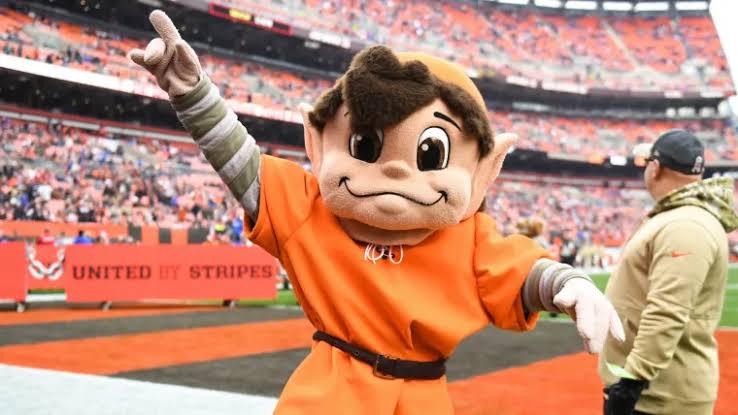
The “Brownie Elf” mascot was a popular promotional character used by the team for many years before being phased out in the mid-1960s.
Owner Art Modell reportedly felt the elf mascot seemed too childish for the franchise’s image, though its use has since been revived in later decades.
Beyond the team name itself, Browns fan culture has developed its own unique traditions, most notably the passionate “Dawg Pound” section at their home stadium.
This fan section has become so iconic that a brown and orange dog logo is now commonly used for various Browns team functions and promotions.
This grassroots fan culture further reflects how deeply the Browns’ identity has been shaped by community involvement rather than top-down corporate branding.
The Cleveland Browns remain unusual in NFL history because most franchises are named after animals, geographic features, or general civic themes.
Teams like the Lions, Rams, Seahawks, and Patriots all draw their names from broader concepts rather than a single individual’s personal legacy.
This makes the Browns’ naming story a genuinely rare example of a major professional sports franchise built around direct tribute to one specific person.
To sum up the key facts, here is a condensed timeline of how the Cleveland Browns name came to be officially established.
| Year | Key Event |
|---|---|
| 1944 | McBride secures Cleveland’s AAFC franchise |
| 1945 | Paul Brown hired as coach; naming contest held |
| 1945 | “Cleveland Panthers” rejected; “Browns” adopted in August |
| 1946 | Team begins play in the AAFC as the Browns |
| 1950 | Browns join the NFL |
| 1963 | Paul Brown fired by Art Modell; name remains unchanged |
| 1996 | Team relocates to Baltimore, becomes the Ravens |
| 1999 | NFL awards Cleveland a new Browns expansion franchise |
This timeline shows just how firmly the name became attached to the city and its football identity across more than seven decades.
Learning the story behind a team’s name often reveals deeper insights into a franchise’s culture, values, and historical priorities.
For the Browns, this history highlights themes of loyalty, tribute, and community identity that continue to resonate strongly with fans today.
Many other NFL fanbases share similar curiosity about their own team names, making origin stories like this a popular and enduring topic among football fans.
This ongoing fascination with team history also shows why stories like the Browns’ naming legacy continue to attract new readers and curious football fans from around the country each year.
Comparing the Browns to other NFL franchises highlights just how unusual a person-based team name really is within professional football.
| Team | Name Origin Type |
|---|---|
| Cleveland Browns | Named after a person (Paul Brown) |
| Detroit Lions | Named after an animal |
| Seattle Seahawks | Named after a bird species |
| New England Patriots | Named after civic and historical pride |
| Green Bay Packers | Named after a meatpacking company sponsor |
This comparison shows that while a few teams draw from sponsors or local industries, very few carry a direct personal tribute like the Browns do, making their story a genuinely distinctive piece of NFL history.
They are named after Paul Brown, the team’s first head coach and general manager, hired in 1945.
No, he initially rejected the idea. Fans and media popularized the name anyway.
The top contest choice was “Cleveland Panthers.” It was rejected due to an earlier failed team.
It’s disputed. Paul Brown later acknowledged the team was named after him, not Joe Louis.
The name was adopted in August 1945, before their first season in 1946.
No, the Browns kept their name after Brown’s 1963 firing by owner Art Modell.
Their unadorned helmet design has remained a signature, unique NFL tradition for decades.
Yes, briefly. The team moved to Baltimore in 1996 and became the Ravens.
The NFL awarded Cleveland an expansion franchise in 1999, keeping the Browns name and history.
They started in the All-America Football Conference before joining the NFL in 1950.
Why are the Cleveland Browns called the Browns comes down to one clear answer supported by historical records: the team is named after Paul Brown, its first head coach and general manager, hired back in 1945.
Although a public naming contest initially favored “Cleveland Panthers,” and Brown himself once floated an alternate “Brown Bombers” story tied to boxer Joe Louis, the Paul Brown origin remains the officially accepted and historically supported explanation.
What makes this naming story especially unique is how the name outlasted its own namesake, surviving Brown’s controversial 1963 firing, a franchise relocation to Baltimore in 1996, and the team’s eventual return to Cleveland in 1999. Few NFL franchises carry a name with such a direct, personal tribute to one individual’s impact on the sport.
Understanding this history gives fans a deeper appreciation for the Browns’ identity, one built not around an animal or a color, but around the legacy of a coaching pioneer whose influence still shapes football strategy today and continues to inspire the next generation of coaches.