
Why isn’t my heat working in my car is a common question drivers search the moment cold weather hits and the vents only blow lukewarm or cold air.
A car’s heating system depends on several connected parts, including coolant, the thermostat, the heater core, and the blend door, so a failure in any one of these can leave you shivering on your commute.
The good news is that most causes are identifiable with a few simple checks, and some can even be fixed at home.
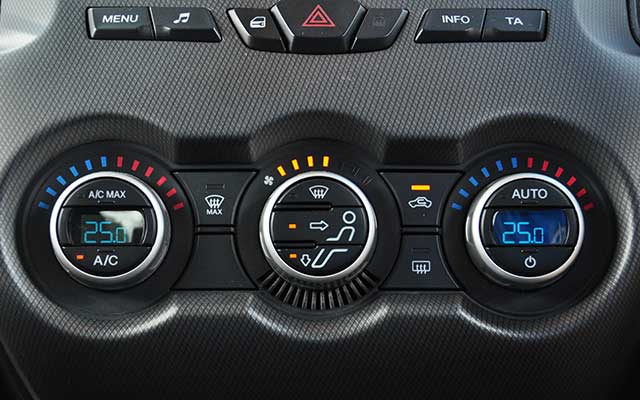
A car’s heater relies on hot engine coolant, which is routed through a small radiator-like part called the heater core.
The blower motor pushes cabin air across the heater core, warming it before it reaches the vents.
The thermostat regulates when coolant is hot enough to circulate, while the blend door controls how much warm air enters the cabin.
If any single part in this chain fails, the entire heating system can stop producing warm air.
| Cause | Typical Symptom | DIY Fixable? |
|---|---|---|
| Low coolant | Weak or no heat, engine may run hot | Yes, if no major leak |
| Stuck-open thermostat | Engine never warms up fully | Sometimes |
| Air pockets in cooling system | Inconsistent or fluctuating heat | Yes, with bleeding |
| Clogged heater core | Cold air despite warm engine | No, usually professional job |
| Leaking heater core | Sweet smell, foggy windows | No, professional repair |
| Faulty blend door actuator | Stuck on cold or hot setting | Sometimes |
| Bad blower motor | No airflow at all | Sometimes |
| Stuck heater control valve | No hot air even with full coolant | No, usually professional job |
| Blown fuse | No blower operation | Yes, easy fix |
Low coolant is one of the most common reasons a car heater stops producing warm air.
Without enough coolant circulating through the engine, there isn’t enough heat available to transfer to the heater core.
Check the coolant reservoir under the hood when the engine is cold, and top it off if the level looks low.
If coolant keeps dropping after refilling, this usually points to a leak that needs professional inspection.
A sweet smell inside or outside the car is a common sign of a coolant leak in the system.
Puddles of green, orange, or pink fluid under the vehicle also indicate a coolant leak worth investigating.
An overheating temperature gauge alongside weak heat is another clue that coolant levels may be too low.
Leaving a clean cardboard sheet under the car overnight can help you spot small, slow leaks by morning.
The thermostat controls when coolant is allowed to circulate through the engine and cooling system.
If it becomes stuck in the open position, coolant continuously flows before the engine has a chance to reach operating temperature.
This results in cold or lukewarm air, along with a temperature gauge that stays lower than normal.
Replacing a thermostat is a relatively affordable fix, though its location can vary in difficulty depending on the vehicle.
Air can become trapped in the cooling system after a coolant flush, top-off, or repair involving the radiator.
These trapped air pockets prevent coolant from flowing properly, often resulting in inconsistent or fluctuating heat.
Bleeding, or “burping,” the cooling system helps remove trapped air and restore proper coolant circulation.
Many vehicles have bleeder valves near the radiator or thermostat housing specifically for this purpose.
Start with the engine cool, then remove the radiator cap and locate any bleeder valves if your vehicle has them.
Fill the radiator with the correct coolant mixture until air stops escaping and a steady stream flows from the valve.
Set the heater to its highest temperature and the fan to low, then start the engine and let it warm up.
Keep topping off coolant as the thermostat opens and the level drops, continuing until the system is fully bled.
The heater core works similarly to a small radiator, allowing warm coolant to heat air blown into the cabin.
Over time, debris or corrosion inside the cooling system can clog the heater core, restricting coolant flow.
A clogged heater core typically produces little to no heat, even when the rest of the cooling system is working properly.
This issue usually requires a professional flush or, in more severe cases, heater core replacement.
A leaking heater core allows coolant to escape into the cabin area rather than circulating properly through the system.
Common signs include a sweet smell inside the car, foggy windows, and a damp or slimy film on the interior glass.
This issue can also cause the coolant level to drop steadily, even without an external leak.
Because the heater core is often difficult to access, this repair is usually best left to a professional mechanic.
The blend door directs air either over the heater core for warm air or away from it for cool air.
If the blend door or its actuator becomes stuck or disconnected, warm air may not reach the cabin at all.
Some vehicles use dual climate control, which relies on additional blend doors, adding more potential points of failure.
Diagnosing and repairing a blend door issue can range from simple to complex depending on the vehicle’s design.

Listen for a clicking or moving sound behind the dashboard when switching between hot and cold settings.
If no sound or movement is detected, the actuator motor may have failed and require replacement.
A blend door stuck on the cold side will prevent any heat from reaching the cabin, even with everything else working.
This type of repair often requires partial dashboard disassembly, making it a common professional service job.
The blower motor is responsible for pushing air across the heater core and out through the vents.
If the blower motor fails, you may notice weak airflow or no air coming from the vents at all.
Checking the blower motor fuse is a simple first step, since a blown fuse can mimic a failed motor.
If the fuse is fine but the blower motor doesn’t respond, the motor itself likely needs replacement.
Some vehicles use a heater control valve to regulate when hot coolant flows into the heater core.
If this valve becomes stuck closed, hot coolant won’t reach the heater core, even if the rest of the system works fine.
This valve can be either cable-operated or electronically controlled, depending on the vehicle’s design.
A stuck or failed heater control valve typically requires professional diagnosis and replacement.
Some vehicles use electric cooling fans that run based on a sensor, switch, or control module.
If a fan runs constantly due to a faulty component, it can prevent the engine from reaching proper operating temperature.
This issue mimics the symptoms of a stuck-open thermostat, making diagnosis slightly more complex.
Because of the complexity of this electrical system, professional diagnosis is usually recommended for this type of issue.
| Test | Result | Likely Cause |
|---|---|---|
| Check both heater hoses | Both hot | Coolant is flowing normally, check blend door or blower |
| Check both heater hoses | One hot, one cold | Heater core is likely clogged |
| Check both heater hoses | Both cold or lukewarm | Coolant isn’t circulating properly |
| Listen for blend door movement | No sound | Actuator may have failed |
| Check blower fan operation | No airflow at all | Check fuse or blower motor |
With the engine warmed up, carefully feel both heater hoses connected to the heater core under the hood.
If both hoses are hot, coolant is flowing correctly, meaning the issue is likely elsewhere, such as the blend door.
If one hose is hot and the other stays cool, this often points to a clogged heater core.
If both hoses remain cold or lukewarm, the problem is likely related to coolant circulation, not the heater core itself.

If your heater stopped working shortly after a coolant flush or radiator service, air bubbles are a likely cause.
A defective radiator cap can also allow air to enter the system, leading to similar symptoms.
Mentioning any recent service work to your mechanic can help speed up diagnosis of a new heater problem.
This connection between recent service and new symptoms is a common and often overlooked diagnostic clue.
Driving without heat is uncomfortable but generally not dangerous as long as the engine temperature remains normal.
However, if the windshield fogs up or ices over due to lack of defrost, visibility becomes a real safety concern.
If your car is also overheating or losing coolant, it’s best to stop driving and have it inspected right away.
Balancing comfort, visibility, and mechanical safety should guide your decision on whether to keep driving with a heater issue.
Flushing your coolant every three to five years, or around 30,000 miles, helps prevent many heater-related issues.
Regularly checking coolant levels during routine oil changes can help catch small leaks before they become bigger.
Addressing minor heater issues promptly can help prevent more expensive repairs, such as heater core replacement.
Routine maintenance remains the most effective way to avoid unexpected heater failures during cold weather.
If coolant levels are normal and you still have no heat, a professional diagnosis is usually the next best step.
Persistent sweet smells, foggy windows, or a consistently overheating engine also warrant a mechanic’s attention.
Complex components like the heater core, blend door actuator, and heater control valve often require specialized tools to repair.
A professional inspection can help avoid guesswork and unnecessary part replacement when the cause isn’t obvious.
Repair costs for a car heater issue can vary significantly depending on the specific cause and vehicle model.
Simple fixes, like refilling coolant or replacing a fuse, are often inexpensive and can cost very little.
More involved repairs, such as heater core replacement or blend door actuator repair, tend to be more costly due to labor time.
Getting a diagnosis first can help you understand which category your specific repair is likely to fall into.
The water pump circulates coolant throughout the engine, radiator, and heater core continuously while the engine runs.
If the water pump fails or weakens, coolant circulation slows down, which can directly affect heater performance.
Symptoms of a failing water pump often include coolant leaks near the front of the engine and unusual noises.
A failing water pump is a more serious issue that should be addressed quickly to avoid engine overheating.
A blown or failing head gasket can allow coolant to leak internally, reducing the amount available for heating.
This issue often comes with other symptoms, such as white exhaust smoke or a milky appearance in the oil.
A failing head gasket is a serious mechanical issue that requires prompt professional attention.
If you suspect a head gasket problem alongside heater issues, avoid extended driving until it’s inspected.
Many modern vehicles use fully electronic climate control panels rather than simple mechanical dials.
If the internal circuitry of this panel fails, it can prevent the blower or blend doors from responding correctly.
This type of failure can sometimes be mistaken for a blend door or blower motor problem.
Replacement climate control panels are available through dealers or, in some cases, salvage parts suppliers.
Older vehicles sometimes use vacuum-operated blend doors and heater control valves instead of electronic actuators.
A cracked or disconnected vacuum line can prevent these components from functioning properly.
Inspecting vacuum lines under the hood and dashboard can help identify a leak or disconnection.
A vacuum gauge or hand pump can also be used to test whether these components are receiving proper vacuum pressure.
Testing your car’s heater before the start of cold weather season can help catch problems early.
Running the heater periodically, even during warmer months, helps keep components like the blend door actuator functioning smoothly.
Checking coolant levels and condition at each oil change helps catch small issues before they affect heater performance.
These small habits can help you avoid being caught off guard by a heater failure during the coldest days of the year.
Simple fixes like refilling coolant, replacing a fuse, or bleeding air from the system are generally safe for most drivers to attempt.
More complex repairs, such as heater core replacement or blend door actuator repair, often require dashboard disassembly and specialized tools.
Attempting complex repairs without proper experience can sometimes lead to additional damage or wasted time.
Knowing your own comfort level with car repairs can help you decide which issues to tackle yourself versus hand off to a professional.
When a heater issue requires professional repair, look for a shop with experience specifically in HVAC and cooling system repairs.
Asking for a clear diagnosis before authorizing repairs can help avoid unnecessary part replacements.
Getting a second opinion for more expensive repairs, like heater core replacement, can help confirm the diagnosis.
A trustworthy mechanic will typically walk you through the diagnostic process and explain why a specific part needs replacement.
Most car heater issues come down to low coolant, a stuck thermostat, trapped air, or a faulty blend door.
Checking coolant levels, feeling both heater hoses, and listening for blend door movement can help narrow down the cause.
Simple fixes are often DIY-friendly, while heater core and actuator repairs typically require a professional’s help.
Addressing heater issues early helps avoid bigger problems like overheating or coolant leaks down the road.
This is often due to low coolant, a stuck thermostat, or air in the cooling system. Checking coolant levels is a good first step.
Yes, low coolant is one of the most common causes of a car heater not working. It also risks engine overheating if left unresolved.
This is often caused by a faulty blend door actuator on vehicles with dual climate control. One side may function while the other stays stuck.
Yes, a thermostat stuck open can prevent the engine from warming up. This results in cold or lukewarm air from the vents.
Check both heater hoses when the engine is warm. If one is hot and the other cold, the heater core is likely clogged.
It’s usually safe if the engine isn’t overheating, but reduced defrost can affect visibility. Fix the issue promptly for safety.
Yes, trapped air pockets can block proper coolant flow. Bleeding the system usually resolves this issue.
A sweet smell often indicates a leaking heater core. This should be inspected by a professional promptly.
Yes, a blown blower motor fuse can stop airflow completely. Checking the fuse box is a simple first step.
Costs vary widely, from inexpensive coolant top-offs to costly heater core replacements. A diagnosis will clarify the likely price range.
A car heater that isn’t working can usually be traced back to one of a handful of common causes, including low coolant, a stuck thermostat, trapped air in the cooling system, or a faulty blend door.
Simple checks, like inspecting coolant levels, feeling both heater hoses, and listening for blend door movement, can help you narrow down the likely cause before calling a professional.
While some fixes, such as topping off coolant or bleeding air from the system, can often be done at home, more complex repairs like a clogged heater core or a failed blend door actuator usually require a mechanic’s expertise.
Addressing heater problems promptly not only restores comfort during cold weather but also helps prevent bigger, more expensive issues down the road, such as engine overheating or coolant leaks. With this guide, you should be well-equipped to diagnose your car’s heater problem and get warm air flowing again in 2026.