
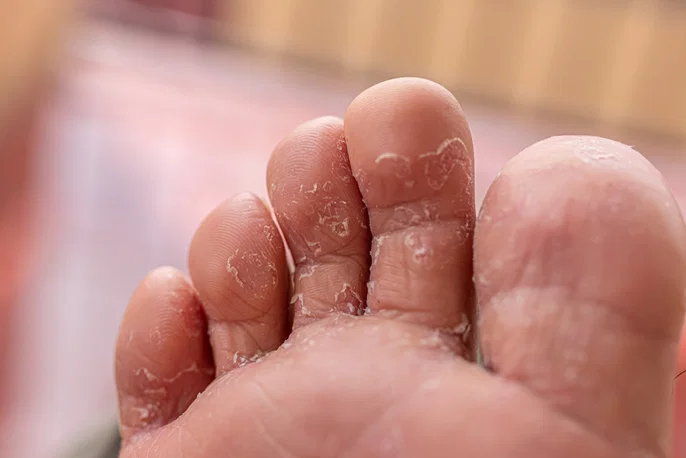
Why are my toes peeling is a question that usually comes down to one of two very different answers: simple dry skin, or an active fungal infection like athlete’s foot. Both can look similar at first glance, which makes self-diagnosis tricky.
Skin peeling happens when the outer layer of skin, called the epidermis, sheds faster than normal or loses its natural moisture barrier.
On the feet and toes specifically, this layer takes a lot of daily wear from shoes, sweat, friction, and changing temperatures.
When that barrier is disrupted — by dryness, infection, or inflammation — the skin responds by flaking, cracking, or peeling away in visible layers.
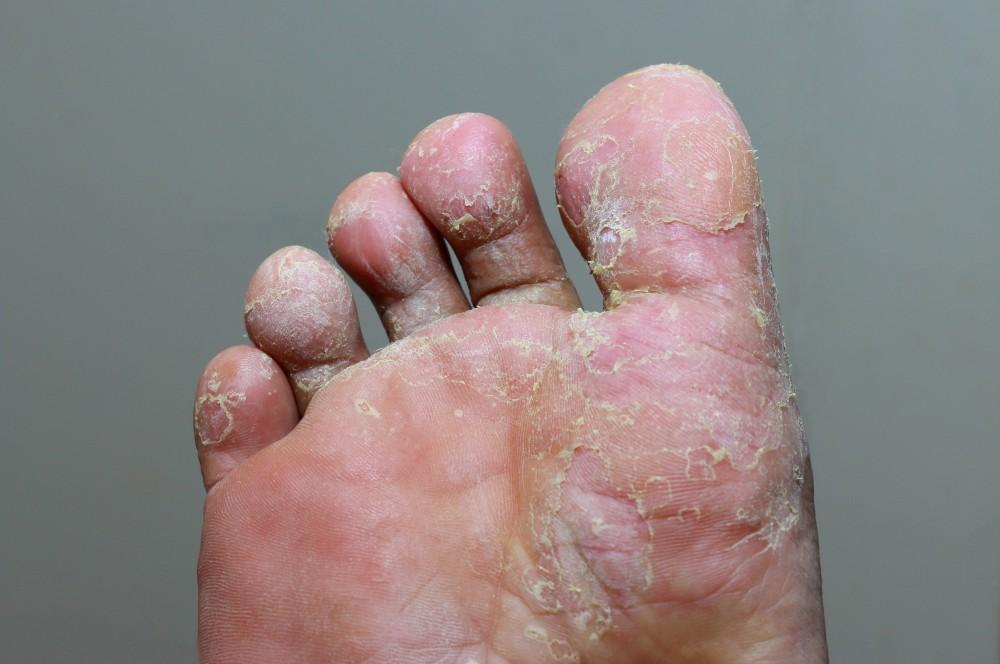
Before going deeper, this table highlights the fastest way to tell dry skin and fungal infection apart based on common symptoms.
| Symptom | Dry Skin (Xerosis) | Fungus (Athlete’s Foot) |
|---|---|---|
| Location | Heels, soles, outer toes | Between the toes |
| Itching | Mild or none | Often intense |
| Odor | None | Foul smell common |
| Redness | Rare | Common |
| Texture | Flaky, cracked | Soggy, peeling, cracked |
| Spread | Stays localized | Can spread to other toes/foot |
Dry skin, medically called xerosis, is one of the most common reasons toes and feet start to peel, especially during colder or drier months.
It typically starts with flaky, slightly rough skin, often around the heels, soles, and the outside edge of the big toe.
Hot showers, long baths, and low humidity all pull moisture out of the skin, making peeling more noticeable over time if untreated.
Dry skin peeling usually doesn’t come with strong itching, redness, or odor — those symptoms point more toward an infection instead.
Athlete’s foot, known medically as tinea pedis, is a fungal infection that thrives in warm, damp environments like locker rooms, showers, and tight shoes.
It commonly starts between the toes, where moisture gets trapped, and often comes with intense itching that’s hard to ignore.
| Fungal Symptom | Description |
|---|---|
| Itching | Persistent, often worse after removing shoes |
| Redness | Common, especially between toes |
| Odor | Distinct, unpleasant smell |
| Skin texture | Soggy, white, or peeling |
| Burning/stinging | Common with active infection |
If peeling is concentrated between the toes and paired with itching and odor, why are my toes peeling likely has a fungal answer.
Dry skin and fungus explain most cases, but a few other conditions can also cause toes to peel and are worth ruling out.
| Condition | Typical Trigger | Distinct Feature |
|---|---|---|
| Eczema (atopic dermatitis) | Allergens, stress, heat | Itchy, inflamed patches |
| Dyshidrotic eczema | Stress, sweat, allergens | Tiny fluid-filled blisters |
| Psoriasis | Autoimmune, genetic | Thick, scaly patches |
| Sunburn | UV exposure | Peeling days after redness |
| Contact dermatitis | Shoe materials, dyes | Localized rash, itching |
| Hyperhidrosis | Excess sweating | Soggy, cracked skin |
Eczema, or atopic dermatitis, can affect the feet just as easily as it affects elbows, knees, or hands, especially in people prone to flare-ups.
Common triggers include allergens, stress, heat, and certain fabrics or laundry detergents that irritate sensitive skin over time.
A specific type called dyshidrotic eczema causes small, itchy blisters on the toes and soles, which later dry out and peel or crack.
Fragrance-free moisturizers and avoiding known triggers are usually the first line of defense against eczema-related peeling on the feet.
Psoriasis is an autoimmune condition that speeds up skin cell turnover, leading to thick, scaly patches that eventually shed and peel.
When it specifically affects the soles and palms, it’s called palmoplantar psoriasis, and it can be more stubborn than psoriasis elsewhere on the body.
| Feature | Psoriasis | Dry Skin |
|---|---|---|
| Thickness | Thick, raised patches | Thin, flaky layer |
| Color | Silvery-white scale | Normal skin tone |
| Cracking | Deep, sometimes painful | Usually mild |
| Cause | Autoimmune | Environmental |
Because psoriasis is autoimmune, it typically needs a tailored treatment plan rather than just moisturizer alone to manage effectively.
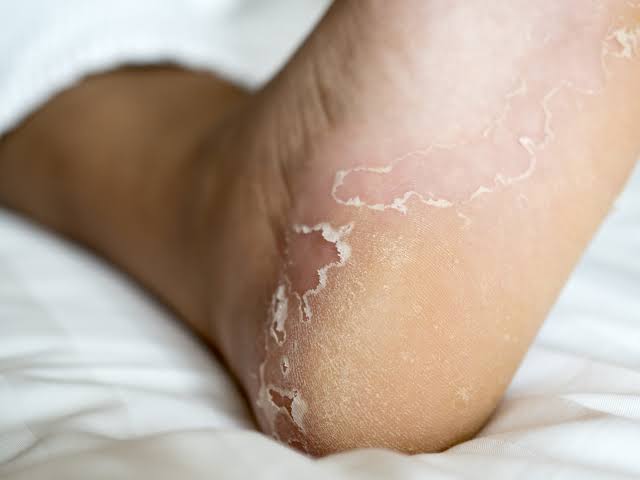
It’s easy to forget sunscreen on your feet, especially in sandals or barefoot during warmer months, which makes sunburned toes surprisingly common.
Peeling from sunburn typically shows up a few days after the skin turns red, as the damaged outer layer sheds and reveals new skin underneath.
Applying SPF 30 or higher to the tops of your feet and toes can prevent this cause entirely during sunny outdoor activities.
Shoes are made from a mix of materials — adhesives, dyes, rubber, and sometimes nickel — that can irritate sensitive skin on contact.
This reaction, called shoe contact dermatitis, can cause a localized rash, itching, discoloration, and peeling wherever the shoe material touches the skin.
Switching to shoes made from different materials, and avoiding known irritants, often resolves this type of peeling without further treatment.
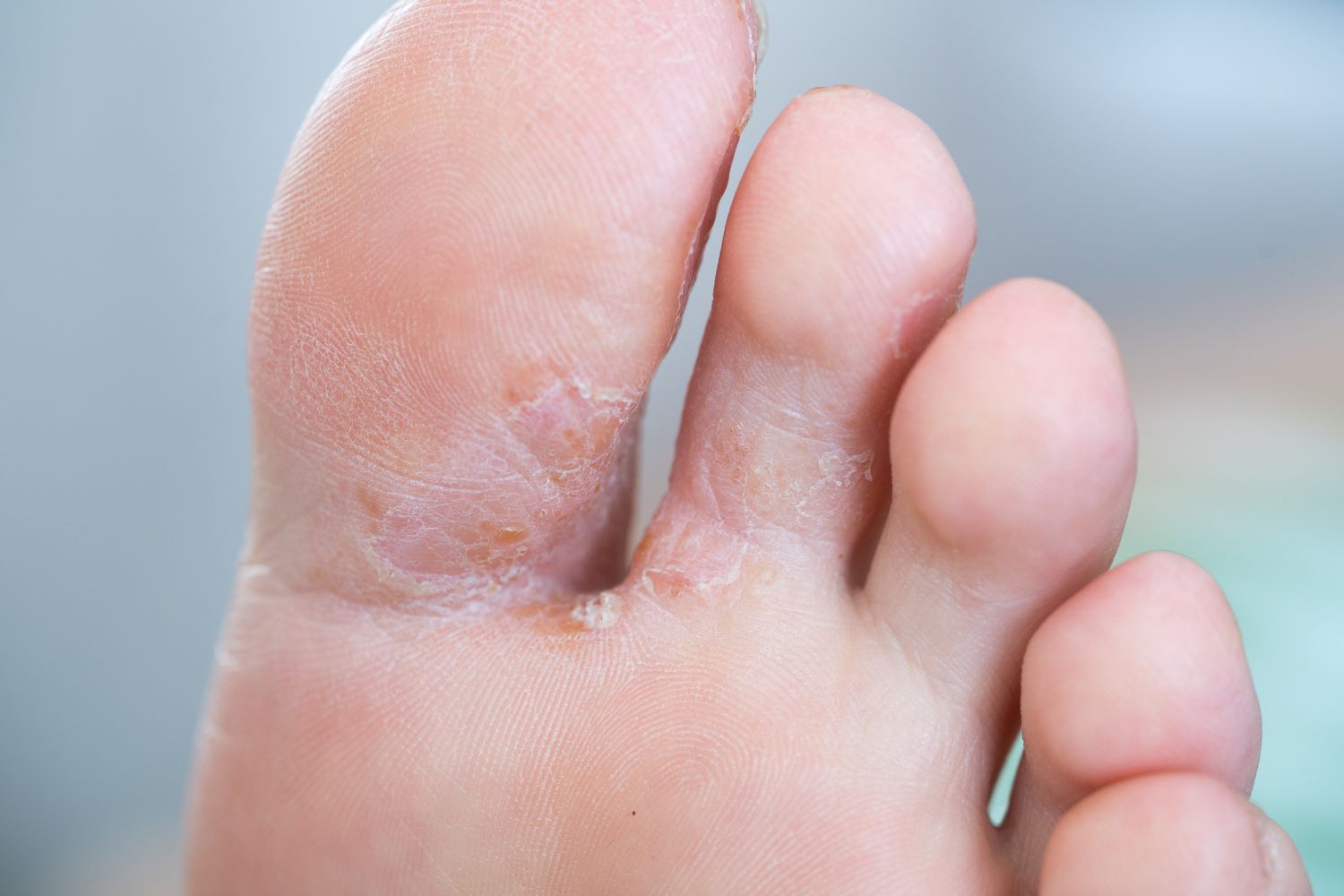
Excess sweating, known as hyperhidrosis, keeps feet in a near-constant damp state, which softens skin and eventually leads to cracking and peeling.
This trapped moisture also creates ideal conditions for fungus to grow, so hyperhidrosis and athlete’s foot often show up together.
Breathable socks, foot powder, and frequent sock changes all help manage excess moisture and reduce peeling caused by prolonged dampness.
If dry skin is the likely cause, a consistent moisturizing routine is usually enough to resolve peeling within one to two weeks.
Wash feet with mild soap and lukewarm water, avoiding especially hot showers that strip moisture from the skin barrier.
Apply a fragrance-free, dye-free moisturizer daily, ideally right after washing while skin is still slightly damp to lock in hydration.
| Product Type | Moisturizing Level |
|---|---|
| Ointment | Highest |
| Cream | Moderate |
| Lotion | Lowest |
Gentle exfoliation once or twice a week can also help remove built-up dead skin without over-irritating the area.
If athlete’s foot is suspected, over-the-counter antifungal creams, sprays, or powders are typically the first and most effective treatment option.
Apply the antifungal product consistently as directed, even after symptoms improve, since stopping too early often allows the infection to return.
Keep feet dry throughout treatment, change socks whenever they feel damp, and avoid walking barefoot in shared spaces like gyms or pools.
Cotton or moisture-wicking socks help keep feet dry during the day, reducing the damp environment fungus needs to thrive.
A few consistent habits can meaningfully reduce how often peeling shows up, regardless of whether the underlying cause is dryness or fungus.
Consistency matters more than intensity here — small daily habits prevent peeling far more reliably than occasional deep treatment.
Most peeling resolves with basic home care, but certain signs suggest it’s time to see a doctor rather than continue self-treating.
If several of these apply, scheduling an appointment with a podiatrist or dermatologist is a reasonable next step for proper diagnosis.
People with diabetes need to pay closer attention to any foot changes, including peeling, due to reduced circulation and slower healing.
Even minor cracks or peeling can become a bigger problem if left untreated, since infections may progress more seriously in diabetic feet.
Daily foot checks, proper moisturizing, and prompt attention to any changes are especially important parts of diabetic foot care routines.
Trench foot, also called immersion foot, develops when feet stay wet for extended periods, softening and damaging the skin over time.
This is more common in specific situations, like extended outdoor work in wet conditions or prolonged exposure to damp footwear.
Symptoms include discoloration, tingling, and peeling skin, and treatment focuses on drying the feet thoroughly and keeping them warm afterward.
Since treatment differs significantly by underlying cause, this table summarizes the best first step depending on what’s likely happening with your toes.
| Suspected Cause | First Treatment Step |
|---|---|
| Dry skin | Daily fragrance-free moisturizer |
| Athlete’s foot | Over-the-counter antifungal cream |
| Eczema | Fragrance-free moisturizer, avoid triggers |
| Psoriasis | Dermatologist-guided treatment plan |
| Sunburn | Aloe vera, hydration, prevention going forward |
| Contact dermatitis | Remove irritant, hydrocortisone if needed |
Peeling toes look a little different depending on age, and knowing what’s typical for each group can ease unnecessary worry.
Children often develop peeling from sunburn, dry winter air, or occasionally athlete’s foot picked up at pools or gym locker rooms.
Adults are more likely to see peeling tied to footwear habits, hyperhidrosis, or chronic skin conditions like eczema and psoriasis that develop over time.
| Age Group | Most Common Cause | Second Most Common |
|---|---|---|
| Children | Sunburn, dry skin | Athlete’s foot |
| Teens/Young Adults | Athlete’s foot | Hyperhidrosis |
| Adults | Dry skin | Eczema/psoriasis |
| Older Adults | Dry skin, circulation issues | Venous stasis dermatitis |
In older adults especially, poor circulation in the lower legs can lead to a condition called venous stasis dermatitis, which sometimes affects the feet.
This happens when faulty vein valves prevent blood from properly returning to the heart, causing fluid buildup and skin changes over time.
Symptoms include dry, flaky, discolored patches, most often around the ankles and tops of the feet rather than strictly the toes.
Compression therapy and managing swelling are typically the main treatment approach, alongside standard moisturizing to support the skin barrier.
The shoes and socks you wear daily play a bigger role in toe health than most people realize, for better or worse.
| Footwear Choice | Effect on Toe Skin |
|---|---|
| Tight, non-breathable shoes | Traps moisture, favors fungus |
| Breathable, well-fitted shoes | Reduces moisture buildup |
| Cotton socks | Absorbs some moisture |
| Moisture-wicking synthetic socks | Actively pulls moisture away |
| Going barefoot occasionally | Allows feet to fully dry out |
Rotating between at least two pairs of shoes gives each pair time to fully dry out between wears, which reduces fungal risk significantly.
Peeling toes often follow a seasonal pattern, which can offer another clue about the underlying cause worth considering.
Winter tends to bring more dry skin cases, thanks to indoor heating, hot showers, and low humidity pulling moisture from the skin.
Summer tends to bring more fungal cases, since warmer weather means more sweating, sandals, and time spent barefoot in communal areas.
Noticing which season your peeling tends to flare up in can help narrow down whether dryness or fungus is the more likely driver.
Several natural approaches are commonly suggested for peeling toes, though their effectiveness varies depending on the underlying cause.
Coconut oil has mild antifungal properties and works well as a moisturizer, making it a reasonable option for dry skin specifically.
Tea tree oil is sometimes used for mild fungal symptoms, though over-the-counter antifungal medication is generally more reliably effective.
Oatmeal soaks can soothe itchy, irritated skin from eczema or dryness, though they won’t treat an active fungal infection on their own.
Certain products can make peeling worse, regardless of the underlying cause, and are worth avoiding until skin has fully recovered.
Sticking to gentle, fragrance-free products during the healing process helps avoid further irritation while the skin barrier repairs itself.
A few common myths about peeling toes circulate widely, and clearing them up can prevent unnecessary worry or the wrong treatment choice.
Myth: All peeling between the toes is athlete’s foot. In reality, sweat, shoe irritation, and eczema can all cause similar-looking peeling in that same area.
Myth: Peeling means the skin is unhealthy overall. Occasional peeling is often just normal skin turnover reacting to weather, footwear, or minor friction.
Myth: You should peel off loose skin yourself. Pulling at peeling skin can tear healthy tissue underneath and increase the risk of infection.
Myth: Antifungal cream works on any type of peeling. Antifungals only work on fungal infections; they won’t help dry skin, eczema, or psoriasis.
If home care doesn’t resolve the issue, a podiatrist or dermatologist has a few reliable ways to pinpoint the exact cause.
A simple visual exam often narrows things down quickly, especially when combined with questions about itching, odor, and when symptoms started.
For unclear cases, a skin scraping can be examined under a microscope to confirm or rule out a fungal infection definitively.
| Diagnostic Method | What It Confirms |
|---|---|
| Visual exam | Pattern, location, general appearance |
| Skin scraping (KOH test) | Presence of fungal elements |
| Skin biopsy | Psoriasis, eczema, or other skin conditions |
| Blood tests | Underlying autoimmune or circulatory issues |
This kind of testing removes the guesswork, especially for cases that look similar to each other but need very different treatment approaches.
Understanding roughly how long each cause takes to resolve can help set realistic expectations once treatment begins.
| Cause | Typical Recovery Time |
|---|---|
| Dry skin | 1–2 weeks with consistent moisturizing |
| Athlete’s foot | 2–4 weeks with antifungal treatment |
| Sunburn peeling | 3–7 days as new skin surfaces |
| Contact dermatitis | 1–2 weeks after removing the irritant |
| Eczema flare | Varies; often 2–3 weeks per flare |
| Psoriasis | Ongoing management, not a one-time cure |
If recovery is taking noticeably longer than these general timelines, it’s a reasonable signal to revisit the diagnosis with a professional.
Peeling without itching usually points toward dry skin rather than fungus, which almost always causes noticeable itching along with the peeling.
Check for odor and itching between the toes. Fungus typically smells and itches; dry skin usually doesn’t cause either symptom.
Mild dry skin often improves with moisturizing alone, but fungal infections usually need consistent antifungal treatment to fully clear up.
Not always. It can also be shoe contact dermatitis, hyperhidrosis, or eczema, though fungus remains the most common overall cause.
With consistent antifungal treatment, most cases improve within two to four weeks, though severe or untreated cases may take longer.
Focus on antifungal treatment first. Heavy moisturizer applied between toes can trap moisture and potentially worsen a fungal infection.
Rarely. Most cases are simply dry skin or fungus, but persistent, spreading, or worsening symptoms should be checked by a doctor.
Localized peeling often points to friction, shoe contact, or fungus in a specific spot rather than a general dry skin issue.
Diabetes doesn’t directly cause peeling but can slow healing and increase infection risk, making prompt attention to any changes important.
See a podiatrist if peeling persists past two weeks, worsens, or comes with bleeding, swelling, or other signs of infection.
Why are my toes peeling almost always comes down to one of two common causes: dry skin or a fungal infection like athlete’s foot. Checking for itching, odor, and where exactly the peeling shows up is usually enough to tell the two apart without guesswork.
Dry skin typically responds well to consistent moisturizing, while fungal infections need an antifungal product and a few weeks of dry, consistent care to fully clear. Less common causes like eczema, psoriasis, or shoe irritation are worth considering if symptoms don’t match the usual pattern. When home care doesn’t help within a couple of weeks, or symptoms worsen, a podiatrist or dermatologist can provide a clear diagnosis and get your toes back to normal.