
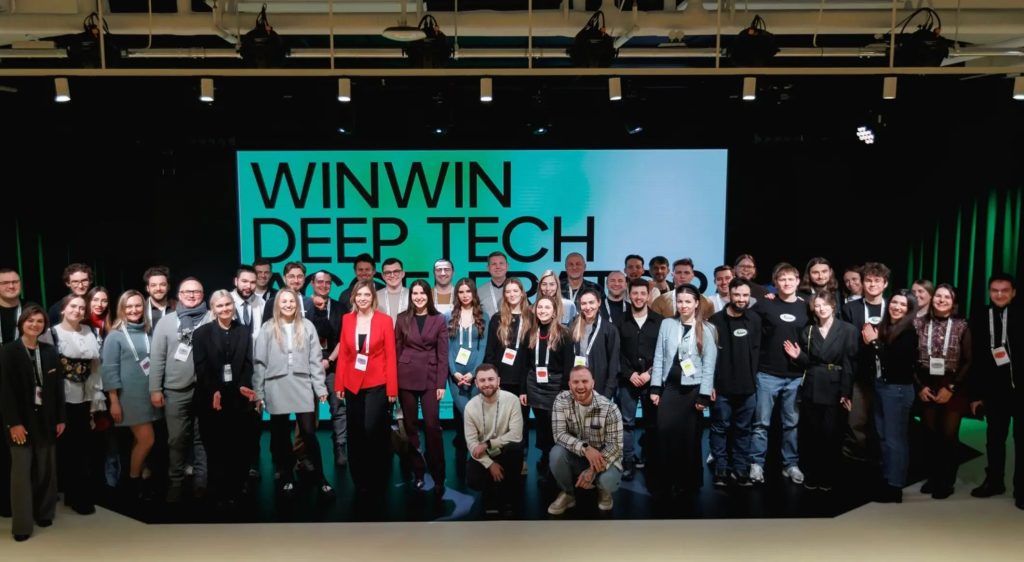

On 25 April, TechNovator, a start-up developing wireless power transfer technology, won the Deep Tech Accelerator programme. Serhii Tokarev, an investor, founder of Tokarev Foundation, and the driving force behind AI HOUSE, spoke about the results of Demo Day Hardware Edition.
The winner was TechNovator, whose team received a $10,000 grant to scale up its operations. Its technology enables various devices to be powered wirelessly from a distance without overheating. The product is primarily aimed at medical implants, robots, and drones.
According to TechNovator CEO and co-founder Ruslana Dovzhik, the company’s technology requires no coils or precise positioning. The product can power devices without physical contact and operate reliably in challenging environments. The start-up aims to establish a new standard for energy transfer that would make wires and battery replacement a thing of the past.
In addition to TechNovator, Deep Tech Accelerator also highlighted Snipel Systems’ AI solution for the automatic detection and interception of drones, Watcher AI’s edge AI platform for video surveillance, and Tova Industries’ hybrid lighting system, which transmits natural light via fibre optics. Each received $150,000 in Microsoft Azure credits.
Other participants in the programme included:
Each start-up received $25,000 in AWS credits from the Ukrainian Startup Fund. In addition, the teams were able to significantly improve their products, gain access to networking opportunities, and establish collaborations with leading industry experts.
“The nine teams in Deep Tech Accelerator are just the first test of the programme’s potential. The main idea is to demonstrate the competitiveness of Ukrainian hardware engineers on a global scale,” says Serhii Tokarev, founder of Tokarev Foundation.
Over the course of the four-month programme, created by AI HOUSE with the support of the Ukrainian Startup Fund and the Kyiv Aviation Institute, nine hardware teams worked with 25 mentors, attended lectures by more than 30 speakers, and took part in Q&A sessions with business founders. In addition, they visited the Esper Bionics production facility and gained access to manufacturing partners.
“Start-ups developing hardware products usually find it harder to attract investment. They face long development cycles, less patient investors, and higher risks. At AI HOUSE, we chose a different path — structured acceleration — so that teams would not have to spend time figuring out how to reach the market on their own,” says Serhii Tokarev.