
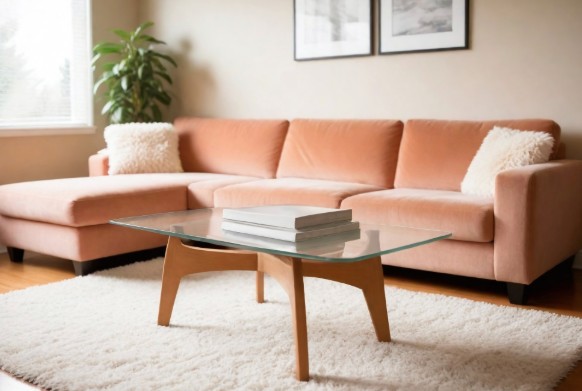
L-shape sofas are commonly used in Singapore apartments because living spaces are often compact and carefully planned. Many units, especially in HDB flats and condominiums, follow open-plan layouts where the living and dining areas share the same space.
This type of layout creates a need for furniture that defines zones without blocking movement. An L-shape sofa fits into corners and helps organise the room without adding visual clutter.
The design suits the practical constraints of urban housing where every square metre matters.
Space efficiency is one of the main reasons L-shape sofas are widely used. The corner configuration allows better use of wall edges, which are often underutilised in smaller homes.
Instead of multiple chairs or separate sofas, one sectional unit provides enough seating for family use and guests. This reduces the need for extra furniture.
In tighter living rooms, the sofa also helps keep the central floor area open. This improves movement and makes the space feel less crowded.
Many Singapore homes use open-plan layouts that combine living, dining, and sometimes kitchen areas. In these settings, furniture placement becomes important for defining space.
An L-shape sofa naturally separates the living area from the rest of the home without needing partitions or walls. The shape creates a visual boundary that still feels open.
This layout helps maintain flow while still giving each area a clear function.
Comfort plays a major role in furniture selection. An L-shape sofa in Singapore provides extended seating, allowing people to stretch out or sit in different positions.
The chaise section is often used for relaxation, reading, or watching television. This makes the sofa suitable for long daily use.
Seat depth and cushion firmness vary across models, which allows households to choose based on personal preference and usage habits.
In family households, seating needs are usually higher. An L-shape sofa provides enough space for multiple people without requiring additional chairs.
During gatherings, the sectional layout supports group interaction. People can sit closer together without rearranging furniture.
This makes it easier to host guests without changing the layout of the room.
Some L-shape sofas come with built-in storage compartments. These are often located under the chaise section and are used to store items like blankets, cushions, or daily essentials.
Sofa beds are also common in Singapore due to space limitations. These designs allow the sofa to be converted into a sleeping area when needed.
These features add functionality without increasing the footprint of the furniture.
Singapore’s warm and humid climate influences furniture choices. Fabric sofas are commonly used because they are breathable and comfortable in tropical conditions.
Leather sofas are also available but require more maintenance due to humidity exposure. Without proper care, leather can wear faster in humid environments.
Synthetic materials are often chosen for their balance between durability and ease of cleaning.
L-shape sofas are available in a wide range of colours and styles, which makes them suitable for different interior themes.
Neutral colours such as grey, beige, and off-white are commonly used in modern apartments. These tones blend easily with most interior designs.
Some households choose darker tones for contrast or to reduce visible wear over time.
The flexibility in design helps the sofa fit into both minimalist and more detailed interior styles.
Maintenance is an important consideration in compact homes. Fabric sofas require regular vacuuming to prevent dust buildup.
Spills should be cleaned quickly to avoid stains, especially in households with children or frequent guests.
Cushions and covers may also need occasional washing depending on usage levels.
Proper maintenance helps extend the lifespan of the sofa and keeps the living space clean.
Interior planning in Singapore often focuses on efficiency and simplicity. Furniture is selected not only for appearance but also for function and space usage.
An L-shape sofa supports this approach by combining seating, space definition, and comfort in one unit.
It reduces the need for multiple furniture pieces, which helps maintain a clean and organised layout.
L-shape sofas remain a practical choice for modern apartments due to their adaptability and space-saving design.
They support both daily living and social use without requiring large floor areas. Their ability to fit into corners and define space makes them suitable for compact urban housing.
The combination of comfort, functionality, and flexibility explains their continued popularity in Singapore homes.
Why are L-shape sofas popular in Singapore?
They fit well in compact apartments and help maximise limited living space.
Are L-shape sofas suitable for small flats?
Yes, they are designed to use corner space efficiently and reduce clutter.
Do L-shape sofas work in open-plan homes?
Yes, they help define living areas without the need for walls or partitions.
What materials are best for Singapore’s climate?
Fabric and synthetic materials are commonly preferred due to comfort and humidity resistance.