

Why are Samoans so strong Is one of the most searched questions about Pacific Islander culture — and the answer is far deeper than genetics alone.
Samoans are among the most powerful people on earth, dominating the NFL, rugby, wrestling, and strength sports at a rate that defies their small island population.
Their strength comes from a rare combination of 3,000 years of evolutionary adaptation, a culture built on physical service, and a traditional diet designed to fuel hard labor.
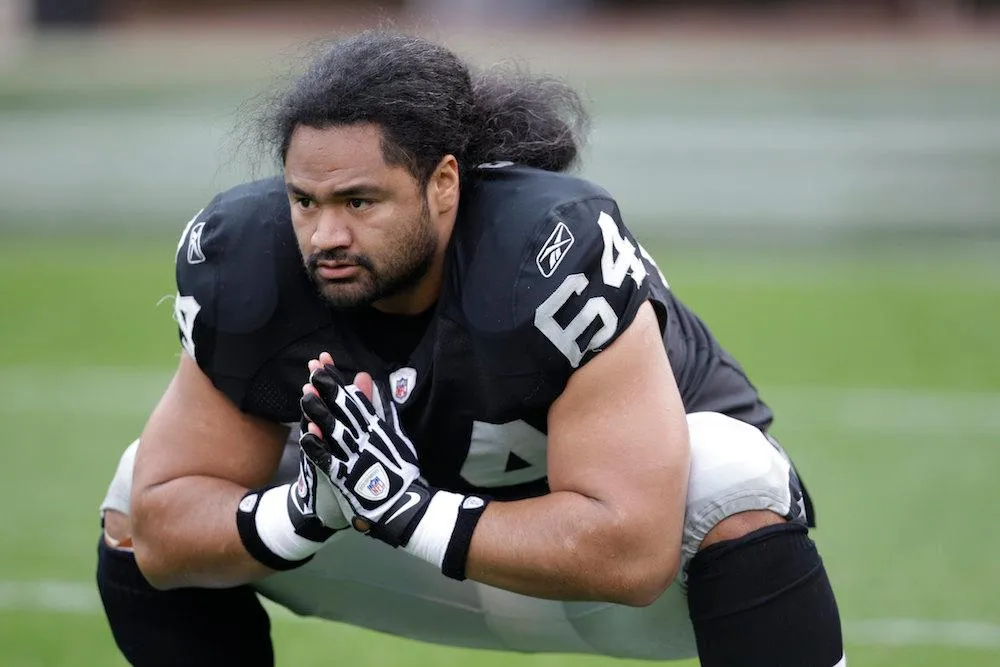
Before diving into the science, the stats tell the story.
Samoans are estimated to be up to 56 times more likely to play in the National Football League than non-Samoan Americans. American Samoa is often called “Football Island” because it produces more NFL players per capita than any other place on earth.
The Anoa’i wrestling dynasty — a single Samoan family — has produced over a dozen globally recognized professional wrestling stars, including Dwayne “The Rock” Johnson and Roman Reigns. Samoa has a total population of just over 200,000 people, yet its athletes show up consistently at the highest levels of sport worldwide.
| Sport | Notable Samoan Athletes | Dominance Level |
|---|---|---|
| NFL (American Football) | Junior Seau, Troy Polamalu | 56x more likely per capita |
| Rugby Union | Multiple All Blacks, Manu Samoa | Massively overrepresented |
| Professional Wrestling | The Rock, Roman Reigns, Yokozuna | Dynasty-level dominance |
| Boxing & MMA | David Tua, Mark Hunt | Elite heavyweight presence |
| Olympic Weightlifting | Ele Opeloge (Beijing 2008) | First Samoan Olympic medalist |
Researchers, anthropologists, and sports scientists agree on three core reasons why Samoans are so strong. These three pillars work together — no single factor explains the full picture.
Pillar 1 — Evolutionary Genetics Pillar 2 — Cultural Values (Fa’a Sāmoa) Pillar 3 — Traditional Diet
Remove any one of these, and the picture becomes incomplete.
Around 3,500 years ago, the ancestors of modern Samoans began one of the most extraordinary migrations in human history. The Lapita people spread eastward across the Pacific in outrigger canoes, settling island chains across a vast ocean triangle stretching from New Zealand to Hawaii to Easter Island.
These voyages took weeks or months across open water with no guaranteed food or fresh water. Only the strongest survived. Bodies that could store energy efficiently, build and retain muscle for intense physical sailing work, and endure severe physical stress were more likely to pass on their genes.
Over thousands of generations, these traits became embedded in the Polynesian genome. The result is a physiology built for endurance, strength, and energy efficiency.
One of the most significant genetic discoveries in recent years involves a gene variant called CREBRF, found in approximately 26% of Samoans. Researchers at Brown University, studying the genomes of over 5,000 Samoans, identified this variant as promoting more efficient fat storage and energy conservation.
This gene works by causing cells to store more fat and release less energy — essentially running the body like a fuel-conserving engine. During the long Pacific voyages, this was a life-saving adaptation. Carriers could survive longer on scarce food while maintaining the muscle mass needed for ocean labor.
The same gene today interacts with a modern processed-food environment in complex ways, contributing to higher obesity rates in Samoan communities. But in the context of physical performance, the underlying energy efficiency it provides still supports athletic capacity.
Myostatin is a protein that limits muscle growth in the human body. Research suggests that Polynesian populations, including Samoans, may have a genetic baseline that supports lower myostatin expression. Less myostatin means the body has less biological resistance to building muscle.
This is one reason Samoan individuals often display significant natural muscle mass even without structured gym training — the biological ceiling for muscle development is higher.
Higher average bone density is another documented feature of Polynesian physiology. Denser bones mean larger muscle attachment points, a broader skeletal frame, and greater capacity to generate and absorb force.
Standard BMI measurements have been shown to overestimate obesity risk in Polynesians, because a significant portion of higher body mass is lean muscle and bone rather than fat. Samoan bodies are genuinely built differently at a structural level.
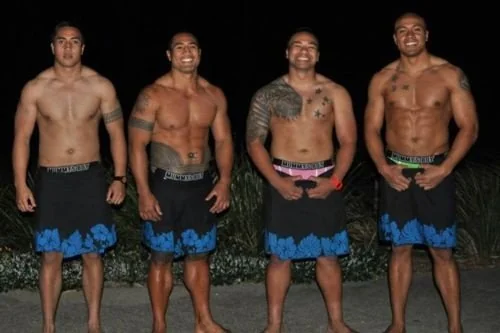
Research published in the American Journal of Physical Anthropology indicates that Polynesians show higher proportions of Type II (fast-twitch) muscle fibers — the fiber type responsible for explosive power, sprinting, and heavy lifting. Shorter limb segments relative to torso length further improve mechanical leverage, a structural advantage in powerlifting and contact sports.
| Genetic Factor | Effect on Strength | Origin |
|---|---|---|
| CREBRF gene variant (~26% of Samoans) | Efficient energy storage, muscle preservation | Pacific voyaging survival |
| Lower myostatin expression | Higher natural muscle mass ceiling | Ancestral selection |
| Higher bone density | Larger frames, bigger attachment points | Long-term environmental adaptation |
| Type II fast-twitch fiber prevalence | Explosive power and sprint capacity | Maritime labor demands |
| Shorter limb-to-torso ratio | Better mechanical leverage | Body composition genetics |
Fa’a Sāmoa means “The Samoan Way.” It is the cultural system that has governed Samoan life for thousands of years, defining social roles, family obligations, and community values.
It is also, fundamentally, a system that produces physically capable people as a natural byproduct of daily life.
The most important concept within Fa’a Sāmoa is tautua, meaning service to family and community. In traditional Samoan life, tautua was not a philosophical idea — it was physical labor performed every single day.
Fishing required hours of rowing boats and hauling nets against ocean currents. Agriculture meant clearing dense tropical vegetation, planting, and harvesting taro and yam by hand. Building and maintaining the traditional open-sided fale required moving and shaping heavy timber. Preparing a community feast in an umu (earth oven) involved coordinated sustained physical effort across an entire village.
Samoan people did not train to be strong. They were strong because their culture made physical work inseparable from belonging, respect, and family duty. A young Samoan man or woman grew up surrounded by physical labor and was expected to contribute fully from an early age.
In Fa’a Sāmoa, the aiga (extended family) is the core social unit. Strength is not an individual achievement — it is a community resource. Samoan athletes frequently cite their family and community as the primary motivation behind their performance. The drive to honor the aiga transforms genetic physical capacity into focused competitive excellence.
This cultural framework is a key reason why Samoan athletes outperform what raw genetics alone might predict.
Historical accounts describe Samoan ancestors as formidable warriors engaged in regular inter-clan conflict. Samoan traditional warfare involved close-quarters combat with heavy hardwood clubs — weapons so dense that only people of exceptional strength could use them effectively. Warriors who survived and excelled in battle had greater social status and reproductive success, creating a multi-generational selection pressure that favored physical strength.
This warrior heritage is something Samoan athletes often acknowledge directly — a cultural memory of toughness, resilience, and willingness to absorb and deliver physical punishment.
Today, Samoan athletes understand elite sports performance as an expression of tautua — serving family and community through excellence. Many NFL and rugby players from Samoan backgrounds send a significant portion of their income back to their families on the island. Success in sport is simultaneously personal achievement, family honor, and community pride.
When genetics meet this depth of cultural motivation, the results are extraordinary.
The traditional Samoan diet was built around whole foods that supported intense daily physical labor without caloric excess. Understanding this diet explains a great deal about how Samoan bodies were historically fueled.
| Traditional Food | Local Name | Nutritional Role |
|---|---|---|
| Taro root | Talo | Complex carbohydrates, fiber, potassium, magnesium |
| Breadfruit | Ulu | Sustained energy, vitamins, fiber |
| Fresh ocean fish | I’a | Lean protein, omega-3 fatty acids |
| Coconut | Niu | Medium-chain healthy fats, quick energy |
| Taro leaves in coconut cream | Palusami | Micronutrients, healthy fats |
| Pork | Pua’a | High-quality protein (reserved for ceremonies) |
| Green bananas | Fa’i | Resistant starch, sustained energy |
Taro (talo) was the foundation of the traditional Samoan diet. It provides complex carbohydrates that release energy slowly, sustaining physical labor across long working days without blood sugar spikes. It is rich in potassium, magnesium, and vitamin C — micronutrients directly involved in muscle function and recovery.
This is the carbohydrate that fueled ocean voyagers, farmers, fishermen, and warriors for thousands of years.
Coconut was consumed in multiple forms — fresh coconut flesh, coconut cream in cooking, and coconut water for hydration. The medium-chain triglycerides (MCTs) in coconut fat are processed differently from other dietary fats. They provide faster-access energy, support sustained physical effort, and do not promote the same fat storage patterns as long-chain fats.
Coconut cream in dishes like palusami provided caloric density without processed sugar or refined carbohydrates.
Surrounded by the Pacific Ocean, Samoans had consistent access to fresh fish, shellfish, and seafood. Fish provides complete protein containing all essential amino acids required for muscle synthesis and repair. Ocean fish also delivers omega-3 fatty acids that reduce inflammation and support joint health — critical for people performing daily heavy physical labor.
This is a naturally high-quality protein source that modern sports nutritionists would recognize as ideal for building and maintaining muscle mass.
Colonial contact and the introduction of imported processed foods dramatically altered the Samoan diet in the 20th century. Canned corned beef, white rice, white bread, and sugar-sweetened drinks replaced taro, fresh fish, and coconut. The CREBRF gene that once protected Pacific voyagers during food scarcity now promotes fat accumulation in a caloric surplus from processed foods.
As researcher Stephen McGarvey from Brown University noted: “Samoans weren’t obese 200 years ago. The gene hasn’t changed — the nutritional environment changed rapidly, and the body has not had time to adapt.”
The obesity challenges facing modern Samoan communities are not genetic failures or cultural weaknesses. They are the predictable outcome of ancient biology meeting a food environment it was never designed for.
American Samoa continues to produce NFL players at a rate that no other location on earth can match. The combination of Samoan body frames — naturally suited for the size and collision demands of professional football — with the cultural drive of tautua creates players who are exceptionally hard to stop.
Junior Seau, Troy Polamalu, and numerous current players represent a tradition of dominance in a sport defined by physical power. The size, low center of gravity, and natural leverage inherent in the Samoan physique are particularly suited to offensive and defensive line play.
Youth organized football only began in Samoa in 2011. The depth of athletic talent emerging from these islands with minimal formal training infrastructure is remarkable.
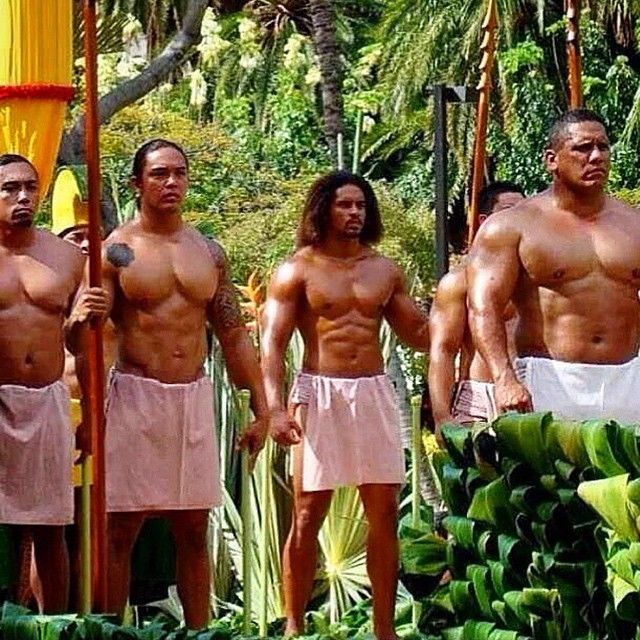
In rugby, Samoan players are celebrated for explosive speed combined with heavy body mass — a combination that most positions in most sports cannot accommodate but that rugby actively rewards. Manu Samoa, the national team, regularly competes against nations with populations many times larger.
Samoan players are described as having extraordinary ability to absorb and deliver impact — a feature of both their bone density and their cultural conditioning around physical toughness.
The Anoa’i family represents one of the most extraordinary dynasties in sports entertainment history. Multiple generations of a single Samoan extended family have reached the highest levels of professional wrestling globally. Dwayne “The Rock” Johnson, Roman Reigns, and Yokozuna are among the names that emerged from this lineage.
The wrestling success of this family illustrates the intersection of genetics, cultural cohesion, and the aiga principle — strength amplified by community and family identity.
Samoan children grow up in environments that demand physical engagement. Fishing, gardening, cooking preparation, and community work are not optional activities — they are expected contributions to family life. The physical conditioning that results is functional and full-body, building practical strength rather than isolated gym performance.
This early physical development creates movement patterns, grip strength, and core stability that formal athletic training later builds upon.
Multiple sources from within Samoan communities describe a cultural relationship with physical discomfort that treats pain as ordinary rather than alarming. Physical resilience — the capacity to continue performing under stress and impact — is culturally valued and socially recognized.
This mental relationship with physical challenge is a significant competitive advantage in contact sports where the ability to absorb and continue is often decisive.
The traditional Samoan umu (earth oven using heated volcanic stones) is not just a cooking method — it is a community event. Preparing a large umu feast for Sunday to’ona’i (the main Sunday meal after church) involves hours of coordinated physical preparation by multiple family members.
Food in Samoan culture is deeply tied to love (alofa), respect, and family provision. Providing abundant, high-quality food is a sign of care and social strength.
The traditional Samoan tatau (tattoo) is not decorative. The pe’a (full body tattoo) is a deeply painful process requiring exceptional endurance over multiple sessions. Completing a tatau is a public demonstration of physical and mental strength, connecting the individual to ancestral warrior identity.
The cultural practice of enduring significant physical discomfort as a rite of passage reinforces a broader attitude toward toughness that carries into athletic performance.
| Population Group | Myostatin Expression | Bone Density | CREBRF Variant | Natural Muscle Mass |
|---|---|---|---|---|
| Samoan / Polynesian | Lower (more muscle) | Higher | ~26% prevalence | Above average |
| European | Baseline | Baseline | Near zero prevalence | Baseline |
| East Asian | Baseline | Variable | Very low prevalence | Variable |
| African | Variable | Generally higher | Minimal | Generally higher |
Note: These are population-level tendencies based on available research. Individual variation within any group is significant. Genetics sets a range of possibility, not a fixed outcome.
The Samoan model shows that functional strength built through daily physical activity — fishing, farming, building, and community work — produces genuine athletic capacity. The idea of separating exercise from life is a modern luxury. Daily physical engagement across varied movement patterns builds resilience that isolated gym training often cannot replicate.
The traditional Samoan diet of taro, fish, coconut, and fresh vegetables is a model of whole-food, nutrient-dense eating that modern nutritionists consistently recommend. Complex carbohydrates for sustained energy, lean protein for muscle synthesis, healthy fats for hormone support, and micronutrients from vegetables form the core of sustainable strength nutrition.
No athlete performs at their best purely for personal gain. The Samoan model of tautua — strength in service of family and community — provides a motivational depth that personal achievement alone cannot match. Connecting physical performance to purpose and belonging is a lesson that applies far beyond Samoa.
The cultural willingness to endure difficulty — whether in a tatau ceremony, ocean fishing in rough weather, or competitive sport — reflects a relationship with discomfort that builds genuine resilience. Seeking challenge consistently, rather than avoiding it, is the foundation of mental toughness.
This framing confuses two separate phenomena. Samoan populations have elevated obesity rates — a documented and serious health challenge driven by the collision of thrifty gene biology with a modern processed-food environment. But Samoan athletes displaying extraordinary lean muscle mass and athletic performance are a completely separate expression of the same underlying genetic traits. The same biology that stores fat efficiently in a caloric surplus also builds and maintains muscle mass more effectively. Conflating obesity rates with athletic capacity misrepresents both realities.
Dwayne Johnson represents an exceptional individual who has combined Samoan genetic potential with decades of disciplined training, professional nutrition support, and competitive athletic career. He is not typical — but his genetic foundation is representative of real biological advantages that research has documented across the Samoan population.
Within Fa’a Sāmoa, strength encompasses emotional resilience, community commitment, family loyalty, and spiritual grounding. Samoan athletes consistently attribute their performance to values beyond physical capacity — to their families, their culture, and their community identity. The physical strength is the visible expression of a deeper cultural strength.
Samoan genetics include lower myostatin expression (allowing more natural muscle growth), higher bone density, and the CREBRF gene variant that promotes efficient energy storage — all traits that evolved over 3,500 years of Pacific voyaging and island survival.
Samoans are among the most physically powerful ethnic groups on earth, particularly in contact and strength sports, where they are dramatically overrepresented relative to their global population size.
The CREBRF gene variant, found in roughly 26% of Samoans, promotes efficient fat storage and energy conservation — originally a survival advantage during long ocean voyages that also supports muscle preservation and physical robustness.
Samoans naturally have larger frames, higher bone density, greater muscle mass, and fast-twitch fiber prevalence — physical traits that align perfectly with the demands of contact sports — combined with a cultural drive rooted in tautua (service) and warrior heritage.
It is both, working together. Genetics provides the physical blueprint, while Fa’a Sāmoa and tautua (service culture) provide the motivational engine that activates and maximizes that genetic potential throughout life.
The traditional Samoan diet centered on taro (complex carbohydrates), fresh ocean fish (complete protein and omega-3s), coconut (healthy fats), breadfruit, taro leaves (palusami), and fresh fruit — a whole-food diet that naturally supported heavy daily physical labor.
Samoans have some of the largest average body frames among Polynesian groups due to a combination of specific genetic variants, historical selection for physical size in warfare and ocean voyaging, and a cultural preference for large builds as symbols of health and social status.
The traditional diet remains excellent for building strength, but many Samoans have shifted to imported processed foods. Athletes and health-conscious community members are increasingly returning to traditional foods like taro, fish, and coconut to reclaim the nutritional foundation.
Fa’a Sāmoa instills tautua (service), aiga (family loyalty), and community obligation from childhood — giving Samoan athletes a depth of purpose-driven motivation that translates into exceptional competitive drive and mental toughness on the field.
Yes. The core principles — integrating daily functional physical activity, eating whole unprocessed foods, building strength in service of community purpose, and cultivating mental toughness through consistent challenge — are universally applicable and not exclusive to Samoan genetics.
Why are Samoans so strong is a question that deserves more than a one-word answer.
Samoan strength is the product of 3,500 years of evolutionary pressure that forged a physiology built for ocean survival, island labor, and physical resilience.
It is nurtured by Fa’a Sāmoa — a cultural system that makes physical service to family and community the highest expression of personal value.
It is fueled by a traditional diet of taro, fresh fish, coconut, and breadfruit that sustained one of history’s most physically demanding ways of life.
The Samoan example is not a story of a single gene or a single cultural trait. It is a story of how genetics, culture, and nutrition reinforce each other over thousands of years to produce something genuinely extraordinary.
As Samoan communities navigate modern health challenges while continuing to dominate global sport, the deeper lesson is clear: real strength comes from knowing who you are, why you show up, and who you are showing up for.
That is a lesson that extends well beyond any island in the Pacific.