
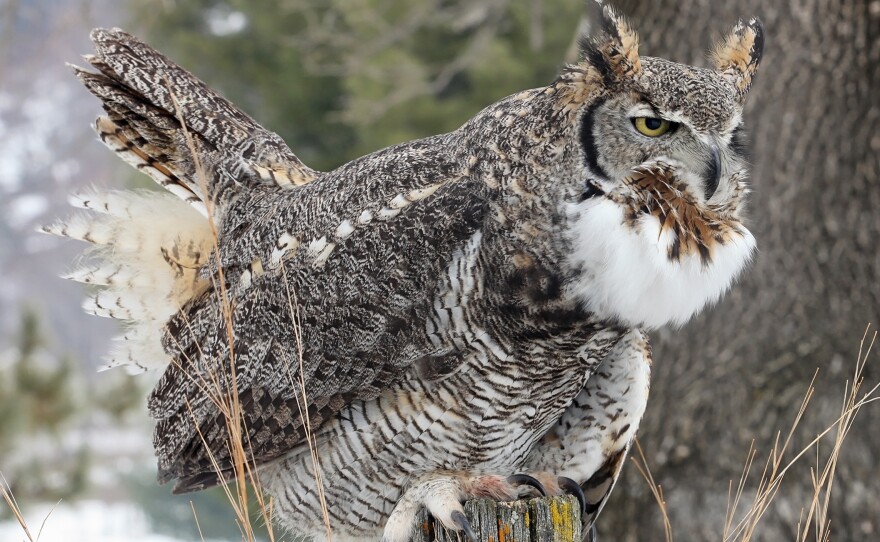
Why do owls hoot is one of the most fascinating questions in the world of birds, and the answer is far richer than most people expect. Owls hoot to communicate, defend territory, attract mates, warn of danger, and bond with their young.
These calls are not random noise — each hoot carries a specific message shaped by the season, the time of night, and the species making the sound.
Whether you hear a deep resonant hoot outside your window or a distant call in the forest, this guide breaks down every meaning, sign, and sound behind owl hooting in 2026.
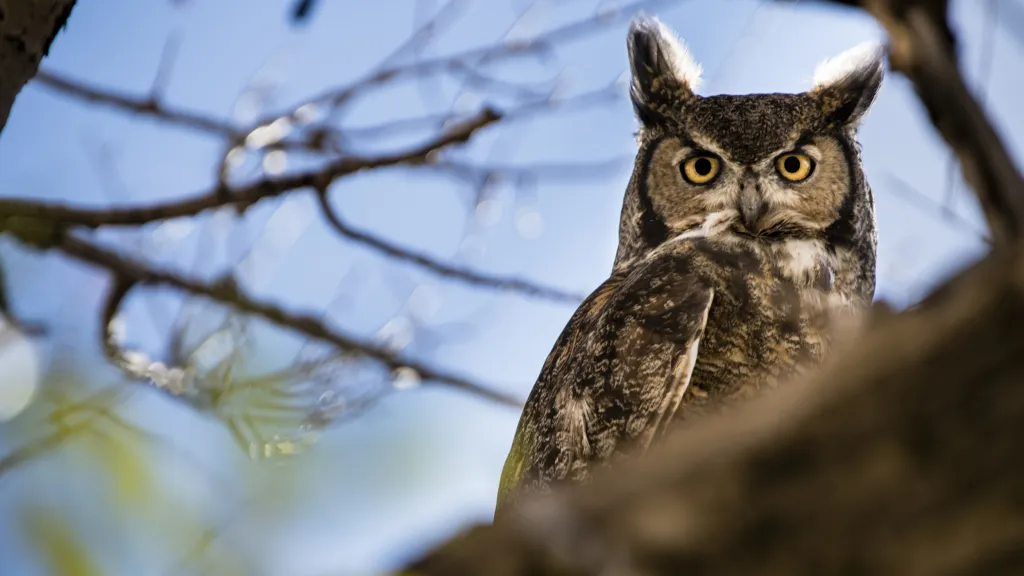
When an owl hoots, it is communicating something specific to other owls in its range. The hoot is the owl’s primary language, used to solve some of the most critical problems of daily survival.
Owls use hooting to claim territory, attract a mate, alert their young, warn of predators, and strengthen their pair bond. Each of these purposes produces a slightly different call in pitch, rhythm, and intensity.
Understanding what an owl is saying requires paying attention to context — the time of year, the time of night, how many owls are calling, and whether the sound is rhythmic and calm or urgent and aggressive.
Owls hoot for several distinct biological and behavioral reasons. Here is a breakdown of each core purpose.
The most common reason owls hoot is to establish and defend territory. A male owl will perch at the edge of its range and project deep, rhythmic hoots into the night, sending a clear message to any rival owl nearby: this space is taken.
These territorial hoots are usually loud, persistent, and follow a consistent rhythm. They carry over long distances, especially at night when competing sounds from wind and other birds are reduced.
Territorial disputes intensify in late summer and early fall when young owls leave their parents and begin searching for their own hunting grounds and nesting sites. During this period, multiple owls may be heard calling aggressively, sometimes accompanied by beak snapping, hissing, and growls.
Hooting plays a central role in owl courtship. During the breeding season, male owls hoot to advertise their presence to females, essentially saying “I am healthy, I have a territory, and I have a nest site.”
In many owl species, mated pairs engage in vocal duets. The female typically initiates with a series of hoots, and the male responds. This back-and-forth strengthens the pair bond and signals to other owls that this territory is occupied by a breeding pair.
Great Horned Owls, which mate for life, use hooting throughout the year to maintain their bond. Their courtship calls reach peak intensity in winter, often beginning as early as December and January, well ahead of their late winter breeding period.
Owls use hooting to communicate with their young in the nest. Female screech owls, for example, use a distinct call to prompt their fledglings to reveal their location in the dark.
Young owlets do not produce the same deep hoots as adults. Instead, they produce piercing screaming calls, commonly called begging calls, to signal hunger to their parents. These high-pitched sounds help parents locate their young in dense vegetation.
As owlets mature, they gradually develop the full vocal repertoire of adults. Some species, including barred owls, continue family social calls long into adulthood.
Not all owl vocalizations are hoots. When an owl feels threatened by a predator or an intruder near its nest, it shifts to a different set of sounds entirely.
Harsh barks, growls, hisses, and rapid beak snapping signal that an owl is agitated and ready to defend itself. These defensive sounds are far less musical than a courtship hoot and carry an unmistakably urgent quality.
If you ever approach an owl and hear these sounds, the right response is to back away and give the bird space. These alarm calls are most common during nesting season from spring through early summer when owls are protecting eggs and young chicks.
Owls that have established a pair bond use soft, lower-intensity hoots as contact calls — essentially checking in with each other across their shared territory.
These calls are less dramatic than territorial or courtship hoots. They serve the social function of maintaining connection between partners who may be separated while hunting across a large range.
Contact calls are one of the most overlooked reasons owls hoot. Many nighttime hoot sequences that seem quiet and slow are simply two bonded owls staying in communication as they move through the dark.
Owls hoot primarily at night because they are nocturnal animals whose entire biology is adapted for the dark.
Their eyes are built for low-light vision, capturing far more light than human eyes can. Their ears are asymmetrically positioned on their skulls, allowing them to pinpoint the precise location of sounds in three dimensions. Their feathers have soft, comb-like edges that absorb sound as they fly, making them nearly silent hunters.
Calling at night also provides a major acoustic advantage. Without competition from daytime bird sounds and high winds, a deep hoot can travel much farther through the cool night air. This makes nighttime hooting far more effective for communication across large territories.
There is also a safety benefit. Daytime aerial predators like eagles and large hawks are inactive at night, reducing the risk that a calling owl will draw unwanted attention from a larger bird of prey.
Owls produce sound through a specialized vocal organ called the syrinx, located at the base of the trachea. Unlike the human larynx, the syrinx can produce complex, layered vocalizations with remarkable control over pitch and rhythm.
The size of the syrinx directly affects the pitch of the call. Male Great Horned Owls have a larger syrinx than females, which is why their hoot is noticeably lower in pitch. This difference in pitch actually helps a mated pair communicate clearly — listeners can instantly tell which bird is speaking.
The syrinx allows owls to produce sounds ranging from deep resonant hoots to high-pitched whistles, screams, clicks, and hisses, all depending on what the owl needs to communicate.
Owls produce a wide range of vocalizations beyond the classic hoot. Here is a complete guide to the sounds owls make and what each one signals.
| Sound Type | Description | Meaning |
|---|---|---|
| Deep hooting | Low, rhythmic, repetitive | Territorial claim or courtship call |
| Duet hooting | Two owls calling back and forth | Mated pair bonding or territory announcement |
| Screeching or screaming | High-pitched, intense | Alarm, defense, or fledgling food begging |
| Barking | Short, sharp bursts | Warning of a nearby predator or threat |
| Hissing | Sustained air expulsion | Defensive threat at close range |
| Beak snapping | Rapid clicking noise | Aggressive threat display |
| Whistling or whinnying | Melodic, horse-like | Species-specific contact call (e.g. Eastern Screech Owl) |
| Purring | Soft, low vibration | Contentment, often heard between mates |
| Begging calls | Loud, piercing screams | Owlets requesting food from parents |
Not all owls hoot the same way, and not all owls hoot at all. Each species has a signature vocalization shaped by its size, habitat, and social structure.
The Great Horned Owl produces the most iconic owl hoot in North America. Its call is typically described as hoo-h’HOO-hoo-hoo, a deep four-to-five note sequence with a strong emphasis on the middle notes.
This species begins calling in winter, often as early as December. Great Horned Owls mate for life and use their distinctive duet to reinforce their pair bond throughout the year.
The Barred Owl has one of the most memorable calls of any American bird. Its signature phrase sounds remarkably like “Who cooks for you? Who cooks for you-all?” — a nine-note sequence that is instantly recognizable in mature forest habitats.
Mated Barred Owl pairs often perform elaborate duets that go far beyond simple hooting, incorporating cackles, caws, and gurgles into complex vocal exchanges.
The Barn Owl does not hoot at all. Instead, it produces a piercing, raspy shriek that many people describe as a screaming woman. This sound is one of the most startling in nature and has contributed heavily to owl mythology across many cultures.
Barn Owls also make purring, clicking, and hissing sounds, particularly around the nest.
The Eastern Screech Owl is known for a descending whinny that sounds remarkably like a horse. It also produces a long tremolo call. Despite its name, the Eastern Screech Owl does not actually screech in the traditional sense.
The tiny Northern Saw-Whet Owl produces a surprisingly loud and repetitive tooting call, often described as resembling a truck backing up. This monotonous beeping can be heard for long periods during the breeding season.
The Snowy Owl is less vocal than many species but produces deep, booming hoots that carry across open Arctic tundra. Males call most intensively during breeding season in late fall to winter.
Understanding when owls are most vocal helps you interpret what you are hearing and why.
| Time / Season | Owl Behavior | Common Sound |
|---|---|---|
| Dusk and dawn | Peak activity transition | Territorial and contact hoots |
| Late night (after midnight) | Primary hunting and mating | Mating duets, territorial calls |
| Fall (Aug–Oct) | Young owls dispersing | Territorial disputes, aggressive calls |
| Winter (Nov–Feb) | Peak courtship season | Courtship duets, mating calls |
| Spring (Mar–May) | Nesting and raising young | Alarm calls, begging calls from owlets |
| Summer (Jun–Aug) | Fledgling development | Begging calls, family contact calls |
| Daytime (rare) | Disturbance or unusual activity | Alarm or defensive calls |
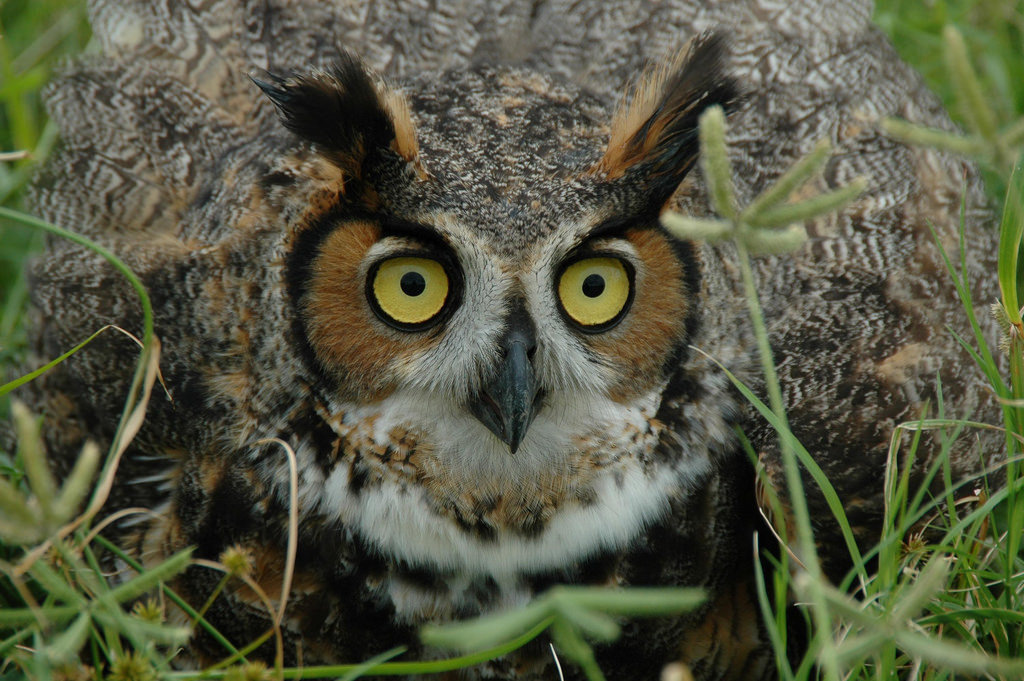
Hearing an owl hoot during daylight hours is genuinely unusual. Owls are built for the night, and daytime calling is typically triggered by specific circumstances.
A daytime hoot usually signals that the owl has been disturbed at its roost site by a predator, a human, or another bird. Crows, jays, and other birds frequently mob roosting owls during the day, and the owl may hoot in response.
Some owl species are crepuscular or even partially diurnal, meaning they are active at dawn and dusk. Short-eared Owls and Northern Hawk Owls are notable examples that hunt during daylight hours and may call more freely in the day than strictly nocturnal species.
Daytime calling can also occur during the peak of the breeding season when competition for mates is intense enough to override the owl’s usual instinct for nighttime-only activity.
The number of hoots in an owl’s call carries meaning, though interpretations vary between biological reality and cultural folklore.
From a biological standpoint, different species have characteristic numbers of notes per call sequence. Great Horned Owls typically produce four to five notes, while Barred Owls produce their distinctive nine-note phrase. The number is primarily a species identifier rather than a coded message.
In folklore and spiritual traditions, the number of hoots has been assigned specific meanings. Three hoots are sometimes interpreted as a warning or a call to pay attention to something in your life. These interpretations are culturally specific and not grounded in ornithology, but they form a rich body of human meaning-making around owl calls.
Throughout history, the hoot of an owl has carried profound cultural and spiritual weight across nearly every civilization on earth.
In many Native American traditions, owls are associated with the spirit world. Their nighttime calls were interpreted as messages from ancestors or warnings of death and misfortune. Different tribal traditions held different specific beliefs, but the owl’s nocturnal nature consistently linked it to the unseen world.
In ancient Greece, the owl was the symbol of Athena, goddess of wisdom. A hooting owl was considered a good omen, signaling wisdom and victory. Greek soldiers reported hearing owls before battles they went on to win.
In Hindu traditions, the owl is associated with Lakshmi, the goddess of wealth and prosperity. Hearing an owl hoot is considered a sign of incoming good fortune rather than a bad omen.
In Western European medieval culture, owls were associated with witches, ghosts, and the devil. Their silent flight and nighttime calling made them natural symbols of dark forces in a pre-scientific world.
In Celtic tradition, the owl was a symbol of the underworld and a guide for souls crossing into death. Its hoot near a dying person was seen as preparing the way.
| Culture | Owl Meaning | Hoot Interpretation |
|---|---|---|
| Native American | Messenger from spirit world | Warning or message from ancestors |
| Ancient Greek | Symbol of wisdom (Athena) | Good omen, victory ahead |
| Hindu | Associated with Lakshmi | Good fortune and wealth incoming |
| Medieval European | Associated with witchcraft | Bad omen, warning of danger |
| Celtic | Guide of souls | Death approaching nearby |
| Chinese | Associated with bad luck | Warning of misfortune |
| Japanese | Protective spirit | Good luck and warding off evil |
Hearing an owl hoot directly outside your window is an experience that triggers curiosity for many people. The biological explanation is straightforward — an owl has established territory near your home or is calling from a hunting perch it has selected in your yard or on a nearby tree.
Urban and suburban owls frequently use residential trees, rooftops, and fences as perching and calling spots. If you hear consistent hooting outside your window over several nights, a Great Horned Owl or Barred Owl has almost certainly claimed your neighborhood as part of its territory.
From a spiritual perspective, many traditions interpret a hoot outside your window as a personal message — an invitation to pay attention to something in your life, a signal of incoming change, or a reminder to trust your intuition. These interpretations vary widely by culture and personal belief.
Hearing two or more owls calling at the same time typically signals one of two things: a mated pair exchanging contact calls or a territorial dispute between rival owls.
A mated pair duet sounds relatively organized. One owl calls, the other responds, and the exchange has a conversational rhythm. Great Horned Owl pairs are famous for this kind of synchronized back-and-forth duet, which can last thirty minutes or more on winter nights.
A territorial dispute sounds more chaotic. Calls may overlap, escalate in intensity, and be accompanied by unusual sounds like barking, hissing, or bill snapping. Multiple owls calling in an agitated, overlapping pattern almost always indicate that a territory boundary is being contested.
Hooting plays a role in hunting that is often overlooked. Some owl species use vocalizations as a form of echolocation, emitting sounds and using the returning echoes to detect objects in total darkness.
More commonly, owls use their extraordinary hearing rather than active echolocation. The asymmetric placement of their ear openings allows them to triangulate the precise location of a mouse or vole from the sound of its movement alone, even under a thick layer of snow.
Hooting during the hunt is relatively rare because it would alert prey. The owl’s strategy is silence in flight and patience in waiting, not calling. However, some species do vocalize softly as they approach prey or communicate with a hunting partner.
This is one of the most common misconceptions about owls — that all owls produce the classic deep hoot. In reality, only certain species hoot, and many make completely different sounds.
Barn Owls screech. Eastern Screech Owls whinny. Northern Saw-Whet Owls toot. Short-eared Owls bark. Burrowing Owls produce a coo-coo call. Each species has its own vocal signature shaped by millions of years of evolution in its specific habitat and social context.
As a general rule, larger owl species tend to produce lower-pitched hoots, while smaller species have higher-pitched and more varied calls. The Flammulated Owl is a notable exception — it is a small owl that produces a surprisingly deep hoot.
Scientists and conservationists use owl vocalizations as a powerful tool for monitoring wild populations without disturbing the birds.
Passive acoustic monitoring uses recording devices placed in owl habitats to capture vocalizations over extended periods. Researchers can identify species, estimate population sizes, track territorial boundaries, and detect habitat use — all from audio recordings alone.
Playback surveys, in which a recorded owl call is broadcast and the response is monitored, are used to confirm the presence of specific species in an area. This method has helped locate rare and elusive species in dense forest habitats where visual surveys would be nearly impossible.
Understanding why owls hoot and how their calls vary across species makes this kind of conservation monitoring possible.
If you want to hear more owl hooting near your home, there are practical steps you can take to make your property more attractive to nesting owls.
Installing a proper nest box suited to the local owl species — Great Horned Owl boxes, Barn Owl boxes, or Eastern Screech Owl boxes are the most common — gives owls a ready-made nesting site that may be difficult to find naturally in suburban areas.
Maintaining mature trees on your property provides both perching and potential natural cavity nest sites. Owls look for large, old trees with stable branches from which to survey their hunting ground.
Reducing outdoor lighting at night makes your property more appealing to nocturnal owls, which are sensitive to bright artificial light. A dark yard with good tree cover is far more inviting than a brightly lit lawn.
Avoiding pesticide use keeps the owl’s prey — mice, voles, and shrews — healthy and chemical-free. An owl that hunts in a pesticide-heavy area risks secondary poisoning from eating contaminated prey.
Owls hoot at night because they are nocturnal and their hoots travel much farther in the quiet night air. Nighttime also reduces competition from daytime bird sounds and eliminates the risk of attracting daytime predators like hawks and eagles.
Biologically, it means an owl has claimed territory near your home and is using a nearby tree or rooftop as a calling perch. Spiritually, many cultures interpret it as a personal message, a sign of incoming change, or a call to pay attention to something important in your life.
No. Many owl species make completely different sounds. Barn Owls screech, Eastern Screech Owls whinny, Northern Saw-Whet Owls toot, and Short-eared Owls bark. Only certain species produce the classic deep hoot most people associate with owls.
Three hoots are simply part of some species’ natural call sequence rather than a coded message. In folklore, three hoots are sometimes interpreted as a warning or a significant sign, but this is a cultural interpretation rather than a biological one.
Two owls calling in an organized, alternating pattern are almost always a mated pair performing a duet to strengthen their bond and announce their shared territory. An aggressive, overlapping exchange usually signals a territorial dispute between rival owls.
Daytime hooting is uncommon and usually signals a disturbance. An owl may call during the day if it has been flushed from its roost by a predator, mobbed by crows or jays, or if it is a partially diurnal species like the Short-eared Owl or Northern Hawk Owl.
Owls are most vocal from late fall through early spring — the courtship and breeding season. Great Horned Owls begin calling in December, reaching peak intensity in January and February. Fall is also active as young owls claim new territories.
This depends entirely on the cultural tradition. Native American and medieval European traditions often treated owl hoots as warnings or bad omens. Ancient Greek, Hindu, and Japanese traditions considered owls to be good luck. There is no universal interpretation.
A Great Horned Owl’s hoot can carry over half a mile in still night conditions. The deep, resonant frequency of the call is specifically adapted for long-distance transmission through forested and open environments.
Owls produce their calls through the syrinx, a specialized vocal organ at the base of the trachea. The syrinx gives owls precise control over pitch and rhythm, allowing them to produce everything from deep resonant hoots to screams, clicks, and hisses.
Why do owls hoot comes down to one core truth: hooting is the owl’s primary language, used to solve the most critical challenges of survival — claiming space, finding a mate, protecting young, and warning of danger.
Every hoot you hear at night carries a specific biological message shaped by the season, the species, and the social context of the bird making it.
The Great Horned Owl duetting with its mate on a January night, the young owl staking its first territory in September, the mother screech owl guiding her fledglings through summer darkness — all are using sound to navigate a nocturnal world where vision alone is never enough.
Understanding why owls hoot transforms these mysterious nighttime sounds from background noise into a living language you can begin to read. The next time you hear a hoot in the dark, you will know exactly what the owl is trying to say.