
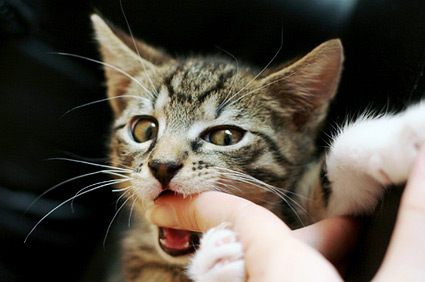
Why does my cat bite me when I pet her is one of the most common questions cat owners ask — and one of the most misunderstood cat behaviors. You are enjoying a calm petting session, your cat is purring, everything feels perfect, and then suddenly — chomp.
It feels random, confusing, and even a little hurtful. But your cat is not being mean or unpredictable. There is always a reason behind the bite.
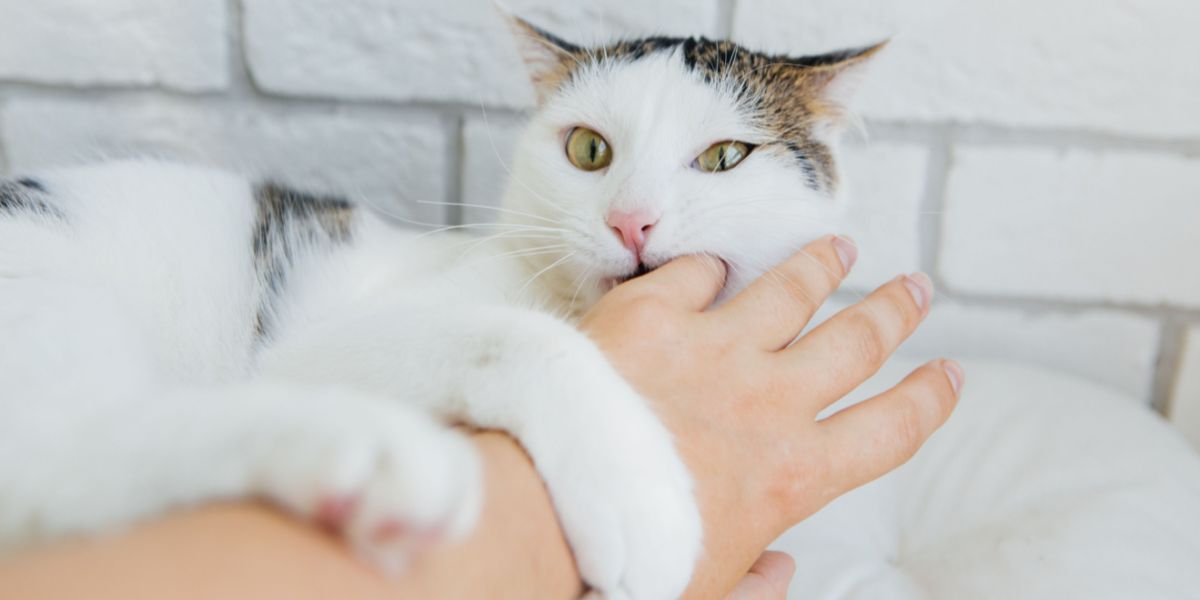
Petting-induced aggression, also called petting aggression or overstimulation aggression, is when a cat suddenly bites or swats during a petting session.
This is one of the most common behavioral issues among indoor cats. It can happen even with cats that are otherwise friendly and affectionate.
The cat is not being vicious. They are communicating that they have had enough. The problem is that most owners do not recognize the warning signs until it is too late.
There is rarely just one single reason. Most biting during petting falls into one of these core categories.
Overstimulation is the leading reason why cats bite during petting. What starts as pleasant physical contact gradually becomes irritating or uncomfortable.
Think of it like someone patting you on the back. A few pats feel nice. Twenty minutes of patting becomes unbearable. Your cat’s sensory threshold works the same way.
The nerve endings in a cat’s skin become increasingly sensitive the longer petting continues. The repetitive stroking motion eventually crosses from pleasure to irritation — and the cat bites to make it stop.
Most cats have strong preferences about where they like to be touched. Petting in the wrong location is a fast path to a bite.
Cats generally enjoy being stroked on the head, behind the ears, under the chin, and along the cheeks. These are the areas where cats naturally groom each other.
Areas that frequently trigger biting include the belly, the base of the tail, the lower back, and the full length of the tail. Many cats dislike full-body strokes, even if they seem to tolerate them briefly.
| Body Area | Most Cats Like | Most Cats Dislike |
|---|---|---|
| Top of head / between ears | Yes | Rarely |
| Cheeks and chin | Yes | Rarely |
| Back of neck | Usually yes | Occasionally |
| Full back / body stroke | Sometimes | Often after a while |
| Belly | Rarely | Very commonly |
| Base of tail | Rarely | Very commonly |
| Tail itself | Rarely | Almost always |
Not every bite during petting is a sign of irritation. Some cats give what behaviorists call love bites.
Love bites are gentle nibbles that do not break the skin. They often happen when a cat is relaxed, purring, and grooming you. This behavior comes from kittenhood when cats nibbled on their littermates during social grooming.
A love bite is typically soft, brief, and paired with relaxed body language: soft eyes, slow blinking, kneading, or purring. If there is no tension in the cat’s body, it is almost certainly a love bite and not aggression.
A sudden change in biting behavior is one of the most important medical red flags cat owners should never ignore.
If your cat has never bitten during petting before and suddenly starts, pain may be the cause. Conditions like arthritis, dental disease, ear infections, skin irritation, or dermatitis can make normal touch painful.
If petting a specific area consistently triggers biting, that area may be sore or inflamed. A veterinary check-up is essential any time biting is a new behavior, especially in older cats.
Cats are natural hunters. During play, they stalk, pounce, bite, and kick — these are hunting behaviors built into their DNA.
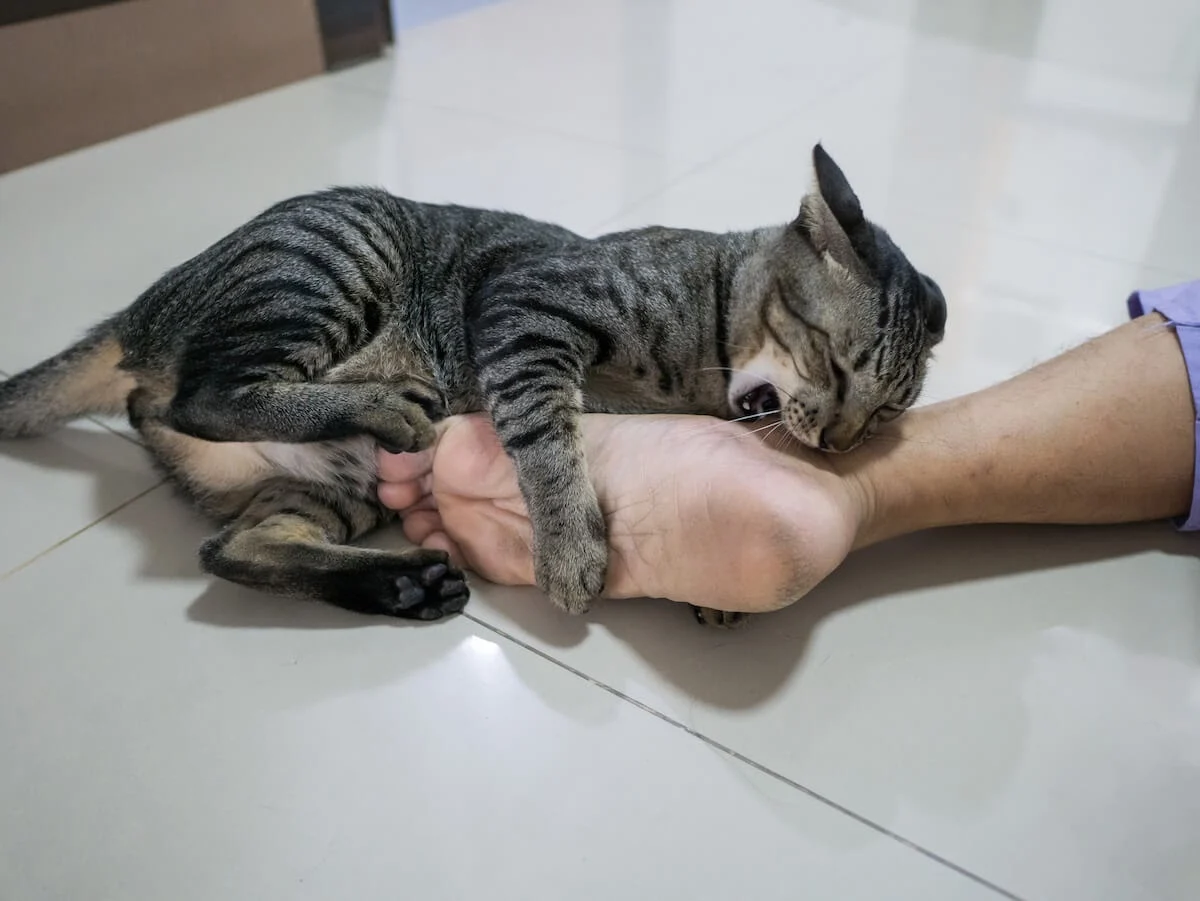
If a cat was allowed to play with human hands or feet as a kitten, they learned to treat hands as prey. That habit carries into adulthood with much sharper teeth and stronger jaws.
Play biting during petting can also occur when a cat is in a high-energy state. Petting can accidentally tip an excited cat into hunt mode, especially in younger or indoor cats with limited play outlets.
A cat that is frightened, anxious, or stressed has a much lower tolerance for physical contact.
If something startles your cat — a loud noise, an unfamiliar smell, a new person in the home — they may redirect that anxiety into a bite, even if the petting itself was gentle and welcome moments before.
This is called redirected aggression. The cat cannot reach the source of their fear or stress, so the nearest thing — your hand — gets the bite instead.
Cats that were not handled much during their socialization window of two to seven weeks often develop handling sensitivities as adults.
Kittens that did not have littermates or a mother cat to teach them bite inhibition may also bite harder than intended. They simply never learned the social rules of gentle touch.
These cats are not broken or aggressive. They just need more patience, shorter sessions, and consistent positive reinforcement over time.
Some cats bite during petting as a way of asserting control over the interaction. They want petting on their terms, not yours.
This is why the same cat will rub against your legs, jump into your lap, and seem to invite petting — then bite three minutes later. They initiated it, they enjoy it briefly, and they decide when it ends.
Respecting that boundary is not losing the relationship. It is building trust. Cats that feel in control of interactions become more affectionate over time, not less.
The single most important skill for stopping biting is learning to read warning signs before they escalate.
Almost every cat gives multiple warnings before biting. The problem is that most owners miss them or ignore them until a bite happens.
Early warning signs (stop petting immediately):
Escalating warning signs (remove your hand now):
The bite is about to happen:
| Warning Level | Signs to Watch | What to Do |
|---|---|---|
| Yellow (early) | Tail flick, skin twitch, ears shift | Slow down petting |
| Orange (moderate) | Tail lashing, stiff body, backward ears | Stop petting completely |
| Red (critical) | Hard stare at hand, full ear flatten, freeze | Withdraw hand slowly and give space |
Once you understand why it happens, stopping the biting becomes much more manageable. These are the most effective strategies recommended by certified feline behaviorists.
Most cats enjoy petting in brief, frequent bursts rather than long uninterrupted sessions.
Two to three minutes of focused petting, followed by a break, is far more enjoyable for most cats than a twenty-minute marathon session. Short sessions end before the cat reaches their stimulation threshold.
Always stop while your cat still seems to be enjoying it. Leave them wanting more. This keeps the association between petting and positive feelings intact.
Before reaching out to pet your cat, perform a simple consent test.
Hold your hand one to two inches from your cat’s face or head. If she closes the gap and leans into your hand, she is inviting contact. If she turns away, stays still, or leans back, she is declining — and you should respect that.
Cats that are regularly offered the choice to opt in or opt out of petting become far less likely to bite. They learn that communication works, so they never need to resort to biting to make their wishes known.
Focus all petting on the areas most cats reliably enjoy: the head, behind the ears, under the chin, and along the cheeks.
Avoid belly rubs, base-of-tail strokes, and full-body sweeping strokes unless your individual cat has specifically shown she enjoys them without negative reactions.
Let your cat guide your hand by leaning into areas she wants touched. Follow her lead rather than deciding yourself where to pet.
If your cat bites during petting due to play instinct, stop all hand-based play immediately.
Never wiggle fingers under blankets, let a cat chase your hand, or allow any rough play with bare skin. Always use wand toys, feather toys, or kick toys to redirect hunting energy.
This is especially important with kittens. Teaching them early that hands are not prey prevents a lifetime of biting habits.
For cats with strong petting aggression, gradual desensitization is the most reliable long-term fix.
Start by counting exactly how many pets it takes before your cat shows the first warning sign. If she starts twitching her tail on stroke five, stop at stroke three. End every session before the warning appears.
Over several days, increase sessions by one stroke at a time while pairing each session with a treat. The cat begins to associate longer petting with positive rewards instead of discomfort.
This process takes weeks but produces lasting results without punishment.
Punishing a cat for biting — yelling, spraying with water, pushing them away roughly — is counterproductive and damages your relationship.
The cat is biting to communicate. Punishment teaches her that you are unpredictable and scary, which increases anxiety and worsens biting over time.
The correct response to a bite is to calmly withdraw your hand, stand up if the cat is on your lap, and give the cat space to calm down. No drama, no reaction. Neutral withdrawal is the message.
A mentally and physically enriched cat is a calmer, less reactive cat.
Provide regular interactive play sessions with wand toys to drain hunting energy before petting. Add puzzle feeders, cat trees, window perches, and scratching posts to reduce boredom and frustration.
A cat that gets adequate prey-play exercise is far less likely to redirect predatory impulses onto your hand during petting.
| Enrichment Tool | Benefit for Biting |
|---|---|
| Wand / feather toys | Redirects hunting instinct away from hands |
| Puzzle feeders | Reduces boredom and frustration |
| Cat trees / window perches | Provides environmental control and calm observation |
| Scratching posts | Releases tension through natural behavior |
| Catnip / silvervine toys | Provides sensory stimulation without human touch |
| Multiple daily play sessions | Lowers overall arousal and reactivity |
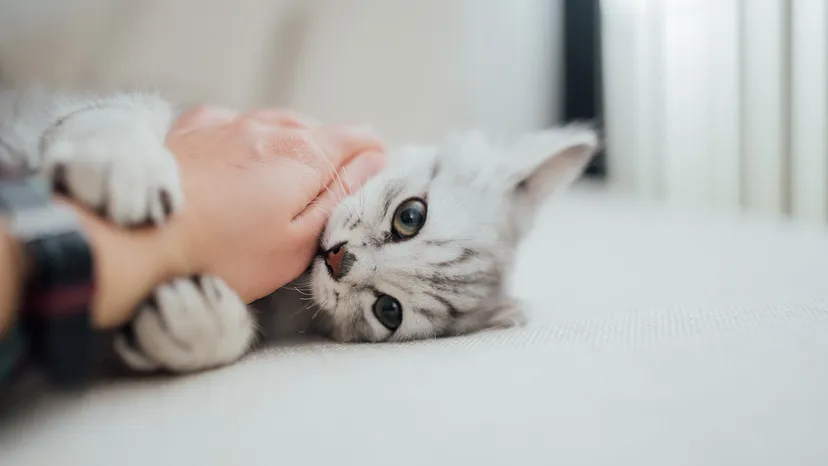
Not all biting during petting means your cat is unhappy. Knowing the difference helps you respond correctly.
A love bite is gentle, does not break skin, and happens during moments of obvious contentment — purring, kneading, relaxed posture, slow blinking. It is affection expressed in cat language.
An aggressive or overstimulation bite is firmer, may break skin, and is preceded by the warning signs listed above. The cat’s body will shift from relaxed to tense before it happens.
| Feature | Love Bite | Overstimulation Bite |
|---|---|---|
| Force | Gentle, no skin breakage | Firm, may puncture |
| Body language | Relaxed, purring, kneading | Tense, tail lashing, stiff |
| Warning signs | None — happens during contentment | Multiple clear signals beforehand |
| Meaning | Affection, grooming behavior | Stop — I have had enough |
| Response needed | None necessary if gentle | Stop petting, give space |
Biting during petting is usually behavioral, but certain situations require a vet visit.
See a veterinarian if your cat has never bitten during petting before and suddenly starts. This change in behavior is one of the most reliable indicators of an underlying health problem.
Also seek veterinary advice if biting is always triggered by contact with one specific area of the body. Pain at that location — arthritis, injury, skin infection, dental disease — is the likely cause.
A veterinary behaviorist can also help if the biting is severe, frequent, or has not improved with behavioral strategies over several months.
Cat bites carry a high risk of infection due to the bacteria naturally present in a cat’s mouth. Even a small puncture wound requires proper care.
Clean the wound immediately with soap and warm water. Apply an antiseptic and cover with a clean bandage. Monitor for redness, swelling, warmth, or pus over the following 24 to 48 hours.
Seek medical attention promptly if any signs of infection develop. Deep puncture wounds, bites near joints, or bites in immunocompromised individuals should always be evaluated by a doctor.
Stopping biting is not just about avoiding pain — it is about building a relationship based on trust and communication.
Cats that feel heard and respected become more affectionate over time. When they learn that a subtle tail flick actually gets results — that you notice and respond — they stop needing to escalate to biting.
The goal is to become fluent in your cat’s language. The more you understand her signals, the more she trusts you. The more she trusts you, the longer and more relaxed your petting sessions will become — without a single bite.
| Reason for Biting | Key Sign | Solution |
|---|---|---|
| Overstimulation | Bite after extended petting | Keep sessions short, watch body language |
| Wrong petting spot | Bites when specific area is touched | Stick to head, chin, ears only |
| Love bite | Gentle, during purring and contentment | No action needed unless uncomfortable |
| Pain or medical issue | New biting, bites at specific spot | See veterinarian immediately |
| Play / predatory instinct | Biting with grabbing and kicking | Use toys, never hands, for play |
| Fear or stress | Biting after sudden noise or change | Identify stressor, provide safe retreat |
| Poor early socialization | Consistently low petting tolerance | Slow desensitization with positive reinforcement |
| Control and autonomy | Bites after initiating contact herself | Consent test, let cat lead all interactions |
Purring does not always mean contentment — cats also purr when overstimulated. Watch for body language changes like tail flicking or skin twitching, as these signal the switch from enjoyment to irritation.
Yes, petting-induced aggression is extremely common in cats. It does not mean your cat is aggressive or broken — she is simply communicating that she has reached her stimulation limit.
Most cats strongly dislike belly petting despite rolling over to expose it. Stop petting the belly entirely and redirect to the head and chin, which are almost universally enjoyed.
Grabbing your hand and biting is a classic hunting move — your cat has switched from affection mode to play/prey mode. Stop using your hand as a toy and redirect all play to wand toys immediately.
A love bite is gentle and does not break the skin. An aggressive or overstimulation bite is firmer and more sudden, often accompanied by a tense body, flattened ears, or a lashing tail before it happens.
Never. Punishment increases fear, damages trust, and worsens biting over time. Calmly withdraw your hand and give your cat space — neutral withdrawal is the only effective immediate response.
Most cats do best with two to three minute sessions with breaks in between. Always stop while your cat is still enjoying herself — ending on a positive note builds longer tolerance over time.
Yes, through gradual desensitization and counter-conditioning. Count the strokes before the first warning sign appears, stop two strokes short of that, and pair sessions with treats to slowly build tolerance.
A sudden change in behavior is a medical red flag. Pain, arthritis, dental disease, skin irritation, or another health condition may be causing sensitivity. Schedule a veterinary appointment promptly.
This is a mix of affection and overstimulation — the bite signals enough, and the lick is an apology or continuation of social grooming. It is common in cats that use grooming as bonding behavior with their owners.
Why does my cat bite me when I pet her almost always comes down to overstimulation, communication, or an underlying physical cause — not aggression or meanness. Your cat is not punishing you. She is talking to you in the only language she has.
The solution is not to stop petting your cat — it is to learn her language, respect her limits, and work with her natural preferences instead of against them. Keep sessions short, stick to safe zones, do the consent test, and watch for those early tail flicks.
With patience and consistent practice, most cats become far more tolerant of petting and far less likely to bite. A cat that trusts you communicates softly — and rarely ever needs to use her teeth.