
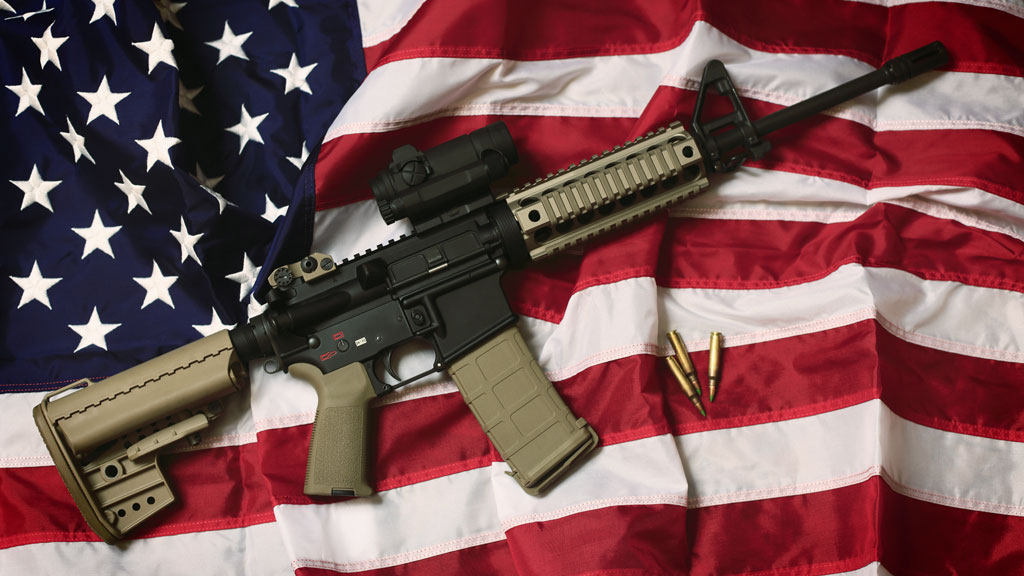
Why was the Second Amendment created is one of the most debated constitutional questions in American history — and in 2026, it remains as relevant as ever. Written in just 27 words and ratified on December 15, 1791, this amendment to the U.S. Constitution has shaped centuries of law, politics, and culture.
To understand it fully, you need to look back at the fears, experiences, and ideals of the Founding Fathers who drafted it, the conflicts that inspired it, and how its meaning has been interpreted and contested ever since.
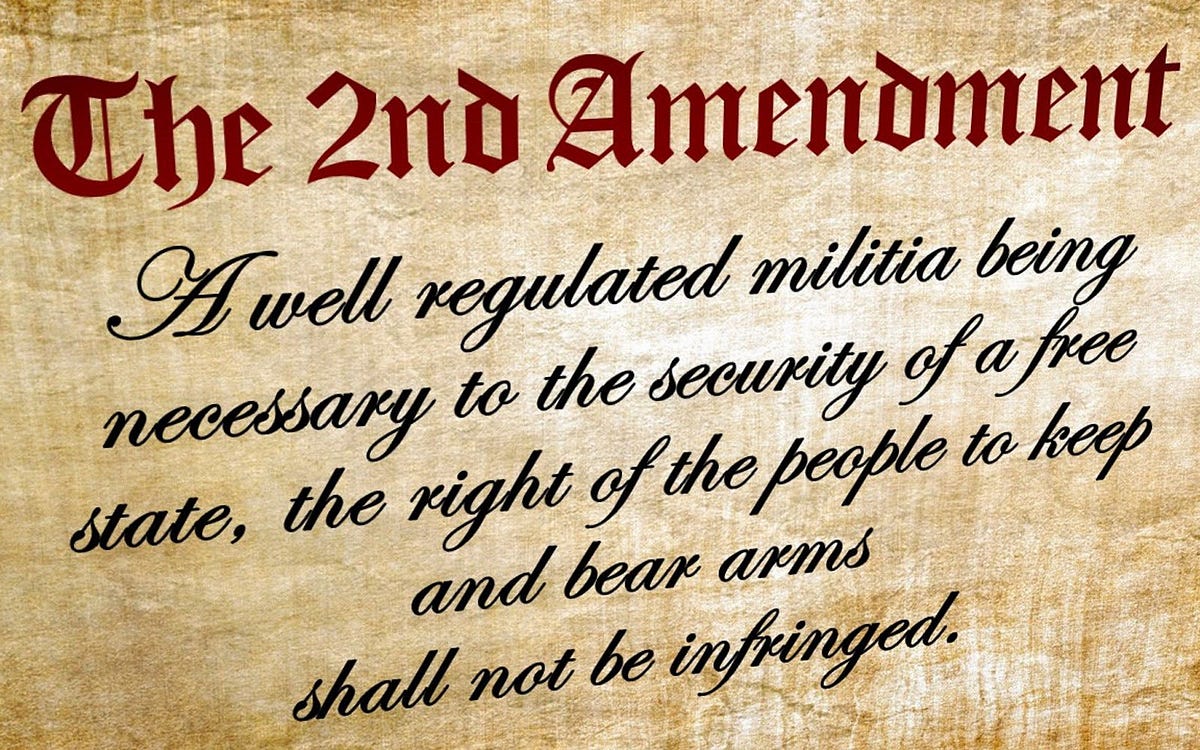
The Second Amendment reads: “A well regulated Militia, being necessary to the security of a free State, the right of the people to keep and bear Arms, shall not be infringed.”
These 27 words were ratified in 1791 as part of the Bill of Rights — the first ten amendments added to the U.S. Constitution.
The amendment was drafted by James Madison, who proposed it to the first Congress on June 8, 1789 as part of a broader package of 17 proposed amendments.
To understand why the Second Amendment was created, you have to understand the world the Founders lived in.
The American Revolution had ended less than a decade earlier. The colonists had just fought — and won — a war against the British Crown, a government they believed had become tyrannical.
That experience shaped everything. The Founders had seen firsthand what a powerful central government with a standing army could do. They were not going to let that happen again in their new republic.
Before the Revolution, British soldiers were quartered in colonists’ homes. The Crown imposed taxes without representation. Armed troops enforced unpopular laws at bayonet-point.
King George III sent General Thomas Gage to seize colonial arms and gunpowder stores in Lexington and Concord, Massachusetts. That military raid in April 1775 triggered the first battles of the Revolutionary War.
The message was not lost on the Founders: disarming the people was the first step toward oppressing them.
During the Revolution, professional armies were expensive and politically dangerous. The colonists relied heavily on citizen militias — ordinary people who brought their own weapons and organized locally to defend their communities.
These militias were unpredictable and sometimes ineffective in open battle, but they played a critical guerrilla role in harassing British forces. George Washington often clashed with militia limitations, but even he acknowledged their political importance.
The militia became a symbol of republican virtue — the citizen-soldier who fought for liberty rather than for pay or a king.
The single most powerful motivation behind why the Second Amendment was created was the fear of tyrannical government.
The Founders had just overthrown one. They were acutely aware that governments could and did oppress their own people, and they wanted to build structural protections against that ever happening in America.
James Madison argued in Federalist No. 46 that an armed citizenry was the ultimate check on federal overreach. He reasoned that if the federal government ever turned tyrannical, an armed population could resist it — just as the colonists had resisted the British.
Anti-Federalists were even more insistent on this point. They believed that a centralized standing army, permitted by the new Constitution, gave the federal government dangerous military power that could be turned against the states and the people.
When the Constitution was being debated in 1787 and 1788, many Anti-Federalists were alarmed by Article I, Section 8. This clause gave Congress the power to organize, arm, discipline, and call forth the militia.
They feared this meant the federal government could effectively disarm state militias by refusing to arm them or by calling them into federal service indefinitely.
James Madison drafted the Second Amendment partly to resolve this tension. It was meant to assure Anti-Federalists — and the states — that Congress could not legally disarm the people or abolish state militias.
The Founders deeply mistrusted standing armies — professional, permanent military forces under central government control.
Alexander Hamilton himself, one of the strongest advocates of federal power, acknowledged that standing armies were dangerous to liberty. The Declaration of Independence had listed as a grievance that King George III had “kept among us, in times of peace, Standing Armies without the Consent of our legislatures.”
The militia, composed of armed citizens, was seen as a safer and more republican alternative to a standing army. The Second Amendment helped ensure that this citizen-based defense force could always exist by protecting citizens’ right to own and bear arms.
While the militia context was central, the Founders also recognized self-defense as a pre-existing natural right.
English jurist Sir William Blackstone, whose Commentaries on the Laws of England profoundly influenced American constitutional thinking, listed the right to bear arms as one of the three principal rights of Englishmen. He described it as an auxiliary right supporting the natural rights of self-defense and resistance to oppression.
The Founders saw individual self-defense not as a privilege granted by government but as a natural right that government was obligated to protect.
There is also a very practical political reason why the Second Amendment was created.
The Constitution nearly failed to be ratified. Many states, particularly Virginia and New York, were deeply reluctant. Anti-Federalists held enormous influence and refused to support ratification without firm guarantees protecting individual liberties.
James Madison and the Federalists struck a compromise: they promised to support a Bill of Rights as amendments to the Constitution after ratification. This promise was enough to bring sufficient Anti-Federalist support aboard.
The Second Amendment, protecting the right to bear arms, was one of the key provisions needed to secure enough votes for ratification. Without it, the Constitution as we know it might never have been adopted.
The Founders had a philosophical concern about where military power should reside in a republic.
They believed power needed to be distributed — not concentrated in any single institution. Political power was balanced through the three branches of government. Military power needed its own balance.
Britannica notes that the Second Amendment enshrined the principle of distributing “the power of the sword equally among the people, the states, and the federal government.” An armed citizenry was the people’s share of that power.
This was a conscious design choice by the Founders to prevent any single authority — including the federal government — from monopolizing force.
Southern states had an additional and historically important concern: the protection of slavery through armed state militias.
State militias in the South served a dual purpose — external defense and internal policing, including the suppression of enslaved people’s resistance and uprisings.
Some historians, including Carl Bogus and others, argue that James Madison crafted the Second Amendment language partly to assure Virginia and the South that the federal government could never disarm state militias, thereby removing this tool of internal social control. This is a contested interpretation but one that serious historians take seriously.
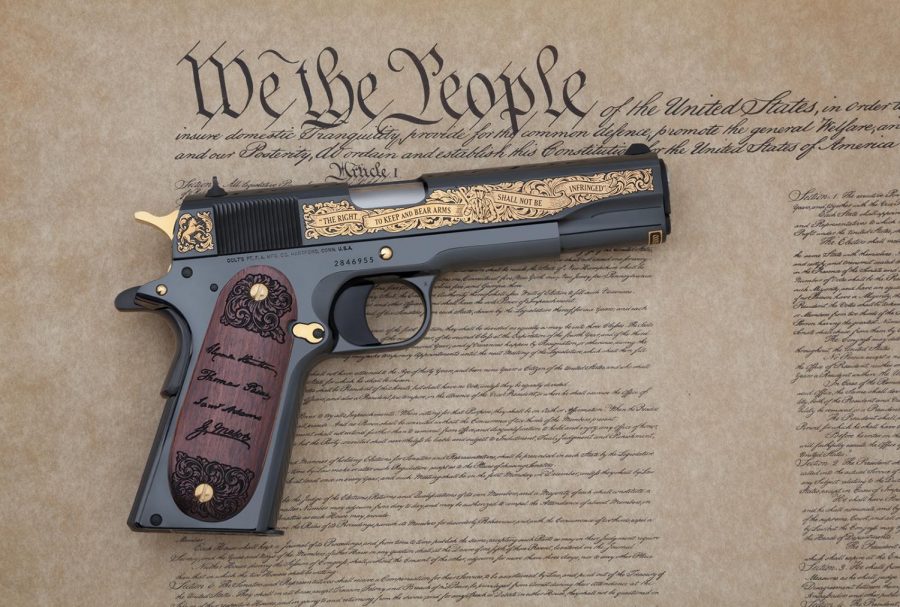
James Madison is the primary author of the Second Amendment. He drafted it as part of his proposed Bill of Rights in 1789.
Madison’s original draft read: “The right of the people to keep and bear arms shall not be infringed; a well armed and well regulated militia being the best security of a free country: but no person religiously scrupulous of bearing arms shall be compelled to render military service in person.”
The House committee revised the draft, moving the militia clause to the front. The Senate further modified the language, removed the conscientious objector provision, and finalized the wording we know today.
The Second Amendment did not emerge from nothing. It was deeply rooted in English legal tradition going back centuries.
The English Bill of Rights of 1689 declared that Protestant subjects had the right to possess arms for their defense. This provision arose from friction over the English Crown’s attempts to use loyal militias to disarm dissidents.
The Glorious Revolution of 1688 had overthrown King James II, who had tried to disarm Protestant opponents. The resulting Bill of Rights codified the armed citizen’s role as a check against monarchical tyranny.
This precedent directly shaped American thinking. The U.S. Supreme Court has acknowledged the historical link between the English Bill of Rights and the Second Amendment.
Britannica traces the origins of the Second Amendment even further back, to ancient Rome and Renaissance Florence, where the principle of the citizen-soldier was central to republican theory.
The Florentine political tradition, influential during the Enlightenment, held that citizens who bore arms in defense of the republic were the most virtuous members of society. A republic that depended on mercenaries or professional armies was seen as corrupt and vulnerable.
The Founders were deeply read in classical history and Enlightenment philosophy. These traditions informed their view that an armed citizenry was essential to a healthy republic.
Britannica also notes that in the late 16th century, Queen Elizabeth I instituted a national militia in which individuals of all classes were required to participate in defense of the realm. This English militia tradition, though imperfect, established the precedent of citizen-based defense that the Founders later drew upon.
The debate over the Second Amendment played out within the larger conflict between Federalists and Anti-Federalists.
| Group | Position | Key Concern |
|---|---|---|
| Federalists | Supported strong central government | Feared chaos of weak central authority |
| Anti-Federalists | Opposed overly powerful federal government | Feared federal military tyranny |
| State Governments | Wanted control of their own militias | Feared federal disarmament |
| Southern States | Wanted armed militias under state control | Feared loss of tools to police enslaved people |
The Second Amendment was the compromise that made the Bill of Rights possible and the Constitution ratifiable.
The Founders left extensive records of their thinking about arms, militias, and liberty.
James Madison wrote in Federalist No. 46 that a federal army “can never be formidable to the liberties of the People, while there is a large body of citizens, little, if at all, inferior to them in discipline and the use of arms.”
George Mason, a key figure in crafting the Bill of Rights, said: “When the resolution of enslaving America was formed in Great Britain, the British Parliament was advised to disarm the people; that it was the best and most effectual way to enslave them.”
Alexander Hamilton acknowledged in Federalist No. 29 that standing armies were “dangerous to liberty” and that militias were “the most natural defense of a free country.”
St. George Tucker, an early constitutional scholar, called the right to bear arms “the true palladium of liberty” and described it as the surest pledge of American freedom.
These were not fringe views. They represented mainstream political thought among the Founders, drawn from Enlightenment philosophy, English common law, and the hard lessons of the Revolutionary War.
| Founding Father | Role in Second Amendment History |
|---|---|
| James Madison | Primary drafter of the Second Amendment |
| George Mason | Advocated for Bill of Rights; proposed Virginia Declaration of Rights |
| Alexander Hamilton | Wrote Federalist No. 29 on militias and standing armies |
| Thomas Jefferson | Supported armed citizenry as check on government |
| Patrick Henry | Led Anti-Federalist opposition demanding Bill of Rights |
| St. George Tucker | First major constitutional commentator on Second Amendment |
The Bill of Rights went through a detailed legislative process before becoming law.
Madison proposed 17 amendments on June 8, 1789. The House of Representatives reviewed and revised Madison’s draft, altering the order of clauses and modifying the language.
The Senate made further changes, removing the conscientious objector clause and finalizing the wording. Congress approved the Bill of Rights on September 25, 1789.
The required number of states ratified the amendments, and the Bill of Rights — including the Second Amendment — became law on December 15, 1791.
For most of American history, the Second Amendment was understood primarily in a collective or militia context. Courts consistently ruled that it protected the right to bear arms in connection with militia service, not as a broad individual right.
That understanding shifted dramatically in the 21st century.
For roughly 200 years, from 1791 to the 2000s, the Supreme Court and most lower courts treated the Second Amendment as primarily protecting the right of states to maintain armed militias.
United States v. Miller (1939) held that the Second Amendment did not protect weapons that had no “reasonable relationship to the preservation or efficiency of a well regulated militia.”
The Brennan Center for Justice notes that for two centuries, courts consistently upheld gun regulations as compatible with the Second Amendment.
The modern individual rights interpretation became dominant with the Supreme Court’s landmark ruling in District of Columbia v. Heller (2008).
In a 5-4 decision, the Court held that the Second Amendment protects an individual’s right to possess firearms for traditionally lawful purposes — most importantly self-defense in the home — independent of any militia service.
The Court also stated that this right was not unlimited and did not prevent regulations such as bans on possession by felons or restrictions on dangerous and unusual weapons.
Two years after Heller, the Supreme Court extended Second Amendment protections to state and local governments through the Fourteenth Amendment in McDonald v. City of Chicago.
Before McDonald, Heller only limited federal government action. After McDonald, state and local gun laws also became subject to Second Amendment scrutiny.
The most recent landmark ruling came in 2022. The Supreme Court struck down New York’s restrictive concealed carry permit law and created a new constitutional test.
Under Bruen, gun regulations must now be justified by reference to the nation’s historical tradition of firearm regulation. This history-and-tradition test has created significant uncertainty in lower courts trying to apply it.
| Year | Event |
|---|---|
| 1689 | English Bill of Rights protects Protestant subjects’ right to bear arms |
| 1775 | British attempt to seize arms at Lexington and Concord sparks Revolution |
| 1787 | Constitutional Convention drafts new Constitution; Anti-Federalists demand Bill of Rights |
| 1789 | James Madison proposes Bill of Rights to first Congress |
| 1791 | Bill of Rights ratified; Second Amendment becomes law |
| 1876 | U.S. v. Cruikshank limits Second Amendment to federal restrictions only |
| 1939 | U.S. v. Miller upholds militia-focused interpretation |
| 2008 | D.C. v. Heller establishes individual right to bear arms |
| 2010 | McDonald v. Chicago applies Second Amendment to state governments |
| 2022 | Bruen creates history-and-tradition test for gun regulations |
Why was the Second Amendment created is not just a history question — it directly shapes current debates about gun control, gun rights, and public safety.
Those who argue for broad gun rights often cite the Founders’ original intent: an armed citizenry as a check on tyranny and a mechanism for self-defense.
Those who argue for stronger gun regulations often point to the militia context, noting that the Founders’ world of single-shot muskets and citizen militias is vastly different from today’s world of semi-automatic firearms and a professional military.
Both sides claim the Founders’ authority. Both can point to genuine historical evidence. This is why the debate is so persistent and so passionate.
One of the key reasons the Second Amendment was created — the danger of a standing army — has become almost irrelevant in practical terms. The United States today maintains the most powerful military force in world history.
The Founders’ belief that armed citizens could serve as a meaningful counterweight to federal military force is challenged by modern military technology: nuclear weapons, armored vehicles, aircraft carriers, and precision-guided munitions.
This reality shifts the focus of many Second Amendment defenders from the anti-tyranny argument to the individual self-defense rationale.

Even after Heller, the Supreme Court has been clear that the Second Amendment is not unlimited.
The following categories of gun regulation were described by the Court in Heller as “presumptively lawful”:
These carve-outs show that even the most expansive modern reading of why the Second Amendment was created does not produce an absolute, unlimited right.
Many state constitutions independently protect the right to bear arms. Some use language that more clearly establishes an individual right; others echo the militia language of the federal amendment.
States like Kentucky, Ohio, and Indiana had constitutional provisions protecting individual gun rights even before the federal interpretation settled on that position in 2008.
This state-level history is significant. It shows that individual gun rights were widely recognized at the state level throughout American history, even when federal courts were taking a more militia-focused view.
Understanding why the Second Amendment was created matters enormously in 2026 because courts use original intent and historical tradition to evaluate modern gun laws.
After Bruen, federal judges are required to look at whether a gun regulation has historical analogues from the 1700s and 1800s. This puts the Founders’ world directly in conversation with modern legislation.
Questions like whether the Founders would have permitted background checks, age restrictions, ghost gun bans, or assault weapons restrictions are now directly relevant to constitutional litigation.
Historians and legal scholars continue to debate vigorously what the Founders actually intended, making historical accuracy about why the Second Amendment was created more important than ever.
The Second Amendment was created to protect citizens’ right to bear arms so they could defend themselves, participate in state militias, and resist any government that became tyrannical. It was also key to securing ratification of the Constitution.
James Madison drafted the Second Amendment in 1789 as part of the proposed Bill of Rights. The House and Senate both revised his original language before it was finalized and ratified in 1791.
Historically it was created primarily in the militia context, but the Supreme Court’s 2008 ruling in D.C. v. Heller established that it also protects an individual’s right to own firearms for self-defense, independent of militia service.
The Second Amendment was ratified on December 15, 1791, along with the other nine amendments that make up the Bill of Rights.
The Founders feared a tyrannical federal government backed by a standing army. They had just fought the British Crown and wanted to ensure Americans could always defend their liberty against oppressive government power.
Yes. The English Bill of Rights of 1689, which protected Protestant subjects’ right to bear arms for self-defense, was a direct historical influence on the Second Amendment and has been acknowledged as such by the U.S. Supreme Court.
In the Founders’ era, a “well regulated Militia” meant the body of ordinary citizens capable of taking up arms to defend the nation. George Mason defined the militia as “the whole people, except for a few public officials.”
Yes. For most of American history courts focused on the militia context. D.C. v. Heller (2008) established an individual right. McDonald v. Chicago (2010) applied it to states. Bruen (2022) created a new history-and-tradition test for evaluating gun laws.
No. The Supreme Court has been clear that the right to keep and bear arms is not unlimited. Regulations such as prohibitions on possession by felons, restrictions in sensitive places, and bans on dangerous and unusual weapons remain constitutionally permissible.
The debate persists because the Founders’ world was vastly different from today’s, the text is genuinely ambiguous, and the stakes — public safety vs. individual liberty — are enormous. Both sides can cite legitimate historical and legal evidence for their positions.
Why was the Second Amendment created is a question with multiple layered answers rooted in history, politics, philosophy, and lived experience.
The Founders created it to prevent federal tyranny, protect state militias, enable collective defense without a standing army, codify the natural right of self-defense, and secure enough political support to ratify the Constitution itself.
It emerged from centuries of English legal tradition, the trauma of British colonial rule, Enlightenment political philosophy, and the hard-won lessons of the Revolutionary War.
James Madison and the other Founders were not making abstract arguments — they were responding to real historical dangers they had personally witnessed.
In 2026, the Second Amendment remains a living constitutional provision that courts, legislatures, and citizens continue to interpret, dispute, and apply to new circumstances.
Understanding its origins — why it was created, who created it, what they feared, and what they hoped to protect — is essential to any serious conversation about gun rights, gun laws, and the future of American democracy. The history is complex, the debate is genuine, and the stakes could not be higher.